
A Director's Guide to the Top 5 Tutoring Platforms for STEM Education in 2026
Published: January 12, 2026 by Amy Ashford


Key Takeaway: Evaluating the top tutoring platforms for STEM education requires a director's perspective. While marketplaces like Wyzant or Varsity Tutors excel at connecting students with tutors, they lack the operational tools tutoring centers need to manage scheduling, billing, and payroll at scale, creating administrative bottlenecks that cap growth.
Scaling your STEM tutoring center from a handful of clients to a multi-branch operation introduces complexities that standard marketplace platforms simply aren't designed to handle. While platforms like Wyzant or Varsity Tutors excel at connecting individual students with tutors, they fall short when you need to manage teacher payroll, complex scheduling across multiple rooms, and automated invoicing for hundreds of lessons. The core challenge shifts from finding students to efficiently managing the business itself. Fragmented systems using spreadsheets, separate billing software, and manual calendar invites create administrative bottlenecks, lead to booking errors, and ultimately cap your growth potential.
This guide moves beyond simple discovery marketplaces to evaluate the top 5 tutoring platforms for STEM education from a business owner’s perspective. We will analyze each solution based on its ability to solve the operational hurdles faced by growing tutoring centers. When considering how to effectively scale your STEM center, it's crucial to understand the foundational, essential business development strategies that drive growth and revenue, and the right software is a cornerstone of that strategy.
Here, you will find a detailed, comparative breakdown focusing on the features that matter most for scaling:
Scheduling and Room Management: How well do they prevent double-bookings and manage physical or online classroom availability across multiple locations?
Billing and Payroll Automation: Can the platform handle complex pricing models, prepaid packages, and varied teacher pay structures without manual intervention?
STEM-Specific Needs: Does the software support the unique requirements of STEM subjects, such as level-based progression (e.g., Algebra I to Calculus) and specialized instructor matching?
We provide screenshots, direct links, and an honest assessment of each platform’s strengths and limitations to help you choose the operational backbone your business needs to grow.
1. Varsity Tutors (Nerdy)
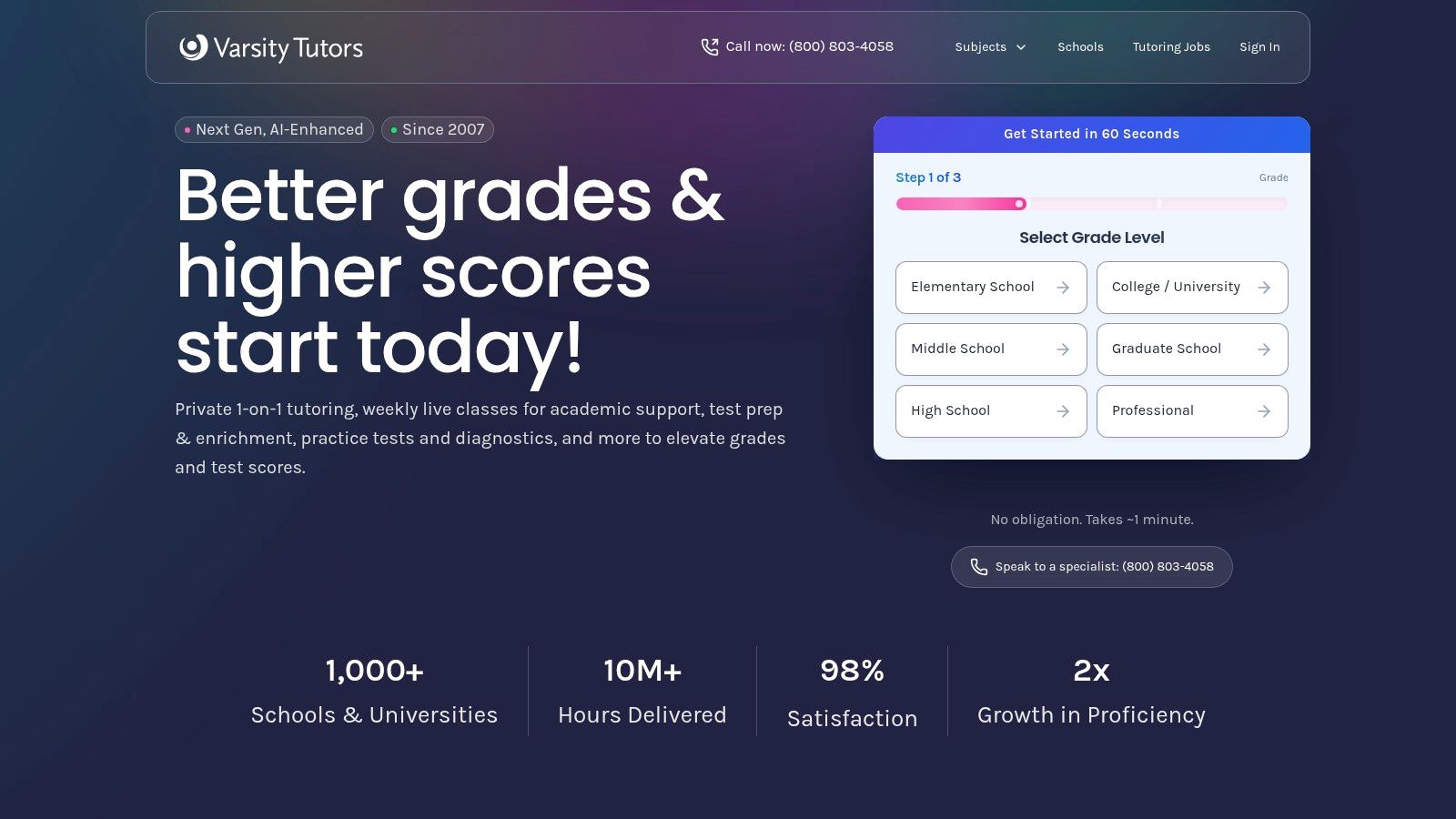
Varsity Tutors, owned by Nerdy, is a prominent player in the online tutoring marketplace, particularly for STEM education. It functions as a large, curated network connecting students with pre-vetted tutors for one-on-one sessions covering K-12, college-level subjects, and extensive test preparation. This platform is best suited for individuals or families seeking a structured, membership-based approach rather than a traditional pay-as-you-go model. Their matching algorithm, which considers over 100 attributes, aims to create an ideal pairing between tutor and student.
Key Features and User Experience
The platform's core offering is its Learning Membership, which bundles a set number of monthly tutoring hours with unlimited access to live, large-group classes and the Learning Lab. This lab includes practice problems, progress tracking tools, and other supplemental resources, creating a comprehensive learning ecosystem. For urgent needs, the Instant Tutoring feature provides on-demand help, making it a strong contender among the top 5 tutoring platforms for STEM education.
Pros and Cons
Pros:
Comprehensive Offerings: The membership includes 1:1 hours, unlimited group classes, and practice resources, offering significant value.
Vetted Tutors: All tutors are background-checked, providing peace of mind for parents and students.
Strong Brand Recognition: As a well-known U.S. brand, it carries a reputation for quality and a broad catalog of subjects.
Cons:
Pricing Opacity: Detailed pricing is often only available after completing an intake process, which can be a hurdle.
Membership Model: The package-based system may lack the flexibility some users prefer compared to pure pay-per-session platforms.
Visit the platform: https://www.varsitytutors.com
2. Tutor.com (The Princeton Review)
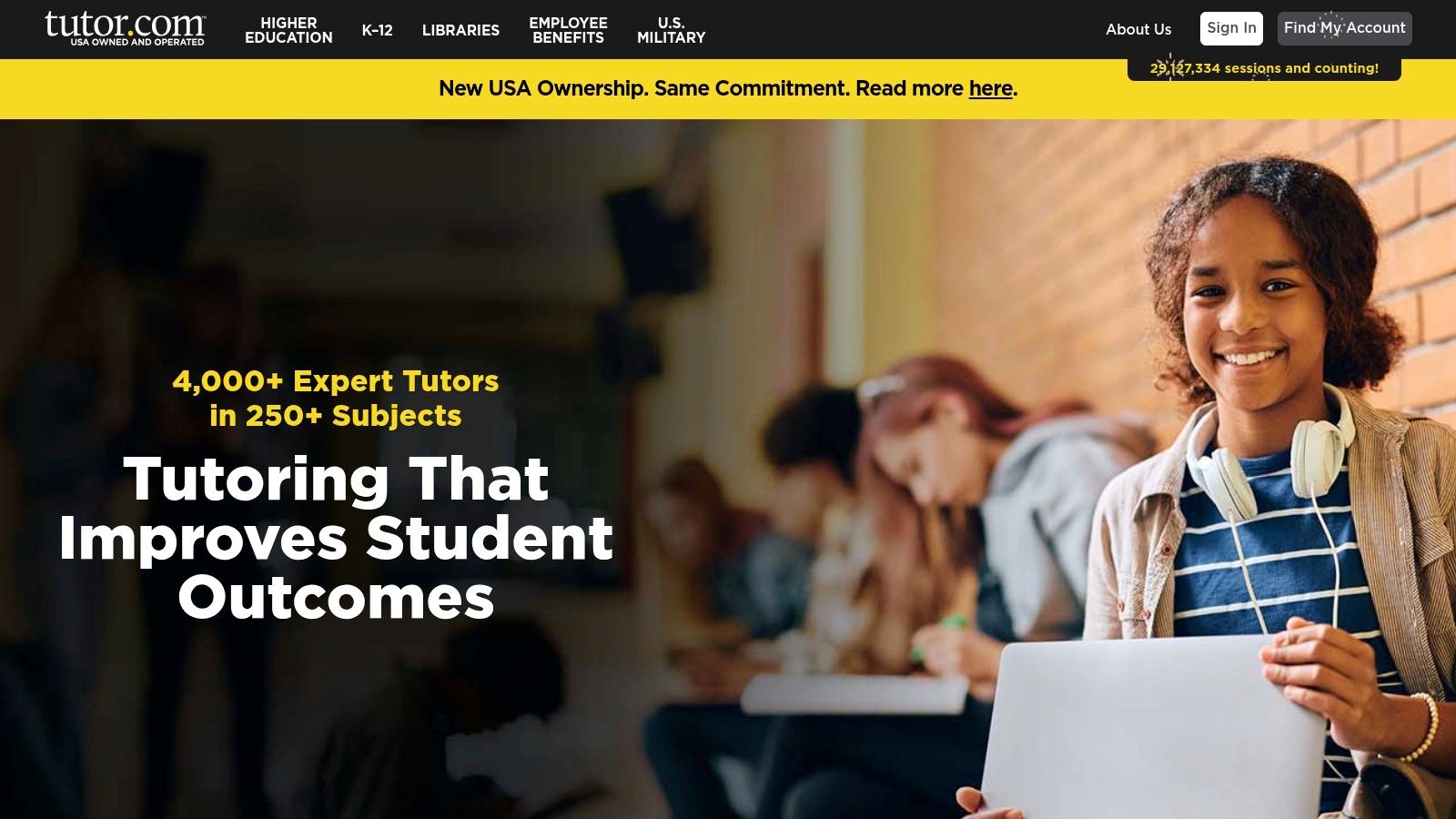
Tutor.com, part of The Princeton Review, excels in providing on-demand academic support across more than 200 subjects, including a strong emphasis on STEM. Its model is built around instant, 24/7 access, making it a go-to resource for students needing immediate help. The platform is widely adopted by U.S. schools, public libraries, and military programs, meaning many users gain access through institutional partnerships rather than direct retail plans. This focus on accessibility and a broad subject range solidifies its position among the top 5 tutoring platforms for STEM education.
Key Features and User Experience
The platform's standout feature is its true on-demand, drop-in tutoring. Students can connect with a qualified expert in subjects like calculus, physics, and chemistry within minutes, any time of day. Sessions are designed for specific problem-solving, with an average length of 20 to 25 minutes. All sessions are recorded and archived, providing a valuable review tool for students and ensuring quality and safety. The interface is straightforward, prioritizing a quick connection over extensive scheduling or profile matching.
Pros and Cons
Pros:
Reliable On-Demand Availability: The 24/7 access is ideal for last-minute homework help or exam prep.
Strong Institutional Footprint: Widespread partnerships in the U.S. provide free or subsidized access for many students.
Flexible Session Lengths: The model supports quick, targeted help without committing to a full hour.
Cons:
Pricing Opacity: Retail pricing for individual plans is often not displayed upfront and may require proceeding to checkout.
Institutional Focus: The experience is optimized for users accessing through institutions, which can make the individual purchase process less clear.
Visit the platform: https://www.tutor.com
3. Wyzant
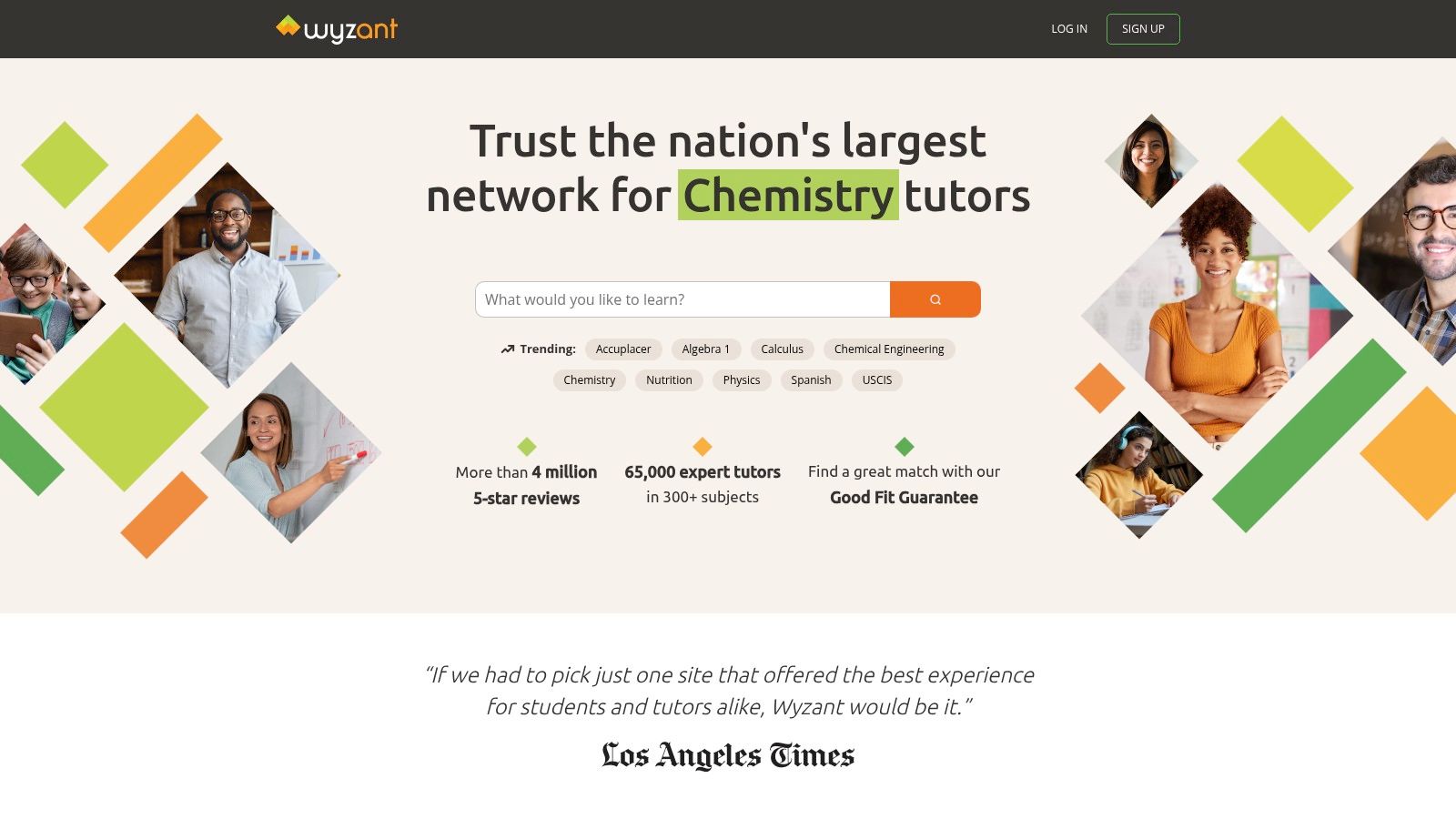
Wyzant operates as a U.S.-centric marketplace connecting students with independent tutors for both online and in-person lessons. It excels in offering flexibility, allowing users to browse and hire professionals for over 300 subjects without any upfront commitment or subscription. This model is particularly effective for those seeking specialized, higher-level STEM support, from AP Physics to university-level engineering courses.
Key Features and User Experience
The platform's strength lies in its powerful search and filtering capabilities. Users can narrow down a vast pool of tutors by rate, qualifications, location for in-person sessions, and subject matter expertise. Tutors set their own hourly rates, creating a competitive market. The pay-as-you-go model offers unparalleled flexibility, and the "Good Fit Guarantee" covers the first hour if a student is unsatisfied, reducing the risk of a bad match. This direct-to-tutor approach makes it a strong contender among the top 5 tutoring platforms for STEM education for those who value choice.
Pros and Cons
Pros:
Flexible Pay-As-You-Go Model: Users only pay for the sessions they book, with no recurring subscription fees.
Wide Selection: The large marketplace is ideal for finding tutors for advanced or niche STEM subjects.
In-Person or Online: Offers the choice between local, in-person tutoring and remote online sessions.
Cons:
Service Fee: The platform adds a 9% service fee to the tutor's rate at checkout, which can increase the overall cost.
Variable Tutor Quality: As tutors are independent contractors, their experience and teaching quality can vary significantly.
Visit the platform: https://www.wyzant.com
4. Skooli
Skooli offers a pay-as-you-go, on-demand online tutoring model that strongly appeals to students needing immediate help in specific STEM subjects. It operates as an instant connection service, where users can find and start a session with a qualified tutor in minutes. This platform is ideal for quick homework assistance or concept clarification rather than long-term, structured learning plans, setting it apart from subscription-based competitors. Its straightforward, per-minute pricing structure provides maximum flexibility for ad-hoc educational support.
Key Features and User Experience
The platform's main draw is its per-minute billing system, which starts after a 15-minute minimum. This makes it a cost-effective choice for targeted, short-burst sessions common in math and science. Users can browse tutor profiles or ask a question to be matched with an available expert. For those anticipating more consistent needs, Skooli offers discounted hour bundles, providing better value without locking users into a monthly subscription. The entire experience is designed for speed and convenience, making it a valuable tool among the top 5 tutoring platforms for STEM education.
Pros and Cons
Pros:
Pay-for-what-you-use Pricing: The per-minute model is perfect for students who need quick, specific help without a long-term commitment.
Transparent Rates: Skooli presents its rate card and bundle savings clearly, so there are no surprises on the bill.
On-Demand Access: Its "instant help" feature connects students with tutors quickly, which is crucial for last-minute study needs.
Cons:
Purely Online: The platform does not offer any in-person tutoring options, limiting its scope.
Lacks Predictability: The pay-as-you-go model may be less suitable for families or centers that prefer the budget predictability of recurring plans.
Visit the platform: https://www.skooli.com
5. Juni Learning
Juni Learning carves out a niche by combining a structured, proprietary curriculum with one-on-one tutoring for kids and teens. Focusing on coding, math, and data science, it offers a more guided educational path than open marketplace platforms. This approach is ideal for parents seeking a consistent, long-term learning program with clear progression, rather than ad-hoc homework help. The model revolves around weekly, 50-minute private sessions delivered via Zoom, making it a predictable and reliable option.
Key Features and User Experience
Juni Learning offers two main tracks: a "Curriculum Path" for structured learning and a "Tutoring Path" for more flexible support. A key part of the experience is the detailed session notes provided by instructors, which help parents track progress. The platform is designed to be parent-friendly, with simple monthly subscription plans (e.g., ~$299/month for weekly sessions) and straightforward rescheduling. For tutoring centers looking to manage their own curriculum-based programs, using dedicated tutoring management software can help replicate this structured approach. This makes it a noteworthy contender among the top 5 tutoring platforms for STEM education.
Pros and Cons
Pros:
Consistent Curriculum: The purpose-built STEM curriculum ensures a cohesive and trackable learning journey.
Simplified Model: The monthly subscription is easy for parents to understand and manage.
Focus on Sustained Learning: The structure encourages long-term skill development over single-session problem-solving.
Cons:
Less Flexible: It lacks the on-demand scheduling and wide tutor selection of open marketplaces.
Narrow Focus: The platform is exclusively for K-12 and teen learners, with no options for adults.
Visit the platform: https://www.junilearning.com
Top 5 STEM Tutoring Platforms Comparison
Platform | Business model & target | Core offerings | Pricing & flexibility | Quality & vetting | Best fit / USP |
|---|---|---|---|---|---|
Varsity Tutors (Nerdy) | Curated marketplace; K–college STEM + test prep; families | 1:1 tutoring, Learning Membership, instant help, live classes | Membership plans (e.g., monthly hour bundles), add-on hours; some price opacity | Curated tutors, background checks, 100+ attribute matching | Strong STEM/test-prep brand with membership + instant access |
Tutor.com (The Princeton Review) | On-demand platform; K–college; schools, libraries, military | 24/7 drop-in sessions, recorded sessions, broad subjects | Institutional licensing common; retail pricing often not public | Institutional-grade tutors, session recordings for quality | Reliable 24/7 institutional access and safety controls |
Wyzant | Marketplace; U.S. online & in-person; pay-as-you-go | Tutor search by rate/credentials/distance, in-person or online | Tutors set rates; students pay tutor + 9% service fee | Tutor quality varies; Good Fit Guarantee first hour | Flexible tutor selection and strong local in-person options |
Skooli | On-demand pay-by-minute; K–college math & science focus | Per-minute sessions (15-min min), discounted bundles, online only | Transparent per-minute billing and bundle discounts | Varying tutor quality; focused on quick online help | Precise pay-for-use model for short, urgent help |
Juni Learning | Structured curriculum platform; kids & teens coding/math | Weekly 1:1 (50 min), proprietary curriculum, progress reports | Subscription-style pricing (example ~$299/mo) | Vetted instructors, curriculum-led progress tracking | Curriculum-first 1:1 programs for sustained learning |
The Right Platform for Scaling Your STEM Tutoring Business
Choosing the right technology is a pivotal decision that can either accelerate your growth or anchor you in administrative quicksand. Throughout this analysis of the top tutoring platforms for STEM education, a clear pattern emerges. Platforms like Varsity Tutors, Tutor.com, and Wyzant excel as marketplaces, connecting individual students with freelance tutors. They are powerful for lead generation but fall short when it comes to managing the complex, multi-faceted operations of a growing tutoring center. Their business model is built around the individual transaction, not the holistic management of a multi-teacher, multi-location educational business. For a center owner juggling five, twenty, or even a hundred teachers, these platforms don't solve the core operational headaches of scheduling conflicts, manual invoicing, and complex payroll calculations that devour more than ten hours of valuable administrative time each week.
The true challenge for a scaling STEM business isn't just finding students; it's building a sustainable, efficient, and profitable operational foundation. This requires a system designed specifically to handle the intricate dance of recurring lessons, diverse pricing packages, multi-branch room availability, and varied teacher pay structures. The platforms we reviewed are simply not engineered for this level of operational complexity. Relying on them for center management is like using a hammer to turn a screw. It might work in a pinch, but it’s inefficient, frustrating, and ultimately limits what you can build.
Key Takeaways for Your Decision
As you move forward, the central question to ask is not "Which platform has the most tutors?" but rather "Which platform will give me back the most time and provide the clearest visibility into my business?" Your selection process should be guided by your specific operational needs, both now and in the future.
Consider these critical factors:
Scalability: Does the platform's performance degrade as you add more students, teachers, and locations? A system that works for 50 weekly lessons may become unusably slow at 5,000.
Automation Depth: Does the tool simply list tasks, or does it truly automate them? Look for systems that automatically generate invoices from attendance records and calculate complex payroll without manual intervention.
STEM-Specific Needs: Can the platform handle curriculum management with distinct subjects and levels (e.g., AP Calculus vs. Grade 8 Algebra)? Does it support hybrid learning environments where some students are in-person and others are online in the same class?
Operational Visibility: Can you easily see key metrics like room utilization, teacher workloads, and student conversion rates from a single dashboard? This data is crucial for making informed business decisions.
Making an Informed Choice
Ultimately, selecting from the top 5 tutoring platforms for STEM education requires a deep understanding of where your business is headed. As you expand your digital offerings, staying current on best practices is essential. For example, understanding key e-learning video production industry trends can help you create more engaging and effective online content, a crucial component of modern STEM tutoring. This strategic foresight ensures that the platform you choose today will support, not hinder, your long-term growth and innovation. The goal is to invest in a solution that eliminates operational chaos, allowing you to refocus your energy on what truly matters: delivering exceptional educational outcomes for your students and strategically growing your business.
Frequently Asked Questions (FAQ)
What defines the "top 5 tutoring platforms for STEM education"?
The top platforms are defined by their ability to provide specialized, high-quality instruction in Science, Technology, Engineering, and Math. Key factors include the quality and vetting of tutors, the breadth of STEM subjects offered (from basic algebra to advanced coding), and the effectiveness of their learning tools, whether for on-demand help or structured, long-term programs.
Why are marketplace platforms not ideal for running a tutoring center?
Marketplace platforms like Wyzant or Preply are designed for lead generation, connecting individual students with freelance tutors. They lack the backend operational tools a tutoring center needs, such as multi-teacher scheduling, room management, automated invoicing for packages, and complex payroll calculations, which leads to a 60% increase in administrative work as you scale.
How does tutoring management software differ from a tutoring platform?
A tutoring platform is a two-sided marketplace for students and tutors. Tutoring management software, like Tutorbase, is an operational system for tutoring businesses. It automates scheduling, billing, and payroll, helping centers reduce admin time by 60% and eliminate double-bookings, which are problems marketplaces do not solve.
What should a growing STEM center look for in a software solution?
A growing STEM center needs software that can handle complexity. This includes multi-branch management, room booking with conflict detection, automated invoicing from attendance data, and flexible teacher payroll that supports various pay structures (per-hour, revenue share). This operational backbone is crucial for scaling beyond 10 teachers.
Can these platforms handle both online and in-person tutoring?
Some platforms in our list, like Wyzant and Sylvan Learning, explicitly support both online and in-person tutoring models. However, for a tutoring center managing its own hybrid classes, dedicated software is needed to track which students are attending in-person versus online for attendance, billing, and capacity management.
If your goal is to move beyond fragmented spreadsheets and marketplaces to a single, powerful system built for growth, Tutorbase is designed for you. Our platform replaces manual chaos with intelligent automation, reducing admin time by 60% and eliminating costly booking errors. See how Tutorbase can transform your STEM tutoring center's operations and unlock its true potential.
A Director's Guide to the Top 5 Tutoring Platforms for STEM Education in 2026
Published: January 11, 2026 by Amy Ashford


Key Takeaway: Evaluating the top tutoring platforms for STEM education requires a director's perspective. While marketplaces like Wyzant or Varsity Tutors excel at connecting students with tutors, they lack the operational tools tutoring centers need to manage scheduling, billing, and payroll at scale, creating administrative bottlenecks that cap growth.
Scaling your STEM tutoring center from a handful of clients to a multi-branch operation introduces complexities that standard marketplace platforms simply aren't designed to handle. While platforms like Wyzant or Varsity Tutors excel at connecting individual students with tutors, they fall short when you need to manage teacher payroll, complex scheduling across multiple rooms, and automated invoicing for hundreds of lessons. The core challenge shifts from finding students to efficiently managing the business itself. Fragmented systems using spreadsheets, separate billing software, and manual calendar invites create administrative bottlenecks, lead to booking errors, and ultimately cap your growth potential.
This guide moves beyond simple discovery marketplaces to evaluate the top 5 tutoring platforms for STEM education from a business owner’s perspective. We will analyze each solution based on its ability to solve the operational hurdles faced by growing tutoring centers. When considering how to effectively scale your STEM center, it's crucial to understand the foundational, essential business development strategies that drive growth and revenue, and the right software is a cornerstone of that strategy.
Here, you will find a detailed, comparative breakdown focusing on the features that matter most for scaling:
Scheduling and Room Management: How well do they prevent double-bookings and manage physical or online classroom availability across multiple locations?
Billing and Payroll Automation: Can the platform handle complex pricing models, prepaid packages, and varied teacher pay structures without manual intervention?
STEM-Specific Needs: Does the software support the unique requirements of STEM subjects, such as level-based progression (e.g., Algebra I to Calculus) and specialized instructor matching?
We provide screenshots, direct links, and an honest assessment of each platform’s strengths and limitations to help you choose the operational backbone your business needs to grow.
1. Varsity Tutors (Nerdy)
Varsity Tutors, owned by Nerdy, is a prominent player in the online tutoring marketplace, particularly for STEM education. It functions as a large, curated network connecting students with pre-vetted tutors for one-on-one sessions covering K-12, college-level subjects, and extensive test preparation. This platform is best suited for individuals or families seeking a structured, membership-based approach rather than a traditional pay-as-you-go model. Their matching algorithm, which considers over 100 attributes, aims to create an ideal pairing between tutor and student.

Key Features and User Experience
The platform's core offering is its Learning Membership, which bundles a set number of monthly tutoring hours with unlimited access to live, large-group classes and the Learning Lab. This lab includes practice problems, progress tracking tools, and other supplemental resources, creating a comprehensive learning ecosystem. For urgent needs, the Instant Tutoring feature provides on-demand help, making it a strong contender among the top 5 tutoring platforms for STEM education.
Pros and Cons
Pros:
Comprehensive Offerings: The membership includes 1:1 hours, unlimited group classes, and practice resources, offering significant value.
Vetted Tutors: All tutors are background-checked, providing peace of mind for parents and students.
Strong Brand Recognition: As a well-known U.S. brand, it carries a reputation for quality and a broad catalog of subjects.
Cons:
Pricing Opacity: Detailed pricing is often only available after completing an intake process, which can be a hurdle.
Membership Model: The package-based system may lack the flexibility some users prefer compared to pure pay-per-session platforms.
Visit the platform: https://www.varsitytutors.com
2. Tutor.com (The Princeton Review)
Tutor.com, part of The Princeton Review, excels in providing on-demand academic support across more than 200 subjects, including a strong emphasis on STEM. Its model is built around instant, 24/7 access, making it a go-to resource for students needing immediate help. The platform is widely adopted by U.S. schools, public libraries, and military programs, meaning many users gain access through institutional partnerships rather than direct retail plans. This focus on accessibility and a broad subject range solidifies its position among the top 5 tutoring platforms for STEM education.

Key Features and User Experience
The platform's standout feature is its true on-demand, drop-in tutoring. Students can connect with a qualified expert in subjects like calculus, physics, and chemistry within minutes, any time of day. Sessions are designed for specific problem-solving, with an average length of 20 to 25 minutes. All sessions are recorded and archived, providing a valuable review tool for students and ensuring quality and safety. The interface is straightforward, prioritizing a quick connection over extensive scheduling or profile matching.
Pros and Cons
Pros:
Reliable On-Demand Availability: The 24/7 access is ideal for last-minute homework help or exam prep.
Strong Institutional Footprint: Widespread partnerships in the U.S. provide free or subsidized access for many students.
Flexible Session Lengths: The model supports quick, targeted help without committing to a full hour.
Cons:
Pricing Opacity: Retail pricing for individual plans is often not displayed upfront and may require proceeding to checkout.
Institutional Focus: The experience is optimized for users accessing through institutions, which can make the individual purchase process less clear.
Visit the platform: https://www.tutor.com
3. Wyzant
Wyzant operates as a U.S.-centric marketplace connecting students with independent tutors for both online and in-person lessons. It excels in offering flexibility, allowing users to browse and hire professionals for over 300 subjects without any upfront commitment or subscription. This model is particularly effective for those seeking specialized, higher-level STEM support, from AP Physics to university-level engineering courses.

Key Features and User Experience
The platform's strength lies in its powerful search and filtering capabilities. Users can narrow down a vast pool of tutors by rate, qualifications, location for in-person sessions, and subject matter expertise. Tutors set their own hourly rates, creating a competitive market. The pay-as-you-go model offers unparalleled flexibility, and the "Good Fit Guarantee" covers the first hour if a student is unsatisfied, reducing the risk of a bad match. This direct-to-tutor approach makes it a strong contender among the top 5 tutoring platforms for STEM education for those who value choice.
Pros and Cons
Pros:
Flexible Pay-As-You-Go Model: Users only pay for the sessions they book, with no recurring subscription fees.
Wide Selection: The large marketplace is ideal for finding tutors for advanced or niche STEM subjects.
In-Person or Online: Offers the choice between local, in-person tutoring and remote online sessions.
Cons:
Service Fee: The platform adds a 9% service fee to the tutor's rate at checkout, which can increase the overall cost.
Variable Tutor Quality: As tutors are independent contractors, their experience and teaching quality can vary significantly.
Visit the platform: https://www.wyzant.com
4. Skooli
Skooli offers a pay-as-you-go, on-demand online tutoring model that strongly appeals to students needing immediate help in specific STEM subjects. It operates as an instant connection service, where users can find and start a session with a qualified tutor in minutes. This platform is ideal for quick homework assistance or concept clarification rather than long-term, structured learning plans, setting it apart from subscription-based competitors. Its straightforward, per-minute pricing structure provides maximum flexibility for ad-hoc educational support.
Key Features and User Experience
The platform's main draw is its per-minute billing system, which starts after a 15-minute minimum. This makes it a cost-effective choice for targeted, short-burst sessions common in math and science. Users can browse tutor profiles or ask a question to be matched with an available expert. For those anticipating more consistent needs, Skooli offers discounted hour bundles, providing better value without locking users into a monthly subscription. The entire experience is designed for speed and convenience, making it a valuable tool among the top 5 tutoring platforms for STEM education.
Pros and Cons
Pros:
Pay-for-what-you-use Pricing: The per-minute model is perfect for students who need quick, specific help without a long-term commitment.
Transparent Rates: Skooli presents its rate card and bundle savings clearly, so there are no surprises on the bill.
On-Demand Access: Its "instant help" feature connects students with tutors quickly, which is crucial for last-minute study needs.
Cons:
Purely Online: The platform does not offer any in-person tutoring options, limiting its scope.
Lacks Predictability: The pay-as-you-go model may be less suitable for families or centers that prefer the budget predictability of recurring plans.
Visit the platform: https://www.skooli.com
5. Juni Learning
Juni Learning carves out a niche by combining a structured, proprietary curriculum with one-on-one tutoring for kids and teens. Focusing on coding, math, and data science, it offers a more guided educational path than open marketplace platforms. This approach is ideal for parents seeking a consistent, long-term learning program with clear progression, rather than ad-hoc homework help. The model revolves around weekly, 50-minute private sessions delivered via Zoom, making it a predictable and reliable option.

Key Features and User Experience
Juni Learning offers two main tracks: a "Curriculum Path" for structured learning and a "Tutoring Path" for more flexible support. A key part of the experience is the detailed session notes provided by instructors, which help parents track progress. The platform is designed to be parent-friendly, with simple monthly subscription plans (e.g., ~$299/month for weekly sessions) and straightforward rescheduling. For tutoring centers looking to manage their own curriculum-based programs, using dedicated tutoring management software can help replicate this structured approach. This makes it a noteworthy contender among the top 5 tutoring platforms for STEM education.
Pros and Cons
Pros:
Consistent Curriculum: The purpose-built STEM curriculum ensures a cohesive and trackable learning journey.
Simplified Model: The monthly subscription is easy for parents to understand and manage.
Focus on Sustained Learning: The structure encourages long-term skill development over single-session problem-solving.
Cons:
Less Flexible: It lacks the on-demand scheduling and wide tutor selection of open marketplaces.
Narrow Focus: The platform is exclusively for K-12 and teen learners, with no options for adults.
Visit the platform: https://www.junilearning.com
Top 5 STEM Tutoring Platforms Comparison
Platform | Business model & target | Core offerings | Pricing & flexibility | Quality & vetting | Best fit / USP |
|---|---|---|---|---|---|
Varsity Tutors (Nerdy) | Curated marketplace; K–college STEM + test prep; families | 1:1 tutoring, Learning Membership, instant help, live classes | Membership plans (e.g., monthly hour bundles), add-on hours; some price opacity | Curated tutors, background checks, 100+ attribute matching | Strong STEM/test-prep brand with membership + instant access |
Tutor.com (The Princeton Review) | On-demand platform; K–college; schools, libraries, military | 24/7 drop-in sessions, recorded sessions, broad subjects | Institutional licensing common; retail pricing often not public | Institutional-grade tutors, session recordings for quality | Reliable 24/7 institutional access and safety controls |
Wyzant | Marketplace; U.S. online & in-person; pay-as-you-go | Tutor search by rate/credentials/distance, in-person or online | Tutors set rates; students pay tutor + 9% service fee | Tutor quality varies; Good Fit Guarantee first hour | Flexible tutor selection and strong local in-person options |
Skooli | On-demand pay-by-minute; K–college math & science focus | Per-minute sessions (15-min min), discounted bundles, online only | Transparent per-minute billing and bundle discounts | Varying tutor quality; focused on quick online help | Precise pay-for-use model for short, urgent help |
Juni Learning | Structured curriculum platform; kids & teens coding/math | Weekly 1:1 (50 min), proprietary curriculum, progress reports | Subscription-style pricing (example ~$299/mo) | Vetted instructors, curriculum-led progress tracking | Curriculum-first 1:1 programs for sustained learning |
The Right Platform for Scaling Your STEM Tutoring Business
Choosing the right technology is a pivotal decision that can either accelerate your growth or anchor you in administrative quicksand. Throughout this analysis of the top tutoring platforms for STEM education, a clear pattern emerges. Platforms like Varsity Tutors, Tutor.com, and Wyzant excel as marketplaces, connecting individual students with freelance tutors. They are powerful for lead generation but fall short when it comes to managing the complex, multi-faceted operations of a growing tutoring center. Their business model is built around the individual transaction, not the holistic management of a multi-teacher, multi-location educational business. For a center owner juggling five, twenty, or even a hundred teachers, these platforms don't solve the core operational headaches of scheduling conflicts, manual invoicing, and complex payroll calculations that devour more than ten hours of valuable administrative time each week.
The true challenge for a scaling STEM business isn't just finding students; it's building a sustainable, efficient, and profitable operational foundation. This requires a system designed specifically to handle the intricate dance of recurring lessons, diverse pricing packages, multi-branch room availability, and varied teacher pay structures. The platforms we reviewed are simply not engineered for this level of operational complexity. Relying on them for center management is like using a hammer to turn a screw. It might work in a pinch, but it’s inefficient, frustrating, and ultimately limits what you can build.
Key Takeaways for Your Decision
As you move forward, the central question to ask is not "Which platform has the most tutors?" but rather "Which platform will give me back the most time and provide the clearest visibility into my business?" Your selection process should be guided by your specific operational needs, both now and in the future.
Consider these critical factors:
Scalability: Does the platform's performance degrade as you add more students, teachers, and locations? A system that works for 50 weekly lessons may become unusably slow at 5,000.
Automation Depth: Does the tool simply list tasks, or does it truly automate them? Look for systems that automatically generate invoices from attendance records and calculate complex payroll without manual intervention.
STEM-Specific Needs: Can the platform handle curriculum management with distinct subjects and levels (e.g., AP Calculus vs. Grade 8 Algebra)? Does it support hybrid learning environments where some students are in-person and others are online in the same class?
Operational Visibility: Can you easily see key metrics like room utilization, teacher workloads, and student conversion rates from a single dashboard? This data is crucial for making informed business decisions.
Making an Informed Choice
Ultimately, selecting from the top 5 tutoring platforms for STEM education requires a deep understanding of where your business is headed. As you expand your digital offerings, staying current on best practices is essential. For example, understanding key e-learning video production industry trends can help you create more engaging and effective online content, a crucial component of modern STEM tutoring. This strategic foresight ensures that the platform you choose today will support, not hinder, your long-term growth and innovation. The goal is to invest in a solution that eliminates operational chaos, allowing you to refocus your energy on what truly matters: delivering exceptional educational outcomes for your students and strategically growing your business.
Frequently Asked Questions (FAQ)
What defines the "top 5 tutoring platforms for STEM education"?
The top platforms are defined by their ability to provide specialized, high-quality instruction in Science, Technology, Engineering, and Math. Key factors include the quality and vetting of tutors, the breadth of STEM subjects offered (from basic algebra to advanced coding), and the effectiveness of their learning tools, whether for on-demand help or structured, long-term programs.
Why are marketplace platforms not ideal for running a tutoring center?
Marketplace platforms like Wyzant or Preply are designed for lead generation, connecting individual students with freelance tutors. They lack the backend operational tools a tutoring center needs, such as multi-teacher scheduling, room management, automated invoicing for packages, and complex payroll calculations, which leads to a 60% increase in administrative work as you scale.
How does tutoring management software differ from a tutoring platform?
A tutoring platform is a two-sided marketplace for students and tutors. Tutoring management software, like Tutorbase, is an operational system for tutoring businesses. It automates scheduling, billing, and payroll, helping centers reduce admin time by 60% and eliminate double-bookings, which are problems marketplaces do not solve.
What should a growing STEM center look for in a software solution?
A growing STEM center needs software that can handle complexity. This includes multi-branch management, room booking with conflict detection, automated invoicing from attendance data, and flexible teacher payroll that supports various pay structures (per-hour, revenue share). This operational backbone is crucial for scaling beyond 10 teachers.
Can these platforms handle both online and in-person tutoring?
Some platforms in our list, like Wyzant and Sylvan Learning, explicitly support both online and in-person tutoring models. However, for a tutoring center managing its own hybrid classes, dedicated software is needed to track which students are attending in-person versus online for attendance, billing, and capacity management.
If your goal is to move beyond fragmented spreadsheets and marketplaces to a single, powerful system built for growth, Tutorbase is designed for you. Our platform replaces manual chaos with intelligent automation, reducing admin time by 60% and eliminating costly booking errors. See how Tutorbase can transform your STEM tutoring center's operations and unlock its true potential.
More from the Blog

A Director's Guide to the Top 5 Tutoring Platforms for STEM Education in 2026
Read Article
Read Article

A Director's Guide to the Top 5 Tutoring Platforms for STEM Education in 2026
Read Article
Read Article

Top 5 Tutoring Apps for Music Teachers: A 2026 Deep-Dive Review
Read Article
Read Article

Top 5 Tutoring Apps for Music Teachers: A 2026 Deep-Dive Review
Read Article
Read Article

The 12 Best Attendance Tracking Apps for Tutoring in 2026
Read Article
Read Article

The 12 Best Attendance Tracking Apps for Tutoring in 2026
Read Article
Read Article


