
A Modern Guide to Jobs for Home Tutors
Published: December 7, 2025 by Amy Ashford

Finding jobs for home tutors presents a key choice: go independent or join a tutoring center. The independent path offers higher earning potential but requires managing all business operations yourself. Joining a modern center provides administrative support, a steady stream of clients, and reliable pay, allowing you to focus purely on teaching.
Should You Be an Independent Tutor or Join a Center?
Choosing your career path as a home tutor means weighing the freedom of being your own boss against the stability and support of an established organization. Each option shapes your income, autonomy, and work-life balance in 2024 and beyond. This is a critical decision framework for tutors.
Going solo puts you in complete control. You set your own rates, choose students, and keep 100% of the revenue. However, this path requires you to handle marketing, invoicing, and legal compliance. You must understand business structures, such as the difference between Limited Company vs Sole Trader structures.
Conversely, joining a modern tutoring center offers a compelling alternative. These centers provide the flexibility many tutors seek, like setting your own hours, without the administrative burden. They handle the back-end operations so you can focus entirely on teaching.
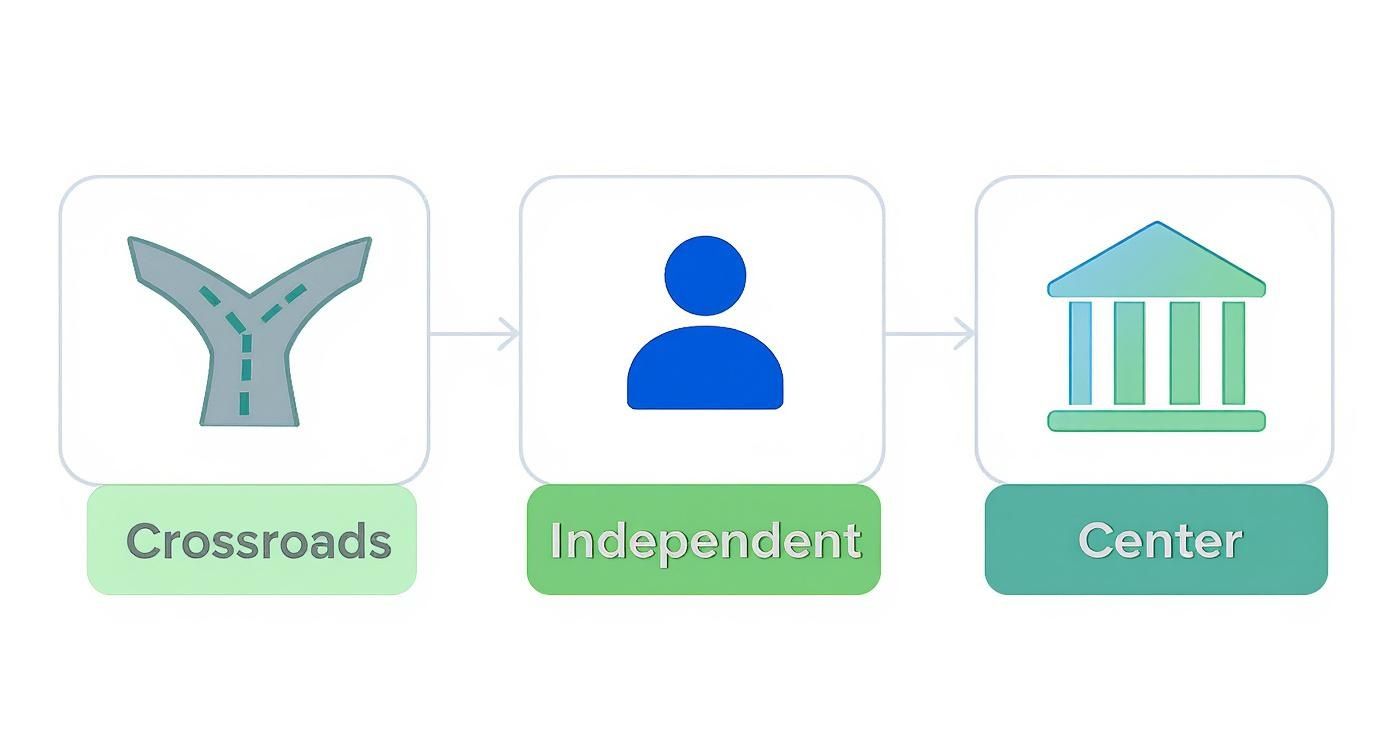
The core trade-off is clear: independence versus operational support. Your choice depends on your appetite for managing business tasks versus your desire to concentrate solely on education. This is especially true for the solo tutor ready to scale who finds administrative work overwhelming.
Comparing Your Two Main Tutoring Career Paths

When starting out, your career will likely follow one of two paths: working as an independent tutor or joining an established tutoring center. Each has significant trade-offs, making it a decision worth careful consideration. Let's compare the options.
What is the Difference Between Independent Tutoring vs. Center Employment?
Going independent gives you complete freedom. You set your rates, choose your hours, and select your students. This autonomy, however, means you are also the marketer, accountant, and administrator. All non-teaching tasks fall on your shoulders.
Working with a center provides a steady stream of students and handles all billing and scheduling. The trade-off is less control over your pay and potentially less flexibility in your teaching methods, though modern centers have improved this balance significantly.
The market for tutors is strong. According to ConsumerAffairs, the private tutoring market was valued at $97.11 billion in 2023. While online tutoring is growing, a substantial 74% of sessions still happen in person, ensuring plenty of local jobs for home tutors. You can review more tutoring market statistics on consumeraffairs.com for detailed insights.
Comparison Table: Independent vs. Center Tutor
Factor | Independent Tutor | Tutoring Center Tutor |
|---|---|---|
Earning Potential | Higher. You keep 100% of what you charge. | Lower. The center takes a percentage for its services. |
Finding Students | Your responsibility. Requires marketing and networking. | Students are provided for you. No marketing is needed. |
Flexibility | Total control over your schedule, hours, and location. | Schedule often set by the center, but modern centers offer more flexibility. |
Admin Work | You handle everything: billing, scheduling, and taxes. | Minimal. The center manages most administrative tasks. |
Support & Resources | You source your own curriculum and materials. | Access to an established curriculum, training, and support staff. |
Income Stability | Income can be unpredictable, especially initially. | A more stable and predictable income stream. |
Ultimately, there is no single "best" choice. Many tutors start at a center to gain experience and build a client base before considering an independent practice. Evaluate your current goals, your comfort with business tasks, and your desired work-life balance.
How Do I Vet a Tutoring Center Before Joining?

Not all tutoring centers are created equal. You are looking for a professional partner, not just an employer. A great center invests in its tutors by providing the tools and flexibility you need to excel, helping you avoid the burnout that can come with solo work.
Before signing any contract, ask critical questions about their operations.
Here’s what to look for in a top-tier tutoring center:
Modern Technology: Does the center provide a professional portal for scheduling, parent communication, and progress tracking? The right software makes a significant difference. Explore some tuition management systems reviews to see what a well-run center should offer.
Payment Reliability: You must understand exactly how and when you get paid. Ask about their payment schedule, hour tracking, and the transparency of their process. Vague answers are a major red flag.
Scheduling Flexibility: Can you set your own hours or are you locked into a rigid schedule? The best centers today offer flexibility that respects your work-life balance, giving you the benefits of support without sacrificing autonomy.
Building a Profile That Attracts Premium Clients

Whether on a tutoring platform, a center’s website, or your own page, your professional profile is your most important marketing asset. It is your opportunity to convince parents that you are the right choice for their child.
To attract high-paying clients, you must clearly communicate your value. This begins with choosing a profitable niche, like ACT prep, early childhood literacy, or specialized exam coaching, where you can command higher rates. A strong education marketing strategy will give you a competitive edge.
Your bio should tell a story, not just list credentials. Focus on your unique teaching philosophy and, most importantly, the tangible results you have helped students achieve. The online tutoring market is projected to reach $23.73 billion by 2030, showing massive demand for tutors who can stand out. Our guide on how to market tutoring online offers more strategies.
How to Evaluate Tutoring Contracts and Pay Structures
Your tutoring contract defines your professional relationship. It outlines your responsibilities, compensation, and expectations from both sides. Before signing, it is crucial to understand the difference between a W-2 (employee) agreement and a 1099 (independent contractor) agreement, as they have significant implications for taxes, benefits, and autonomy.
What are common pay models and contract clauses?
You will encounter several common pay structures. Some centers offer a simple hourly wage, which is straightforward. Others use revenue-sharing models where you receive a percentage of the client's payment. Neither is inherently better, but you must understand the details.
Pay close attention to these key clauses:
Client ownership: Can you continue working with your students if you leave the center?
Cancellation policies: What happens if a student cancels last minute? Do you still receive compensation?
Non-compete limitations: Does the contract restrict you from working with other companies or finding your own clients?
A clear contract protects everyone. For a deeper analysis of your worth and how to set prices, our comprehensive tutoring rates pricing guide is an excellent resource.
How to Grow Your Tutoring Business for the Long Term
Finding your first tutoring job is a great start, but building a sustainable career requires long-term planning. Once you are established, what is your next step? For many, it involves scaling their practice.
For tutors within a center, advancement might mean becoming a lead tutor or developing curriculum. Ambitious solo tutors often look to scale their business. This growth journey can even lead them back to partnering with a center to offload the administrative tasks that come with a larger client list.
The private tutoring market is booming, projected to hit $192.09 billion by 2029, according to Research and Markets. This growth is fueled by digital platforms that simplify connecting with students. This opens up massive opportunities for strategic tutors. You can explore the data in the academic tutoring market growth report on researchandmarkets.com.
Long-term success depends on a structure that supports your ambitions. Many find this with centers that use professional tools like Tutorbase. They offer a professional portal, reliable scheduling, and on-time payments, freeing you to focus on what you do best: teaching. To provide this seamless experience for your clients and tutors, visit tutorbase.com/register.
Frequently Asked Questions About Jobs for Home Tutors
1. What's better: being an independent tutor or joining a tutoring center?
Joining a tutoring center is often better for new tutors as it provides a steady client stream and handles administrative tasks like billing and scheduling. Independent tutoring offers higher earning potential and more autonomy but requires you to manage all aspects of the business, including marketing and accounting.
2. How much can a home tutor earn in 2024?
Home tutor earnings vary widely based on location, subject, and experience, typically ranging from $25 to $80 per hour. Tutors in high-demand subjects like STEM or standardized test prep can command higher rates. Tutors working for centers earn less per hour but have more consistent work.
3. What subjects are most in-demand for home tutors?
The most in-demand subjects for home tutors include math (especially algebra and calculus), science (chemistry, physics), English (reading, writing), and standardized test preparation (SAT, ACT). Foreign languages and coding are also growing fields.
4. Do I need a specific qualification to become a home tutor?
While a formal teaching certificate is not always required, a bachelor's degree in your subject area is standard. Demonstrable expertise, strong communication skills, and prior experience working with students are often more important to parents and tutoring centers.
5. How can I find jobs for home tutors?
You can find jobs for home tutors on online tutoring platforms, local job boards, and by applying directly to tutoring centers in your area. Building a professional profile and networking within educational communities can also lead to direct referrals.
6. What should I look for in a tutoring center's contract?
When evaluating a contract, look for clarity on pay structure (hourly vs. revenue share), client ownership policies, cancellation procedures, and any non-compete clauses. Ensure the contract details how and when you will be paid to avoid future disputes.
7. What technology do modern tutoring centers offer tutors?
Modern tutoring centers often provide tutors with a professional software portal for managing schedules, communicating with parents, tracking student progress, and accessing lesson materials. This technology streamlines administrative work and enhances the tutoring experience for everyone involved.
A Modern Guide to Jobs for Home Tutors
Published: December 6, 2025 by Amy Ashford


Finding jobs for home tutors presents a key choice: go independent or join a tutoring center. The independent path offers higher earning potential but requires managing all business operations yourself. Joining a modern center provides administrative support, a steady stream of clients, and reliable pay, allowing you to focus purely on teaching.
Should You Be an Independent Tutor or Join a Center?
Choosing your career path as a home tutor means weighing the freedom of being your own boss against the stability and support of an established organization. Each option shapes your income, autonomy, and work-life balance in 2024 and beyond. This is a critical decision framework for tutors.
Going solo puts you in complete control. You set your own rates, choose students, and keep 100% of the revenue. However, this path requires you to handle marketing, invoicing, and legal compliance. You must understand business structures, such as the difference between Limited Company vs Sole Trader structures.
Conversely, joining a modern tutoring center offers a compelling alternative. These centers provide the flexibility many tutors seek, like setting your own hours, without the administrative burden. They handle the back-end operations so you can focus entirely on teaching.

The core trade-off is clear: independence versus operational support. Your choice depends on your appetite for managing business tasks versus your desire to concentrate solely on education. This is especially true for the solo tutor ready to scale who finds administrative work overwhelming.
Comparing Your Two Main Tutoring Career Paths

When starting out, your career will likely follow one of two paths: working as an independent tutor or joining an established tutoring center. Each has significant trade-offs, making it a decision worth careful consideration. Let's compare the options.
What is the Difference Between Independent Tutoring vs. Center Employment?
Going independent gives you complete freedom. You set your rates, choose your hours, and select your students. This autonomy, however, means you are also the marketer, accountant, and administrator. All non-teaching tasks fall on your shoulders.
Working with a center provides a steady stream of students and handles all billing and scheduling. The trade-off is less control over your pay and potentially less flexibility in your teaching methods, though modern centers have improved this balance significantly.
The market for tutors is strong. According to ConsumerAffairs, the private tutoring market was valued at $97.11 billion in 2023. While online tutoring is growing, a substantial 74% of sessions still happen in person, ensuring plenty of local jobs for home tutors. You can review more tutoring market statistics on consumeraffairs.com for detailed insights.
Comparison Table: Independent vs. Center Tutor
Factor | Independent Tutor | Tutoring Center Tutor |
|---|---|---|
Earning Potential | Higher. You keep 100% of what you charge. | Lower. The center takes a percentage for its services. |
Finding Students | Your responsibility. Requires marketing and networking. | Students are provided for you. No marketing is needed. |
Flexibility | Total control over your schedule, hours, and location. | Schedule often set by the center, but modern centers offer more flexibility. |
Admin Work | You handle everything: billing, scheduling, and taxes. | Minimal. The center manages most administrative tasks. |
Support & Resources | You source your own curriculum and materials. | Access to an established curriculum, training, and support staff. |
Income Stability | Income can be unpredictable, especially initially. | A more stable and predictable income stream. |
Ultimately, there is no single "best" choice. Many tutors start at a center to gain experience and build a client base before considering an independent practice. Evaluate your current goals, your comfort with business tasks, and your desired work-life balance.
How Do I Vet a Tutoring Center Before Joining?

Not all tutoring centers are created equal. You are looking for a professional partner, not just an employer. A great center invests in its tutors by providing the tools and flexibility you need to excel, helping you avoid the burnout that can come with solo work.
Before signing any contract, ask critical questions about their operations.
Here’s what to look for in a top-tier tutoring center:
Modern Technology: Does the center provide a professional portal for scheduling, parent communication, and progress tracking? The right software makes a significant difference. Explore some tuition management systems reviews to see what a well-run center should offer.
Payment Reliability: You must understand exactly how and when you get paid. Ask about their payment schedule, hour tracking, and the transparency of their process. Vague answers are a major red flag.
Scheduling Flexibility: Can you set your own hours or are you locked into a rigid schedule? The best centers today offer flexibility that respects your work-life balance, giving you the benefits of support without sacrificing autonomy.
Building a Profile That Attracts Premium Clients

Whether on a tutoring platform, a center’s website, or your own page, your professional profile is your most important marketing asset. It is your opportunity to convince parents that you are the right choice for their child.
To attract high-paying clients, you must clearly communicate your value. This begins with choosing a profitable niche, like ACT prep, early childhood literacy, or specialized exam coaching, where you can command higher rates. A strong education marketing strategy will give you a competitive edge.
Your bio should tell a story, not just list credentials. Focus on your unique teaching philosophy and, most importantly, the tangible results you have helped students achieve. The online tutoring market is projected to reach $23.73 billion by 2030, showing massive demand for tutors who can stand out. Our guide on how to market tutoring online offers more strategies.
How to Evaluate Tutoring Contracts and Pay Structures
Your tutoring contract defines your professional relationship. It outlines your responsibilities, compensation, and expectations from both sides. Before signing, it is crucial to understand the difference between a W-2 (employee) agreement and a 1099 (independent contractor) agreement, as they have significant implications for taxes, benefits, and autonomy.
What are common pay models and contract clauses?
You will encounter several common pay structures. Some centers offer a simple hourly wage, which is straightforward. Others use revenue-sharing models where you receive a percentage of the client's payment. Neither is inherently better, but you must understand the details.
Pay close attention to these key clauses:
Client ownership: Can you continue working with your students if you leave the center?
Cancellation policies: What happens if a student cancels last minute? Do you still receive compensation?
Non-compete limitations: Does the contract restrict you from working with other companies or finding your own clients?
A clear contract protects everyone. For a deeper analysis of your worth and how to set prices, our comprehensive tutoring rates pricing guide is an excellent resource.
How to Grow Your Tutoring Business for the Long Term
Finding your first tutoring job is a great start, but building a sustainable career requires long-term planning. Once you are established, what is your next step? For many, it involves scaling their practice.
For tutors within a center, advancement might mean becoming a lead tutor or developing curriculum. Ambitious solo tutors often look to scale their business. This growth journey can even lead them back to partnering with a center to offload the administrative tasks that come with a larger client list.
The private tutoring market is booming, projected to hit $192.09 billion by 2029, according to Research and Markets. This growth is fueled by digital platforms that simplify connecting with students. This opens up massive opportunities for strategic tutors. You can explore the data in the academic tutoring market growth report on researchandmarkets.com.
Long-term success depends on a structure that supports your ambitions. Many find this with centers that use professional tools like Tutorbase. They offer a professional portal, reliable scheduling, and on-time payments, freeing you to focus on what you do best: teaching. To provide this seamless experience for your clients and tutors, visit tutorbase.com/register.
Frequently Asked Questions About Jobs for Home Tutors
1. What's better: being an independent tutor or joining a tutoring center?
Joining a tutoring center is often better for new tutors as it provides a steady client stream and handles administrative tasks like billing and scheduling. Independent tutoring offers higher earning potential and more autonomy but requires you to manage all aspects of the business, including marketing and accounting.
2. How much can a home tutor earn in 2024?
Home tutor earnings vary widely based on location, subject, and experience, typically ranging from $25 to $80 per hour. Tutors in high-demand subjects like STEM or standardized test prep can command higher rates. Tutors working for centers earn less per hour but have more consistent work.
3. What subjects are most in-demand for home tutors?
The most in-demand subjects for home tutors include math (especially algebra and calculus), science (chemistry, physics), English (reading, writing), and standardized test preparation (SAT, ACT). Foreign languages and coding are also growing fields.
4. Do I need a specific qualification to become a home tutor?
While a formal teaching certificate is not always required, a bachelor's degree in your subject area is standard. Demonstrable expertise, strong communication skills, and prior experience working with students are often more important to parents and tutoring centers.
5. How can I find jobs for home tutors?
You can find jobs for home tutors on online tutoring platforms, local job boards, and by applying directly to tutoring centers in your area. Building a professional profile and networking within educational communities can also lead to direct referrals.
6. What should I look for in a tutoring center's contract?
When evaluating a contract, look for clarity on pay structure (hourly vs. revenue share), client ownership policies, cancellation procedures, and any non-compete clauses. Ensure the contract details how and when you will be paid to avoid future disputes.
7. What technology do modern tutoring centers offer tutors?
Modern tutoring centers often provide tutors with a professional software portal for managing schedules, communicating with parents, tracking student progress, and accessing lesson materials. This technology streamlines administrative work and enhances the tutoring experience for everyone involved.