
11 Best Tutoring CRM Tools for Small Teams in 2026

Published: January 8, 2026 by Amy Ashford

For small tutoring teams, juggling student inquiries, scheduling lessons, and chasing payments across fragmented tools like Google Calendar, QuickBooks, and Excel is a significant drain on time. This manual admin burden consumes 10+ hours per week, leading to double-bookings, missed revenue, and slower growth. The right Customer Relationship Management (CRM) platform automates these tasks, consolidating your entire operation into a single, reliable system.

This guide analyzes the top tutoring CRM tools for small teams in 2026, moving beyond generic feature lists to focus on their specific strengths and ideal use cases. We'll help you find the perfect fit, whether you're a solo tutor scaling up or a small center owner managing a growing team. Streamlining operations frees you to focus on delivering outstanding customer service and building stronger student relationships.

Each option reviewed below includes screenshots and direct links, giving you a clear, practical overview to inform your decision and reclaim valuable hours from your workweek.

1. Tutorbase

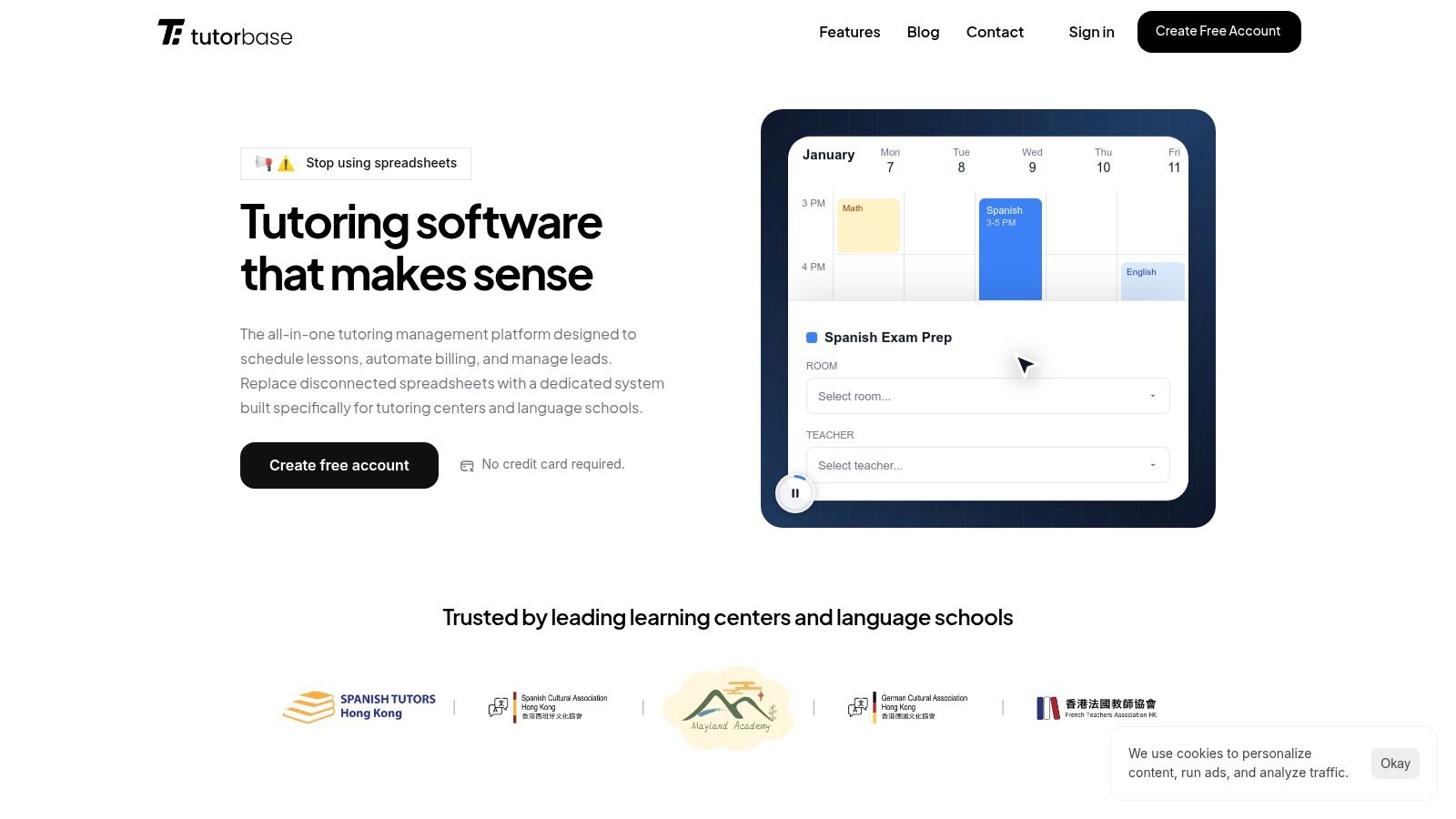
Tutorbase is an AI-powered tutoring management software designed for centers that have outgrown fragmented systems like Teachworks or spreadsheets. It consolidates every administrative workflow, from lead capture and scheduling to automated billing and complex payroll, into a single ecosystem. This makes it an exceptional choice among top tutoring CRM tools for small teams aiming to scale efficiently from 5 to 100+ teachers.

The platform's standout feature is its AI-powered scheduling. The Find Slot tool auto-generates optimal teacher, room, and time combinations, cutting booking time from 10 minutes to under 2. The Find Spot tool filters existing classes to fill open seats, maximizing group utilization. This AI assistance eliminates the manual calendar hunting that leads to double-bookings and underutilized capacity, reducing admin time by up to 60%.
Tutorbase

Why It Stands Out

Tutorbase excels where many legacy systems fall short, especially for growing and multi-location centers. Its architecture handles complexity without manual workarounds.

  • Unified Automation: The system creates a seamless flow where lesson attendance automatically generates accurate invoices and calculates complex teacher payroll. This end-to-end connection removes manual data entry and reconciliation between different software.

  • Built for Scale: With robust multi-branch room management, multi-brand support, and performance engineered for up to 10,000+ lessons per week, it supports a business from its first small team to a multi-center operation.

  • Advanced Financial Tools: Tutorbase natively handles prepaid credit packages, layered pricing policies (global, location, service, student), and diverse teacher pay models (revenue share, base+variable, overtime) that are often difficult to manage in other systems.

  • Modern Lead Capture: An integrated WhatsApp intake widget and embeddable website forms feed new leads directly into a built-in CRM pipeline, modernizing and accelerating student onboarding by 3x.

Pros & Cons

Pros:

  • AI-powered scheduling drastically reduces booking time and prevents errors.

  • End-to-end automation connects attendance directly to billing and payroll.

  • Natively supports multi-branch operations, complex payroll, and prepaid credits.

  • Integrated lead management tools like a WhatsApp widget capture more prospects.

Cons:

  • Pricing is not public; you must contact their sales team for a custom quote.

  • The extensive feature set may be overly complex for solo tutors with very basic needs.

Pricing

Tutorbase uses tailored pricing based on your center's specific needs, including the number of students, teachers, and locations. You must schedule a demo to receive a quote.

Website: https://tutorbase.com

2. Teachworks

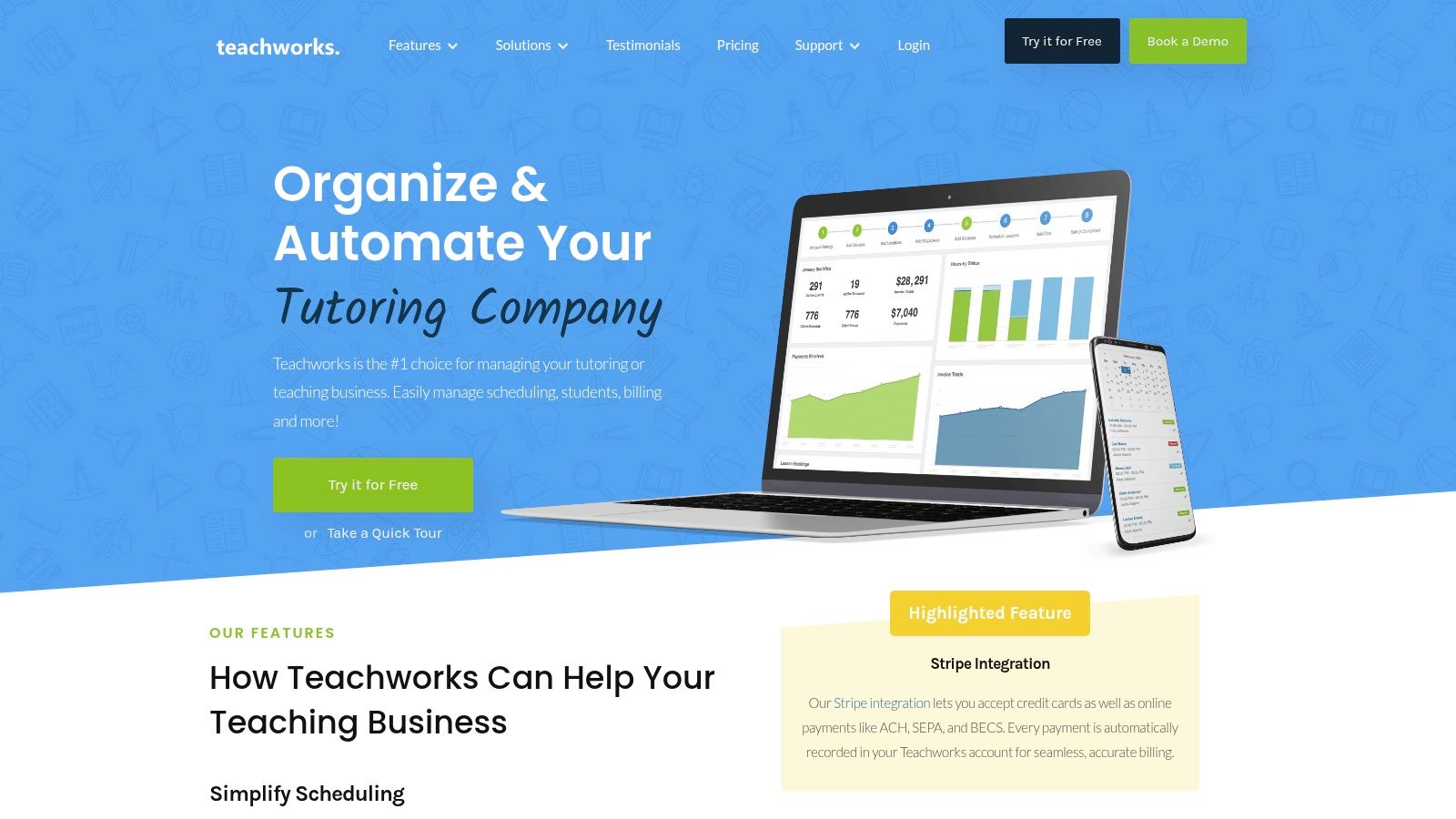
Teachworks is a flexible tutoring management platform designed to grow with your business, from a small team to a multi-branch operation. It offers a solid foundation of scheduling, billing, and communication tools, making it a strong contender among the top tutoring CRM tools for small teams seeking a scalable solution. Its core strength lies in its robust calendar and automated invoicing capabilities that connect directly to student attendance.

The platform provides an excellent balance of features for managing day-to-day operations. Its calendar includes conflict detection and online booking requests, while the system automates invoice generation from tracked attendance, integrates with Stripe for payments, and syncs with QuickBooks Online. This automation helps significantly reduce the administrative workload related to billing and scheduling, allowing small teams to focus on teaching and growth.
Teachworks

Pros and Cons

  • Pros: Highly scalable for multi-location centers, robust scheduling and billing automation, many free add-ons and integrations.

  • Cons: The per-student-lesson pricing can be difficult to predict for businesses with fluctuating enrollment, and API access is limited to higher-tier plans.

Ideal For

Teachworks is best for tutoring businesses that anticipate significant growth and need a system that can scale from a single location to a multi-branch enterprise. Its usage-based pricing is particularly suitable for smaller teams that want access to powerful features without a high upfront cost. For more details on managing tutor payments effectively, you can learn more about sessions payroll management and how systems like Teachworks handle it.

Website: https://teachworks.com

3. TutorBird

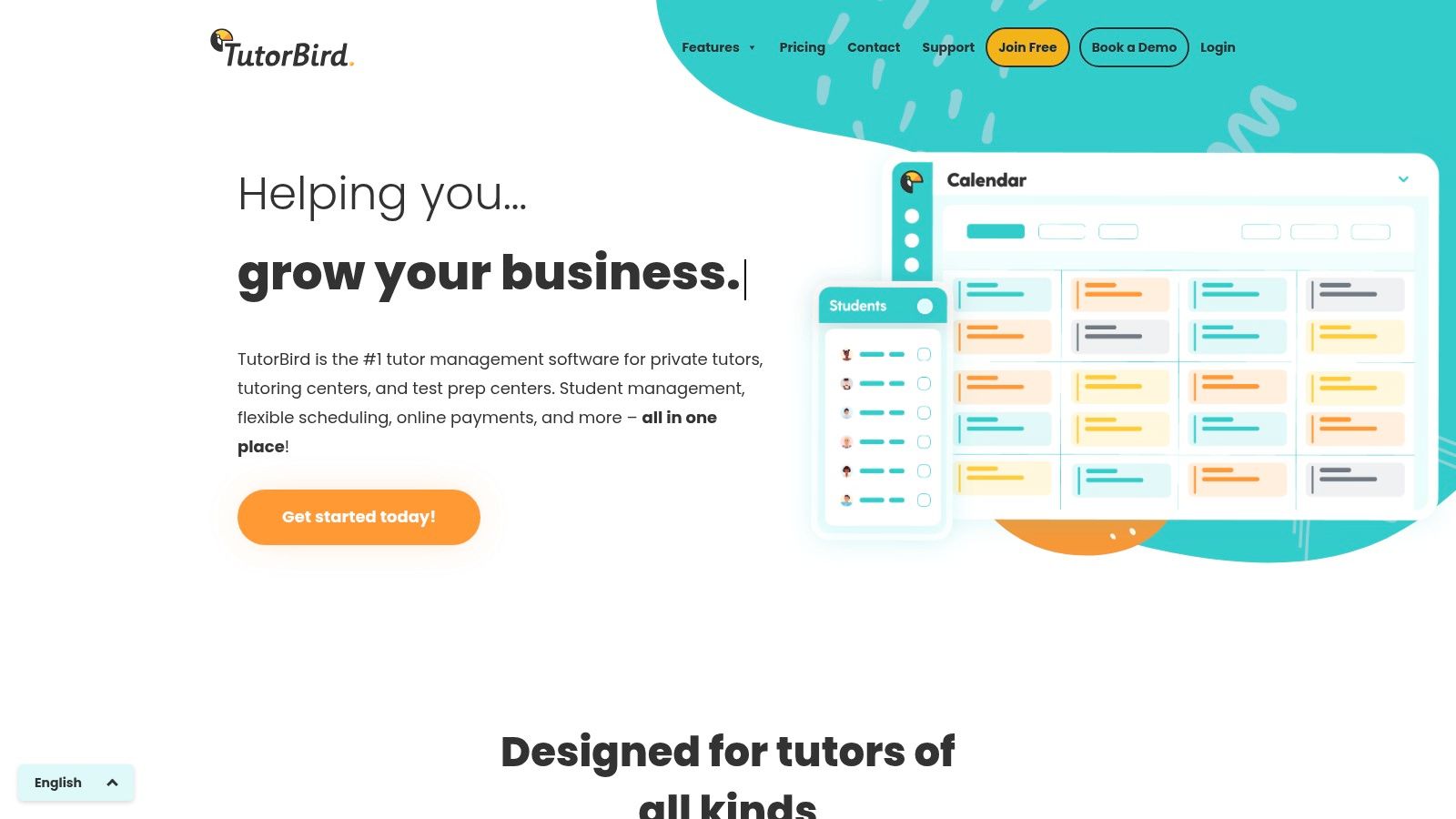
TutorBird is a highly affordable and streamlined management suite designed for private tutors and very small tutoring operations. It provides a straightforward solution for managing core administrative tasks, including student records, scheduling, attendance, and invoicing, all within a single platform. Its low-cost entry point and simplicity make it a popular choice for solo tutors transitioning from manual methods or those starting a new tutoring business.
TutorBird

The platform stands out with its user-friendly interface and quick setup, which includes a self-booking portal for clients and automated email and SMS reminders. For those needing a simple public presence, the optional website builder is a valuable addition. While it may not have the deep analytical capabilities of more enterprise-focused systems, it effectively covers the essential needs of a small business, making it one of the top tutoring CRM tools for small teams.

Pros and Cons

  • Pros: Very low entry price suitable for solo tutors and small teams, simple setup with positive user ratings, phone support for US/Canada.

  • Cons: Fewer advanced analytics compared to enterprise platforms, relies on integrations for deeper CRM workflows.

Ideal For

TutorBird is the perfect fit for individual tutors or small, newly formed tutoring companies that need an all-in-one, budget-friendly tool. Its strength lies in simplifying daily operations like scheduling and billing without a steep learning curve or significant financial investment. It is less suitable for multi-branch centers requiring complex payroll or advanced business intelligence.

Website: https://www.tutorbird.com

4. Classcard

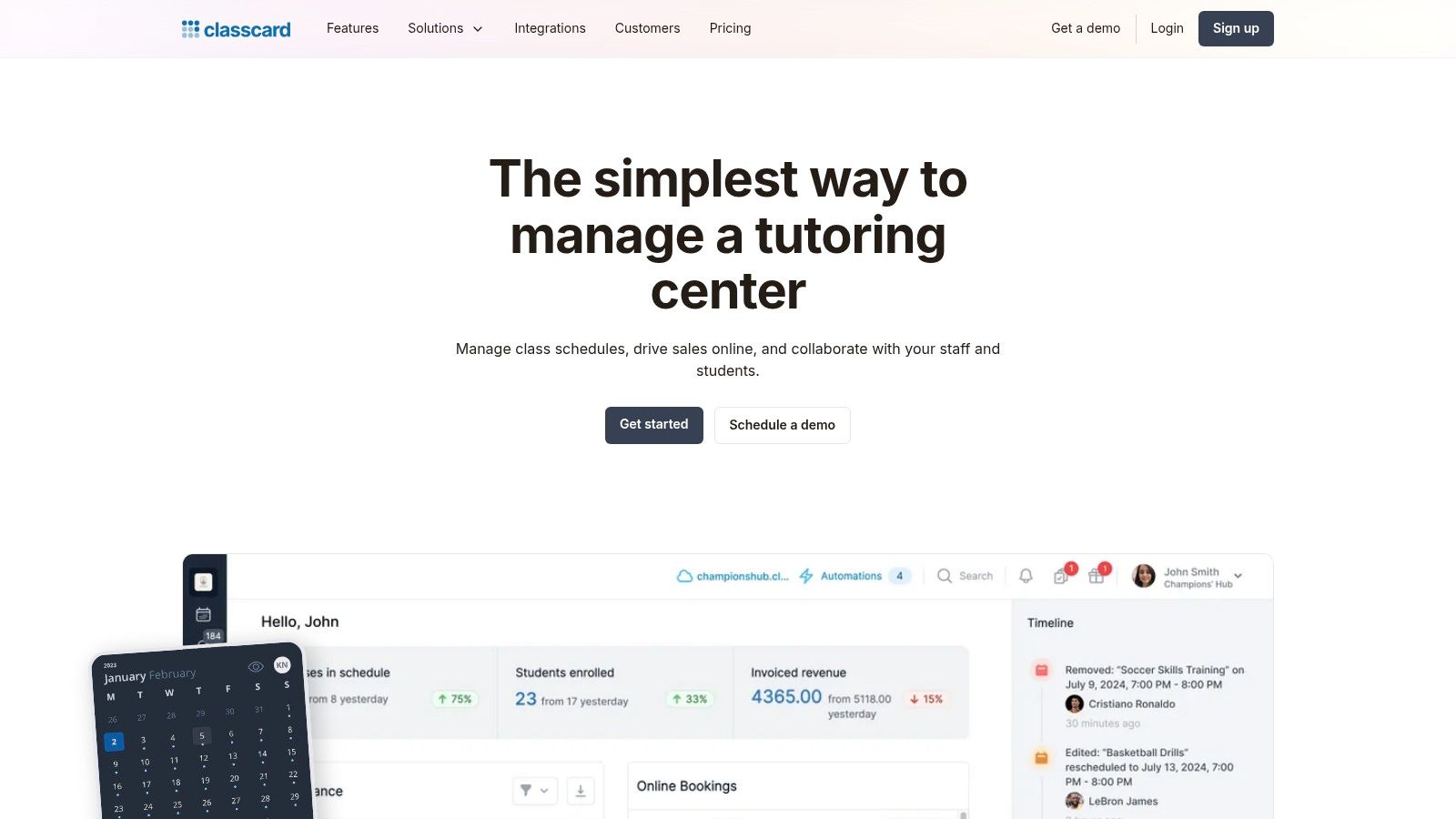
Classcard is a modern class and tutoring management platform that provides a clean user interface alongside powerful operational tools. It focuses on simplifying client interactions, from initial online booking to ongoing communications, making it a strong contender among top tutoring CRM tools for small teams. Its CRM-like features allow for efficient contact segmentation and automated reminders, which helps nurture leads and retain current students.

The platform's emphasis on a branded student web app and dashboard is a key differentiator. This gives smaller tutoring businesses a professional, tech-forward presence without custom development costs. Integrations with popular tools like Lessonspace, Zoom, and Stripe ensure that both online tutoring delivery and payment collection are seamless, consolidating core workflows into one system.
Classcard

Pros and Cons

  • Pros: Modern and intuitive user experience, branded student app option enhances customer engagement, strong integrations with common online lesson and payment tools.

  • Cons: Public pricing is not always clearly displayed on main landing pages, and some support materials are geared more toward a global audience than a US-specific one.

Ideal For

Classcard is best suited for small to medium-sized tutoring businesses and solo tutors who prioritize a modern user experience for both their staff and their clients. It’s a great fit for organizations that want to offer a polished online booking and portal experience without a large budget. Its straightforward scheduling and communication tools are perfect for teams moving online or standardizing their hybrid operations.

Website: https://www.classcardapp.com/solutions/tutoring

5. Jackrabbit Class

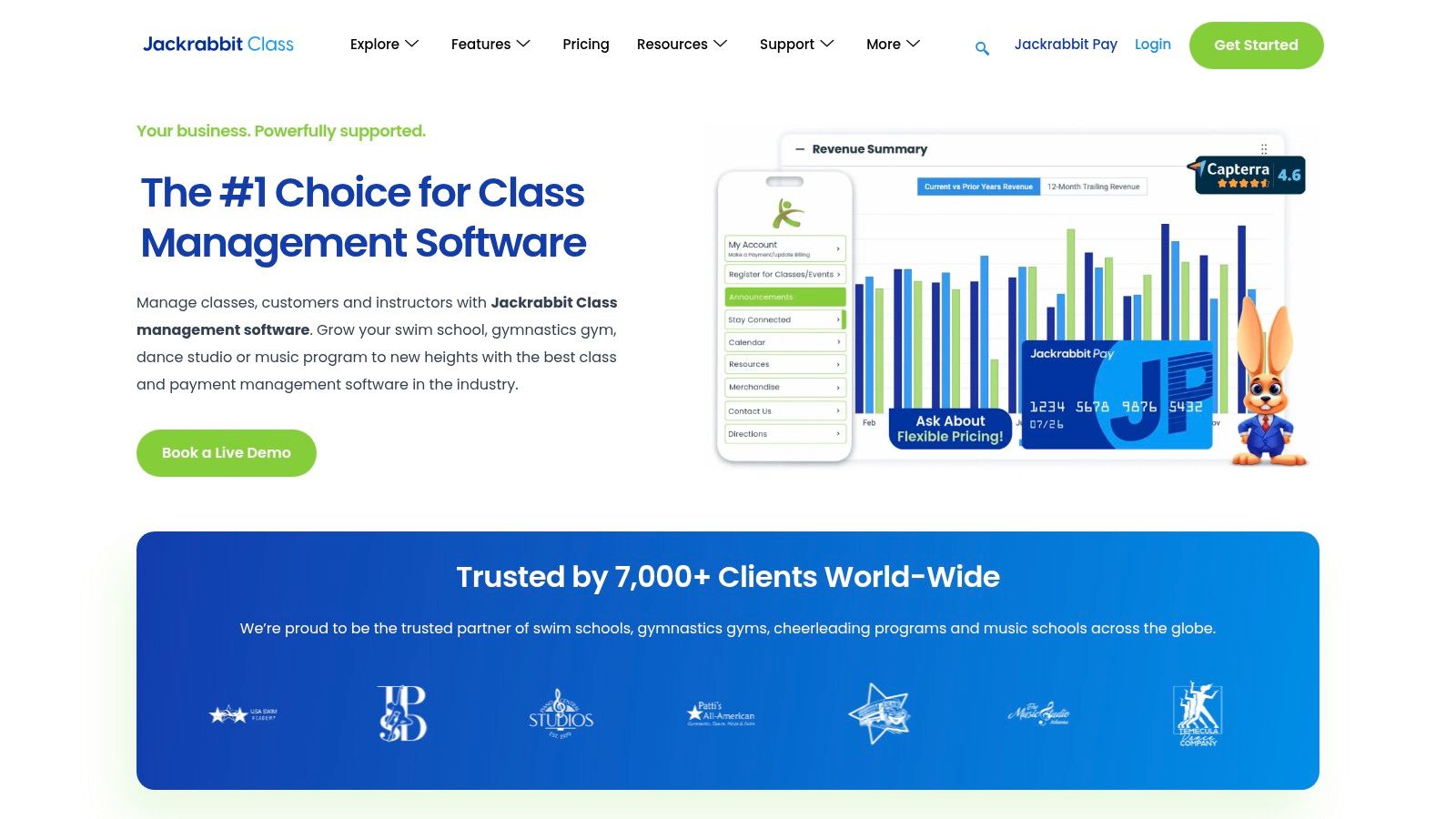
Jackrabbit Class is a popular US-based class management system designed for after-school programs, including music, swim, and dance studios. While not a dedicated tutoring CRM, its robust features for group-based learning make it a strong contender for tutoring businesses that deliver their services primarily through classes, camps, or workshops. It effectively manages registration, attendance, billing, and parent communication for programs with complex scheduling needs.
Jackrabbit Class

The system stands out with its Parent Portal, which empowers families to manage their own schedules, make payments, and handle make-up lessons without administrative intervention. For growing businesses, its ability to scale across multiple locations and offer a branded mobile app on higher tiers provides a professional touch. Extensive documentation and strong customer support help new users navigate the initial setup, making it a reliable choice among the top tutoring CRM tools for small teams focused on group instruction.

Pros and Cons

  • Pros: Deep documentation and strong support, scales effectively to multi-location programs, offers clear pricing tiers for small teams.

  • Cons: Geared more toward class-based programs than 1:1 tutoring CRM, some key features require configuration or are paid add-ons.

Ideal For

Jackrabbit Class is best for tutoring centers, after-school programs, and test prep academies that are built around a group class or camp model. Its strength in managing enrollments, make-ups, and class rosters makes it a great fit for businesses that need to manage high volumes of students in structured group settings rather than flexible one-on-one sessions.

Website: https://www.jackrabbitclass.com

6. Arlo

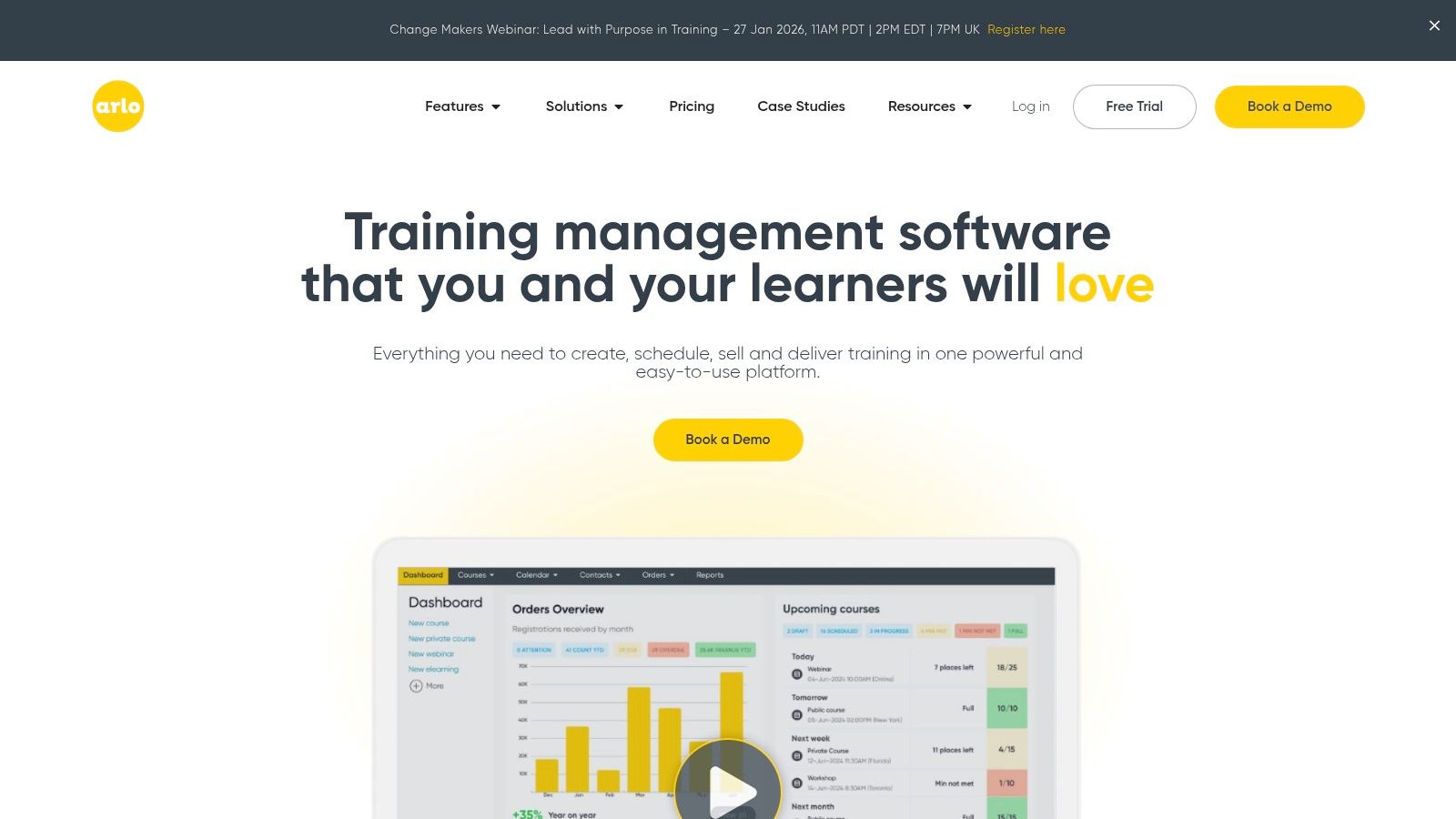
Arlo is a powerful training and event management system with a built-in CRM that excels in managing course-based educational programs. While not a traditional tutoring CRM, it is perfectly suited for businesses like language schools or test-prep academies that run structured courses, bootcamps, and workshops. It streamlines the entire course lifecycle from marketing and online registration to automated communications and certificate delivery.
Arlo

The platform’s strength lies in its automation of course workflows. It can handle complex scheduling for multi-session courses, manage registrations across different formats (in-person, online, private), and automate follow-up emails. For tutoring centers that offer group classes with set start and end dates, Arlo provides a robust framework that goes beyond simple one-on-one lesson scheduling, making it one of the top tutoring CRM tools for small teams with a course-centric business model.

Pros and Cons

  • Pros: Purpose-built for training and course providers, strong automation for course workflows, website integration with registration widgets.

  • Cons: Less ideal for ad-hoc, flexible one-on-one tutoring; its course-centric design may be too rigid for some tutoring models.

Ideal For

Arlo is the best fit for training providers and tutoring businesses that operate on a course or term-based schedule. This includes language schools with level-based progression, test-prep centers running intensive bootcamps, or after-school programs with seasonal enrollment. It is less suited for businesses that primarily offer flexible, on-demand private tutoring.

Website: https://www.arlo.co

7. LeadSquared

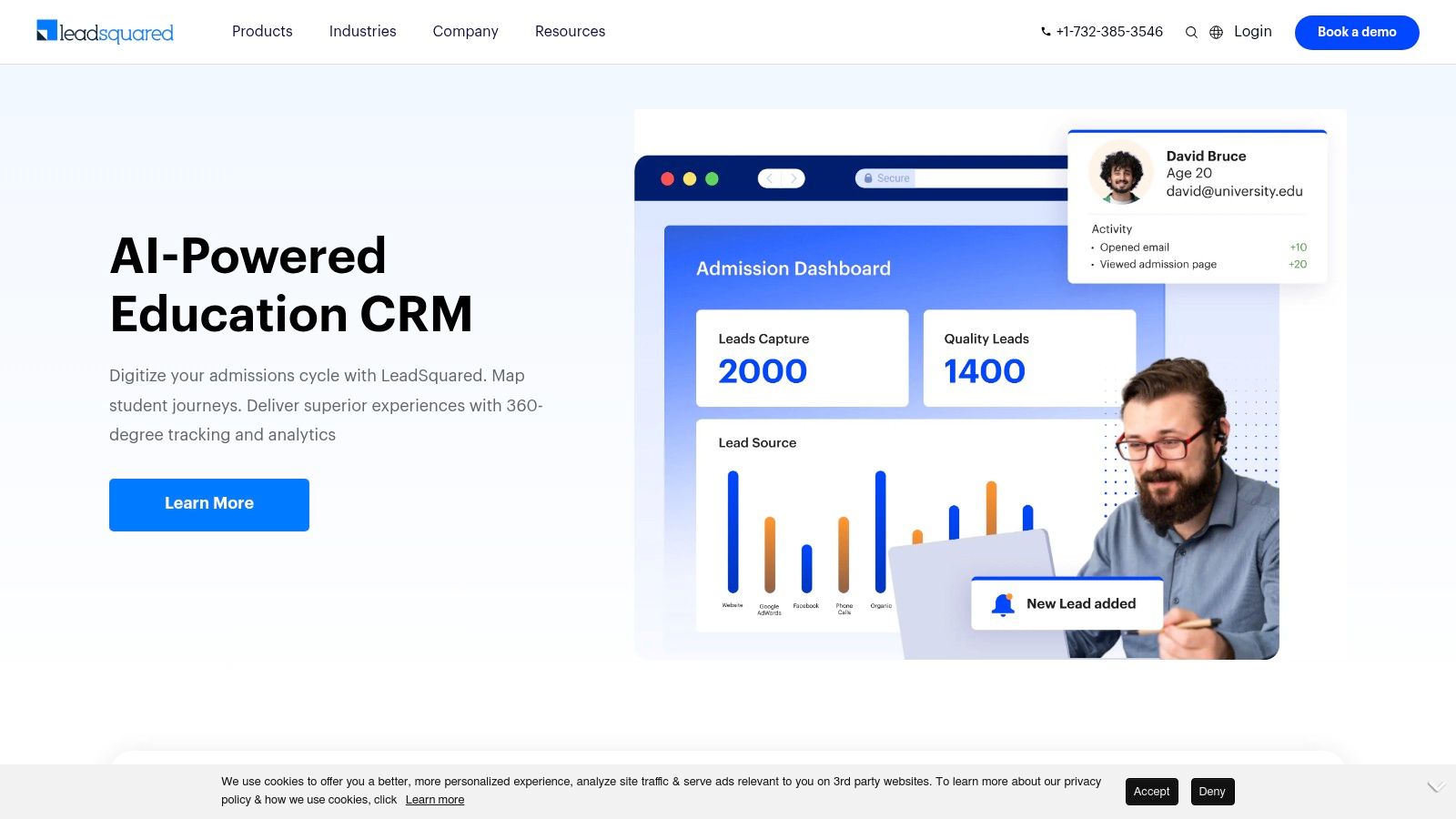
LeadSquared is an education-focused CRM built for the admissions and enrollment process. While not a full tutoring management system, it excels at the top of the funnel: capturing, nurturing, and converting inquiries into paying students. For growing tutoring centers serious about sales, it provides powerful tools to manage the entire student journey from the first point of contact.

The platform specializes in automating counselor workflows and omni-channel communication. It can capture leads from website forms, social media, and WhatsApp, then automatically score and assign them to the right team members. This level of automation in lead management makes it a strong contender among top tutoring CRM tools for small teams looking to scale their marketing and sales efforts efficiently.
LeadSquared

Pros and Cons

  • Pros: Highly specialized for education admissions, robust workflow automation, proven success in improving enrollment rates.

  • Cons: Pricing is geared towards dedicated admissions teams and can be high for solo tutors, and the extensive features require a significant implementation effort.

Ideal For

LeadSquared is ideal for larger tutoring centers, test prep academies, and multi-location businesses that have a dedicated sales or admissions team. Its strength lies in managing a high volume of leads and optimizing the conversion funnel, not day-to-day scheduling or billing. For businesses focused on improving their sales pipeline, you can explore more about tutoring lead management software and its impact.

Website: https://www.leadsquared.com/us/education/

8. HoneyBook

HoneyBook is a clientflow management platform designed for small businesses to streamline everything from lead capture to final payment. While not built exclusively for tutoring, its robust proposal, contract, and invoicing tools make it a strong contender for independent tutors and small teams focused on a professional client onboarding experience. It helps manage inquiries, automate follow-ups, and get paid faster.

The platform’s strength lies in its template-driven workflows. Users can create reusable templates for contracts, proposals, and questionnaires, significantly speeding up the process of converting a lead into a paying student. Integrated scheduling and payment processing within a single proposal-to-invoice flow create a seamless experience for parents. This makes HoneyBook a great choice among the top tutoring CRM tools for small teams who prioritize a polished, modern client journey.

Pros and Cons

  • Pros: Fast to implement with an attractive client experience, clear US pricing and payment fee information, good for small operations needing proposals and contracts.

  • Cons: A generic CRM that needs customization for education-specific workflows, short free trial (7 days) compared to some competitors.

Ideal For

HoneyBook is best for solo tutors or small tutoring businesses that need an all-in-one system for client onboarding and project management. It excels for those who want to automate proposals, contracts, and payments to present a highly professional image from the very first interaction. Businesses that do not require complex, multi-teacher scheduling or specific academic progress tracking will find it most useful.

Website: https://www.honeybook.com/tutor-software

9. vcita

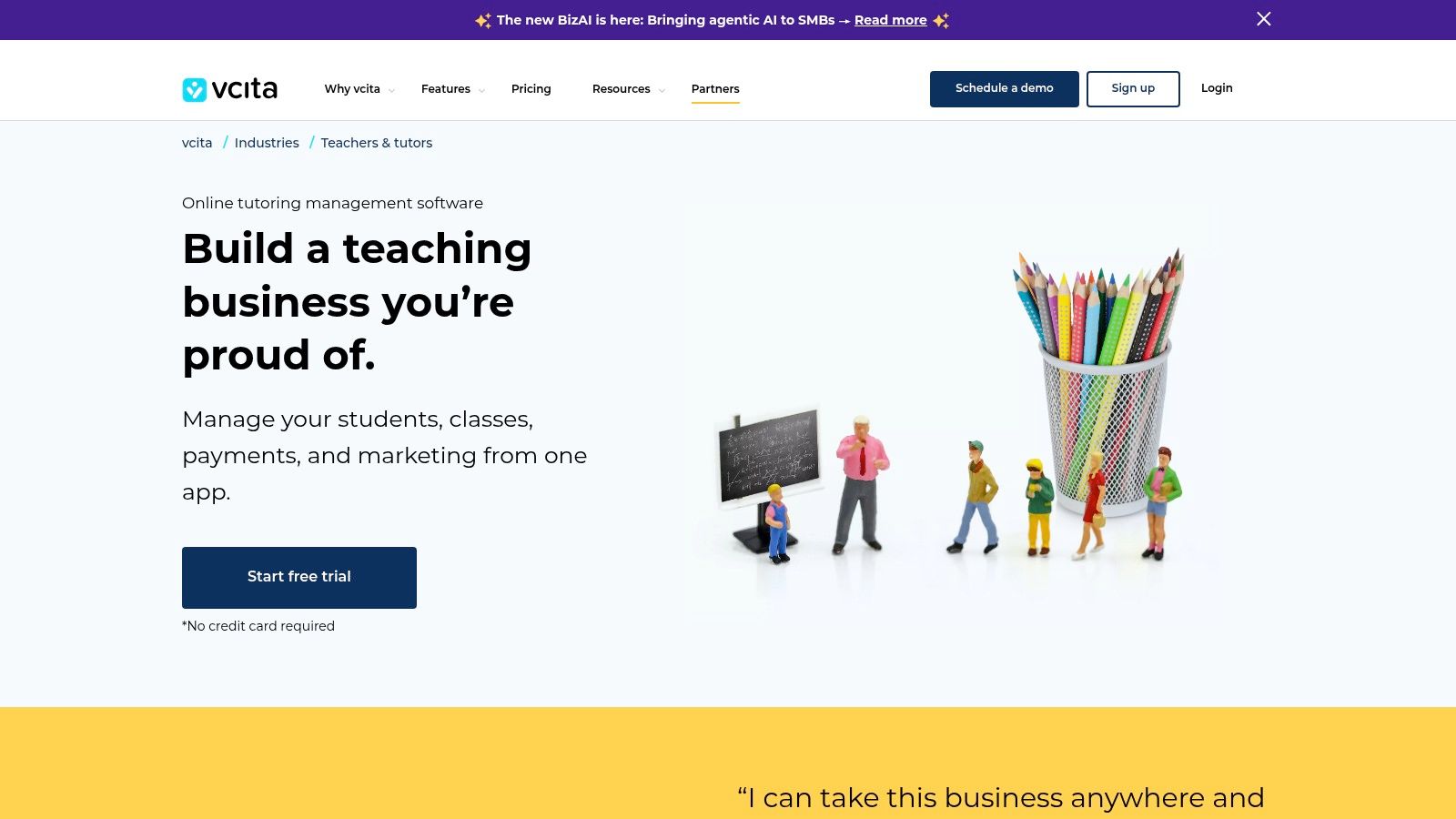
vcita positions itself as a comprehensive business management app rather than a niche tutoring tool, but it offers dedicated features for teachers and tutors. It combines CRM, scheduling, payments, and marketing into a single platform, making it a strong contender for solo tutors or very small teams who need an all-in-one solution without the complexity of a specialized system. Its primary strength lies in its simplicity and speed of setup, allowing users to get a professional booking and payment system running quickly.

The platform provides a client portal where students can book sessions, pay invoices, and share documents, centralizing communication and administration. For tutors focused on client acquisition and marketing, vcita's integrated email and SMS marketing tools are a significant advantage. This makes it one of the top tutoring CRM tools for small teams that prioritize lead generation and client management alongside basic scheduling. While it may not handle complex payroll, its integrated nature is a major time-saver for core business tasks.
vcita

Pros and Cons

  • Pros: Quick setup covering CRM, scheduling, and payments in one place, priced for small teams and solo tutors, dedicated teacher/tutor industry pages and templates.

  • Cons: Less specialized for complex multi-branch tutoring operations, and advanced analytics are limited compared to enterprise CRMs.

Ideal For

vcita is best for solo tutors and small tutoring businesses that need a simple, integrated tool for managing client bookings, payments, and marketing. Its straightforward interface and all-in-one approach are perfect for those who want to professionalize their operations without a steep learning curve or the need for advanced, tutor-specific features like multi-teacher payroll or complex curriculum management.

Website: https://www.vcita.com/industries/teachers-tutors

10. Pipedrive

Pipedrive is a sales-focused CRM that has gained traction with service-based businesses, including tutoring centers managing their lead-to-enrollment process. Its strength lies in its visual "deal pipeline," which can be easily adapted to track prospective students from initial inquiry through trial lessons to full enrollment. This makes it one of the top tutoring CRM tools for small teams who prioritize sales and lead conversion.

Pipedrive

The platform offers a clean user interface that is famously easy to learn, allowing small teams to get up and running quickly. Features like email sync, automated follow-ups, and a built-in scheduler help streamline the administrative side of student acquisition. While it is not a purpose-built tutoring management system, its robust integration capabilities with tools like Zapier and DocuSign mean it can be connected to other software to create a more comprehensive, albeit customized, solution.

Pros and Cons

  • Pros: Easy-to-use visual interface and quick team adoption, affordable per-seat pricing for small teams, excellent resources for building education-based workflows.

  • Cons: Requires significant customization for tutoring operations, and per-user pricing can become costly as the team grows. Lacks integrated billing and scheduling.

Ideal For

Pipedrive is best for small but growing tutoring businesses that need a powerful, dedicated tool for managing and converting new student leads. It is a great fit for centers with a dedicated sales or admin person focused on enrollment, where the main priority is tracking the pipeline rather than day-to-day student management.

Website: https://www.pipedrive.com/industries/higher-education-crm

11. Zoho CRM

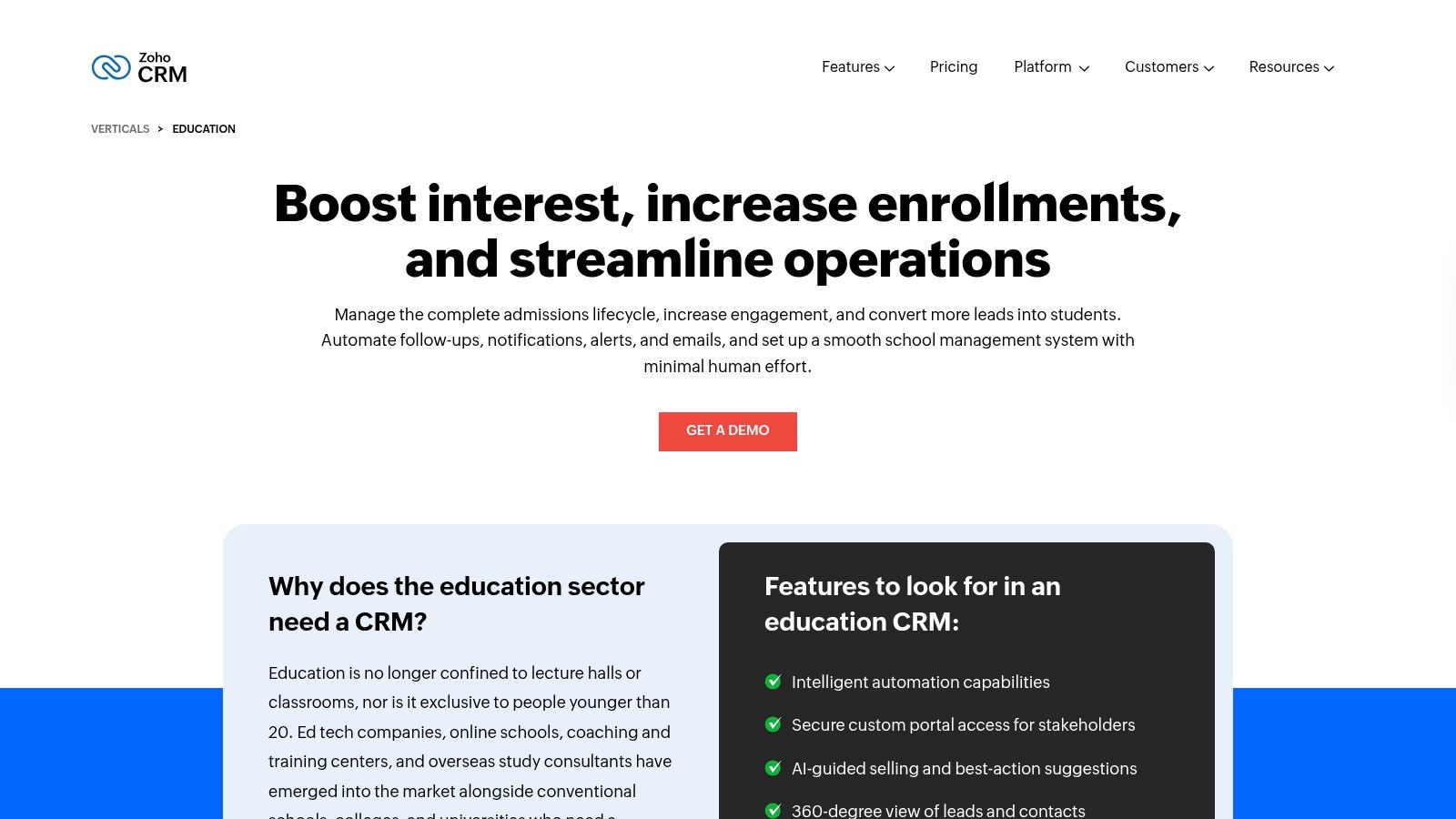
Zoho CRM is a highly flexible, general-purpose CRM that offers a specialized solution for the education sector. It stands out by providing powerful automation, deep customization, and multi-stakeholder portals at a competitive price point, making it a strong contender among the top tutoring CRM tools for small teams that need more than just a scheduling tool and are willing to invest time in setup.

The platform's strength lies in its adaptability. You can build custom lead and enrollment workflows from scratch, create dedicated portals for students, parents, and teachers, and design dashboards that fit your exact operational needs using the no-code Canvas editor. This level of control allows a tutoring business to create a system that mirrors its unique processes, from initial inquiry to student retention, rather than conforming to a rigid, pre-built structure.
Zoho CRM

Pros and Cons

  • Pros: Strong price-to-capability ratio with deep customization, a free tier is available for very small teams, and it has an extensive integration ecosystem.

  • Cons: Education-specific workflows require significant initial setup and customization, and some advanced AI features are only available on higher-priced plans.

Ideal For

Zoho CRM is best for small to medium-sized tutoring businesses that prioritize customization and have the technical confidence to configure their own workflows. It's a great fit for centers that need to manage complex relationships between students, parents, and multiple programs and want a system that can scale and integrate with a wide array of other business applications.

Website: https://www.zoho.com/crm/solutions/education/

Comparison of Top Tutoring CRM Tools

Tool

Best For

Key Differentiator

Pricing Model

Tutorbase

Scaling centers (5-100+ teachers)

AI-powered scheduling and zero double-bookings

Custom Quote

Teachworks

Businesses planning for multi-branch growth

Scalability and many free add-ons

Per student/lesson

TutorBird

Solo tutors and very small teams

High affordability and simplicity

Low monthly fee

Classcard

Centers wanting a modern client UX

Branded student web application

Tiered subscription

Jackrabbit Class

Group class and camp-based programs

Strong parent portal and make-up management

Tiered by students

Arlo

Course-based businesses (e.g., test prep)

Automation for multi-session course workflows

Per registration/plan

LeadSquared

Centers with dedicated sales/admissions teams

Advanced lead nurturing and conversion automation

Custom Quote

HoneyBook

Solo tutors needing professional onboarding

Integrated proposals, contracts, and payments

Monthly subscription

vcita

Small teams needing an all-in-one simple tool

Quick setup with built-in marketing features

Tiered subscription

Pipedrive

Teams focused on sales pipeline management

Visual deal pipeline and ease of use

Per user, per month

Zoho CRM

Tech-savvy teams needing deep customization

Highly adaptable workflows and integrations

Free tier & paid plans

How do I choose the right tool for my tutoring business?

Selecting the right CRM is a foundational decision. For solo tutors, a simple tool like TutorBird or HoneyBook can bring immediate order to scheduling and client communication. However, as your business scales to manage 5 to 20 teachers, coordinate multiple locations, or handle complex payroll, the limitations of basic tools become clear. This is where the distinction between a management tool and a true growth platform emerges.

Your choice should be guided by your ambition. Don't just solve today's administrative headaches; anticipate tomorrow's operational challenges.

  1. Audit Your Admin Time: Track every minute you spend on scheduling, invoicing, and payroll for one week. This data reveals your biggest bottlenecks and quantifies the cost of manual work.

  2. Map Your Processes: Whiteboard your student lifecycle, from lead inquiry and trial scheduling to recurring billing and teacher payments. Identify where information gets lost or where manual handoffs create errors.

  3. Prioritize Your Feature Needs: Based on your audit, create a "must-have" feature list. Is preventing double-bookings your top priority, or is it automating complex, multi-rate teacher payroll? Be specific.

  4. Run Targeted Demos: Approach demos with your specific use cases. Ask sales reps to show you exactly how their software handles your most frustrating workflows, like finding the perfect teacher and room for a new student in under two minutes.

The best tool frees you from the administrative grind to focus on educational quality and growth. Beyond software, understanding broader expansion tactics is crucial. Explore these proven SaaS growth strategies for insights into scaling your revenue. By combining powerful software with a smart growth plan, you build a resilient and more profitable tutoring center.

Ready to eliminate administrative chaos and unlock your tutoring center's potential? Discover how Tutorbase uses AI-powered scheduling, fully automated billing, and multi-branch management to help centers reduce admin time by 60%. Start your free trial today and see how a platform built for scale can transform your operations.

Frequently Asked Questions

What is a tutoring CRM?

A tutoring CRM (Customer Relationship Management) is software designed specifically for tutoring businesses to manage every aspect of the student lifecycle. It centralizes student information, automates scheduling and reminders, streamlines billing and payments, and tracks communication, replacing fragmented tools like spreadsheets and calendars.

Why do small teams need a CRM for tutoring?

Small teams need a CRM to automate the repetitive administrative tasks that consume over 10 hours per week. A CRM prevents double-bookings, ensures accurate and timely invoicing, tracks leads to increase enrollment, and provides a single source of truth for all student and teacher data, enabling the team to scale efficiently without hiring more admin staff.

How does tutoring management software help with payroll?

Tutoring management software helps by automatically calculating teacher pay based on their specific rates and the lessons they have taught. Advanced systems like Tutorbase can handle complex models like per-hour, revenue share, or base plus variable pay, generating accurate payroll reports or self-billing invoices in minutes instead of hours.

Can a CRM help me prevent double-booking teachers?

Yes, a key function of top tutoring CRM tools is conflict detection. When you schedule a lesson, the software automatically checks the teacher's availability, room availability, and existing appointments to prevent any overlaps. This eliminates costly and unprofessional double-bookings.

What is the best alternative to Teachworks or TutorCruncher?

Tutorbase is a leading alternative to Teachworks and TutorCruncher, especially for tutoring centers focused on scaling. It offers more advanced features like AI-powered scheduling to find open slots, native prepaid credit management, and support for complex multi-branch and multi-brand operations, addressing the limitations growing businesses face with older systems.

How much does tutoring software typically cost?

The cost of tutoring software varies widely. Simple tools like TutorBird can start around $15 per month for solo tutors. More comprehensive platforms for small teams, like Teachworks, often use usage-based pricing. Advanced, scalable systems like Tutorbase provide custom quotes based on the size and complexity of your operation.

11 Best Tutoring CRM Tools for Small Teams in 2026

Published: January 7, 2026 by Amy Ashford

For small tutoring teams, juggling student inquiries, scheduling lessons, and chasing payments across fragmented tools like Google Calendar, QuickBooks, and Excel is a significant drain on time. This manual admin burden consumes 10+ hours per week, leading to double-bookings, missed revenue, and slower growth. The right Customer Relationship Management (CRM) platform automates these tasks, consolidating your entire operation into a single, reliable system.

This guide analyzes the top tutoring CRM tools for small teams in 2026, moving beyond generic feature lists to focus on their specific strengths and ideal use cases. We'll help you find the perfect fit, whether you're a solo tutor scaling up or a small center owner managing a growing team. Streamlining operations frees you to focus on delivering outstanding customer service and building stronger student relationships.

Each option reviewed below includes screenshots and direct links, giving you a clear, practical overview to inform your decision and reclaim valuable hours from your workweek.

1. Tutorbase

Tutorbase is an AI-powered tutoring management software designed for centers that have outgrown fragmented systems like Teachworks or spreadsheets. It consolidates every administrative workflow, from lead capture and scheduling to automated billing and complex payroll, into a single ecosystem. This makes it an exceptional choice among top tutoring CRM tools for small teams aiming to scale efficiently from 5 to 100+ teachers.

The platform's standout feature is its AI-powered scheduling. The Find Slot tool auto-generates optimal teacher, room, and time combinations, cutting booking time from 10 minutes to under 2. The Find Spot tool filters existing classes to fill open seats, maximizing group utilization. This AI assistance eliminates the manual calendar hunting that leads to double-bookings and underutilized capacity, reducing admin time by up to 60%.

Tutorbase

Why It Stands Out

Tutorbase excels where many legacy systems fall short, especially for growing and multi-location centers. Its architecture handles complexity without manual workarounds.

  • Unified Automation: The system creates a seamless flow where lesson attendance automatically generates accurate invoices and calculates complex teacher payroll. This end-to-end connection removes manual data entry and reconciliation between different software.

  • Built for Scale: With robust multi-branch room management, multi-brand support, and performance engineered for up to 10,000+ lessons per week, it supports a business from its first small team to a multi-center operation.

  • Advanced Financial Tools: Tutorbase natively handles prepaid credit packages, layered pricing policies (global, location, service, student), and diverse teacher pay models (revenue share, base+variable, overtime) that are often difficult to manage in other systems.

  • Modern Lead Capture: An integrated WhatsApp intake widget and embeddable website forms feed new leads directly into a built-in CRM pipeline, modernizing and accelerating student onboarding by 3x.

Pros & Cons

Pros:

  • AI-powered scheduling drastically reduces booking time and prevents errors.

  • End-to-end automation connects attendance directly to billing and payroll.

  • Natively supports multi-branch operations, complex payroll, and prepaid credits.

  • Integrated lead management tools like a WhatsApp widget capture more prospects.

Cons:

  • Pricing is not public; you must contact their sales team for a custom quote.

  • The extensive feature set may be overly complex for solo tutors with very basic needs.

Pricing

Tutorbase uses tailored pricing based on your center's specific needs, including the number of students, teachers, and locations. You must schedule a demo to receive a quote.

Website: https://tutorbase.com

2. Teachworks

Teachworks is a flexible tutoring management platform designed to grow with your business, from a small team to a multi-branch operation. It offers a solid foundation of scheduling, billing, and communication tools, making it a strong contender among the top tutoring CRM tools for small teams seeking a scalable solution. Its core strength lies in its robust calendar and automated invoicing capabilities that connect directly to student attendance.

The platform provides an excellent balance of features for managing day-to-day operations. Its calendar includes conflict detection and online booking requests, while the system automates invoice generation from tracked attendance, integrates with Stripe for payments, and syncs with QuickBooks Online. This automation helps significantly reduce the administrative workload related to billing and scheduling, allowing small teams to focus on teaching and growth.

Teachworks

Pros and Cons

  • Pros: Highly scalable for multi-location centers, robust scheduling and billing automation, many free add-ons and integrations.

  • Cons: The per-student-lesson pricing can be difficult to predict for businesses with fluctuating enrollment, and API access is limited to higher-tier plans.

Ideal For

Teachworks is best for tutoring businesses that anticipate significant growth and need a system that can scale from a single location to a multi-branch enterprise. Its usage-based pricing is particularly suitable for smaller teams that want access to powerful features without a high upfront cost. For more details on managing tutor payments effectively, you can learn more about sessions payroll management and how systems like Teachworks handle it.

Website: https://teachworks.com

3. TutorBird

TutorBird is a highly affordable and streamlined management suite designed for private tutors and very small tutoring operations. It provides a straightforward solution for managing core administrative tasks, including student records, scheduling, attendance, and invoicing, all within a single platform. Its low-cost entry point and simplicity make it a popular choice for solo tutors transitioning from manual methods or those starting a new tutoring business.

TutorBird

The platform stands out with its user-friendly interface and quick setup, which includes a self-booking portal for clients and automated email and SMS reminders. For those needing a simple public presence, the optional website builder is a valuable addition. While it may not have the deep analytical capabilities of more enterprise-focused systems, it effectively covers the essential needs of a small business, making it one of the top tutoring CRM tools for small teams.

Pros and Cons

  • Pros: Very low entry price suitable for solo tutors and small teams, simple setup with positive user ratings, phone support for US/Canada.

  • Cons: Fewer advanced analytics compared to enterprise platforms, relies on integrations for deeper CRM workflows.

Ideal For

TutorBird is the perfect fit for individual tutors or small, newly formed tutoring companies that need an all-in-one, budget-friendly tool. Its strength lies in simplifying daily operations like scheduling and billing without a steep learning curve or significant financial investment. It is less suitable for multi-branch centers requiring complex payroll or advanced business intelligence.

Website: https://www.tutorbird.com

4. Classcard

Classcard is a modern class and tutoring management platform that provides a clean user interface alongside powerful operational tools. It focuses on simplifying client interactions, from initial online booking to ongoing communications, making it a strong contender among top tutoring CRM tools for small teams. Its CRM-like features allow for efficient contact segmentation and automated reminders, which helps nurture leads and retain current students.

The platform's emphasis on a branded student web app and dashboard is a key differentiator. This gives smaller tutoring businesses a professional, tech-forward presence without custom development costs. Integrations with popular tools like Lessonspace, Zoom, and Stripe ensure that both online tutoring delivery and payment collection are seamless, consolidating core workflows into one system.

Classcard

Pros and Cons

  • Pros: Modern and intuitive user experience, branded student app option enhances customer engagement, strong integrations with common online lesson and payment tools.

  • Cons: Public pricing is not always clearly displayed on main landing pages, and some support materials are geared more toward a global audience than a US-specific one.

Ideal For

Classcard is best suited for small to medium-sized tutoring businesses and solo tutors who prioritize a modern user experience for both their staff and their clients. It’s a great fit for organizations that want to offer a polished online booking and portal experience without a large budget. Its straightforward scheduling and communication tools are perfect for teams moving online or standardizing their hybrid operations.

Website: https://www.classcardapp.com/solutions/tutoring

5. Jackrabbit Class

Jackrabbit Class is a popular US-based class management system designed for after-school programs, including music, swim, and dance studios. While not a dedicated tutoring CRM, its robust features for group-based learning make it a strong contender for tutoring businesses that deliver their services primarily through classes, camps, or workshops. It effectively manages registration, attendance, billing, and parent communication for programs with complex scheduling needs.

Jackrabbit Class

The system stands out with its Parent Portal, which empowers families to manage their own schedules, make payments, and handle make-up lessons without administrative intervention. For growing businesses, its ability to scale across multiple locations and offer a branded mobile app on higher tiers provides a professional touch. Extensive documentation and strong customer support help new users navigate the initial setup, making it a reliable choice among the top tutoring CRM tools for small teams focused on group instruction.

Pros and Cons

  • Pros: Deep documentation and strong support, scales effectively to multi-location programs, offers clear pricing tiers for small teams.

  • Cons: Geared more toward class-based programs than 1:1 tutoring CRM, some key features require configuration or are paid add-ons.

Ideal For

Jackrabbit Class is best for tutoring centers, after-school programs, and test prep academies that are built around a group class or camp model. Its strength in managing enrollments, make-ups, and class rosters makes it a great fit for businesses that need to manage high volumes of students in structured group settings rather than flexible one-on-one sessions.

Website: https://www.jackrabbitclass.com

6. Arlo

Arlo is a powerful training and event management system with a built-in CRM that excels in managing course-based educational programs. While not a traditional tutoring CRM, it is perfectly suited for businesses like language schools or test-prep academies that run structured courses, bootcamps, and workshops. It streamlines the entire course lifecycle from marketing and online registration to automated communications and certificate delivery.

Arlo

The platform’s strength lies in its automation of course workflows. It can handle complex scheduling for multi-session courses, manage registrations across different formats (in-person, online, private), and automate follow-up emails. For tutoring centers that offer group classes with set start and end dates, Arlo provides a robust framework that goes beyond simple one-on-one lesson scheduling, making it one of the top tutoring CRM tools for small teams with a course-centric business model.

Pros and Cons

  • Pros: Purpose-built for training and course providers, strong automation for course workflows, website integration with registration widgets.

  • Cons: Less ideal for ad-hoc, flexible one-on-one tutoring; its course-centric design may be too rigid for some tutoring models.

Ideal For

Arlo is the best fit for training providers and tutoring businesses that operate on a course or term-based schedule. This includes language schools with level-based progression, test-prep centers running intensive bootcamps, or after-school programs with seasonal enrollment. It is less suited for businesses that primarily offer flexible, on-demand private tutoring.

Website: https://www.arlo.co

7. LeadSquared

LeadSquared is an education-focused CRM built for the admissions and enrollment process. While not a full tutoring management system, it excels at the top of the funnel: capturing, nurturing, and converting inquiries into paying students. For growing tutoring centers serious about sales, it provides powerful tools to manage the entire student journey from the first point of contact.

The platform specializes in automating counselor workflows and omni-channel communication. It can capture leads from website forms, social media, and WhatsApp, then automatically score and assign them to the right team members. This level of automation in lead management makes it a strong contender among top tutoring CRM tools for small teams looking to scale their marketing and sales efforts efficiently.

LeadSquared

Pros and Cons

  • Pros: Highly specialized for education admissions, robust workflow automation, proven success in improving enrollment rates.

  • Cons: Pricing is geared towards dedicated admissions teams and can be high for solo tutors, and the extensive features require a significant implementation effort.

Ideal For

LeadSquared is ideal for larger tutoring centers, test prep academies, and multi-location businesses that have a dedicated sales or admissions team. Its strength lies in managing a high volume of leads and optimizing the conversion funnel, not day-to-day scheduling or billing. For businesses focused on improving their sales pipeline, you can explore more about tutoring lead management software and its impact.

Website: https://www.leadsquared.com/us/education/

8. HoneyBook

HoneyBook is a clientflow management platform designed for small businesses to streamline everything from lead capture to final payment. While not built exclusively for tutoring, its robust proposal, contract, and invoicing tools make it a strong contender for independent tutors and small teams focused on a professional client onboarding experience. It helps manage inquiries, automate follow-ups, and get paid faster.

The platform’s strength lies in its template-driven workflows. Users can create reusable templates for contracts, proposals, and questionnaires, significantly speeding up the process of converting a lead into a paying student. Integrated scheduling and payment processing within a single proposal-to-invoice flow create a seamless experience for parents. This makes HoneyBook a great choice among the top tutoring CRM tools for small teams who prioritize a polished, modern client journey.

Pros and Cons

  • Pros: Fast to implement with an attractive client experience, clear US pricing and payment fee information, good for small operations needing proposals and contracts.

  • Cons: A generic CRM that needs customization for education-specific workflows, short free trial (7 days) compared to some competitors.

Ideal For

HoneyBook is best for solo tutors or small tutoring businesses that need an all-in-one system for client onboarding and project management. It excels for those who want to automate proposals, contracts, and payments to present a highly professional image from the very first interaction. Businesses that do not require complex, multi-teacher scheduling or specific academic progress tracking will find it most useful.

Website: https://www.honeybook.com/tutor-software

9. vcita

vcita positions itself as a comprehensive business management app rather than a niche tutoring tool, but it offers dedicated features for teachers and tutors. It combines CRM, scheduling, payments, and marketing into a single platform, making it a strong contender for solo tutors or very small teams who need an all-in-one solution without the complexity of a specialized system. Its primary strength lies in its simplicity and speed of setup, allowing users to get a professional booking and payment system running quickly.

The platform provides a client portal where students can book sessions, pay invoices, and share documents, centralizing communication and administration. For tutors focused on client acquisition and marketing, vcita's integrated email and SMS marketing tools are a significant advantage. This makes it one of the top tutoring CRM tools for small teams that prioritize lead generation and client management alongside basic scheduling. While it may not handle complex payroll, its integrated nature is a major time-saver for core business tasks.

vcita

Pros and Cons

  • Pros: Quick setup covering CRM, scheduling, and payments in one place, priced for small teams and solo tutors, dedicated teacher/tutor industry pages and templates.

  • Cons: Less specialized for complex multi-branch tutoring operations, and advanced analytics are limited compared to enterprise CRMs.

Ideal For

vcita is best for solo tutors and small tutoring businesses that need a simple, integrated tool for managing client bookings, payments, and marketing. Its straightforward interface and all-in-one approach are perfect for those who want to professionalize their operations without a steep learning curve or the need for advanced, tutor-specific features like multi-teacher payroll or complex curriculum management.

Website: https://www.vcita.com/industries/teachers-tutors

10. Pipedrive

Pipedrive is a sales-focused CRM that has gained traction with service-based businesses, including tutoring centers managing their lead-to-enrollment process. Its strength lies in its visual "deal pipeline," which can be easily adapted to track prospective students from initial inquiry through trial lessons to full enrollment. This makes it one of the top tutoring CRM tools for small teams who prioritize sales and lead conversion.

Pipedrive

The platform offers a clean user interface that is famously easy to learn, allowing small teams to get up and running quickly. Features like email sync, automated follow-ups, and a built-in scheduler help streamline the administrative side of student acquisition. While it is not a purpose-built tutoring management system, its robust integration capabilities with tools like Zapier and DocuSign mean it can be connected to other software to create a more comprehensive, albeit customized, solution.

Pros and Cons

  • Pros: Easy-to-use visual interface and quick team adoption, affordable per-seat pricing for small teams, excellent resources for building education-based workflows.

  • Cons: Requires significant customization for tutoring operations, and per-user pricing can become costly as the team grows. Lacks integrated billing and scheduling.

Ideal For

Pipedrive is best for small but growing tutoring businesses that need a powerful, dedicated tool for managing and converting new student leads. It is a great fit for centers with a dedicated sales or admin person focused on enrollment, where the main priority is tracking the pipeline rather than day-to-day student management.

Website: https://www.pipedrive.com/industries/higher-education-crm

11. Zoho CRM

Zoho CRM is a highly flexible, general-purpose CRM that offers a specialized solution for the education sector. It stands out by providing powerful automation, deep customization, and multi-stakeholder portals at a competitive price point, making it a strong contender among the top tutoring CRM tools for small teams that need more than just a scheduling tool and are willing to invest time in setup.

The platform's strength lies in its adaptability. You can build custom lead and enrollment workflows from scratch, create dedicated portals for students, parents, and teachers, and design dashboards that fit your exact operational needs using the no-code Canvas editor. This level of control allows a tutoring business to create a system that mirrors its unique processes, from initial inquiry to student retention, rather than conforming to a rigid, pre-built structure.

Zoho CRM

Pros and Cons

  • Pros: Strong price-to-capability ratio with deep customization, a free tier is available for very small teams, and it has an extensive integration ecosystem.

  • Cons: Education-specific workflows require significant initial setup and customization, and some advanced AI features are only available on higher-priced plans.

Ideal For

Zoho CRM is best for small to medium-sized tutoring businesses that prioritize customization and have the technical confidence to configure their own workflows. It's a great fit for centers that need to manage complex relationships between students, parents, and multiple programs and want a system that can scale and integrate with a wide array of other business applications.

Website: https://www.zoho.com/crm/solutions/education/

Comparison of Top Tutoring CRM Tools

Tool

Best For

Key Differentiator

Pricing Model

Tutorbase

Scaling centers (5-100+ teachers)

AI-powered scheduling and zero double-bookings

Custom Quote

Teachworks

Businesses planning for multi-branch growth

Scalability and many free add-ons

Per student/lesson

TutorBird

Solo tutors and very small teams

High affordability and simplicity

Low monthly fee

Classcard

Centers wanting a modern client UX

Branded student web application

Tiered subscription

Jackrabbit Class

Group class and camp-based programs

Strong parent portal and make-up management

Tiered by students

Arlo

Course-based businesses (e.g., test prep)

Automation for multi-session course workflows

Per registration/plan

LeadSquared

Centers with dedicated sales/admissions teams

Advanced lead nurturing and conversion automation

Custom Quote

HoneyBook

Solo tutors needing professional onboarding

Integrated proposals, contracts, and payments

Monthly subscription

vcita

Small teams needing an all-in-one simple tool

Quick setup with built-in marketing features

Tiered subscription

Pipedrive

Teams focused on sales pipeline management

Visual deal pipeline and ease of use

Per user, per month

Zoho CRM

Tech-savvy teams needing deep customization

Highly adaptable workflows and integrations

Free tier & paid plans

How do I choose the right tool for my tutoring business?

Selecting the right CRM is a foundational decision. For solo tutors, a simple tool like TutorBird or HoneyBook can bring immediate order to scheduling and client communication. However, as your business scales to manage 5 to 20 teachers, coordinate multiple locations, or handle complex payroll, the limitations of basic tools become clear. This is where the distinction between a management tool and a true growth platform emerges.

Your choice should be guided by your ambition. Don't just solve today's administrative headaches; anticipate tomorrow's operational challenges.

  1. Audit Your Admin Time: Track every minute you spend on scheduling, invoicing, and payroll for one week. This data reveals your biggest bottlenecks and quantifies the cost of manual work.

  2. Map Your Processes: Whiteboard your student lifecycle, from lead inquiry and trial scheduling to recurring billing and teacher payments. Identify where information gets lost or where manual handoffs create errors.

  3. Prioritize Your Feature Needs: Based on your audit, create a "must-have" feature list. Is preventing double-bookings your top priority, or is it automating complex, multi-rate teacher payroll? Be specific.

  4. Run Targeted Demos: Approach demos with your specific use cases. Ask sales reps to show you exactly how their software handles your most frustrating workflows, like finding the perfect teacher and room for a new student in under two minutes.

The best tool frees you from the administrative grind to focus on educational quality and growth. Beyond software, understanding broader expansion tactics is crucial. Explore these proven SaaS growth strategies for insights into scaling your revenue. By combining powerful software with a smart growth plan, you build a resilient and more profitable tutoring center.

Ready to eliminate administrative chaos and unlock your tutoring center's potential? Discover how Tutorbase uses AI-powered scheduling, fully automated billing, and multi-branch management to help centers reduce admin time by 60%. Start your free trial today and see how a platform built for scale can transform your operations.

Frequently Asked Questions

What is a tutoring CRM?

A tutoring CRM (Customer Relationship Management) is software designed specifically for tutoring businesses to manage every aspect of the student lifecycle. It centralizes student information, automates scheduling and reminders, streamlines billing and payments, and tracks communication, replacing fragmented tools like spreadsheets and calendars.

Why do small teams need a CRM for tutoring?

Small teams need a CRM to automate the repetitive administrative tasks that consume over 10 hours per week. A CRM prevents double-bookings, ensures accurate and timely invoicing, tracks leads to increase enrollment, and provides a single source of truth for all student and teacher data, enabling the team to scale efficiently without hiring more admin staff.

How does tutoring management software help with payroll?

Tutoring management software helps by automatically calculating teacher pay based on their specific rates and the lessons they have taught. Advanced systems like Tutorbase can handle complex models like per-hour, revenue share, or base plus variable pay, generating accurate payroll reports or self-billing invoices in minutes instead of hours.

Can a CRM help me prevent double-booking teachers?

Yes, a key function of top tutoring CRM tools is conflict detection. When you schedule a lesson, the software automatically checks the teacher's availability, room availability, and existing appointments to prevent any overlaps. This eliminates costly and unprofessional double-bookings.

What is the best alternative to Teachworks or TutorCruncher?

Tutorbase is a leading alternative to Teachworks and TutorCruncher, especially for tutoring centers focused on scaling. It offers more advanced features like AI-powered scheduling to find open slots, native prepaid credit management, and support for complex multi-branch and multi-brand operations, addressing the limitations growing businesses face with older systems.

How much does tutoring software typically cost?

The cost of tutoring software varies widely. Simple tools like TutorBird can start around $15 per month for solo tutors. More comprehensive platforms for small teams, like Teachworks, often use usage-based pricing. Advanced, scalable systems like Tutorbase provide custom quotes based on the size and complexity of your operation.