


A top-tier tutor training program is the single most powerful investment you can make when scaling your tutoring center. A great program is built on a systematic process: identifying real skill gaps, setting clear business goals, and designing a curriculum that elevates both teaching quality and operational efficiency.
Get this right, and you’ll have a standardized, high-performing team that keeps students coming back. It's the key to turning your tutoring center into a predictable, scalable business.
Laying the Groundwork for Your Training Program

Before designing a curriculum, you must know exactly what problems you are solving. Every successful tutor training program development process starts with a thorough needs analysis. This is not just a quick check on subject knowledge. It's a deep dive into your center’s unique operational hurdles, from double-booked rooms to manual invoicing.
Your analysis must pinpoint specific weak spots across your team. For instance, are tutors fumbling with hybrid class management? Do they freeze up during difficult parent conversations? Are they using your tutoring software to mark attendance correctly, a simple task that directly impacts your billing and payroll?
The real magic happens when you connect these gaps to tangible business outcomes. If you are launching a new SAT prep service, your training must include modules on test-specific strategies. If you want to boost student retention by 42%, the program must zero in on building rapport and mastering personalized learning techniques.
Core Components of a Needs Analysis for Tutor Training
To get a full picture, you need to look beyond just teaching skills. This table breaks down the key areas to investigate during your needs analysis, helping you connect everyday challenges to specific training solutions.
| Assessment Area | Key Questions to Ask | Potential Training Module |
|---|---|---|
| Pedagogical Skills | Where are tutors struggling with lesson delivery? Do they need help with classroom management or specific teaching methods (e.g., inquiry-based learning)? | Effective Teaching Strategies |
| Operational Proficiency | Are tutors using our management software (like Tutorbase) correctly for scheduling, attendance, and notes? Are there workflow bottlenecks causing billing errors? | Mastering Your Tech Stack |
| Client Communication | How effectively do tutors communicate with parents and students? Are there recurring complaints or misunderstandings? | Parent & Student Communication |
| Curriculum Knowledge | Do tutors have a deep understanding of our specific curriculum and learning materials? Are they adapting it effectively for different students? | Curriculum Mastery & Personalization |
| Business Growth | What new services are we launching? What skills will tutors need to support these new offerings (e.g., group sessions, online tutoring, SAT Prep)? | Advanced Tutoring for New Services |
A structured analysis like this ensures you are not just training for the sake of it. You are building a program that directly addresses the pain points holding your business back and reduces your weekly admin burden.
Defining Your Training Objectives
Once you know what's needed, you can set sharp, measurable objectives. Vague goals like "improve teaching" are useless because you cannot measure them. You need to create specific targets that tie directly to your business metrics.
Here are a few examples of effective objectives:
- Operational Proficiency: All new tutors must demonstrate 100% accuracy in managing their schedules and recording attendance in Tutorbase within their first week.
- Pedagogical Skill: Increase the use of inquiry-based teaching methods in K-12 math sessions by 40% within three months.
- Client Communication: Reduce parent complaints related to tutor communication by 50% over the next quarter.
This level of detail transforms your training from a simple orientation into a strategic tool for growth. It also makes it much easier to measure your return on investment down the road.
Understanding the Market and Quality Standards
The private tutoring market is exploding. Valued at USD 124.5 billion in 2026, it is expected to nearly double by 2033. In a market this competitive, high-quality, standardized training is what sets you apart from the competition.
The data does not lie: well-trained tutors can improve student retention by 25-60% simply by running more effective, personalized sessions. This is especially true for centers managing 50 to 10,000 lessons weekly, where a structured program can slash administrative burdens by up to 60%.
A great training program does more than just teach; it creates consistency. When every tutor follows the same best practices for lesson delivery and administrative tasks, the client experience becomes reliable and professional, building trust in your brand.
It is also smart to look at how formal education frameworks are structured. For example, providers of Australian accredited online courses can offer fantastic insights into quality assurance and certification standards that you can adapt for your own program.
This foundational work ensures every dollar and hour you invest is targeted. It links every training module directly to a business need, transforming your program from an expense into a powerful engine for improving teaching quality, operational consistency, and your bottom line.
Designing a Curriculum That Builds Expert Tutors
Once you know what your tutors need, it is time to build the curriculum. An effective training program moves from big-picture teaching principles to specific, hands-on modules. The goal is not just to dump information on new hires. It is to forge confident, adaptable educators who can handle the messy reality of a real tutoring session.
A solid curriculum is built on two layers. First, you have the core modules every single tutor needs to master, no matter their specialty. These are the pillars of quality that keep your service consistent. After that, you layer on specialized tracks that turn good tutors into genuine experts in your most profitable services.
Building Foundational Training Modules
Every tutor, whether they teach calculus or Spanish, needs a baseline of skills that go beyond subject knowledge. These core modules create consistency in your teaching quality and client communication, two things that are essential for building a strong brand reputation. Think of these as the non-negotiables for anyone representing your business.
Your foundational training should always include:
- Pedagogical Best Practices: This is where you standardize how your center teaches. Cover the essentials of teaching methodology, classroom management for both one-on-one and group settings, and practical techniques for engaging different learning styles.
- Ethical and Professional Guidelines: Get crystal clear on expectations. Outline your policies for professional conduct, communication with parents, student confidentiality, and maintaining proper boundaries. This protects your students, your tutors, and your business.
- Operational Excellence: Tutors must know how to handle the admin side of their job. Train them on mastering your scheduling software, marking attendance accurately, and sticking to cancellation policies. These tasks directly impact billing, payroll, and your sanity.
The online tutoring sector is rocketing toward USD 22.67 billion by 2030, and that explosive growth has changed what training needs to cover. In North America, where 70% of programs now involve some form of online delivery, training on digital tools is critical. Investing in this kind of operational training enables 3x faster student onboarding and hitting zero double-bookings by using scheduling AI correctly.
Developing Specialized Training Tracks
After a tutor has the fundamentals down, they should dive into specialized tracks. These need to align directly with their assigned subjects and your key business offerings. This is non-negotiable for any center offering diverse services like SAT prep, K-12 math, and B2-level French. A math wiz needs very different training than a language coach.
Consider creating dedicated tracks like:
- Test Preparation Excellence: This goes beyond just knowing the content. Focus on specific exam structures (like the SAT, ACT, or IELTS), timing strategies, and the common pitfalls that trip students up. The goal is to equip tutors to teach test-taking as a distinct skill.
- Early Childhood Education: Here, the emphasis shifts to play-based learning, positive reinforcement techniques, and communication strategies for keeping both young learners and their parents engaged and happy.
- Advanced Subject Mastery: For high-level courses like AP Calculus or IB Chemistry, this track should involve deep dives into complex topics and the advanced teaching approaches required to make them click for students.
A great curriculum is not static; it is a living system. Make a habit of updating your materials based on student feedback, changes in standardized tests, and new teaching methodologies. This is how you keep your training sharp and effective year after year.
Creating Dynamic and Engaging Materials
How you deliver the training is just as important as the content. No one learns well from a passive lecture. To build confident and competent tutors, you need to use interactive, hands-on experiences that mimic the real challenges they will face with students.
Keep your trainees engaged by mixing up your delivery methods:
- Role-Playing Scenarios: Make it real. Have tutors practice handling common situations, like navigating a tricky conversation with an anxious parent, managing a disruptive student in a group class, or explaining a tough concept in a new way.
- Video Libraries: Create a bank of short, focused videos demonstrating key skills. Think "how-to" clips on using your virtual whiteboard or the correct way to log a "Late Cancelled" lesson in your management software.
- Peer Observation and Feedback: There is no substitute for seeing it live. Arrange for new tutors to shadow your seasoned veterans, then follow up with a structured debriefing session. It provides invaluable real-world context they cannot get from a manual.
By weaving together foundational knowledge, specialized skills, and interactive materials, your curriculum becomes a powerful tool. It transforms new hires into expert tutors who deliver exceptional results and operate like pros within your systems. For more on tracking student progress, check out our guide on tutoring student assessment methods.
Executing a Seamless Training and Onboarding Process
A world-class curriculum is just a document until you bring it to life. The real magic happens in the execution, how you deliver the training and onboard new hires. This is where your careful planning translates into tangible teaching quality.
A smooth, well-oiled process ensures training enhances your day-to-day operations instead of disrupting them. It is about creating a system that is repeatable, manageable, and fits naturally into your center's workflow, whether you are onboarding one new tutor or upskilling your veteran team.
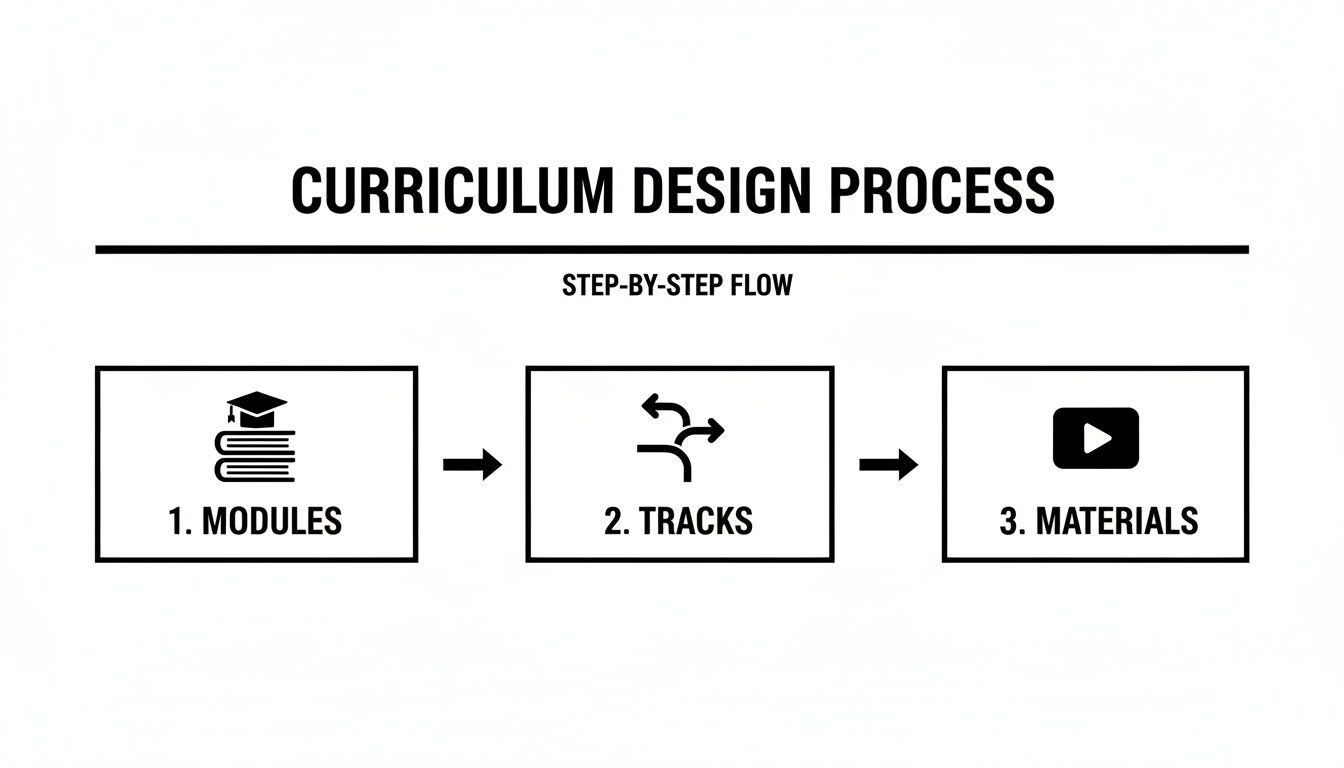
The move from curriculum design to delivery requires a practical, structured approach. This visual flow shows how a solid plan is built on a well-designed curriculum, ensuring every training session is purposeful and builds on what came before.
Choosing the Right Delivery Model
There is no single "best" way to deliver training. The right model depends on your budget, your tutors' schedules, and the complexity of the material you are covering. The most successful programs use a blended approach, mixing different formats to keep things dynamic and cater to how different people learn best.
Consider these powerful delivery models:
- Self-Paced Online Modules: Perfect for foundational knowledge, like company policies or introductory software guides. Tutors can complete these on their own time, which is a lifesaver for busy schedules. This works best for theoretical concepts, not for hands-on skills.
- Live Virtual Workshops: This is where you build skills. Think interactive sessions for practicing new teaching methods or role-playing tricky parent conversations. These workshops foster collaboration and allow for immediate, real-time feedback from trainers and peers.
- Structured Mentorship: Pairing a new hire with a seasoned tutor is one of the most effective training tools. The mentor provides on-the-ground guidance, answers practical "what do I do when..." questions, and helps the new tutor understand your center's culture.
A common and highly effective blend is having new tutors complete self-paced modules on core concepts first. Then, they attend live workshops to put that knowledge into practice, all while getting support from an assigned mentor.
Building a Practical Training Schedule
Your training schedule must work with the reality of running a busy tutoring center. Overloading new hires with a firehose of information or pulling experienced tutors from classes without a plan creates chaos. A well-designed schedule integrates training right into the natural rhythm of your business.
Here is how to build a schedule that actually works:
- Front-Load the Essentials. Dedicate the first few days of onboarding exclusively to foundational training. This must include your teaching philosophy, ethical guidelines, and critical software skills. A new tutor should never face a student without mastering these basics.
- Integrate Shadowing and Co-Teaching. After that initial intensive training, schedule new tutors to shadow your senior staff. The natural next step is co-teaching, where they lead parts of a lesson under supervision before finally taking on their own students.
- Schedule Ongoing Professional Development. Make it a recurring event. Reserve specific, consistent times for team-wide professional development, whether it is a monthly two-hour workshop or quarterly deep-dive sessions. When it is consistent, it becomes a valued part of your company culture.
Leveraging Technology to Manage Training Logistics
Managing training schedules, booking rooms, tracking attendance, and handling payroll for trainers can quickly become an administrative nightmare. This is where a powerful tutoring management software like Tutorbase becomes essential for your tutor training program development. It turns logistical headaches into a smooth, automated process.
Treat training just like any other service you offer. In your management software, create "Training" as a subject, assign your senior trainers, book rooms, and schedule trainees just as you would with students. This centralizes everything in one system.
With Tutorbase, you can make the entire execution phase seamless:
- Scheduling Rooms and Mentors: Use the same scheduling tools you use for student lessons to book training rooms and assign mentors for specific sessions. Conflict detection prevents double-bookings, keeping your resources managed efficiently.
- Tracking Attendance for Certification: Accurately track which tutors have attended and completed required training modules. This creates a clear record for certification and compliance, making sure everyone meets your standards.
- Automating Trainer Payroll: If your senior tutors earn a premium for leading training sessions, Tutorbase handles it automatically. You can set special payroll rates for "training" activities, ensuring your trainers are compensated accurately and on time without any manual calculations.
By embedding the logistics of your training program into your daily operational software, you create a system that is not just seamless, but truly scalable. This approach frees up your admin team and turns that well-designed training plan into a consistently executed reality.
Get Your Tutors Using Your Software (and Stop Leaking Revenue)
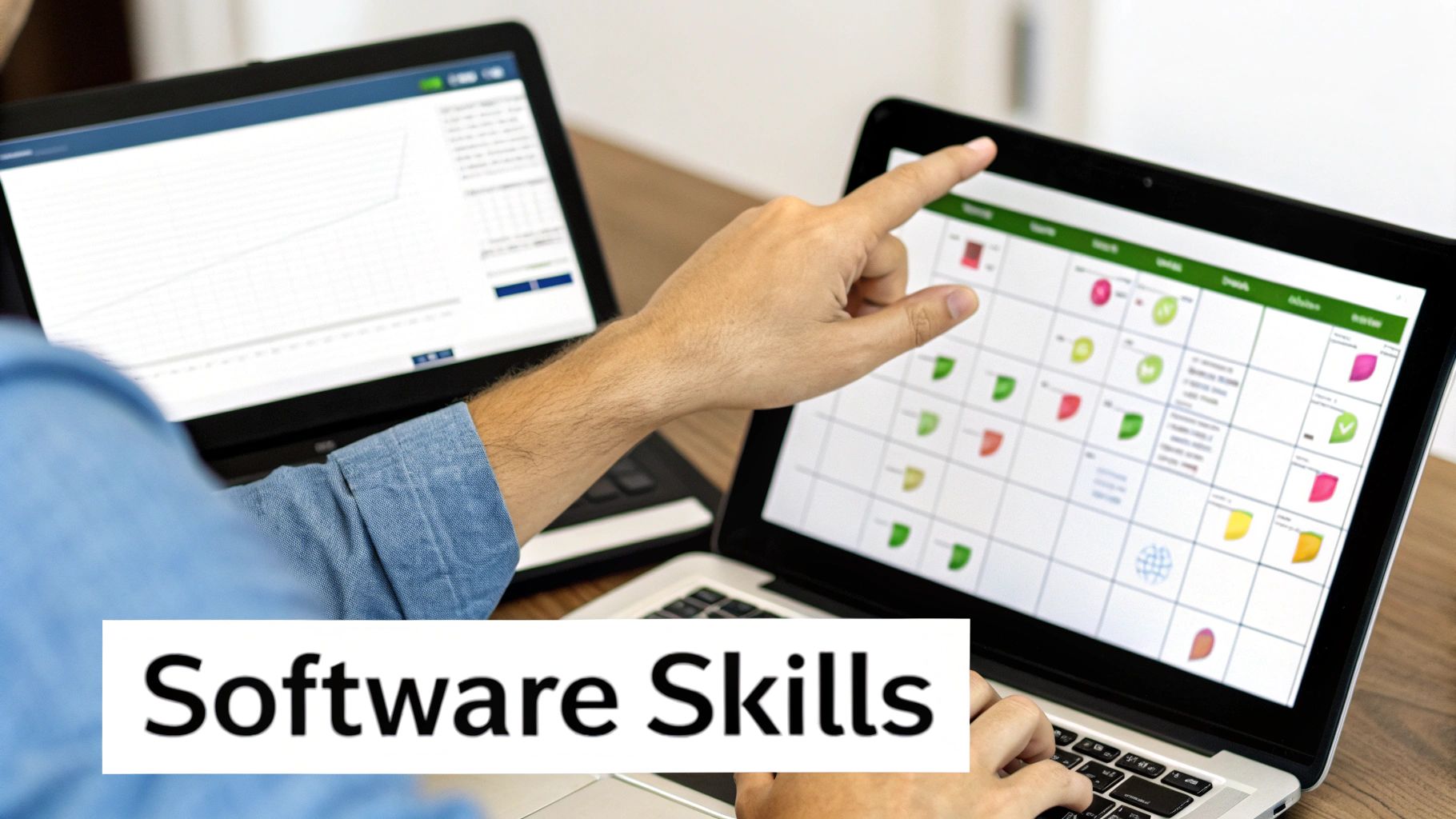
Here is a hard truth: a brilliant tutor who cannot use your management software is a liability. It sounds harsh, but it is real. Tutors who fumble with scheduling, marking attendance, or applying cancellation policies create administrative friction that costs you time and money.
Every mistake, a forgotten attendance mark or an incorrect availability update, sends ripples through your business. It causes billing errors, payroll headaches, and frustrated parents.
That is why software proficiency is a core part of your tutor training program development. This is not just about showing them which buttons to click. It is about helping them understand why those clicks matter and how their actions directly connect to the health of the business.
Training Tutors on the Essentials
First, get your tutors comfortable with the tasks they will handle every day. When they can manage their own schedules and lessons confidently, it frees up your admin team from endless back-and-forth emails and phone calls.
Your core training checklist should cover:
- Managing Their Availability: This is the bedrock of smooth scheduling. Show tutors exactly how to set and update their working hours in the system. Get this right, and you eliminate the painful manual process of finding open slots.
- Confirming Their Schedules: Tutors need to know how to check their daily, weekly, and monthly schedules at a glance. Make sure they understand what different colors or statuses mean for their appointments.
- Marking Attendance Perfectly: This is the big one. Tutors must know how to correctly mark a lesson as ‘Attended’, ‘No-show’, or ‘Late Cancelled’. Stress that this single action is what triggers invoicing and payroll.
Inaccurately marked attendance is the number one cause of lost revenue in tutoring centers. One lesson left as 'Scheduled' instead of 'Attended' means you do not invoice for it and the tutor does not get paid correctly. This part of the training is non-negotiable.
Training Admins to Be Growth Engines
While tutors focus on their daily tasks, your admin staff needs to master the tools that drive growth. Their training should be about streamlining student onboarding and filling every last seat in your classes. This is where you can see massive gains, like a 3x faster onboarding process.
In Tutorbase, two features are absolute game-changers for admins:
- 'Find Slot' for lightning-fast onboarding: Ditch the manual calendar-checking. Train your team to use AI-powered scheduling. They can pop in a student's requirements, subject, level, location, and the system instantly suggests the best tutor, room, and time. This takes a ten-minute booking process down to under two.
- 'Find Spot' to fill empty seats: This is a pure profit-finder. Show your staff how to use filters to find open spots in existing group classes. It is a powerful way to maximize revenue from your current schedule without adding new overhead.
When your team understands these tools, they move from being reactive coordinators to proactive business builders.
Connect the Clicks to the Cash Flow
Always tie the "how" to the "why." A tutor is far more likely to be diligent about marking a ‘Late Cancelled’ lesson correctly if they know it automatically bills the client the right fee, protecting both the center's revenue and their own paycheck.
When you get this right, the impact is huge. Tutoring centers that nail their software training report a 60% reduction in time wasted on admin tasks and eliminate double-bookings for good. It also turns your student management software into a reliable source of truth for making smart decisions.
Ultimately, great software training shifts your entire team from putting out fires to preventing them in the first place. When everyone uses your platform with precision, you can finally stop wrestling with admin chaos and focus on what you do best: teaching.
Measuring Your Program's Impact on Business Growth
A tutor training program that does not produce measurable business results is just an expensive hobby. If you cannot connect your tutor training program development to actual business growth, you are flying blind.
It is about moving beyond simple feedback forms and tracking the numbers that truly matter. How do you prove your training is delivering real value? You measure its impact on student retention, tutor performance, and overall client satisfaction. When you do this right, your program becomes a powerful engine for your center’s long-term success, not just another operational cost.
Defining Your Core Training KPIs
To measure impact, you need to track the right metrics. Vague goals like "making better tutors" are impossible to quantify. You need to focus on specific KPIs that draw a straight line from your training activities to your bottom line.
These metrics tell a clear story about your program's return on investment. Start with these three:
- Student Renewal Rate: This is your ultimate metric. A well-trained tutor who delivers exceptional, consistent service is the single biggest driver of renewals. Track this rate before and after implementing your training program to see the direct impact. A 42% increase is a strong indicator of success.
- Tutor Performance Scores: Do not just rely on gut feelings. Use a blend of student feedback surveys, mentor evaluations, and lesson observations to create a performance score for each tutor. This helps you spot top performers and identify where others need more support.
- Error Reduction Rate: Take a hard look at the frequency of administrative mistakes, things like incorrect attendance marking, scheduling conflicts, or billing disputes. A solid training program should drive these errors toward zero, saving your admin team hours of cleanup work.
The private tutoring market is huge and projected to hit USD 154.8 billion by 2030. With 70% of US programs now using hybrid models, effective training is what separates leaders from laggards. For multi-location centers, good training can slash 10+ weekly admin hours by 60% and make essential features like automated invoicing run smoothly. This isn't just theory, it directly boosts renewals when tutors can expertly handle everything from prepaid credits to conflict-free scheduling.
Gathering and Acting on Feedback
Data tells you what is happening, but feedback tells you why. A continuous feedback loop is non-negotiable for refining your curriculum and catching gaps before they turn into bigger problems. You need a structured way to collect insights from everyone involved.
Your feedback process should include these key sources:
- Trainee Surveys: Send out anonymous surveys right after a training session, and then again 30-60 days later. Ask pointed questions about the content's relevance, the delivery, and how confident they feel applying what they learned.
- Mentor Debriefs: Your senior tutors are your eyes and ears on the ground. Set up regular, structured debriefs with them to get the real story on how new trainees are performing in actual lessons.
- Client Satisfaction Scores: Keep a close watch on feedback from parents and students. Ask specifically about the tutor’s communication skills, their preparedness, and how clearly they can explain tough concepts.
The goal of feedback is not just to collect it; it is to act on it. If multiple trainees report struggling with your virtual whiteboard software, that is a clear signal to revise that module. Treat feedback as a roadmap for continuous improvement.
To prove your training program is building expert tutors and hitting business goals, you need a way to track its effectiveness. The table below outlines key performance indicators (KPIs) you can use to link tutor performance directly to tangible business outcomes.
Key Performance Indicators (KPIs) for Your Tutor Training Program
| KPI Category | Metric to Track | How to Measure | Target Business Impact |
|---|---|---|---|
| Student Outcomes | Student Renewal Rate | (Renewing Students / Total Students) x 100% | Higher customer lifetime value and predictable revenue |
| Tutor Performance | Tutor Performance Score | Average score from student surveys, peer reviews, and manager observations | Consistent service quality and stronger brand reputation |
| Operational Efficiency | Administrative Error Rate | Number of errors (scheduling, billing, attendance) per tutor per month | Reduced admin costs and improved operational workflow |
| Client Satisfaction | Net Promoter Score (NPS) | Survey asking clients how likely they are to recommend your service | Increased word-of-mouth referrals and stronger client loyalty |
By tracking these KPIs, you create a powerful cycle of improvement. Each piece of data provides the insights needed to refine your curriculum, enhance tutor skills, and ultimately, drive the sustainable growth of your tutoring business.
If you want to formalize your evaluation process beyond simple surveys, consider implementing robust team performance assessment strategies. This structured approach helps turn raw data into actionable steps for improvement.
Frequently Asked Questions About Tutor Training
Here are some quick, practical answers to common questions about developing a tutor training program.
How Long Should a Tutor Training Program Be?
A comprehensive onboarding program for a new tutor should be around 15 to 30 hours, spread over one or two weeks. This ensures they can operate confidently within your business from day one.
A solid program usually breaks down like this:
- Teaching & Pedagogy: Dedicate 10-15 hours to your specific teaching methods, classroom management (virtual or in-person), and curriculum standards.
- Software & Admin Workflows: Carve out 5-10 hours for hands-on training with your management software. They should master scheduling, attendance, and billing workflows before their first lesson.
- Shadowing & Co-Teaching: At least 5 hours should be spent with a senior tutor, first observing lessons and then co-teaching before they go solo.
After this initial onboarding, aim for 2-4 hours of professional development each quarter to cover curriculum updates, new software features, or advanced teaching strategies.
What Is the Biggest Mistake to Avoid in Tutor Training?
The single biggest mistake is focusing 100% on subject matter expertise while ignoring operational competence. A tutor might be a math genius, but if they cannot manage their schedule or use your software correctly, they create administrative chaos.
A brilliant teacher who constantly double-books students, forgets to mark attendance, or misunderstands your cancellation policy is an operational liability. It leads to billing errors, frustrated parents, and hours of wasted admin time. Great training builds both great teachers and competent operators.
Your tutors are part educator and part administrator. Forgetting the second part is a surefire way to lose money and create preventable headaches. A well-designed tutor training program makes these two skill sets feel like one seamless role.
How Do I Measure the ROI of My Training Program?
You measure the return on investment (ROI) by tracking key business metrics before and after you roll out the program. The goal is to draw a straight line from training efforts to real financial and operational improvements.
Zero in on these four data points:
- Student Renewal Rates: This is your ultimate measure of teaching quality and parent satisfaction. An increase of around 42% in renewals is an achievable sign that your training is working.
- Admin Time Saved: How many hours does your operations manager spend fixing scheduling mistakes or chasing attendance logs? A 60% reduction here is a realistic goal that frees up your team for growth-focused work.
- Error Reduction: Tally booking mix-ups, billing disputes, and payroll mistakes each month. The goal is to get that number as close to zero as possible.
- Faster Student Onboarding: Measure how long it takes from a new family's first inquiry to their first paid lesson. Training admins on tools like Tutorbase’s Find Slot feature can reduce this from 10+ minutes to under 2 minutes.
These numbers give you the hard data needed to justify the time and money you invest in your team.
Should I Create Different Training for Online and In-Person Tutors?
Yes, absolutely. While your core teaching philosophy will be the same, the practical skills needed for online versus in-person delivery are completely different. You need distinct training modules for each.
Here is how to specialize the training:
- For Online Tutors: Training must cover your virtual classroom platform, digital whiteboard tools, and techniques for keeping students engaged when they are not in the same room.
- For In-Person Tutors: This training should focus on physical classroom management, using on-site resources, and best practices for face-to-face parent interactions.
For tutors doing hybrid teaching (some students in-person, some online at the same time), you need a dedicated program for that. It is a unique skill set to manage both audiences well without the experience suffering for either group.
Ready to stop administrative chaos and build a scalable training system? See how Tutorbase centralizes your scheduling, billing, and payroll so you can focus on growth. Get started today.


