


Effective teachers are the lifeblood of a successful tutoring center. While passion for a subject is a great start, the best educators possess a dynamic blend of pedagogical, interpersonal, and operational skills. These competencies directly impact student retention, parent satisfaction, and your bottom line.
This guide breaks down the 10 core skills your teachers need to thrive, moving beyond generic advice to provide actionable strategies for hiring, training, and supporting your team. We will explore how to identify these critical skills and demonstrate how the right operational systems can free up your best educators to focus on what they do best: teaching. This isn't just a list; it's a blueprint for building a more effective, scalable, and profitable educational business. Each section offers practical examples and clear signals to look for in your current and future staff.
1. Curriculum Planning & Subject Matter Expertise
One of the most fundamental skills needed for teaching is the ability to combine deep subject matter knowledge with structured curriculum planning. This competency goes beyond simply knowing a topic; it involves designing clear, logical learning pathways that guide students from one level of understanding to the next. It means breaking down complex subjects into digestible lessons that build on each other sequentially.

Strong curriculum design aligns with established educational frameworks. For example, a language school might structure its Spanish courses around CEFR levels (A1-C2), while a K-12 tutoring center maps its math lessons to state standards like the Common Core. This approach ensures consistency and quality across all teachers and locations, which is critical for scaling a tutoring business.
For a growing tutoring center, a well-documented curriculum is the foundation of quality control. It guarantees that a student receives the same standard of instruction regardless of which teacher they are assigned.
Actionable Tips for Implementation
- Standardize Your Offerings: Use a system like Tutorbase to define your curriculum as fixed "Subjects" (e.g., Algebra I) and "Levels" (e.g., Grade 9). This structure allows you to quickly create reusable service offerings like 'SAT Math Fundamentals' that link directly to teacher qualifications and pricing.
- Create a Central Knowledge Base: Document your curriculum progression, materials, and lesson objectives in a shared portal or wiki. This reduces teacher prep time and eliminates constant back-and-forth questions with administrators.
- Audit Delivery vs. Design: Review lesson history logs to see if the curriculum being delivered matches what was planned. This helps identify gaps where teachers may need more support or where the curriculum itself needs adjustment.
2. Student Assessment, Progress Monitoring & Data-Driven Analytics
A crucial skill for effective teaching is the ability to measure student learning, track progress over time, and use that data to inform instructional decisions. This competency involves more than just administering tests; it’s about creating a continuous feedback loop. Teachers must identify knowledge gaps with diagnostics, monitor growth with regular check-ins, and adjust their teaching methods based on performance analytics.

For a tutoring center, this data-driven approach is essential for demonstrating value. An SAT prep academy can show percentile rank improvement per module, while a K-12 center can correlate its sessions with rising school report card grades. This skill allows a business to justify renewals, optimize scheduling, and prove its impact, turning progress into a powerful retention tool.
When parents see clear, documented evidence of their child's progress, they are far more likely to renew services. Data transforms your educational value from a claim into a fact.
Actionable Tips for Implementation
- Document Progress in Lesson Notes: Use a feature like Tutorbase’s Teacher Notes to embed assessment snapshots and progress summaries directly into lesson logs. This makes it simple to share quick, concrete updates with parents.
- Correlate Attendance with Outcomes: Use attendance data from your management system to analyze the relationship between lesson frequency and assessment results. For test prep centers looking to track student progress and scores efficiently, this helps identify the optimal number of sessions needed to hit target scores.
- Automate Progress Alerts: Set up automated email notifications to alert administrators or parents when a student hits a key milestone or falls behind. For instance, an alert can trigger when a student has two consecutive no-shows, flagging them for immediate follow-up.
3. Classroom Management & Student Engagement
A teacher's ability to create a positive, structured learning environment is a critical skill needed for teaching effectively. Strong classroom management maximizes on-task time, minimizes disruptions, and keeps students motivated and focused. It involves setting clear expectations, managing group dynamics, and using engagement techniques tailored to the student’s age and ability level.

This skill directly impacts business outcomes like attendance rates and client satisfaction. For example, an after-school STEM program might use timed challenges and group rewards to maintain a high-energy, productive atmosphere. Similarly, a language school can use communicative pair work and interactive games to ensure students are actively participating rather than passively listening.
Effective classroom management isn't about rigid control; it's about building predictable routines that make students feel safe and ready to learn. This consistency reduces no-shows and generates positive word-of-mouth referrals.
Actionable Tips for Implementation
- Document Class Norms: Define your expectations for behavior and participation directly in your service descriptions within Tutorbase. This ensures every teacher, student, and parent is aligned from the start.
- Build Routines with Technology: Use Tutorbase’s recurring lessons feature to establish consistency. A predictable time, room, and lesson structure helps build stronger student engagement over time.
- Track Engagement Proxies: Monitor metrics in your management software like attendance rates, package completion speed, and parent satisfaction feedback. These numbers offer clear insights into how well a teacher is engaging their class.
- Identify At-Risk Students: Use attendance logs to spot students who are frequently late, cancelling, or not showing up. Proactively reach out with re-engagement strategies before they drop out.
4. Instructional Delivery & Pedagogical Technique
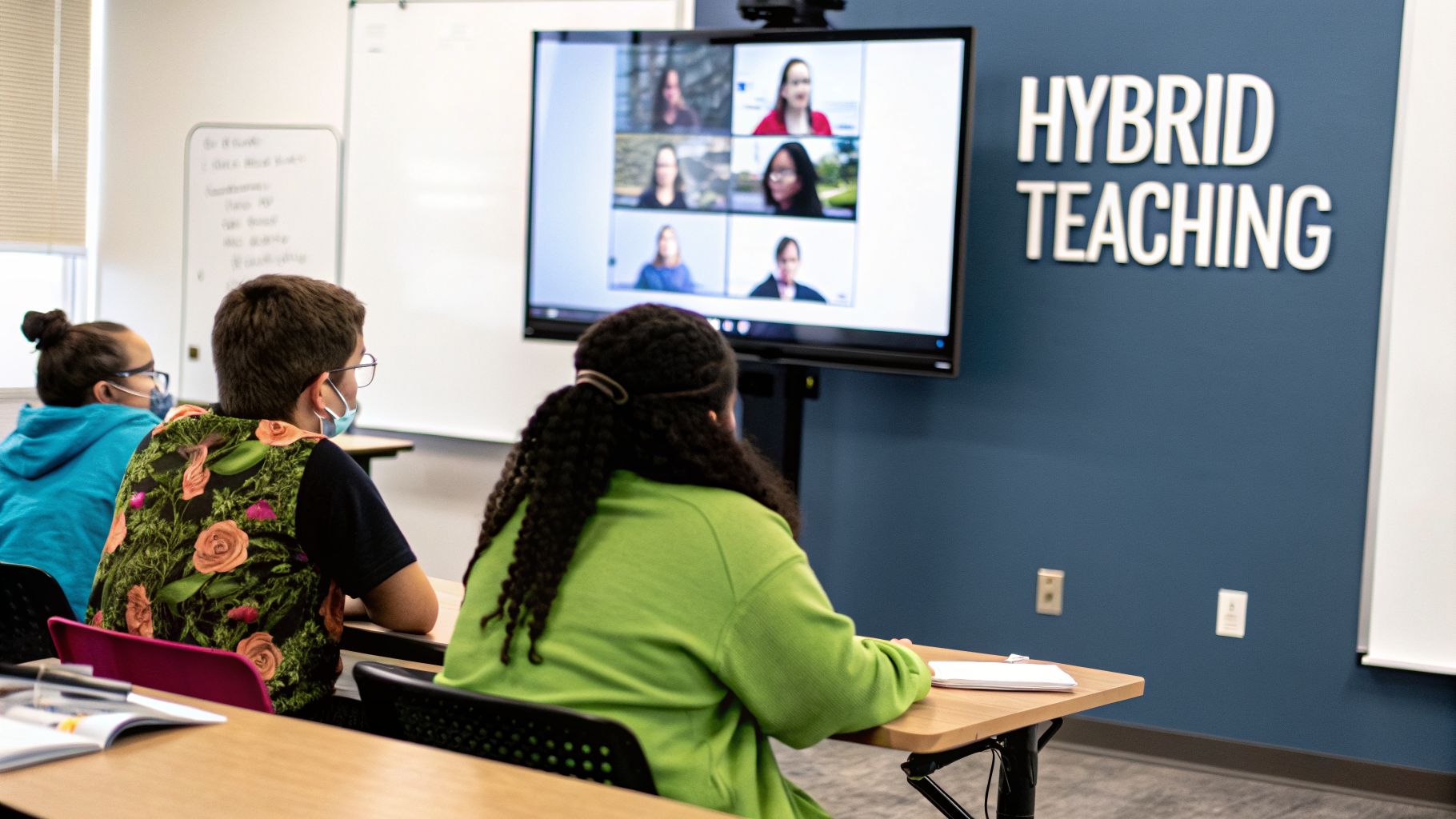
Knowing a subject is one thing; teaching it effectively is another. This skill involves the practical application of evidence-based teaching methods to deliver content. It's the ability to explain concepts clearly, ask higher-order questions, model skills, and pace lessons appropriately. The right pedagogical technique, whether direct instruction, Socratic questioning, or discovery learning, must be adapted to the learner's needs and the delivery modality (in-person, online, or hybrid).
Effective instructional delivery ensures that learning is active, not passive. A music teacher models a technique before guiding a student’s practice (scaffolding). A math tutor might use Polya's problem-solving steps: understand, plan, solve, and reflect. For tutoring centers, standardizing these approaches ensures every student receives a high-quality, consistent learning experience, which is a key part of what skills are needed for teaching at a professional level.
A documented instructional framework moves teaching from an individual art to a replicable science. It empowers new teachers to deliver great lessons from day one and gives experienced educators a common language for improvement.
Actionable Tips for Implementation
- Document Preferred Methods: Create a training manual that outlines your center's core pedagogical approaches. Include examples for both online and in-person delivery to ensure consistency across formats.
- Track What Works: Use Tutorbase Teacher Notes to log which techniques are most effective for individual students (e.g., 'Sara grasps concepts faster with visual analogies'). This data helps other teachers who may work with that student later.
- Observe and Coach: Schedule regular teacher observations, either live or recorded, to provide specific feedback. Log these insights in a CRM to track professional development and identify areas for group training.
- Invest in Training: Provide ongoing professional development opportunities, especially for online and hybrid delivery techniques. This keeps your team's skills current and shows you are invested in their growth.
5. Communication & Relationship Building with Students & Families
Effective teaching extends beyond the classroom; it involves building strong, trusting relationships with both students and their families. This skill centers on clear, consistent communication that keeps parents informed and engaged in their child's educational journey. It means actively listening to concerns, celebrating progress, managing expectations, and creating a collaborative environment that supports student learning from all sides.
This proactive approach is crucial for tutoring businesses. For example, a test prep center that calls families when a student’s score plateaus to discuss new strategies demonstrates partnership, not just service delivery. Similarly, an after-school program sending weekly notes celebrating small wins like "Emma led her group for the first time!" reinforces value and builds emotional connection.
For a tutoring center, strong family communication is a powerful retention tool. When parents feel like partners in their child's education, they are more likely to stay enrolled long-term and refer others.
Actionable Tips for Implementation
- Automate Progress Updates: Use an email notification system to send weekly or monthly progress summaries automatically. This keeps parents informed without adding to teacher workload, ensuring consistent communication.
- Standardize Parent Notes: Create templated notes within your management system. Teachers can quickly select pre-written bullets on progress, areas for improvement, and next steps, saving time while maintaining quality.
- Document Communication Preferences: A key part of knowing how to manage tutoring students and parents is respecting their preferences. Record whether a family prefers email, phone calls, or app messages, and how frequently they wish to be contacted.
6. Differentiation & Personalized Learning
A critical skill for teaching effectively is the ability to adapt instruction for individual student needs. Differentiation involves tailoring the content, process, and pacing of lessons to accommodate diverse learning styles, readiness levels, and interests within a single class. It is the practice of moving away from a one-size-fits-all approach to create a more inclusive and effective learning environment.
This skill is especially important in tutoring centers where students often arrive with different goals and starting points. For example, a K-12 tutor might use guided reading levels to assign appropriate books, while a music teacher adapts lessons to a student’s interest in pop or classical music. This personalization increases success rates and reduces dropout from frustration.
When students feel that instruction is designed for them, their engagement and motivation skyrocket. For a tutoring business, this translates directly into higher retention and better academic outcomes.
Actionable Tips for Implementation
- Document Learner Profiles: Use student records in a system like Tutorbase to note individual learning styles, interests, and pacing needs. Share these notes among teachers to ensure a consistent, personalized approach for each student.
- Create Tiered Resources: Build a central library of materials categorized by difficulty (e.g., beginner, intermediate, advanced). This allows teachers to quickly pull appropriate worksheets or activities during a lesson.
- Offer Flexible Pacing: Use a combination of recurring lessons for core instruction and "catch-up" lessons for targeted support. This structure helps students who are falling behind or who want to get ahead without disrupting the group flow.
- Train for Universal Design: Introduce teachers to Universal Design for Learning (UDL) principles. This framework helps them create lessons that are flexible from the start, with multiple ways for students to access content and demonstrate their knowledge.
7. Professional Development & Continuous Learning
Great teachers are not born; they are made through a relentless commitment to improvement. Professional development is the skill of staying curious and actively seeking opportunities for growth. This involves embracing feedback, attending workshops, collaborating with peers, and staying current with pedagogical research and updates in one's subject area. It’s a mindset of continuous learning that keeps instruction fresh, effective, and relevant.
This commitment directly impacts student outcomes. For instance, a K-12 tutoring center might send teachers to Wilson Reading training to better support students with dyslexia, or a test prep center may attend annual conferences to learn about changes to the SAT. For tutoring centers, a strong culture of professional development reduces teacher turnover and provides a significant competitive advantage in attracting top talent.
A teacher who stops learning is a teacher who stops growing. Investing in your team's development is a direct investment in your students' success and your business's reputation.
Actionable Tips for Implementation
- Budget for Growth: Allocate a small percentage of your payroll (e.g., 2-3%) specifically for teacher training and certifications. Position this as a key retention benefit during hiring to attract motivated educators.
- Create Mentorship Pairs: Pair new hires with experienced teachers for a structured six-month coaching period. This provides targeted support and helps integrate new staff into your center’s culture and teaching methods.
- Log Certifications and Goals: Use the People module in Tutorbase to track each teacher's training, certifications, and development goals. This gives administrators clear visibility into team qualifications and helps identify skill gaps across the organization.
8. Adaptive & Online/Hybrid Teaching Competency
The ability to deliver effective instruction in virtual and blended environments is no longer a niche skill but a core requirement. This competency involves using synchronous and asynchronous tools to manage lessons, overcome technical challenges, and maintain student engagement without the benefit of in-person cues. Teachers must be proficient in everything from screen sharing and interactive platforms to troubleshooting common connectivity issues.
This skill is crucial for tutoring centers looking to expand their reach and offer flexible learning models. A music school can conduct one-on-one piano lessons online using screen sharing for sheet music, while a test prep center can live-stream SAT workshops to a global audience. As teaching evolves, understanding and potentially integrating new tools like homework helper AI tools becomes part of this adaptive competency.
An educator's confidence with technology directly translates to the student's online learning experience. A seamless, well-managed virtual classroom minimizes distractions and keeps the focus squarely on learning.
Actionable Tips for Implementation
- Document Technical Standards: Create a checklist for your teacher onboarding process that outlines minimum requirements for internet speed, lighting, microphones, and a professional, distraction-free background.
- Create Online Lesson Blueprints: Develop structured templates for virtual lessons, including a virtual icebreaker, an interactive whiteboard activity, breakout room exercises, and a concluding reflection to ensure consistency.
- Track Delivery Modes Systematically: Use a feature like Tutorbase’s hybrid attendance tracking to monitor which students attend in-person versus online. This data helps you tailor your approach and manage resources effectively.
- Develop Troubleshooting Guides: Prepare simple PDF guides or short videos to help teachers and students solve common tech issues, such as poor audio or connection drops. Share these resources before the first online session.
9. Time Management & Operational Efficiency
A critical, yet often overlooked, teaching skill is the ability to manage time and run a lesson with operational precision. This extends beyond simple punctuality. It involves meticulous lesson planning, efficient transitions between activities, and maximizing every minute for instructional delivery. Great teachers minimize wasted time, ensuring students remain engaged and learning momentum is maintained.
This efficiency is the engine of a profitable tutoring center. For example, a language school might use a strict 45-minute block: five minutes for a warm-up, 20 for direct instruction, 15 for pair work, and a final five to preview homework. Similarly, a test prep center can block time for a timed practice section followed by a structured review. This predictability reduces administrative overhead and improves lesson quality.
Teacher efficiency is a direct multiplier for business scalability. When lessons run like clockwork, you can serve more students with higher quality, reducing admin support needs and boosting profitability.
Actionable Tips for Implementation
- Create Timed Templates: Develop lesson plan templates in a shared drive with specific time allocations for each activity. This standardizes pacing and helps new teachers get up to speed quickly.
- Audit Teacher Schedules: Review calendars to spot inefficiencies like excessive travel time between locations or back-to-back lessons with no buffer. Learning how to schedule tutoring sessions efficiently can reveal opportunities to optimize teacher workloads and availability.
- Use Lesson Notes for Prep: Encourage teachers to use a system's "Teacher Notes" feature to log what worked and what didn't in a lesson. This simple habit dramatically cuts down on re-preparation time for the next session.
10. Inclusivity, Cultural Competence & Supporting Diverse Learners
A critical skill for modern educators is the ability to create learning environments that are welcoming and effective for every student. This involves recognizing and responding to a wide range of needs, from learning disabilities and neurodiversity to language barriers and cultural backgrounds. It means building psychologically safe spaces where all students feel seen, respected, and empowered to participate.
This skill is not just about being kind; it's about employing evidence-based strategies to ensure equitable access to education. For example, a K-12 tutoring center might train its staff in dyslexia-friendly instruction, while a language school hires ESL-certified teachers to support new immigrant communities. This commitment to inclusivity directly improves student outcomes and strengthens a center’s reputation.
An inclusive tutoring center doesn't just enroll diverse students; it actively removes barriers to their success. This builds trust with families and creates a powerful, positive brand in the community.
Actionable Tips for Implementation
- Document Accommodations Securely: Use custom fields in Tutorbase student profiles to confidentially record learning differences, language needs, or specific accommodations. This information is accessible to assigned teachers but kept private otherwise.
- Share Strategies in Teacher Notes: Equip your team for success by documenting specific support strategies (e.g., "Allow extra processing time" or "Use visual aids for new vocabulary") in persistent Teacher Notes. This ensures consistent support no matter which teacher is leading the lesson.
- Match Teachers to Student Needs: Use the Find Spot filter to quickly identify teachers with specific training, such as ADHD support or ESL certification. This ensures students are matched with educators best equipped to help them succeed from day one.
- Offer Free Consultations: Build trust and gather essential information by offering a free intake consultation with families. Track accommodation requests and history in the Tutorbase CRM to provide a seamless, supportive experience as the student progresses.
Empowering Teachers Through Smarter Operations
The skills needed for teaching are extensive, covering everything from pedagogical technique and personalized learning to operational efficiency and adaptive online instruction. The common thread is a relentless focus on student outcomes, driven by a teacher's ability to create a supportive, engaging, and effective learning environment.
However, the reality for many tutoring centers is that even the most gifted teachers are hindered by operational friction. Time that should be spent planning differentiated lessons or communicating with families is instead consumed by administrative tasks. Manual scheduling, double-checking payroll, and chasing invoices are significant drains on energy and focus. This administrative burden directly impacts a teacher's capacity to apply their core skills where they matter most: with their students.
The answer to what skills are needed for teaching must therefore include a supportive operational framework. When your administrative systems are fragmented, using separate tools for scheduling, billing, and communication, you create an environment where teacher burnout is a constant risk. A teacher's skill in time management is nullified if they spend hours coordinating schedules, and their ability to build relationships is strained by payment-chasing conversations.
By centralizing these back-office functions, you give your teaching staff their most valuable resource back: time. When a system handles scheduling conflicts, generates accurate payroll, and automates invoicing, educators can dedicate their energy to their craft. They can focus on developing curriculum, analyzing student progress, and fostering a love of learning. Supporting your teachers with smart, efficient operations is not just a business decision; it is a pedagogical one.
Ready to eliminate the administrative chaos that holds your best teachers back? Tutorbase consolidates scheduling, billing, payroll, and student management into a single, automated platform, reducing admin time by up to 60%. Empower your educators to focus on teaching, not paperwork, and watch your student success and business grow. Explore how Tutorbase can transform your operations today.
Frequently Asked Questions (FAQ)
What are the 3 most important skills of a teacher?
The three most important skills for a teacher are subject matter expertise combined with curriculum planning, effective communication with both students and parents, and the ability to differentiate instruction to meet individual student needs. These skills form the foundation of high-quality education.
What soft skills are important for teaching?
Key soft skills for teaching include empathy, patience, active listening, and strong interpersonal communication. These skills enable teachers to build trust with students, manage classroom dynamics effectively, and create a supportive learning environment where students feel safe to take risks.
How do operational tools help teachers improve their skills?
Operational tools like tutoring management software automate administrative tasks such as scheduling, billing, and attendance tracking. This automation reduces admin time by up to 60%, freeing up teachers to focus on core instructional skills like lesson planning, student assessment, and parent communication.
What is the most difficult skill for a teacher to master?
Differentiated instruction is often the most difficult skill to master. It requires a deep understanding of each student's unique learning profile and the ability to design and deliver flexible lessons that cater to a wide range of needs simultaneously within a single group.
Can technology replace core teaching skills?
No, technology cannot replace core teaching skills. Tools like AI and management software are powerful aids that enhance a teacher's ability to be efficient and data-informed. However, the fundamental skills of building relationships, managing a classroom, and inspiring students remain irreplaceable human abilities.
Why is data analysis a critical teaching skill in 2026?
In 2026, data analysis is critical because it allows educators to move from subjective feelings to objective facts about student progress. Analyzing performance data helps teachers identify learning gaps, personalize instruction, and demonstrate tangible value to parents, which is crucial for student retention in a competitive market.
How can a tutoring center owner assess these skills during hiring?
Tutoring center owners can assess these skills by using scenario-based interview questions, asking for a portfolio of lesson plans, and conducting a mock teaching session. For example, you can ask a candidate how they would handle a disengaged student or adapt a lesson for a struggling learner.


