


Key Takeaway: To run a successful Mandarin tutoring business, you need two distinct toolkits: a student-facing teaching stack for lesson delivery and practice (e.g., Pleco, Skritter, ClassIn), and an operations stack to automate the business. A platform like Tutorbase acts as the operations stack, automating scheduling, billing, and payroll to reduce admin time by over 60%.
Running a Mandarin tutoring business requires more than teaching skills; it demands an efficient operational backbone. Juggling lesson delivery, student practice, scheduling, and billing across disconnected platforms leads to double-bookings, missed payments, and hours spent on manual tasks. This fragmentation actively prevents your language school from scaling.
This guide presents the best apps for Mandarin tutors in 2026, organized into a complete technology stack:
- Business & Operations Management: All-in-one platforms for scheduling, billing, and payroll.
- Student Practice & Resources: Apps for character writing, reading, and vocabulary.
- Lesson Delivery & Collaboration: Interactive whiteboards and virtual classrooms.
Each recommendation analyzes its pros, cons, and ideal use case, helping you move from administrative chaos to a streamlined operation. While these tools are Mandarin-specific, effective language schools also use broader technologies. For instance, understanding top translation tools for businesses can provide insights for handling multilingual communications.
What is tutoring management software?
Tutoring management software is a centralized platform that automates the administrative operations of a tutoring center or language school. It replaces fragmented tools like Google Calendar for scheduling, QuickBooks for billing, and Excel for payroll. A comprehensive system handles the entire student lifecycle, from lead management and trial bookings to automated invoicing and teacher payroll calculations, reducing admin time by up to 60%.
Business & Operations Management
1. Tutorbase
For language school directors scaling their operations, Tutorbase is the premier all-in-one management platform. It replaces disjointed systems like spreadsheets and separate schedulers with a single, intelligent workflow. This platform is engineered for growing educational businesses that need to eliminate administrative bottlenecks and focus on teaching, reducing manual admin time by up to 60%.
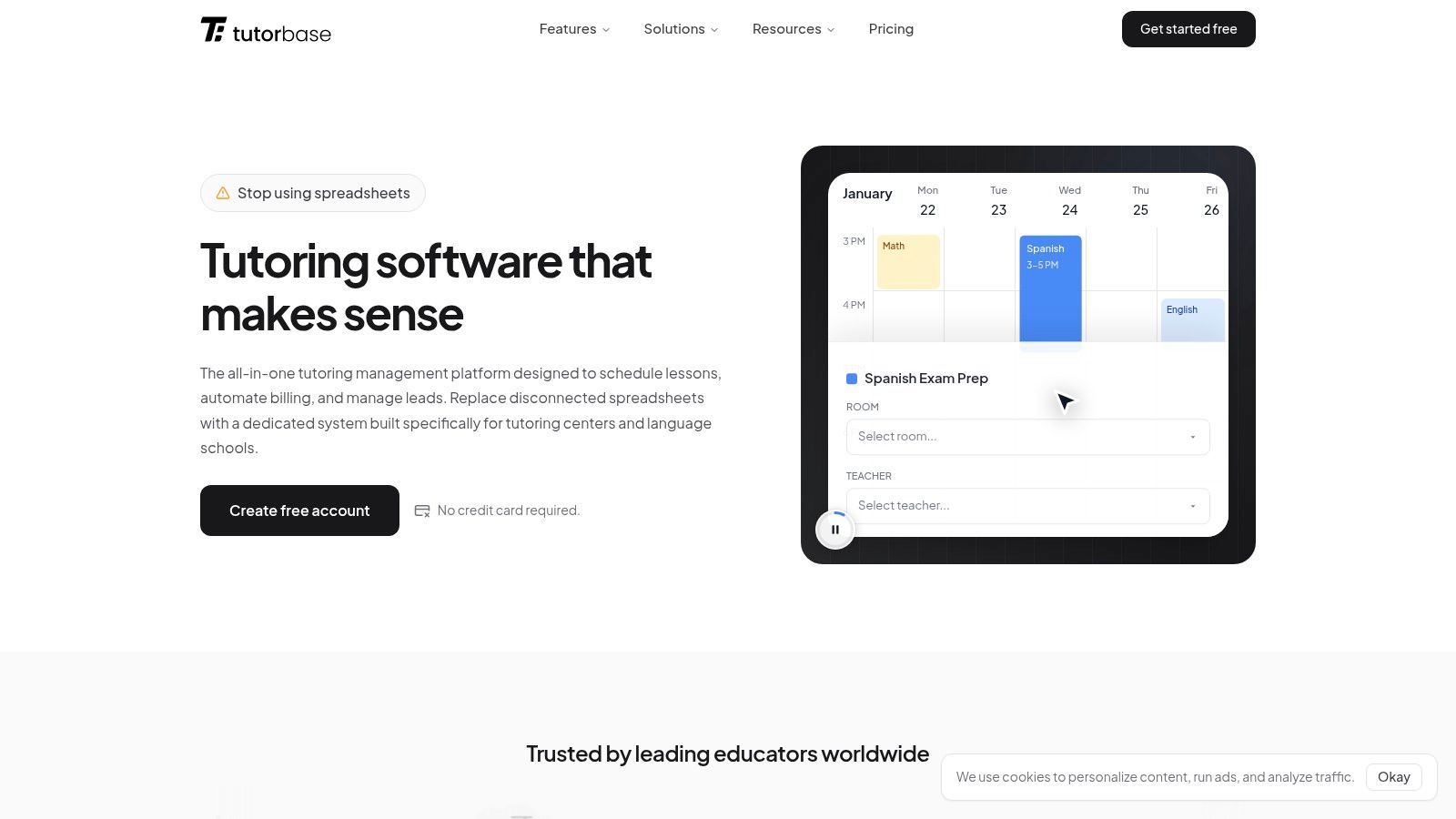
Tutorbase excels by automating the entire operational lifecycle from a new student inquiry to teacher payroll. Its core strength lies in tying lessons, attendance, invoicing, and payments into one seamless process. When a tutor marks a student as "Attended," the system automatically generates the correct invoice, deducts from a prepaid package, and calculates the tutor's pay based on their specific contract rules.
Key Strengths and Use Cases
- Intelligent Scheduling: The "Find Slot" feature instantly generates all possible teacher, room, and time combinations for a new lesson request, reducing booking time from 10+ minutes to under 2. The "Find Spot" tool complements this by surfacing existing group classes with open seats, maximizing class fill rates.
- Automated Financial Management: The platform handles complex billing scenarios with ease. It supports prepaid credit wallets, lesson packages with automatic consumption tracking, and multiple billing cadences (per-lesson, weekly, monthly). This system eliminates manual invoicing and accelerates payment collection by 42%.
- Robust Multi-Branch Operations: Unlike many alternatives, Tutorbase is built for scale. It manages multiple locations, rooms, and even separate brands from a single dashboard. Its payroll module is exceptionally flexible, supporting everything from simple hourly rates to complex revenue-share models, crucial for growing language schools.
- Integrated Lead Capture: A native WhatsApp widget and customizable web forms capture inquiries directly into a built-in CRM, streamlining the trial and enrollment process and leading to 3x faster student onboarding.
Practical Considerations
While Tutorbase offers a free trial, its comprehensive feature set is best suited for established centers with 5-100+ instructors. Solo tutors might find the platform more powerful than necessary. Pricing is tailored to the business's size, so you will need to contact their sales team for a quote. For those looking to manage and grow a professional Mandarin tutoring business, this is the top-tier choice. For a closer look at its capabilities, you can explore their mandarin school management software.
- Pros: End-to-end automation (scheduling to payroll), advanced conflict-free scheduling, scales to multi-branch operations, integrated CRM with WhatsApp.
- Cons: Pricing requires a custom quote, may be overly complex for individual solo tutors.
- Website: https://tutorbase.com
Student Practice & Resources
2. Pleco
Pleco is the undisputed heavyweight champion of Chinese dictionary apps. While it functions primarily as a dictionary, its powerful, modular add-ons transform it into an indispensable tool for lesson preparation and in-class support. Tutors use it for instant character lookups, detailed stroke order animations, and generating example sentences on the fly. Its reliability and depth make it a core component of any tutor's digital toolkit.
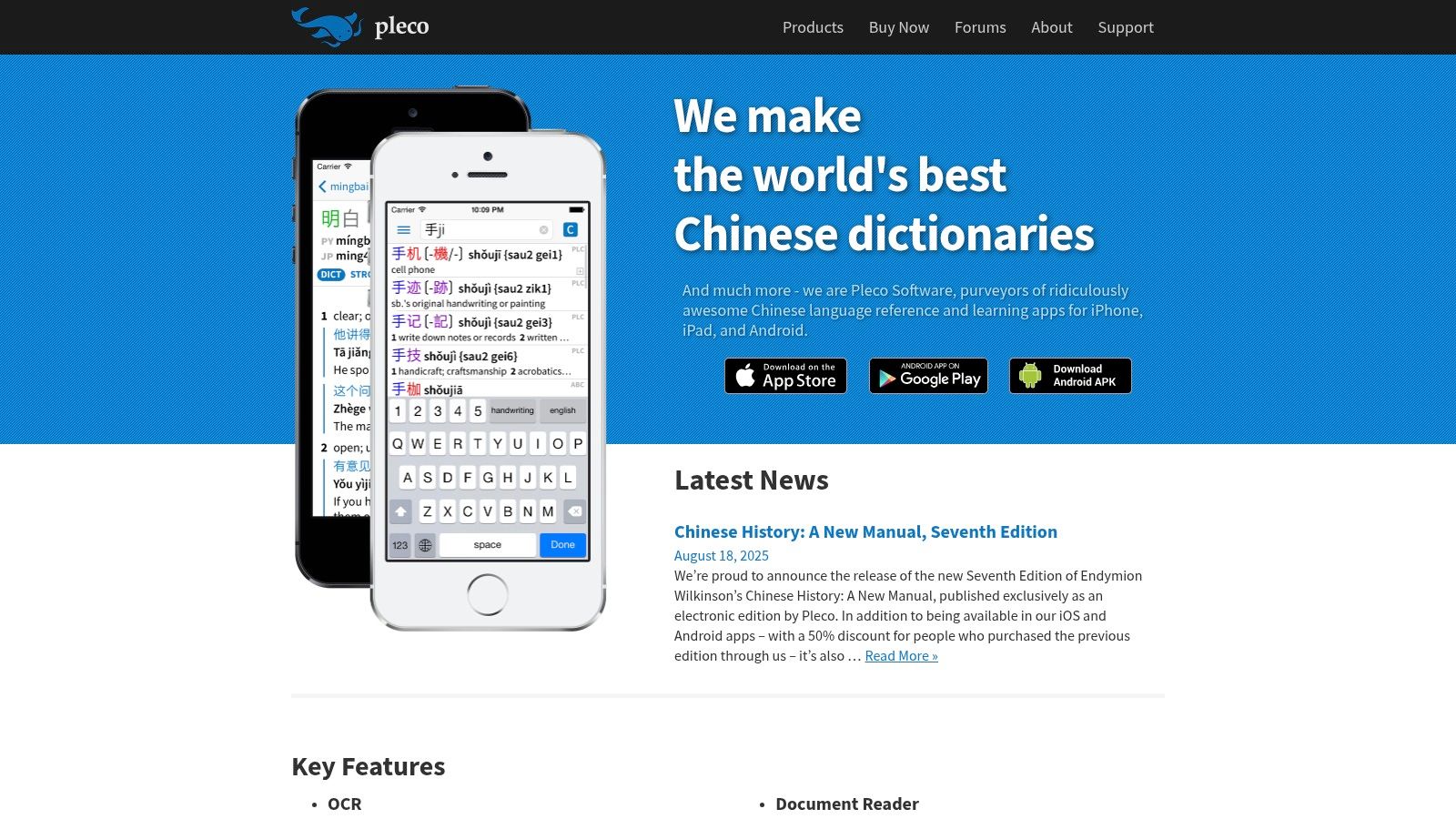
What truly sets Pleco apart is its professional-grade lexical data, licensed from esteemed publishers like Oxford and ABC. Unlike many free dictionary apps that rely on crowdsourced data, Pleco's definitions are authoritative. The app also works entirely offline, a crucial feature when teaching in areas with unreliable internet. For tutors, the optical character recognition (OCR) add-on is a game-changer, allowing you to instantly scan and define characters from worksheets or textbooks.
Key Use Cases & Features
- Live Lesson Support: Instantly look up words suggested by students, show stroke order animations on-screen, and find context-appropriate example sentences.
- Lesson Prep: Build vocabulary lists and export them to the built-in flashcard system for students to practice. Use the document reader to analyze texts you plan to use in class.
- Offline Reliability: Access all core dictionaries and features without an internet connection, ensuring lessons are never interrupted by connectivity issues.
Pricing and Integrations
Pleco is free to download, but its most powerful features are one-time purchases. The Basic Bundle is the most popular starting point. It is a standalone reference tool and does not integrate with management platforms. You can create study materials in Pleco, but you would manage student progress and scheduling in a system like Tutorbase, which handles the administrative side of your tutoring business.
- Pros: Gold-standard dictionary data, powerful one-time purchase add-ons, works completely offline.
- Cons: The most valuable features are behind a paywall, and the user interface can feel dense for new users.
- Website: https://www.pleco.com
3. Skritter
Skritter is the premier app for mastering Chinese character writing, moving beyond simple memorization to active recall and muscle memory. It uses an intelligent system to teach stroke order and provides real-time feedback on handwriting. For tutors, it serves as a powerful homework tool, allowing you to assign specific character lists and track student progress on the most challenging aspect of learning Mandarin: writing.
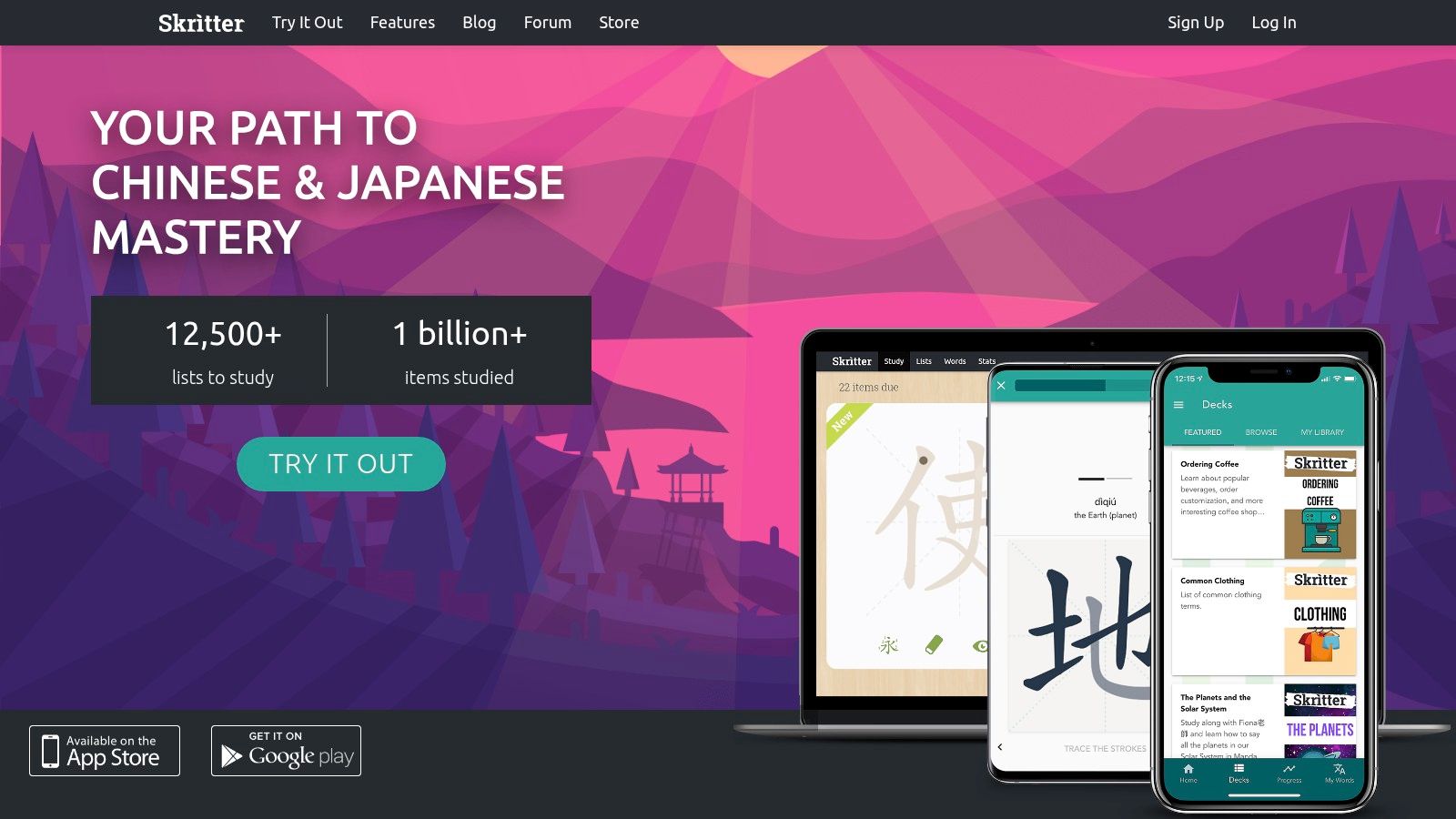
What makes Skritter one of the best apps for Mandarin tutors is its focus on active, hands-on practice. The app's core function is a sophisticated spaced repetition system (SRS) combined with stroke-level grading. Students don't just see a character; they must write it correctly from memory on their screen. The platform also contains thousands of pre-made vocabulary decks aligned with popular textbooks and standardized tests like the HSK, saving tutors countless hours of preparation time.
Key Use Cases & Features
- Assignable Writing Homework: Create and share custom vocabulary lists with students. You can monitor their practice and see which characters they struggle with the most.
- Textbook & HSK Alignment: Quickly assign decks that correspond directly to your curriculum, whether it's Integrated Chinese, New Practical Chinese Reader, or HSK levels 1-6.
- Reinforce Character Memory: The app’s tactile, graded practice helps students build a stronger connection between a character's meaning, pronunciation, and written form.
Pricing and Integrations
Skritter operates on a subscription model, with free access to a limited number of words. They also offer "Skritter Classroom" plans for schools. As a specialized practice tool, it does not integrate directly with tutoring management software. A tutor would assign homework in Skritter but use a platform like Tutorbase to schedule the lessons and handle billing for their services.
- Pros: Excellent real-time handwriting feedback, vast library of pre-made vocabulary decks, encourages daily practice.
- Cons: Subscription is necessary for meaningful use, narrowly focused on writing rather than all language skills.
- Website: https://skritter.com
4. Du Chinese
Du Chinese is a graded reading app designed to bridge the gap between textbook exercises and authentic materials. It offers a vast library of short stories and articles sorted by HSK level, making it an excellent tool for assigning manageable, level-appropriate homework. Tutors use it to build students' reading stamina and vocabulary in a controlled, engaging environment that feels less intimidating than native content.
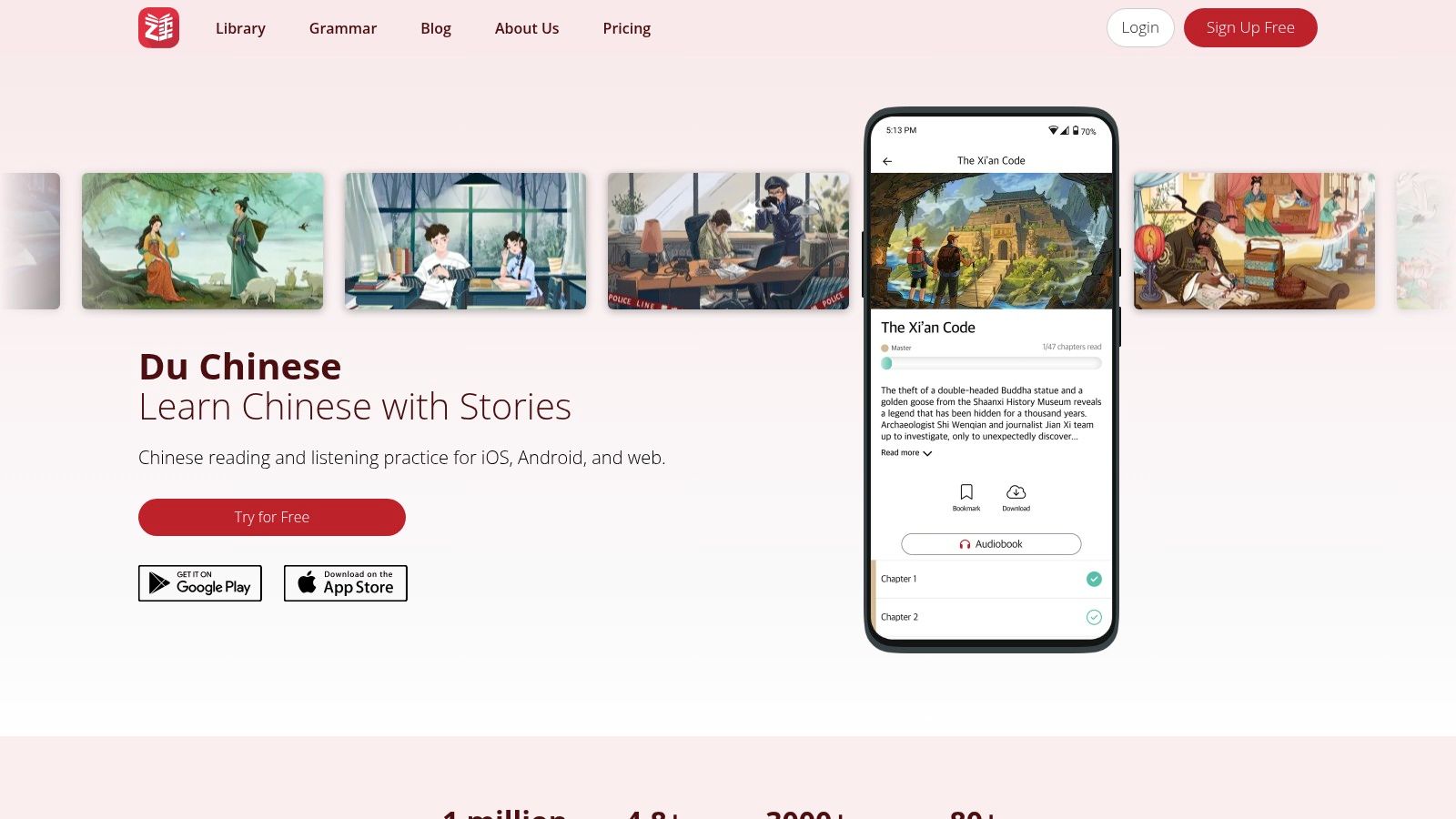
What sets Du Chinese apart is the combination of high-quality, human-voiced audio that syncs with the text and its clean user interface. This allows students to practice both reading and listening comprehension simultaneously. Features like one-tap dictionary lookups and pinyin toggles empower students to work independently, reducing friction and encouraging consistent practice outside of lessons.
Key Use Cases & Features
- Extensive Reading Homework: Assign stories based on a student’s current HSK level to build vocabulary and reading fluency in a low-stress way.
- Listening Comprehension Practice: Students can follow along with natural, human-narrated audio to improve their listening skills.
- In-Lesson Analysis: Use a story as the basis for a lesson, discussing grammar points, vocabulary, and cultural context found within the text.
Pricing and Integrations
Du Chinese offers a limited number of free lessons, with the full library accessible through a subscription. Tutors assign readings from Du Chinese and would then track completion and manage the student relationship within their core platform. For instance, you could assign a Du Chinese article as homework and log it in the student's lesson notes inside a system like Tutorbase.
- Pros: High-quality, level-appropriate content with audio, clean and user-friendly interface, excellent for independent student practice.
- Cons: Primarily focused on reading and listening skills, the full content library requires a subscription for each student.
- Website: https://www.duchinese.net
5. The Chairman’s Bao
The Chairman’s Bao (TCB) transforms current events into accessible, level-appropriate reading lessons for Mandarin learners. It moves beyond static textbook examples by providing a constant stream of articles on topics like technology and culture, all graded according to HSK levels. For tutors, this is a powerful tool for assigning relevant, engaging homework that reinforces vocabulary and grammar in a real-world context.
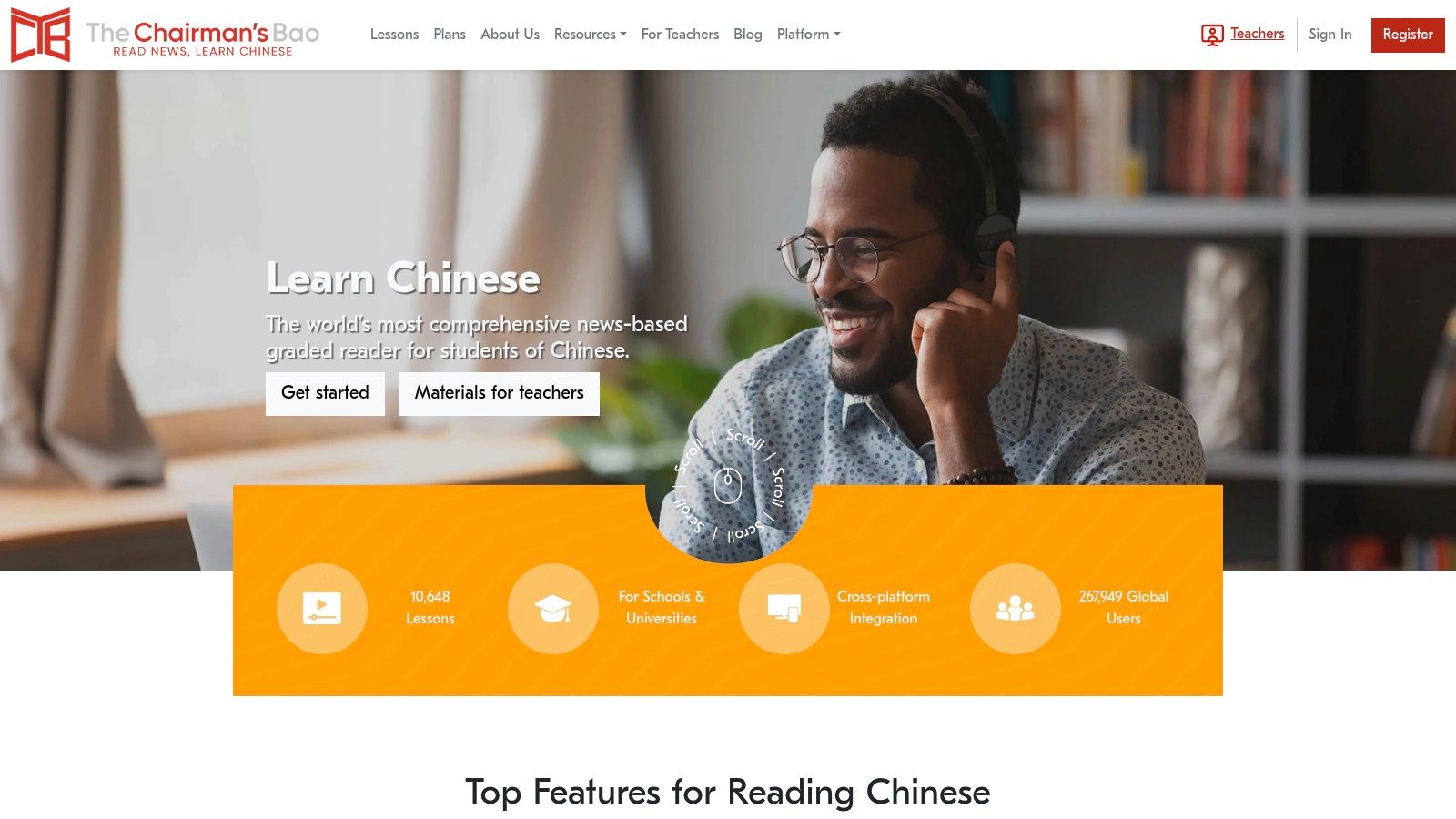
What makes TCB stand out among reading resources is its focus on news and its integrated learning tools. Each article includes a live dictionary, keyword lists, grammar points, and comprehension questions, creating a self-contained lesson. This structure allows tutors to assign reading that students can confidently tackle on their own, while the modern subject matter provides excellent conversation starters for subsequent lessons.
Key Use Cases & Features
- Topical Homework: Assign articles based on student interests or recent events to make learning feel current and relevant.
- Vocabulary Reinforcement: Use the built-in flashcard and vocabulary review systems to help students master new words from their reading assignments.
- Classroom Integration: The institutional plan provides a teacher dashboard to assign articles to specific students or groups and track their progress.
Pricing and Integrations
TCB operates on a subscription model, with monthly and yearly options. Schools and tutoring centers require the "Classroom" plan. It is a content platform and does not offer scheduling or billing features. A tutoring center using Tutorbase could easily manage schedules for a whole class using TCB, while Tutorbase automates the invoicing and payroll.
- Pros: Engaging, real-world content that keeps students motivated; excellent scaffolding with HSK-leveled articles and built-in learning tools.
- Cons: The best value requires a longer-term subscription commitment; individual licenses cannot be shared in a classroom setting.
- Website: https://www.thechairmansbao.com
6. Yabla Chinese
Yabla Chinese is a powerful tool for developing listening comprehension through authentic video content. The platform offers a vast library of clips featuring native speakers in real-world scenarios, from street interviews to TV dramas. For tutors, it serves as a dynamic resource for assigning engaging homework or for bringing colloquial language and cultural context directly into a lesson.

What makes Yabla one of the best apps for Mandarin tutors is its interactive player. Students can slow down playback, loop difficult phrases, and click on any word in the dual-language subtitles for an instant definition. This turns passive video watching into an active learning exercise. Tutors can use these features to deconstruct natural speech patterns and expose students to the speed of everyday Mandarin that textbooks often miss.
Key Use Cases & Features
- Listening Homework: Assign specific videos and use the built-in quizzes (dictation, fill-in-the-blank) to assess comprehension outside of class.
- In-Lesson Analysis: Play clips during sessions to spark discussions about colloquialisms, cultural nuances, or regional accents.
- Vocabulary in Context: Use the clickable subtitles to show students how words are used naturally by native speakers, reinforcing vocabulary learned in class.
Pricing and Integrations
Yabla operates on a subscription model, with specific pricing tiers for schools. While Yabla excels at providing listening material, it is not a management tool. Tutors and centers would use a platform like Tutorbase to schedule the lessons where Yabla content is discussed, manage student billing for the course, and track overall progress beyond just listening skills.
- Pros: Excellent for training listening with authentic, colloquial speech; interactive player with slow-playback and dual subtitles is highly effective.
- Cons: The user interface can feel a bit dated, and it is primarily focused on listening, so it isn't a comprehensive curriculum.
- Website: https://chinese.yabla.com
7. Anki
Anki is the gold standard for spaced repetition systems (SRS), a learning technique that uses increasing intervals between reviews to maximize long-term memory. For Mandarin tutors, it’s a powerful tool for creating and distributing custom vocabulary and character decks that go far beyond simple flashcards. Tutors can build decks perfectly aligned with their curriculum, complete with audio, images, and example sentences.
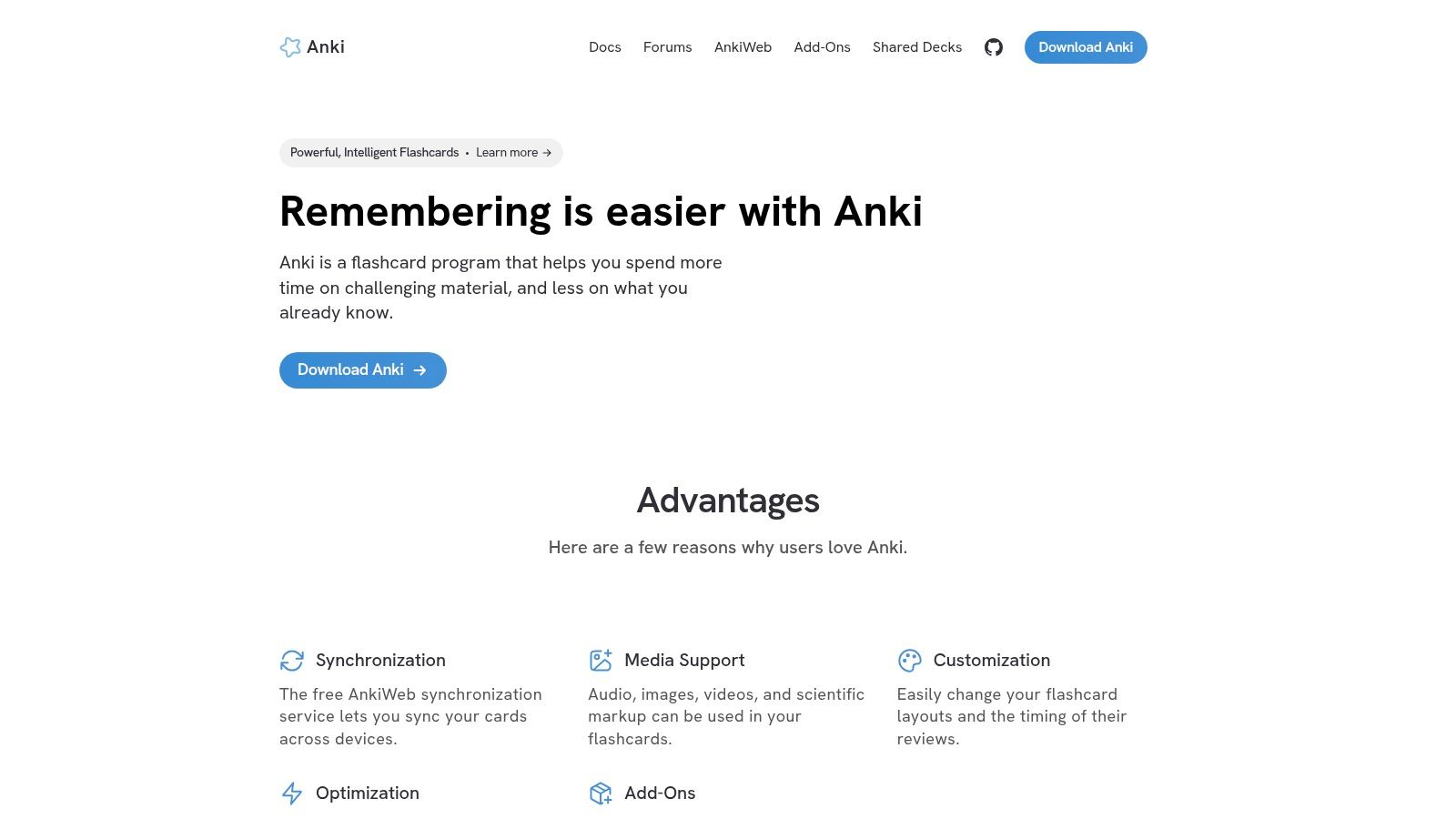
What makes Anki indispensable for serious language instruction is its extreme customizability. Unlike consumer apps with pre-made content, Anki gives tutors full control over card design and the SRS algorithm itself. You can create cards that test recognition, recall, and tones. The free AnkiWeb service syncs progress across devices, allowing students to study on their computer, web browser, or Android device seamlessly.
Key Use Cases & Features
- Custom Curriculum Decks: Build vocabulary decks for each lesson or unit, including pinyin, characters, audio clips, and images to reinforce learning.
- Long-Term Retention: Assign decks to students to ensure they are systematically reviewing old material, moving vocabulary from short-term to long-term memory.
- Tone and Character Practice: Create specialized cards that isolate difficult aspects of Mandarin, such as distinguishing between similar-sounding tones or recognizing complex characters.
Pricing and Integrations
Anki is free for Windows, Mac, Linux, and Android. The official iOS app is a one-time purchase. As a dedicated study tool, Anki does not integrate with other platforms. Scheduling lessons and managing billing would be handled separately in a comprehensive system like Tutorbase, which focuses on the administrative operations of a tutoring business.
- Pros: Extremely powerful and customizable SRS, free on most platforms, syncs across devices.
- Cons: Has a significant learning curve for both tutors and students, no built-in content library.
- Website: https://apps.ankiweb.net
8. Quizlet
Quizlet is a nearly universal digital flashcard platform. For Mandarin tutors, its main advantage is its ubiquity. Most students already have an account and know how to use it, drastically reducing onboarding friction for new tools. Tutors leverage Quizlet to create and share vocabulary sets with characters, pinyin, images, and even audio for practicing tones.
What makes Quizlet one of the best apps for Mandarin tutors is its simplicity and community features. You can quickly create a vocabulary set from a lesson's word list or browse a massive public library of pre-made sets. While public sets require vetting for accuracy, they provide a great starting point. The platform’s various study modes and interactive games like "Match" turn rote memorization into an engaging activity.
Key Use Cases & Features
- Student Practice: Assign flashcard sets for vocabulary, characters, or grammar patterns. Students can use various modes (Learn, Test, Match) to practice between lessons.
- In-Class Activities: Use the "Quizlet Live" game feature for a fun, competitive group review session that encourages teamwork and quick recall.
- Rapid Content Creation: Quickly build new study sets with images and text-to-speech audio to support lesson material. Share them with a single link.
Pricing and Integrations
Quizlet offers a free version with ads and core features. The Quizlet Plus subscription removes ads and unlocks advanced features like custom audio. The platform is a standalone study tool and does not directly integrate with business management systems like Tutorbase, which centralizes all administrative operations.
- Pros: Extremely familiar to most students, versatile study modes and games, large library of existing content.
- Cons: Publicly created sets can have errors, and the most useful creation features are part of a paid subscription.
- Website: https://quizlet.com
Lesson Delivery & Collaboration
9. Explain Everything
Explain Everything is a powerful digital whiteboard that goes beyond simple live annotation. It’s designed for creating dynamic, interactive presentations and video lessons, making it one of the best apps for Mandarin tutors who want to craft reusable teaching materials. Tutors use it to demonstrate stroke order, break down complex grammar with visual aids, and record mini-lessons that students can review asynchronously.
What sets Explain Everything apart is its focus on recording and multimedia. Tutors can create a lesson on the infinite canvas, record their voice and annotations, and export the entire session as a high-quality video. This is ideal for building a library of "flipped classroom" content. Its multi-user collaboration allows for real-time interaction, turning a static lesson into an engaging, shared workspace. For a closer look at similar tools, you can learn more about the best digital online whiteboards for tutoring.
Key Use Cases & Features
- Asynchronous Content Creation: Record step-by-step videos explaining character radicals, stroke order rules, or sentence patterns. Export as an MP4 file or web link for easy sharing.
- Live Interactive Lessons: Collaborate with students on an infinite canvas during live sessions, allowing them to draw characters and participate directly.
- Multimedia Integration: Embed images, PDFs, videos, and web pages directly onto the whiteboard to create rich, multi-sensory learning experiences.
Pricing and Integrations
Explain Everything offers a free plan with limitations on projects and recording length. Paid "Teacher" and "Class" plans unlock unlimited features. It functions as a standalone teaching tool. Tutors would manage their scheduling and invoicing in a dedicated platform like Tutorbase, which centralizes the administrative tasks of running a tutoring business.
- Pros: Excellent for creating reusable video mini-lessons and demonstrations, smooth live collaboration for small groups.
- Cons: The free tier is quite limited by project and time caps, and the best experience is on a tablet with a stylus.
- Website: https://explaineverything.com
10. BitPaper
BitPaper is a streamlined online whiteboard designed specifically with tutors in mind. Unlike general-purpose digital whiteboards, its features are tailored for educational settings, focusing on simplicity and persistence. Tutors use its infinite canvas to practice character writing and annotate texts, with a unique URL for each "paper" that students can revisit anytime for revision.

What makes BitPaper a strong contender is its "persistent paper" model. Every session is automatically saved to its unique link, creating a continuous log of a student's work. A Mandarin tutor can review a student’s character stroke order practice from last week's session at the start of a new one. The built-in voice and video chat mean tutors do not need to juggle separate apps like Zoom, simplifying the tech stack.
Key Use Cases & Features
- Persistent Lesson Records: Share a single link with a student that becomes their ongoing digital notebook for character practice, grammar notes, and lesson activities.
- Simple Student Onboarding: Students join sessions via a simple link without needing to create an account or download software, reducing technical friction.
- Integrated Communication: Conduct entire lessons within the platform using the built-in, reliable audio and video call functionality.
Pricing and Integrations
BitPaper operates on a freemium model. Students can join sessions for free, but tutors need a subscription to create and manage unlimited papers. For a comprehensive solution, a tutoring center would use a system like Tutorbase to manage student scheduling and invoicing, while using BitPaper as the dedicated digital classroom for lesson delivery.
- Pros: Designed specifically for tutors, persistent boards are excellent for revision, simple join-flow for students.
- Cons: Less feature-rich than some general-purpose whiteboards, requires a subscription for core tutor functionality.
- Website: https://bitpaper.io
11. ClassIn
ClassIn is a professional-grade virtual classroom designed specifically for online education, moving far beyond the capabilities of general-purpose video conferencing tools like Zoom. For Mandarin tutors, it provides an interactive, feature-rich environment built to replicate and enhance the physical classroom. It’s an ideal solution for schools that need robust tools for course management and live instruction.

What makes ClassIn one of the best apps for Mandarin tutors is its suite of teaching-focused tools. Tutors can use an interactive blackboard, share multiple types of media simultaneously, and create breakout rooms. The platform also includes LMS-style features, allowing you to manage courses, track attendance, and assign homework. This makes it a powerful option for established language schools needing a comprehensive online teaching solution.
Key Use Cases & Features
- Interactive Virtual Classroom: Use a multi-functional blackboard, screen sharing, and interactive teaching tools to create dynamic lessons.
- Course & Lesson Management: Organize your curriculum, schedule classes, and manage multiple teachers and students within the platform.
- Scalable Instruction: Conduct 1-on-1 sessions or manage larger group classes with features designed to support up to 12 on-stage participants.
Pricing and Integrations
ClassIn offers a free basic plan with limited features. Paid plans unlock longer session durations. While ClassIn handles the virtual classroom, it is not a full business administration tool. A platform like Tutorbase would manage the backend operations, ensuring tutors are paid correctly and students are billed automatically, while ClassIn serves as the front-end teaching environment.
- Pros: Purpose-built for online education with superior interactive tools, scales from solo tutors to large schools, includes basic LMS features.
- Cons: The desktop client is heavier than simple web-based tools, and pricing for advanced business tiers requires a sales consultation.
- Website: https://www.classin.com
12. Zoom
Zoom is the ubiquitous video-conferencing platform, making it a default choice for many Mandarin tutors. Its primary function is hosting reliable online video calls, but features like screen sharing, breakout rooms, and virtual whiteboards make it a highly functional digital classroom. Because so many students and parents are already familiar with it, Zoom minimizes technical friction and onboarding time.
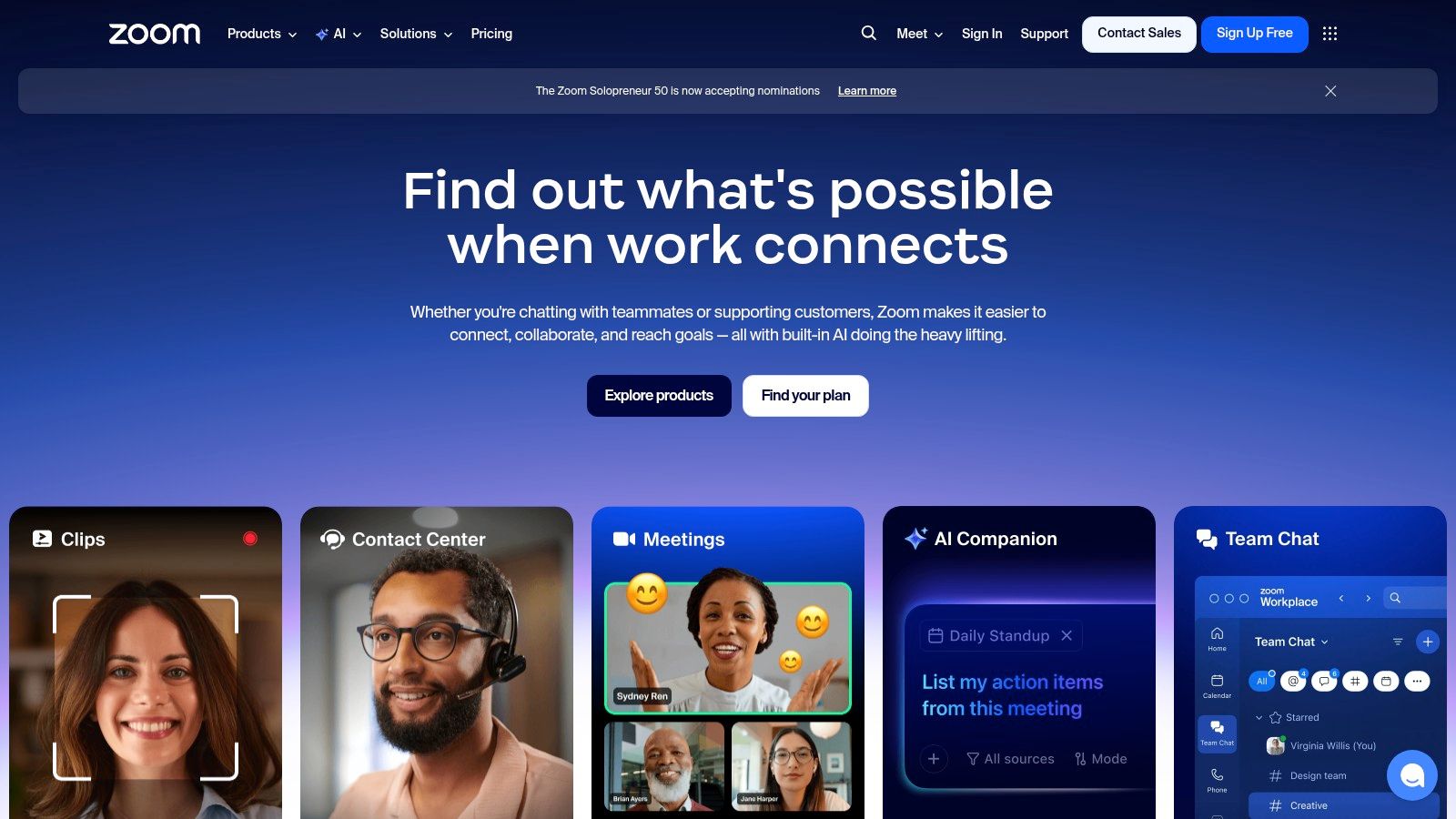
What makes Zoom stand out for tutors is its stability and broad feature set. Breakout rooms are perfect for group classes, allowing tutors to split students into pairs for conversational practice. The ability to record sessions to the cloud provides a valuable resource for students to review later. For comprehensive session review, knowing how to transcribe a Zoom meeting can be an invaluable asset.
Key Use Cases & Features
- Live Lesson Delivery: Host 1:1 or group classes with stable video, screen sharing for presentations or digital textbooks, and an interactive whiteboard.
- Group Practice: Use breakout rooms to facilitate small group conversations or pair work without disrupting the main class.
- Lesson Review: Record lessons and share them with students, providing a powerful tool for revision and catching up on missed classes.
Pricing and Integrations
Zoom offers a free "Basic" plan, but group meetings are limited to 40 minutes, which is often too short for a full tutoring session. Paid plans unlock longer meetings. While it handles the live lesson delivery, it does not manage business administration. A system like Tutorbase would handle scheduling Zoom lessons, managing student billing for them, and tracking attendance. Explore more options in our guide to the best video conferencing tools for online tutoring.
- Pros: Highly familiar to most students and parents, reliable performance, and robust features like breakout rooms.
- Cons: The free plan's 40-minute group limit is a significant constraint, and paid plans are a recurring subscription cost.
- Website: https://zoom.us
Top 12 Mandarin Tutor Apps — Feature Comparison
| Product | Core features | UX / Impact | Best for | Pricing |
|---|---|---|---|---|
| Tutorbase | Smart scheduling (Find Slot/Spot), attendance-driven invoicing, payroll, rooms, CRM, multi-branch | 60% admin time reduction, 3x faster onboarding, conflict detection, scales to 10k+ lessons/week | Tutoring centers, language schools, test-prep, multi-branch ops (5–100+ teachers) | Free trial; tailored quotes for multi-branch/high-volume |
| Pleco | Licensed dictionaries, OCR, flashcards, stroke order readers | Reliable offline lexical data; rich examples for lesson prep | Individual tutors & students needing fast lookups | Freemium core; one-time add-on purchases |
| Skritter | Stroke-level handwriting recognition, SRS, HSK-aligned decks | Measurable handwriting practice; strong retention | Writing-focused students; homework assignment at scale | Subscription |
| Du Chinese | Graded reading library, audio, pinyin/translation toggles, spaced review | Clean UX; easy assignment and cross-device access | Extensive reading homework for all levels | Freemium with subscription for full archive |
| The Chairman’s Bao | HSK-leveled news lessons, vocab recycling, teacher tools | High engagement with real-world topics; classroom options | Intermediate+ students and institutions | Subscription; classroom plans & multi-term discounts |
| Yabla Chinese | Native-speaker videos, interactive captions, slowed playback, quizzes | Excellent for listening & colloquial exposure; utilitarian UI | Listening homework and in-class discussion | Subscription; school/PO options |
| Anki | Highly configurable SRS, media-rich cards, free sync | Powerful long-term retention; steeper setup curve | Program-wide decks and power users | Free (desktop/web); iOS one-time purchase |
| Quizlet | Flashcards, Learn/Test modes, in-class games, class sharing | Very low onboarding friction; familiar to students | Quick set creation, in-class activities | Freemium; Plus subscription |
| Explain Everything | Infinite whiteboard, annotation, screen recording, collaboration | Great for reusable mini-lessons; best on tablet/stylus | Live online classes & asynchronous lesson creation | Freemium with education plans |
| BitPaper | Persistent boards, built-in voice/video, simple link access | Tutor-centric join flow; persistent session history | 1:1 and small-group tutoring with record-keeping | Subscription (tutor plan) |
| ClassIn | Virtual classroom, course management, attendance, multi-teacher support | Education-first feature set; scales for schools | Language schools and larger institutions | Tiered; contact sales for advanced plans |
| Zoom | Stable video, breakout rooms, recording, broad device support | Familiar to families; reliable at scale | General 1:1 and group tutoring | Freemium (limits); paid tiers available |
How to Integrate Your Apps and Automate Your School
Navigating the digital landscape to find the best apps for Mandarin tutors can feel like building a puzzle. You have powerful tools for teaching, from Pleco’s dictionary to Skritter’s character practice. Each app in this list offers a specialized solution that can dramatically enhance lesson quality and student engagement.
However, the focused functionality of these specialized tools can create a significant administrative challenge. Juggling a whiteboard app, a reading app, and a flashcard system is one thing. When you add disconnected systems for scheduling, invoicing, payroll, and student tracking, your operational efficiency plummets. This fragmentation is where growing language schools hit a wall, spending more time on manual data entry than on curriculum development.
From Teaching Tools to a Cohesive Business System
The core takeaway is this: you must separate your teaching stack from your operations stack. Your teaching stack, featuring apps like Du Chinese and ClassIn, is student-facing and designed to deliver a premium learning experience. Your operations stack is the internal engine that powers your business. Trying to run your operations with a patchwork of spreadsheets and calendars is unsustainable and hinders growth.
Consider these critical points when building your integrated system:
- Identify Your Core Bottleneck: Are you spending the most time manually creating invoices, chasing late payments, or trying to resolve scheduling conflicts? Pinpoint your biggest administrative pain point first.
- Prioritize Automation: The goal is to find tools that automate repetitive tasks. A system that automatically generates invoices from attendance records saves dozens of hours a month compared to manually creating them.
- Think in Lifecycles, Not Tasks: Instead of thinking "I need a scheduling app," think "How can I automate the entire process from a new lead inquiry to a paid trial lesson?" A unified platform addresses the entire student lifecycle.
The Power of a Central Nervous System
This is where a comprehensive tutoring management software like Tutorbase becomes the central nervous system for your Mandarin school. It doesn't replace Pleco or Skritter; it complements them by handling the entire business backend. It connects lead management, scheduling, billing, and payroll into a single, automated workflow.
For example, a new lead from your website's WhatsApp widget can be automatically added to your CRM in Tutorbase. From there, you can use the "Find Slot" feature to instantly find the perfect teacher and time for a trial, avoiding any double-bookings. After the lesson, attendance is marked, which automatically triggers the correct invoice and updates the teacher's payroll. This seamless integration eliminates manual work, reduces errors, and frees you to focus on what you do best: teaching Mandarin.
Frequently Asked Questions
What apps do Chinese tutors use?
Chinese tutors use a combination of tools. For business operations, they use management software like Tutorbase to automate scheduling, billing, and payroll. For student practice, they assign homework using apps like Skritter for writing, Du Chinese for reading, and Anki for vocabulary. For live lesson delivery, they use virtual classrooms like ClassIn or online whiteboards like Explain Everything.
What software do tutoring companies use?
Tutoring companies use tutoring management software to run their operations. These platforms, such as Tutorbase, replace fragmented tools like Google Calendar and QuickBooks. They provide a centralized system for multi-branch scheduling, automated invoicing from attendance, complex teacher payroll calculations, and managing rooms and resources, reducing administrative time by over 60%.
How can I make my online Mandarin classes more interactive?
To make online Mandarin classes more interactive, use purpose-built tools. Utilize digital whiteboards like BitPaper for collaborative character practice. Employ virtual classrooms like ClassIn which have built-in interactive features. For group work, use the breakout room feature in Zoom to facilitate student conversation practice.
Is there an app that teaches you to write Mandarin?
Yes, Skritter is widely considered the best app for learning to write Mandarin. It provides real-time, stroke-level feedback on your handwriting and uses a spaced repetition system (SRS) to help you memorize characters effectively. Tutors often use it to assign and track writing homework for their students.
How can I automate billing for my tutoring center?
You can automate billing by using a tutoring management platform like Tutorbase. The system connects student attendance directly to invoicing. When a tutor marks a lesson as "Attended," the platform automatically generates the correct invoice based on the student's pricing plan or deducts a credit from their prepaid package. This eliminates manual invoice creation and reduces payment errors.
Ready to stop wrestling with spreadsheets and fragmented apps? See how Tutorbase can automate your administrative tasks, from scheduling and billing to payroll, so you can focus on growth. Discover Tutorbase and reclaim your time.


