


To motivate learners, show them tangible progress today. The most effective method is a trio of actions: set clear micro-goals, give specific positive feedback, and grant them ownership over a small part of their lesson. This builds momentum and proves that progress is always within reach, completely changing the session's atmosphere.
Quick Wins to Boost Learner Motivation Today
Dealing with a disengaged student? The real issue is often a feeling of stagnation. When a learner feels stuck, their motivation tanks. Fast. The solution is to engineer small, manageable victories within a single lesson that prove they are moving forward.
These are low-effort, high-impact tactics grounded in behavioral psychology. You can start using them in your very next class to show immediate progress.

This approach is about manufacturing success. Forget the final destination, like acing the SAT, for a moment. Instead, focus entirely on the immediate next step. This simple shift makes the learning journey less intimidating and far more rewarding, which is critical for building long-term drive.
Break Down Goals into Micro-Tasks
A huge goal like "mastering quadratic equations" feels overwhelming. A student might not know where to begin, which is a classic recipe for procrastination. The fix is to deconstruct that big objective into bite-sized, achievable tasks for one session.
Instead of a vague goal, set a crystal clear "micro-goal" that can be accomplished in minutes:
- Successfully factor three simple trinomials without help.
- Correctly identify the verb in five consecutive sentences.
- Play the C-major scale once without a single mistake.
This gives the student a clear target and a defined finish line for their effort. When they complete that small task, they get an instant jolt of accomplishment. That feeling fuels their desire to tackle the next one. You turn a daunting marathon into a series of satisfying sprints.
Offer Specific and Actionable Feedback
Generic praise like "good job" is nice but lacks substance. To truly motivate, your feedback must be specific, timely, and focused on the effort and strategy, not just the result. This reinforces what a student did right and guides them on how to improve.
Instead of saying, "Great essay," try this: "I was really impressed with how you used a transition phrase to connect your first and second paragraphs. That made your argument so much clearer."
This kind of feedback achieves two crucial things. First, it proves you are paying close attention. Second, it gives the student a concrete, repeatable action they can use again. You show them how they succeeded, empowering them to replicate that success. This builds competence and confidence, the foundational pillars of motivation.
Introduce Elements of Choice and Autonomy
Giving students a sense of control, even in tiny ways, dramatically increases their investment in the learning process. Autonomy breeds ownership. It makes students feel like active participants instead of passive listeners. You do not have to hand over your entire lesson plan.
Small, simple choices are incredibly powerful:
- "Should we start with vocabulary or grammar today?"
- "Want to solve this problem on the whiteboard or in your notebook?"
- "Time to review. Do you want to use flashcards or do a quick quiz?"
These minor decisions empower students by respecting their preferences and pulling them into the process. In fact, a 2024 report found that 62% of students felt most engaged when learning about topics they chose themselves. By giving them a say, you tap directly into that powerful intrinsic drive.
To help you put these ideas into practice immediately, here’s a simple framework summarizing these quick wins.
| Motivation Quick Wins Framework | | :--- | :--- | :--- | | Strategy | Psychological Driver | Application Example (SAT Prep) | | Set Micro-Goals | Sense of Accomplishment: Creates tangible proof of progress within a short timeframe. | Instead of "Improve vocabulary," the goal is "Correctly define 5 new vocabulary words from this list in 10 minutes." | | Give Specific Feedback | Self-Efficacy: Reinforces how success was achieved, making it repeatable. | Instead of "Good work," say "Your strategy of eliminating the two obviously wrong answers first was really effective on that question." | | Offer Small Choices | Autonomy & Ownership: Increases personal investment and engagement in the task. | "For our reading comprehension practice, would you rather work on the passage about history or the one about science?" |
This table is a practical toolkit. Try picking just one of these strategies for your next tutoring session and watch how the dynamic shifts. Even the smallest changes can reignite a student's curiosity and drive.
Crafting a Motivating Learning Environment
Motivation is not just about what happens during a lesson. It is nurtured by the entire ecosystem you build around your students. Creating an environment where learners feel supported, seen, and eager to participate is a powerful strategy for long-term engagement.
One of the biggest factors, often overlooked, is the operational smoothness of your tutoring center. When administrative headaches like scheduling and billing run flawlessly, the focus for everyone, students, parents, and tutors, stays on learning, not on frustrating logistics. An efficient system frees your tutors to be more present and enthusiastic. That positive energy is contagious and directly impacts student motivation.
Designing the Physical and Digital Space
Your learning environment sends a strong message. A cluttered, disorganized room can feel chaotic and stressful. A well-designed space promotes focus and calm. The same principle applies to your digital presence, such as your student portal.
Think about these environmental factors:
- Flexible Seating: Giving students different seating options empowers them to choose how they learn best. This simple act can boost their sense of autonomy.
- Visual Progress Charts: Publicly displayed charts that track group progress or celebrate milestones make achievement visible and communal.
- A Seamless Student Portal: An easy-to-use digital portal for checking schedules or accessing resources reduces friction and makes students feel more in control.
These elements create a space where students feel comfortable and respected. When their environment is built to support them, they are far more likely to invest themselves fully in the process. A supportive environment also fosters a powerful sense of community.
The Power of Community in Learning
Building a strong sense of community is critical for student success and motivation. When students feel like they are part of a team, they become more willing to take risks, ask for help, and celebrate each other's achievements. It transforms learning from a solo activity into a shared journey.
For some fantastic, actionable strategies on this, check out this guide on How to Build Classroom Community in Your Classroom. This collaborative spirit fights the isolation that can accompany difficult subjects. A student struggling with a tough math concept is much more likely to persevere if they see peers working through similar challenges.
How Seamless Operations Boost Motivation
Administrative chaos is a silent killer of motivation. Picture a student arriving for a lesson only to find their tutor was double-booked or their room is unavailable. This friction creates a negative experience that crushes their enthusiasm before the lesson even starts.
When your operations run like a well-oiled machine, the learning experience feels professional and reliable.
- No Double-Bookings: A system like Tutorbase with built-in conflict detection ensures tutors and rooms are always available as scheduled, building trust.
- Automated Reminders: Timely email or SMS reminders reduce no-shows and help students stay accountable, reinforcing the importance of their commitment.
- Clear Billing: When invoices are accurate and automatically generated from attendance records, it eliminates confusing financial conversations.
Automating these backend tasks frees up your tutors and staff from spending hours on manual work. They can dedicate that time and mental energy to connecting with students. This operational excellence shows a level of care that makes students feel valued.
Use Personalized Learning Paths to Inspire Your Students
Nothing kills motivation faster than a one-size-fits-all curriculum. When every student gets the same material at the same pace, some get bored while others get left behind. Personalization turns a generic requirement into a compelling personal quest.
It starts with recognizing that each student has a unique mix of strengths, weaknesses, and goals. An initial assessment, whether a formal test or a diagnostic chat, gives you the critical data needed to build a learning journey just for them.
This focus on the individual fuels the tutoring industry's incredible growth. The global private tutoring market is expected to reach $201.8 billion by 2026. This surge is driven almost entirely by the shift toward personalized learning that helps students master complex topics on their own terms.
From Assessment to Actionable Plan
Once you have pinpointed a student's knowledge gaps, you can build their personalized learning path. This is not just a checklist of topics. It is a roadmap to success with clear, achievable milestones tied directly to that student's personal goals.
For a language student whose goal is to travel, their learning path should prioritize conversational skills and travel-specific vocabulary, not dense grammar rules. Every lesson feels immediately relevant and useful, which is a huge motivator. This entire process, from the physical space to digital tools, must work together to support this tailored learning.
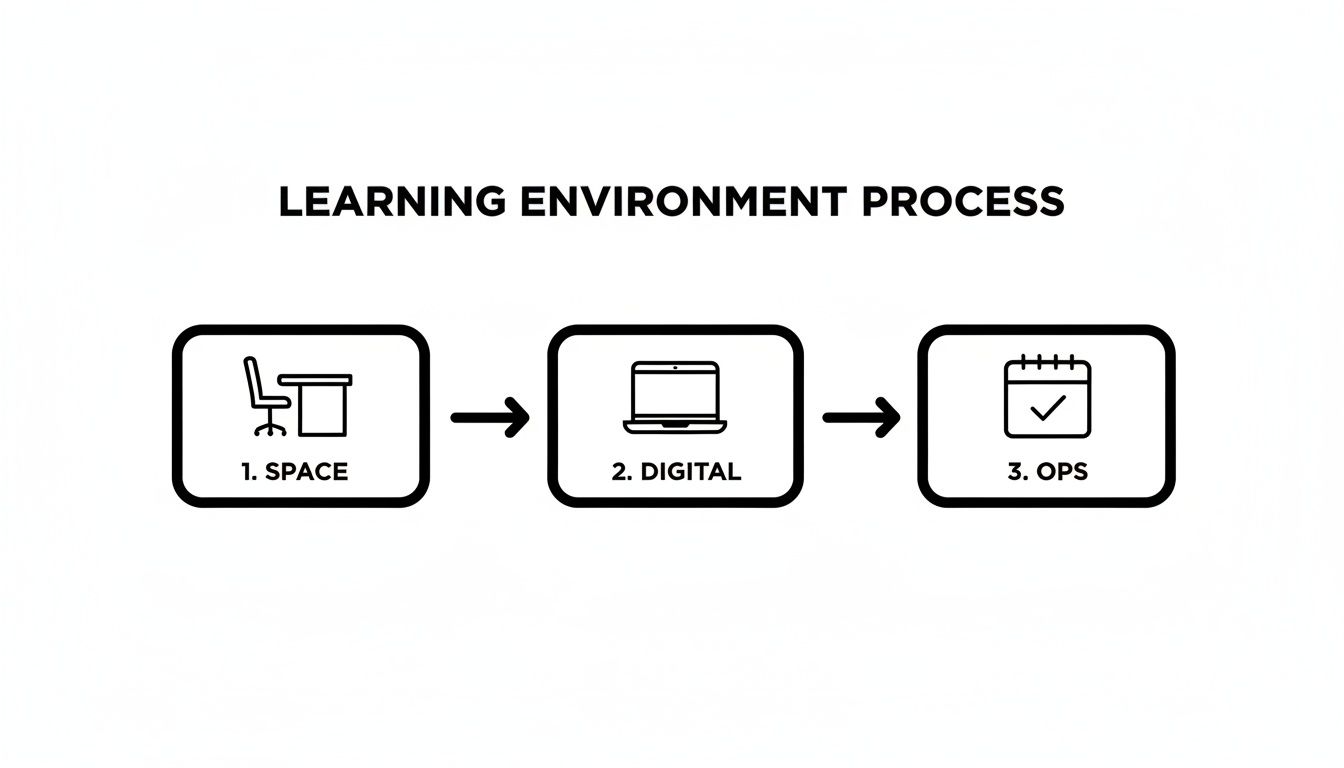
As you can see, a truly motivating experience depends on the seamless integration of your physical, digital, and operational elements, all working to support the student’s journey. When you give students a personalized path, you give them direction and control.
Documenting the Journey for Deeper Motivation
A personalized plan is only as good as its tracking. Your tutors need a central place to record progress, log observations, and adjust the plan on the fly. This is where a solid student management system becomes non-negotiable.
Consistent notes and progress tracking provide the data backbone for genuine individualization.
- Tutor Notes: After each lesson, tutors can log observations about what a student mastered or where they struggled. This creates a living record of their journey.
- Skill Progression: Instead of just tracking attendance, your system can monitor mastery of specific skills or curriculum levels (e.g., moving from A1 to A2 in French).
- Goal Alignment: All this data can be reviewed with the student and their parents, showing tangible progress toward their ultimate goals.
When a student sees a detailed history of their own improvement, logged consistently in a system like Tutorbase, it provides undeniable proof that their hard work is paying off. This visual evidence of growth is one of the most powerful tools for keeping learners invested for the long haul.
The Impact of a Personal Quest
Ultimately, a personalized learning path reframes the entire educational experience. It is no longer about passing a generic test. It is about conquering a personal challenge. This shift fosters deep, intrinsic motivation because the student feels the curriculum was designed for them.
This approach shows students you see them as individuals, not just another name on a roster. You understand their unique goals and have built a plan to help them get there. That level of personal investment is deeply validating. It turns learning into a collaborative partnership, and that is a recipe for sustained engagement.
Boosting Engagement with Technology and Flexibility
Today’s learners expect convenience, control, and options that fit their packed schedules. For a modern tutoring business, technology is a core driver of student motivation. Offering flexible learning models is about meeting students where they are. It tears down the logistical walls that can derail their progress.
From the student's perspective, easily switching from in-person to online for a hybrid class or booking a last-minute session makes them feel a sense of ownership over their education. That feeling is a powerful motivator.
Embrace Hybrid and Online Tutoring
One of the most effective ways to keep learners engaged is to offer a mix of in-person, online, and hybrid classes. This is a direct response to the complex schedules of modern families. The global online tutoring market is projected to grow by $112.2 billion by 2027. Learners are choosing the accessibility that digital platforms provide.
However, managing this flexibility can quickly become an administrative nightmare. Juggling hybrid attendance, different pricing, and coordinating schedules across multiple delivery modes is where many centers get bogged down. This is precisely where a unified management platform makes all the difference.
Make Flexibility Operationally Seamless
To motivate learners with flexible options, the experience must be smooth. Any friction in the process, booking errors, confusion over joining a class, incorrect invoices, negates the benefit. This is where integrated technology gives you a serious edge. A system with robust scheduling capabilities can handle these complexities effortlessly.
- Hybrid Attendance Tracking: A tutor can mark a student as "Attended (In-Person)" or "Attended (Online)" in the same class roster, keeping records accurate.
- Conflict-Free Booking: Software like Tutorbase automatically detects conflicts with its "Find Slot" feature, preventing double-bookings for teachers or rooms.
- Clear Communication: Automated reminders and notifications keep everyone in the loop. This cuts down on no-shows and ensures students know where to be.
If you are looking for immediate strategies to bring modern tools into your lessons, check out this AI teaching hack designed to get students more involved. The goal is to make operational excellence invisible. Students just experience a reliable, professional service that adapts to their needs.
A single platform like Tutorbase gives you at-a-glance visibility into your entire operation. This is the only way to offer true flexibility without creating chaos. When students feel their tutoring center is modern, responsive, and built around their lives, their engagement and loyalty naturally follow.
How to Track Progress and Celebrate Milestones
Motivation feeds on momentum. When students can see that their hard work is paying off, they become more invested in their own learning. This creates a powerful feedback loop that shows them their effort leads to real results.
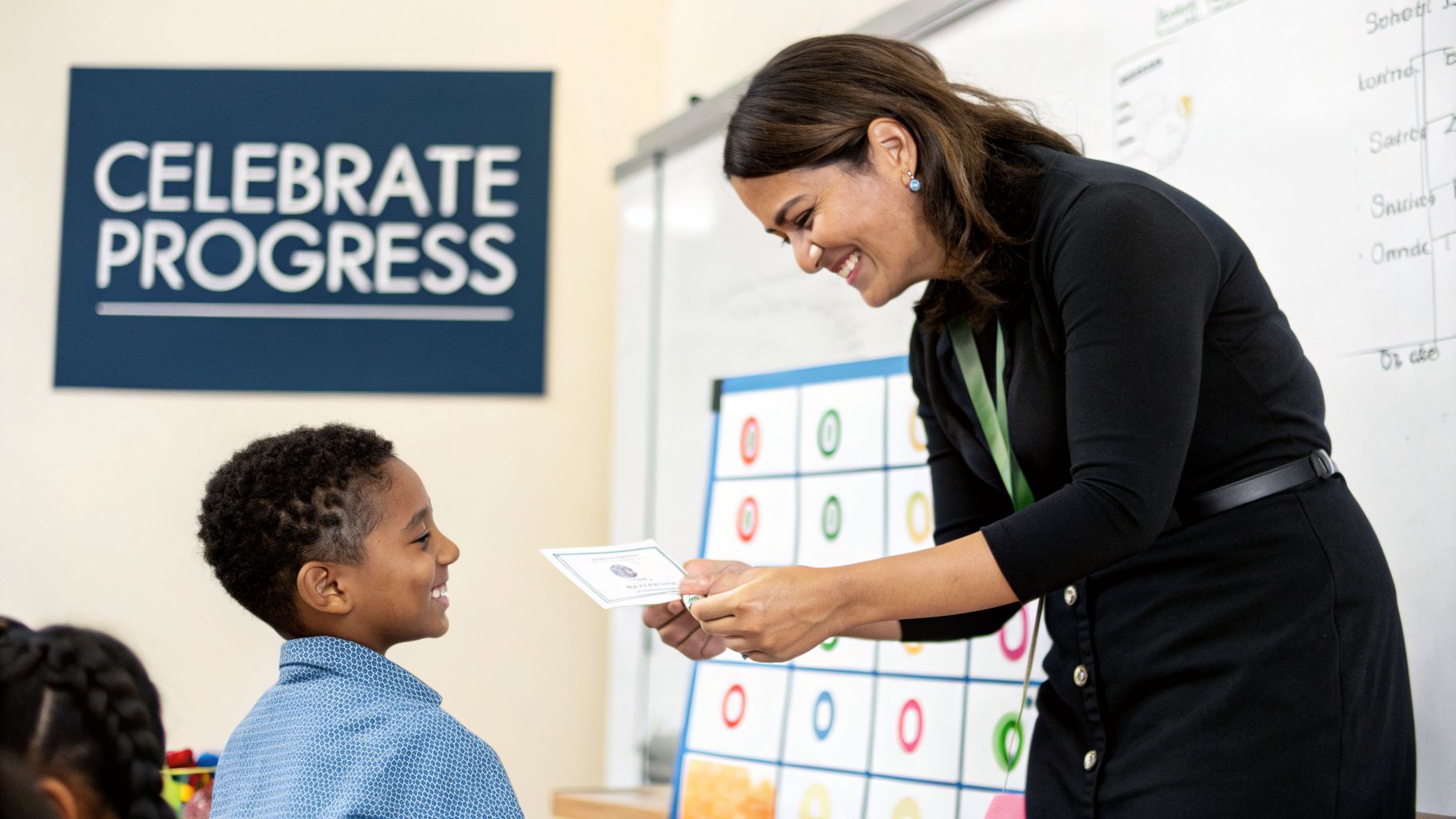
The trick is to look beyond just test scores. Real progress includes confidence boosts, better study habits, or tackling a tough problem. By building a system that recognizes both big and small wins, you create a culture of improvement that keeps learners coming back.
Moving Beyond Test Scores
Grades are important, but they only tell half the story. A student might fail a test but make a huge leap in critical thinking. If you only focus on the grade, you miss an opportunity to show them they are still moving forward. This is where consistent, detailed teacher notes become your secret weapon.
- Be Specific in Your Notes: Encourage tutors to get granular. Instead of "struggled with math," they should write notes like, "Nailed two-step equations but still needs practice setting up word problems."
- Track Confidence: Tutors can jot down when a student speaks up more, volunteers to solve a problem, or hesitates less than last week.
- Notice Good Habits: Are they coming to class more prepared? Did they use a new organizational trick you taught them without a reminder? Track it.
These are powerful data points. They let you paint a complete picture of a student's journey, which is what you need to keep them and their parents on board. For a deeper dive, check out our guide on how to track student progress.
Implementing Formal and Informal Celebrations
Recognition should not be saved for the end-of-term report card. A mix of formal awards and informal, in-the-moment praise creates a steady stream of positive reinforcement. A small, unexpected reward can be far more powerful than a planned one. It shows you are paying attention to the effort, not just the final grade.
Informal celebrations are the quick wins. A simple high-five for figuring out a tricky concept or specific verbal praise ("That was a fantastic question!") makes a student feel seen.
Formal milestones give them bigger goals to aim for:
- Level Completion Certificates: Awarding a certificate for finishing a language level (like A2 Spanish) gives them a tangible trophy for their hard work.
- "Skill of the Week" Shout-Outs: Highlight a student who showed amazing problem-solving skills or was a great collaborator.
- Progress-Based Perks: Offer a small reward, like choosing the next warm-up activity, for hitting a specific learning goal.
Creating a Circle of Encouragement
Parental buy-in is a massive force multiplier for motivation. When parents are kept in the loop, they can reinforce your work at home. Share progress reports that blend test scores with qualitative tutor notes to keep them engaged. This creates a powerful circle of encouragement around the student.
The demand is clearly there. Parents are driving this trend because they want clear outcomes. Tutoring centers that deliver transparent progress tracking will win. You can dig into more stats about the growing demand for personalized instruction at TutoringMavericks.com. When you consistently track progress and celebrate every step, you reframe learning into an exciting journey of visible growth.
FAQ: Your Top Learner Motivation Questions
What is the single most effective way to motivate a disengaged student?
The most effective way to motivate a disengaged student is to manufacture a "quick win." Scale the immediate task down to something small, specific, and achievable in a single session. For example, instead of "understanding fractions," ask them to correctly identify the numerator in just three examples. Celebrate that success to prove progress is possible and rebuild their confidence.
How do I motivate a student who is frustrated with slow progress?
To motivate a student frustrated with slow progress, you must make their small improvements visible. Use a student management system to track and highlight consistent gains beyond test scores, such as improved study habits, mastery of a specific sub-skill, or a noticeable boost in confidence. Showing them a logged record of their journey reframes the narrative from "I'm not there yet" to "Look how far I've come."
How do you keep students motivated in tutoring?
To keep students motivated in tutoring, focus on three areas: personalization, progress, and ownership. Create personalized learning paths that align with their goals. Track their progress with detailed notes and celebrate small wins frequently. Finally, offer them small choices during lessons, such as the topic or type of activity, to give them a sense of autonomy and ownership over their learning.
What are the main types of learner motivation?
The two main types of learner motivation are intrinsic and extrinsic. Intrinsic motivation comes from within; the student learns because they find the subject interesting, enjoyable, or personally fulfilling. Extrinsic motivation comes from external factors, such as earning a good grade, receiving praise from a parent or tutor, or avoiding a negative consequence. Effective tutors leverage both types.
Can technology hurt student motivation?
Yes, technology can hurt motivation if it is implemented poorly. A clunky booking system, confusing online classroom software, or an unreliable student portal creates friction and frustration. The right technology, like Tutorbase, automates administrative tasks and gets out of the way. It simplifies logistics, provides reliable access, and enables flexible learning without adding complexity, creating a smooth experience that supports motivation.
How can I keep advanced students motivated when they get bored easily?
Keep advanced students motivated by providing novel challenges and a sense of ownership. Personalize their learning path with more complex problems or introduce adjacent topics they are curious about. You can also give them a leadership role, such as mentoring a younger student on a concept they have mastered. This reinforces their understanding and taps into a deeper sense of purpose.
Ready to eliminate the administrative chaos that drains motivation from your tutors and students? Tutorbase consolidates scheduling, billing, and progress tracking into one seamless platform, giving you back 60% of your admin time. See how you can build a more motivating learning environment by signing up at tutorbase.com/register.


