


Key Takeaway: The best platforms for voice lesson scheduling range from simple tools like Calendly for solo instructors to comprehensive management systems like Tutorbase for multi-teacher music schools. Choosing the right platform depends on your studio's size, complexity, and growth goals, with integrated systems offering significant time savings on scheduling, billing, and payroll.
Managing a voice studio, whether you're a solo instructor or directing a multi-teacher school, involves far more than just teaching. Administrative tasks like scheduling lessons, preventing double-bookings, managing practice rooms, chasing payments, and calculating payroll can easily consume over 10 hours per week. Relying on fragmented tools like Google Calendar, QuickBooks, and spreadsheets often creates more problems than it solves, leading to costly booking errors and lost revenue.
This comprehensive guide will help you find the perfect harmony between teaching and administration. We will break down the 12 best platforms for voice lesson scheduling, analyzing their specific strengths, weaknesses, and ideal use cases. You will learn how each platform handles critical functions, from automated scheduling and conflict detection to integrated billing and complex payroll models. We will explore how dedicated software can solve the core operational challenges that prevent your studio from scaling effectively.
1. Tutorbase
Best For: Mid-to-large voice studios, music schools, and multi-branch tutoring centers seeking to automate complex operations from a single platform.
Tutorbase is AI-powered tutoring management software designed to replace fragmented workflows. It consolidates scheduling, billing, payroll, and room management, making it an exceptional choice for established voice academies that need to eliminate administrative bottlenecks and prevent costly errors like double-bookings. Its architecture is built to handle high-volume operations, supporting from 50 to over 10,000 lessons per week.
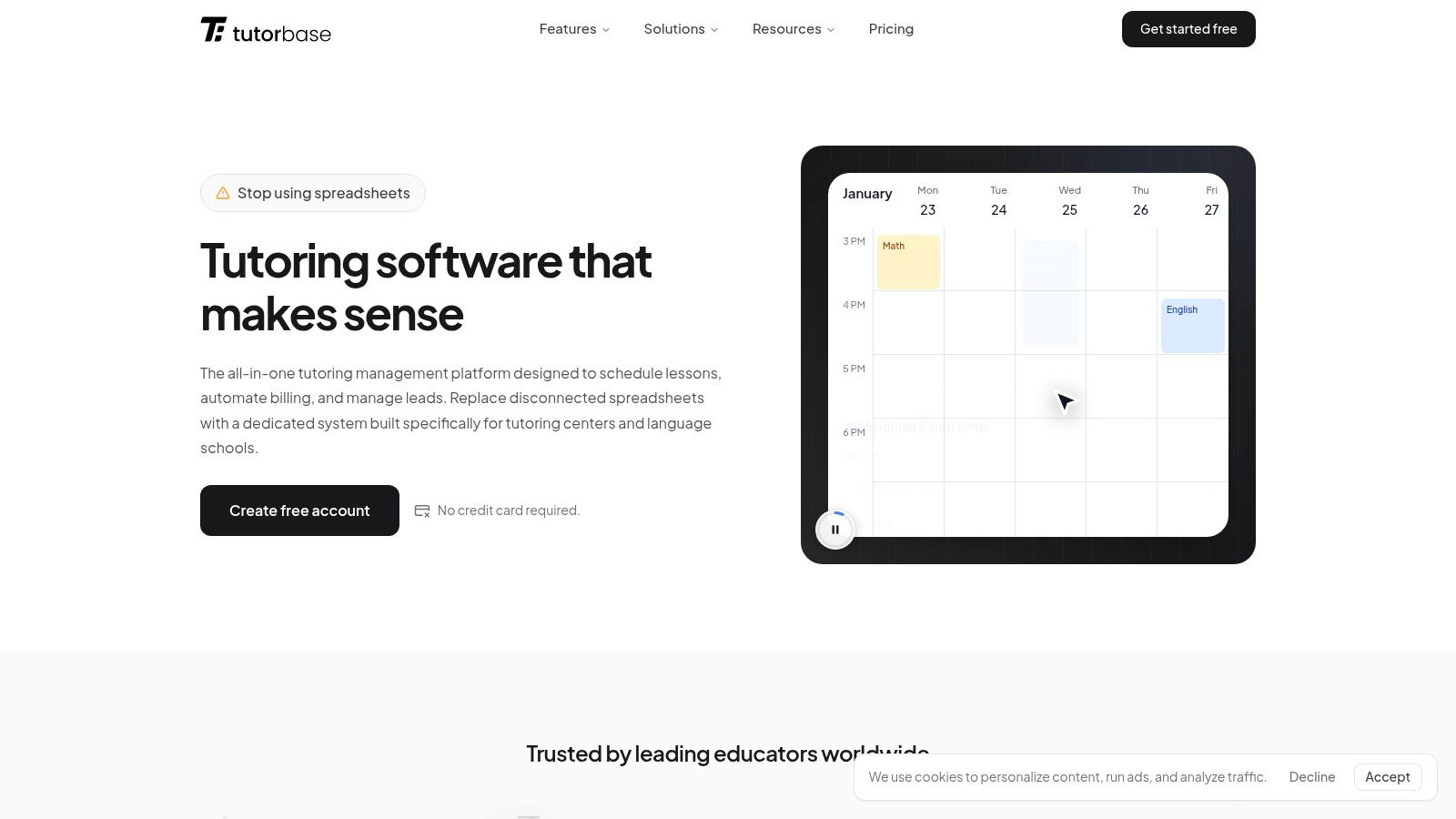
What sets Tutorbase apart is its deep, tutoring-specific automation. The platform’s "Find Slot" feature intelligently generates optimal teacher, room, and time combinations, reducing booking time from 10 minutes to under two. Its attendance-driven invoicing means that once a voice teacher marks a student as "Attended," the system automatically generates the correct invoice and adjusts teacher payroll. This direct link between attendance and finance removes hours of manual reconciliation.
Key Features and Use Cases
- Intelligent Scheduling: The "Find Slot" feature allows an admin to instantly find available teachers and rooms for a new student. The "Find Spot" feature locates an open seat in an existing group class for a make-up lesson, maximizing class utilization and efficiency.
- Advanced Payroll Models: Tutorbase supports varied pay structures common in music education. The system automates complex calculations for instructors paid per-hour, per-student, revenue share, or with premiums for weekend slots.
- Integrated Lead Management: A native WhatsApp widget captures inquiries directly into a CRM pipeline. This allows you to track prospective students from initial interest through trial lessons and full enrollment, improving conversion rates by up to 3x.
- Multi-Branch & Hybrid Support: For schools with multiple locations or those offering both in-person and online voice lessons, Tutorbase provides centralized management. You can track room capacity across different branches and manage hybrid classes from one dashboard.
Pricing and Onboarding
Tutorbase does not publish its pricing publicly. You must book a demo for a quote tailored to your organization's size. While this slows the initial evaluation, it reflects a consultative approach suited for complex operations. The platform offers a free account (no credit card required) and provides free migration assistance from systems like Teachworks, TutorCruncher, or spreadsheets.
Pros:
- End-to-End Automation: Seamlessly connects scheduling, attendance, invoicing, and payroll, reducing admin time by a reported 60%.
- Built for Tutoring Complexity: Manages multi-branch room capacity, hybrid classes, and advanced payroll rules that generic schedulers cannot handle.
- Powerful Lead-to-Enrollment CRM: Integrates WhatsApp and web forms to capture and convert new students more effectively.
Cons:
- Opaque Pricing: Requires contacting sales for a quote, which may not suit buyers who prefer transparent, self-serve tiers.
- Potential Overkill for Solo Tutors: The extensive feature set is optimized for growing centers and may be more than a solo voice coach with simple needs requires.
Website: https://tutorbase.com
2. My Music Staff
My Music Staff is a highly regarded, all-in-one studio management platform designed specifically for music teachers, making it one of the best platforms for voice lesson scheduling. It centralizes key administrative tasks, combining a robust lesson calendar with integrated invoicing, payment processing, and a dedicated portal for students. This focus on music-specific workflows means it elegantly handles the unique needs of a voice studio, from tracking practice time to managing a lending library.
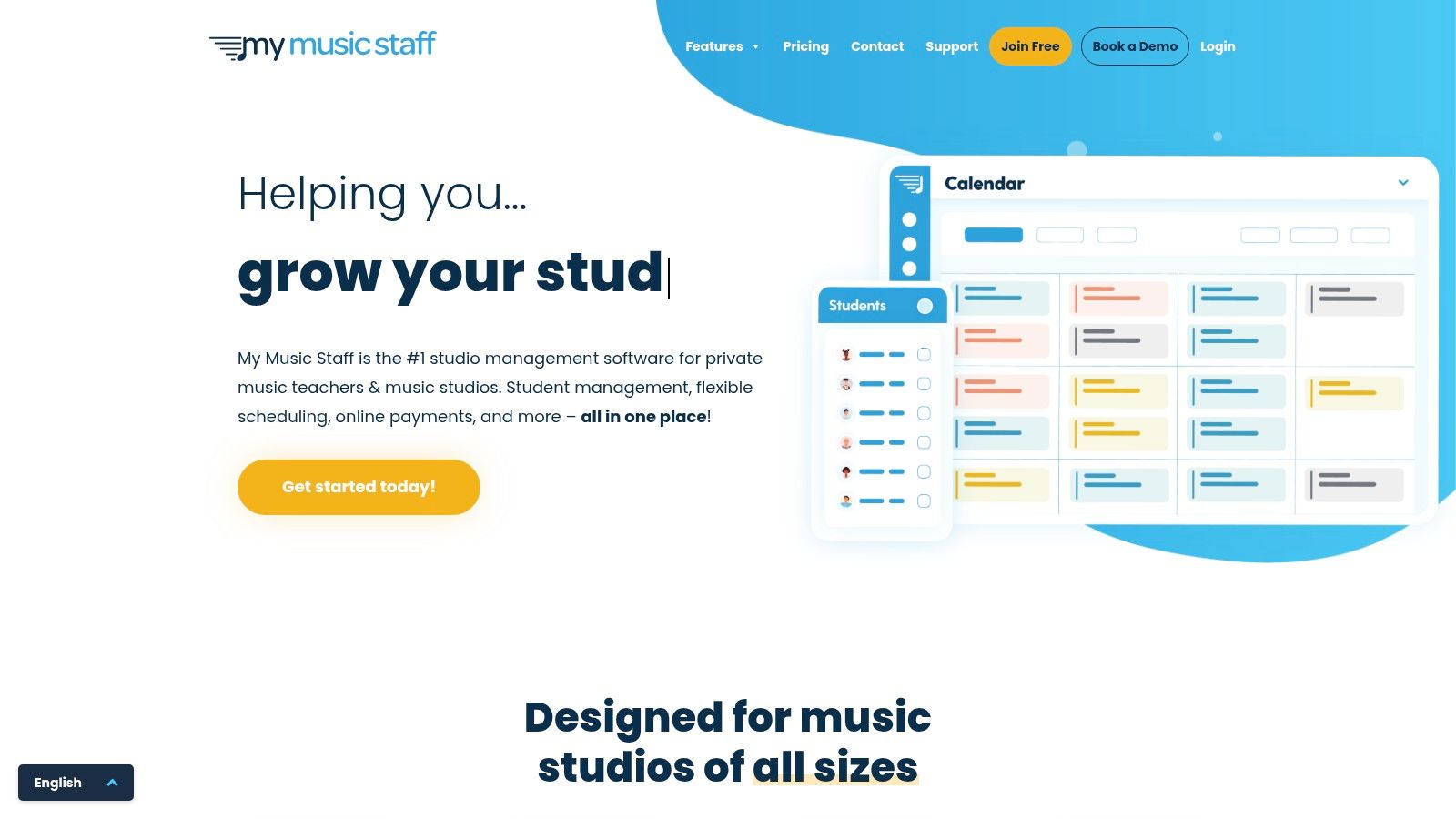
The platform empowers students with self-service options, allowing them to view the calendar, register for open slots, and cancel lessons according to your predefined policies. For instructors, the system automates invoicing based on completed lessons and simplifies communication through bulk email and SMS features. The transparent, flat-rate pricing is particularly appealing for solo teachers and small but growing studios. It's an excellent choice for those who need more than basic scheduling and prefer a system built with their industry in mind.
Key Features & Considerations
- Best For: Solo voice teachers and small to mid-sized music studios needing a comprehensive management solution.
- Pricing: Starts at a low monthly flat rate for solo teachers, with a small additional fee per extra teacher. All features are included without tiered plans.
- Pros: Transparent pricing with a generous 30-day free trial, unlimited student capacity, and strong, music-centric features like progress notes and a repertoire library.
- Cons: The user interface feels dated compared to newer platforms, and the per-teacher fee can become costly for larger organizations.
3. Duet Partner (formerly Music Teacher’s Helper)
Duet Partner, previously known as Music Teacher’s Helper, is a studio management platform built by music teachers. This makes it a natural fit for our list of the best platforms for voice lesson scheduling, as its workflows align perfectly with the daily operations of a music studio. The platform shines with its "Smart Scheduling" feature, which matches student availability with open teacher slots, simplifying the often-complex task of finding the right lesson time.
Beyond scheduling, Duet Partner offers a comprehensive suite of tools, including automated invoicing and family-based payment processing that supports ACH and credit cards. Students can self-schedule, and the platform handles the administrative follow-up. Its pricing model is particularly attractive for solo instructors or small studios looking for a full feature set without a high subscription cost. While it has a small transaction fee, the low monthly fee presents a compelling package for voice teachers.
Key Features & Considerations
- Best For: Independent voice teachers and small music studios who want an affordable, all-in-one system with music-specific terminology.
- Pricing: A very low monthly subscription fee that includes all features. A 1% platform fee is applied to transactions processed through the system.
- Pros: Highly affordable subscription, features designed specifically for music instruction, robust automated billing, and actively maintained with clear support resources.
- Cons: The 1% platform transaction fee adds a variable cost, and it has a smaller ecosystem of third-party integrations compared to more generalized scheduling software.
4. TeacherZone
TeacherZone is a comprehensive, multi-teacher business platform designed for studios that teach music, dance, and other arts. It serves as an excellent option for growing voice programs seeking a single system for scheduling, billing, and student engagement. The platform combines lesson scheduling with automated billing, integrated messaging, and a robust content delivery system, allowing instructors to share assignments and host unlimited videos. This makes it a powerful tool for studios that offer hybrid or online learning.
The platform provides dedicated logins for students and parents, enhancing communication with features like text and email reminders. For larger organizations, TeacherZone supports multiple locations and offers concierge onboarding to streamline setup. Its broad feature set is built to handle the operational complexity of a scaling business, moving beyond simple scheduling to become a central hub for studio management. While the entry price is higher than single-teacher tools, the per-student pricing caps provide cost predictability as the studio grows.
Key Features & Considerations
- Best For: Mid-to-large voice studios, multi-teacher music schools, and franchises needing an all-in-one management platform.
- Pricing: Per-student pricing with month-to-month plans and no long-term contracts. Higher tiers include concierge onboarding.
- Pros: Per-student pricing caps make costs predictable, robust portals for students and parents, and strong communication tools. Unlimited video hosting is a major plus.
- Cons: The entry price is higher compared to solo-teacher software, and the extensive feature set can present a learning curve for new administrators.
5. Fons
Fons is a specialized scheduling and billing platform designed with the independent lesson provider in mind, making it a powerful tool for voice lesson scheduling. It distinguishes itself by focusing on automating the financial side of a teaching business, particularly through its robust auto-billing and policy enforcement features. The platform’s core mission is to eliminate invoice chasing and simplify payments, allowing instructors to concentrate on teaching rather than administrative tasks.
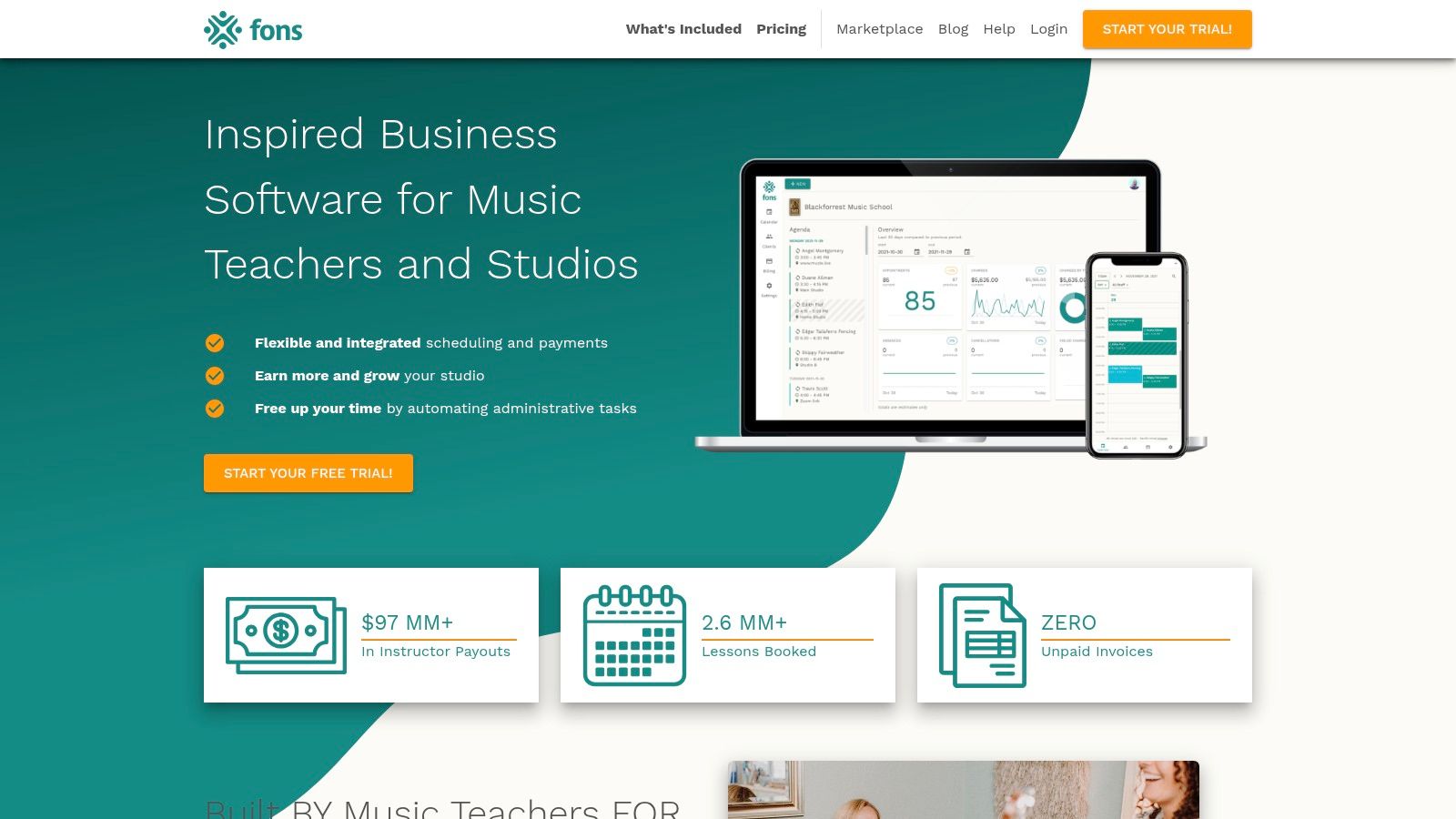
The platform empowers teachers to set up subscription or package-based payments, which are automatically charged according to the schedule. It also strictly enforces cancellation policies, automatically charging for late cancellations or no-shows based on the rules you define. Features like automated reminders, time-zone detection, and detailed income reporting further streamline operations. While it doesn't offer the comprehensive studio management features of larger systems, its focused approach makes it an excellent choice for solo instructors prioritizing financial stability.
Key Features & Considerations
- Best For: Solo voice teachers and small studios who want to automate billing and eliminate payment collection issues.
- Pricing: Plans scale based on the number of staff members, with a plan for solo providers and tiers for growing businesses.
- Pros: Purpose-built for lesson businesses to reduce administrative work, strong backing from MakeMusic, and excellent automated billing and cancellation policy enforcement.
- Cons: Lacks broader learning management (LMS) or curriculum tools and does not include a marketplace feature to help teachers find new students.
6. Pike13
Pike13 is a powerful studio management platform designed for growth, particularly for businesses that manage classes and appointments across multiple sites. For voice studios scaling up or operating in several locations, it provides a robust infrastructure for scheduling, client management, and billing. The platform excels at handling complex offerings like group classes, workshops, and recurring appointments, complete with waitlists and detailed attendance tracking, making it one of the best platforms for voice lesson scheduling for larger organizations.
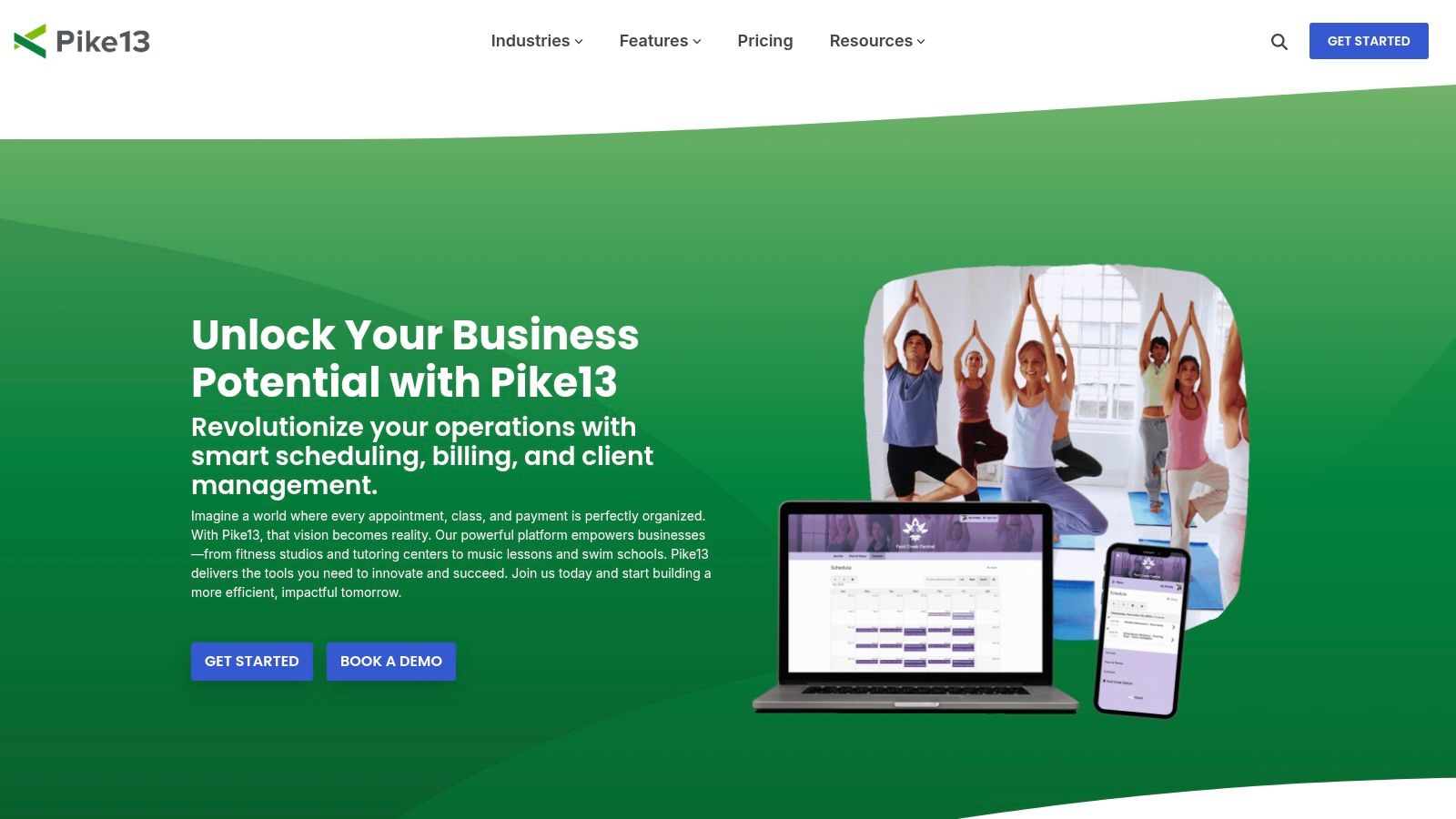
A key differentiator for Pike13 is its focus on branding and the client experience. It offers branded mobile apps for both clients and staff, creating a professional, seamless interface for booking and communication. Its flexible system for selling passes, memberships, and packages automates recurring revenue and simplifies client payments. While the comprehensive feature set may be more than a solo teacher needs, it’s an ideal solution for an established voice school aiming to streamline operations and provide a polished booking experience.
Key Features & Considerations
- Best For: Larger voice studios, multi-location music schools, and franchises needing advanced scheduling and branded client apps.
- Pricing: Some plans are sales-led and not fully public, requiring a demo or direct contact. Flat-rate models are available.
- Pros: Excellent multi-location management and branded app capabilities, add-ons for retail and advanced reporting, and a strong focus on class and membership-based models.
- Cons: The extensive feature set can be overkill for solo voice teachers, and the lack of transparent public pricing for all tiers can be a hurdle.
7. Jackrabbit Class
Jackrabbit Class is a powerful and highly scalable management system originally built for high-volume activities like dance and gymnastics, but it is also one of the best platforms for voice lesson scheduling at larger music academies. It excels at handling complex class schedules, online family registration, and recurring tuition billing for hundreds or even thousands of students. The platform's strength lies in its ability to manage large-scale operations with detailed reporting and integrated payment processing.
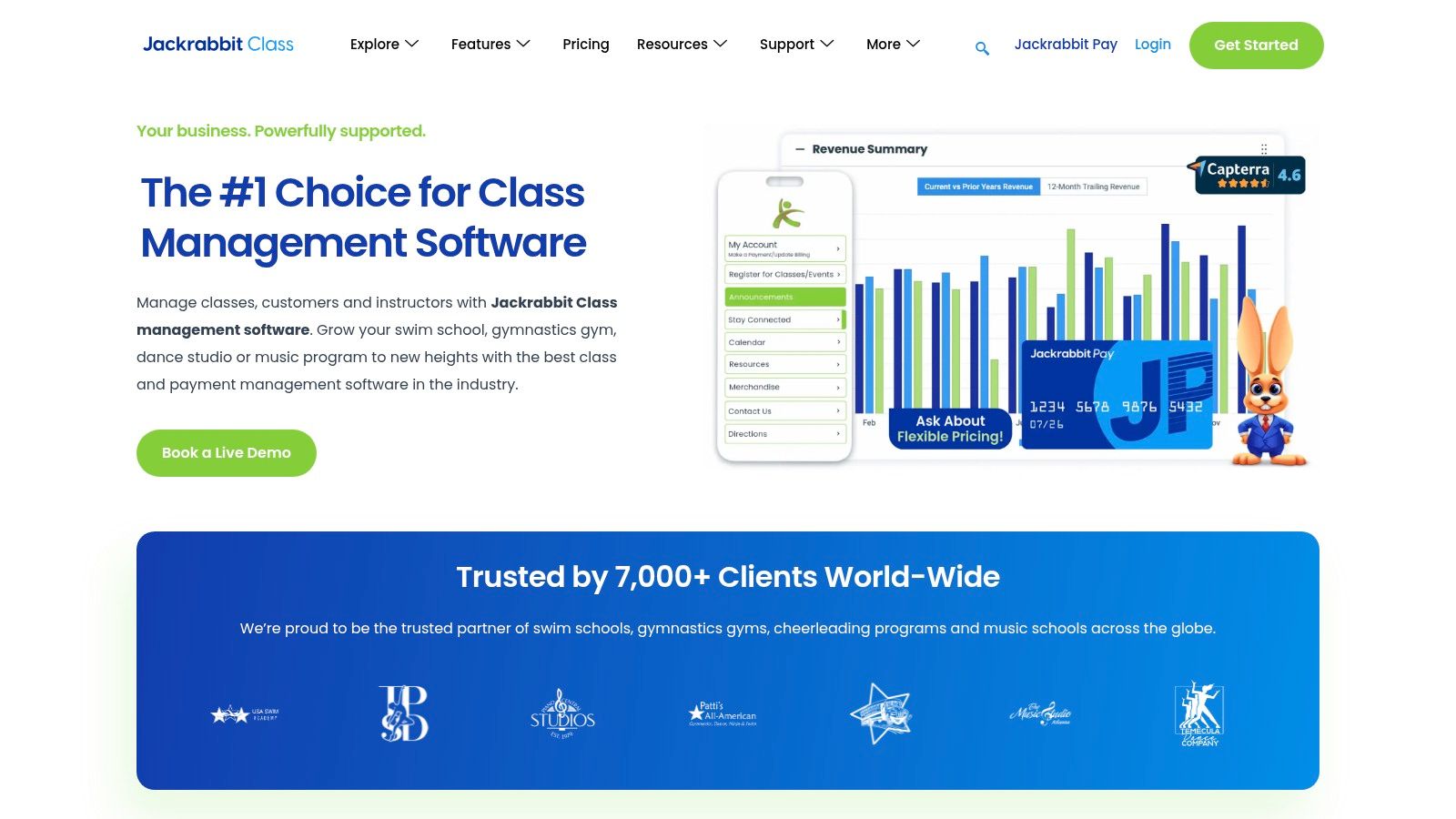
For a growing voice academy offering group classes, private lessons, and workshops, Jackrabbit provides the infrastructure to manage it all under one roof. Its parent portal allows families to enroll multiple students, view schedules, and manage payments from a single account. While it may lack some niche, music-specific features, its enterprise-level architecture is ideal for multi-location schools or large programs that prioritize scalability and detailed financial reporting. The free data import service makes migrating a large student base a manageable process.
Key Features & Considerations
- Best For: Large, multi-teacher music academies and multi-disciplinary schools that offer voice lessons alongside other programs.
- Pricing: Tiered pricing based on the number of active students, which can be cost-effective for programs with high enrollment.
- Pros: Excellent scalability for thousands of students, robust support including free data import, and a 90-day money-back guarantee. Optional add-ons like a branded mobile app are available.
- Cons: The per-student pricing model can become expensive if you have many inactive student records. Some workflows may feel less intuitive for private music lessons.
8. Sawyer Tools (Hisawyer)
Sawyer Tools is a management and booking platform designed for businesses offering children's activities, which makes it a unique option among the best platforms for voice lesson scheduling for studios focusing on younger students. It combines back-office administration like scheduling and payments with a public-facing marketplace where parents can discover and enroll in local classes. This dual functionality helps voice studios attract new students while managing existing ones, a key advantage for growth-focused programs.
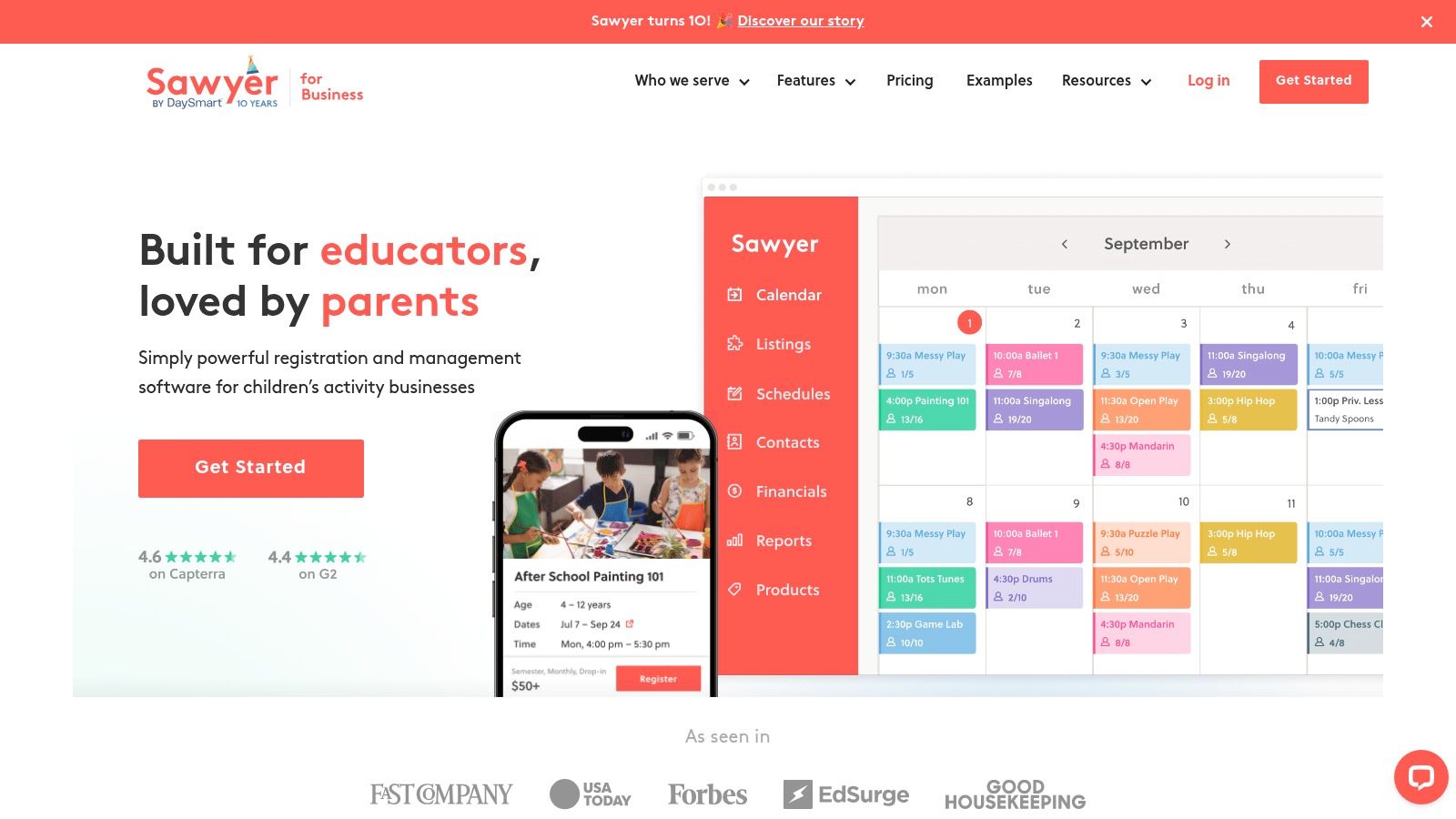
The platform excels at handling group classes, camps, and semester-based enrollments, offering features like class packs, gift cards, and automated messaging. Its payment processing is robust, built on Stripe to handle recurring payments and varied enrollment types smoothly. While its core strength is the youth activities market, its powerful registration and scheduling tools can be adapted for any voice studio managing group sessions. However, studios focused on one-on-one adult lessons might find the youth-centric features less relevant.
Key Features & Considerations
- Best For: Voice studios and music schools that primarily teach children and teenagers in group classes, camps, or workshops.
- Pricing: Tiered subscription plans based on features, with an additional processing fee for bookings made through the Sawyer marketplace.
- Pros: Integrated marketplace provides a powerful student acquisition channel, strong payment and registration flows for group programs, and a user-friendly interface for parents.
- Cons: Less emphasis on one-on-one adult lessons, and marketplace fees can increase costs. The platform's focus is broader than just music education.
9. Squarespace Scheduling (Acuity)
Squarespace Scheduling, formerly Acuity Scheduling, is a powerful and highly flexible online appointment scheduler that serves a wide audience, making it a strong contender for private voice teachers and small studios. It excels at client self-service, allowing students to book lessons based on your real-time availability. The platform's strength lies in its deep customization options for intake forms, reminders, and scheduling rules, which helps automate the entire booking process from start to finish.
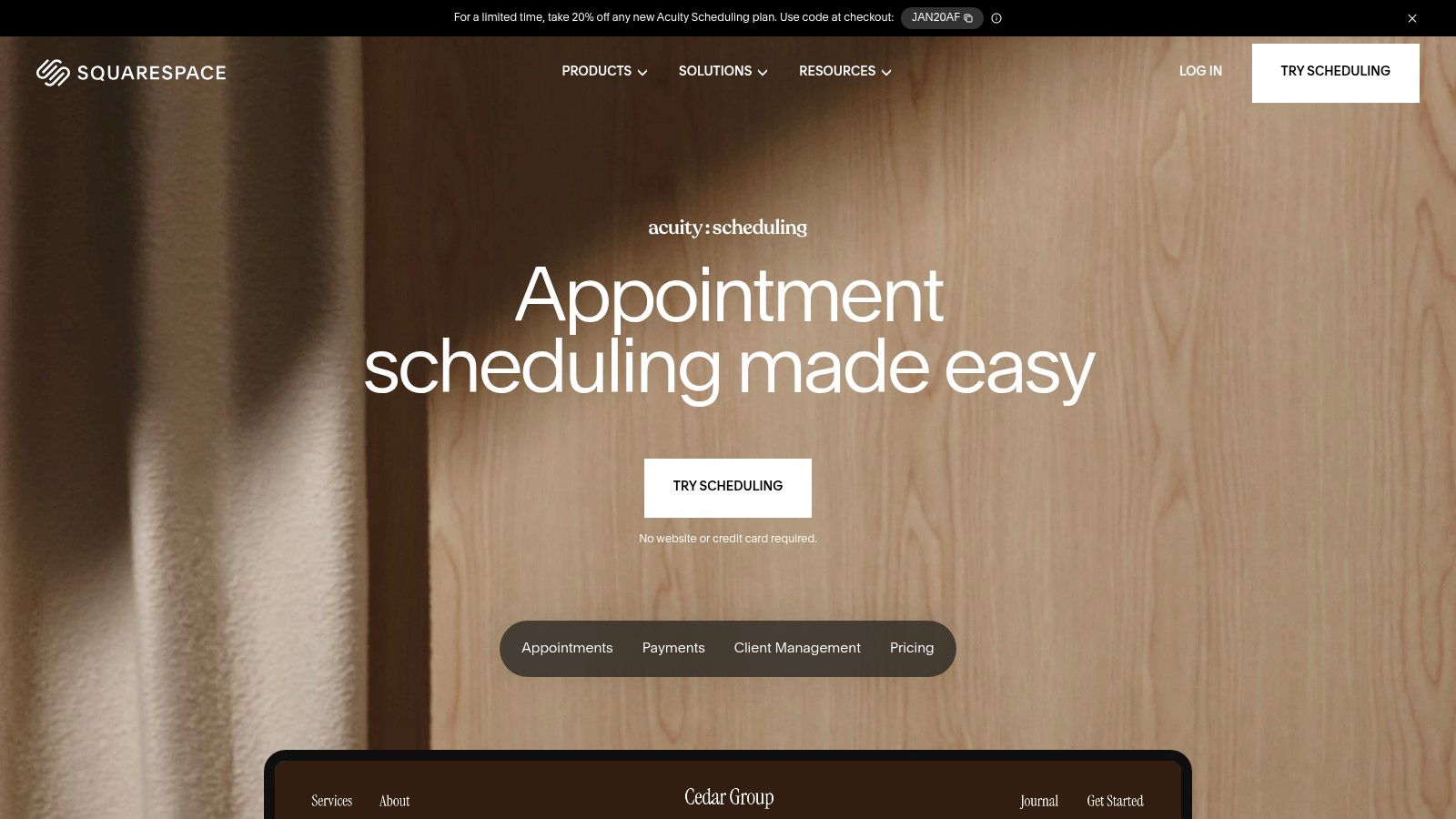
It integrates seamlessly with popular payment processors like Stripe, Square, and PayPal, enabling you to require deposits or full payments at the time of booking. Voice teachers can sell lesson packages and gift certificates to create steady revenue streams. While it is not specifically designed for music schools, its robust embedding capabilities mean you can place the scheduler directly on any website, offering a professional experience for your students. For those seeking different features, it's worth exploring the top Acuity Scheduling alternatives for tutors.
Key Features & Considerations
- Best For: Independent voice teachers and small studios who need a powerful, embeddable scheduler with advanced automation.
- Pricing: Offers several tiered plans, with features like SMS reminders, subscriptions, and multiple staff calendars available on higher tiers. A limited free version is available.
- Pros: Highly customizable booking process, strong automation for reminders and follow-ups, and excellent integration with websites and payment gateways.
- Cons: Lacks music-specific features like repertoire tracking or practice logs, and its broader CRM capabilities are limited compared to dedicated studio management software.
10. Calendly
Calendly is a streamlined appointment scheduler that excels at simplifying the initial booking process, making it a useful tool for voice studios focused on trial lessons. Its primary strength lies in its user-friendly interface. You can create different event types for trial lessons or discovery calls, share a simple link, and allow new clients to book a time that works for them without any back-and-forth emails.
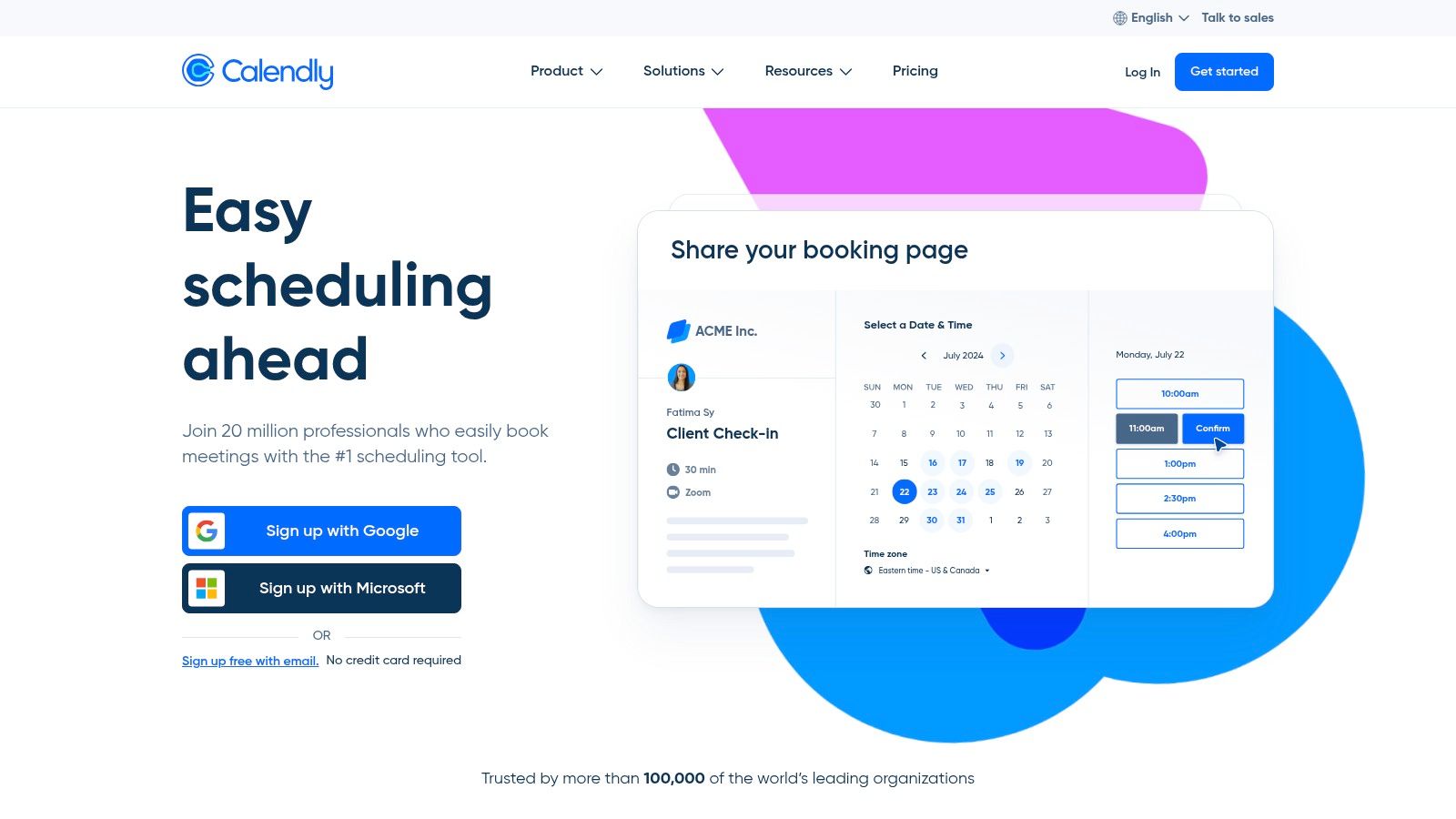
While not a full-fledged studio management system, Calendly’s power comes from its vast integration capabilities with calendars, video conferencing tools like Zoom, and payment processors like Stripe. This makes it an excellent front-end tool for capturing new students. For a growing studio, it can handle routing leads to different teachers and automates reminders to reduce no-shows. It's one of the best platforms for voice lesson scheduling when your main goal is to book that first crucial appointment.
Key Features & Considerations
- Best For: Solo voice teachers and studios needing a simple, effective tool for booking trial lessons and initial consultations.
- Pricing: Offers a free basic plan for one event type. Paid plans start per user, per month, unlocking more features like multiple event types and integrations.
- Pros: Extremely easy for new students to use, fast to set up, and offers powerful integrations with major calendars, CRMs, and payment gateways.
- Cons: Lacks features for managing ongoing lesson schedules, class rosters, lesson packages, or comprehensive invoicing, making it unsuitable as a standalone studio management tool.
11. Setmore
Setmore is a clean, accessible, and budget-friendly online scheduler that serves as an excellent starting point for independent voice teachers. It focuses on the core essentials of appointment management, providing a professional public-facing booking page, robust calendar synchronization, and automated reminders. While not built specifically for music education, its feature set elegantly covers the fundamental needs of a voice teacher organizing their schedule, making it a strong contender among platforms for voice lesson scheduling.
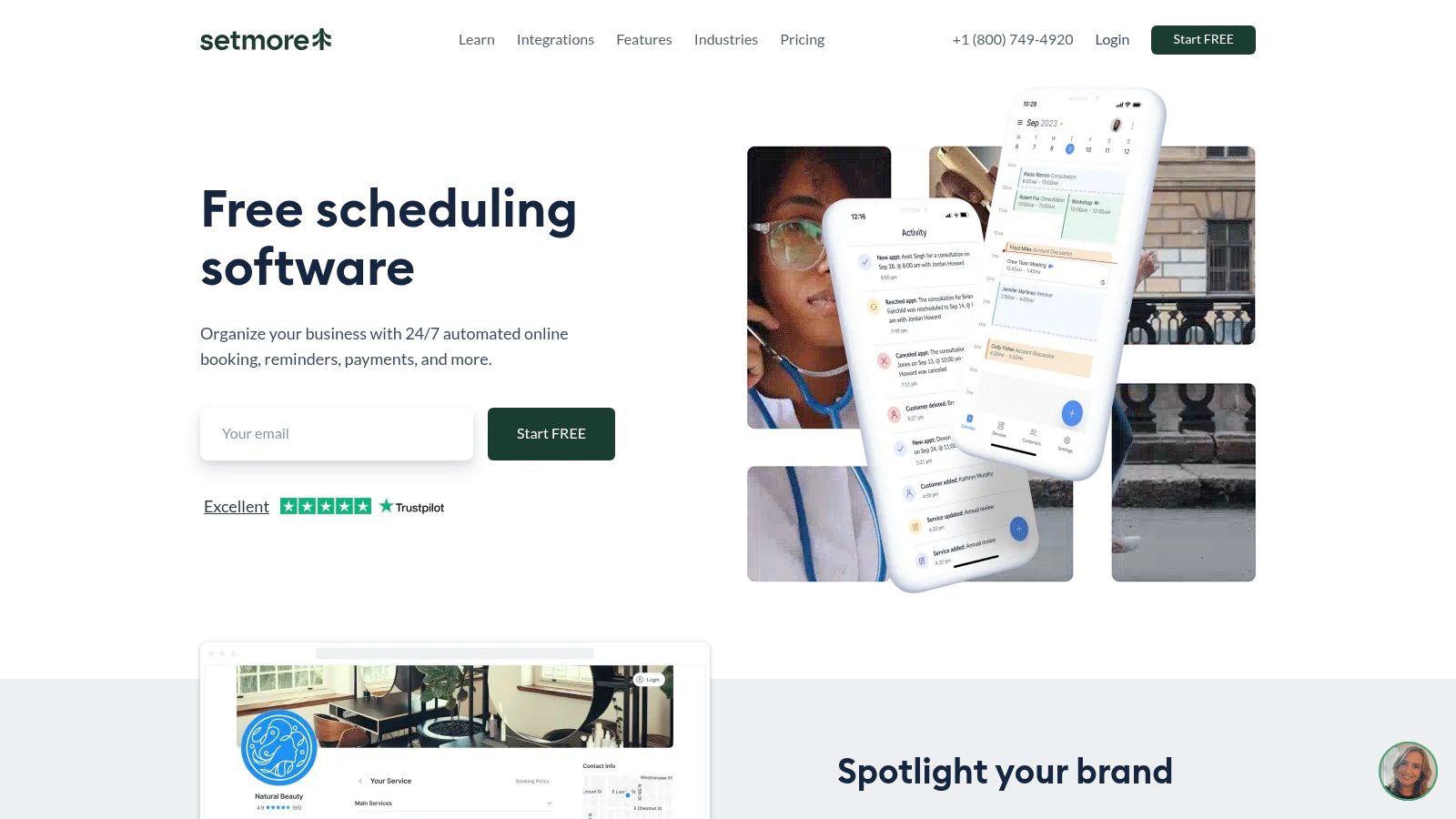
The platform's strength lies in its simplicity and generous free tier, which supports up to four users with unlimited appointments. Students can easily book one-on-one lessons or sign up for group classes, and integrations with Zoom and Google Meet streamline the process for online sessions. Upgrading to a paid plan unlocks valuable features like two-way calendar sync and payment processing at a highly competitive price. It's a practical choice for instructors who prioritize straightforward scheduling without the complexity of a full studio management system.
Key Features & Considerations
- Best For: Solo voice teachers and small teams looking for a simple, low-cost, or free scheduling solution.
- Pricing: Offers a robust free plan for up to four users. Paid plans are inexpensive, adding features like SMS reminders and payment processing.
- Pros: Generous free tier is perfect for getting started, very easy to set up and deploy, and offers 24/7 support even for free users.
- Cons: Lacks advanced, music-specific features like lesson packs and detailed student progress tracking. Removing Setmore branding requires a paid plan.
12. SimplyBook.me
SimplyBook.me is a highly versatile and configurable online booking system that extends far beyond simple appointment setting. Its strength lies in its modular design, allowing a voice studio to build a sophisticated booking experience with a custom website, client-facing app, and integrated payment processing. The platform is especially well-suited for studios that require multilingual support or want to offer complex packages, memberships, and gift cards.
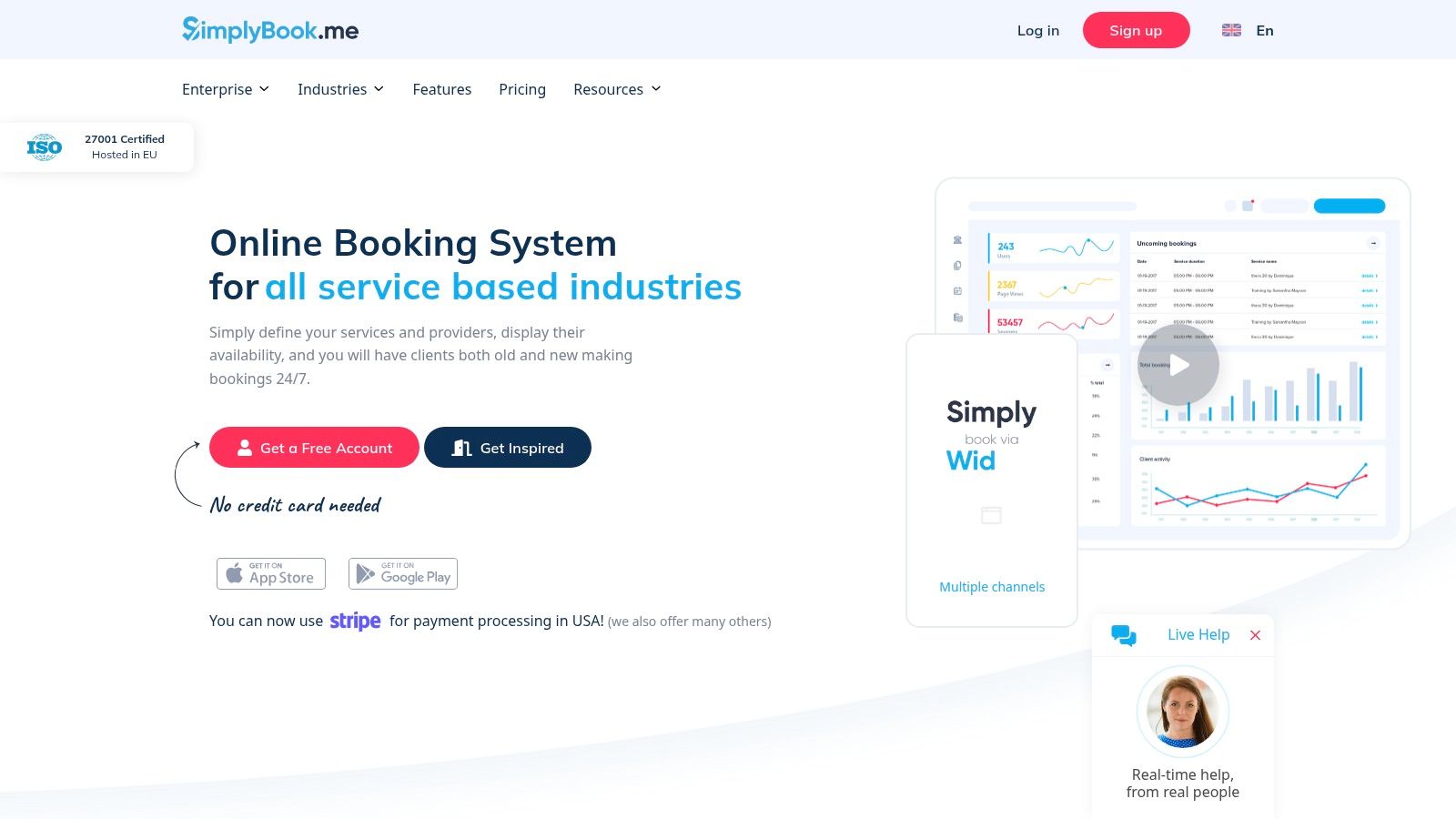
This platform enables voice teachers to create a full-featured booking website or embed a widget into their existing site. It supports advanced features like accepting deposits, selling lesson packages, and offering coupons, which can help increase student retention and upfront revenue. While the extensive customization options can initially feel complex, its flexibility is a significant advantage for growing studios. For those looking to establish a polished, professional online presence, SimplyBook.me provides a powerful and scalable solution.
Key Features & Considerations
- Best For: Voice studios of all sizes needing a highly customizable booking solution with e-commerce features and broad integration capabilities.
- Pricing: Offers a free tier for up to 50 bookings per month. Paid plans scale based on the number of included bookings and custom features.
- Pros: Highly configurable feature set available at a low entry price, extensive multilingual support and a wide ecosystem of integrations, and a free plan for basic needs.
- Cons: The admin interface can have a learning curve due to its many options, and monthly booking limits may require purchasing add-on packages for busier studios.
What is the best voice lesson scheduling platform?
The best voice lesson scheduling platform depends entirely on the size and complexity of your music school. For a solo instructor, a simple tool like Calendly or Setmore is often sufficient. For a growing multi-teacher studio, a dedicated system like Tutorbase is superior because it automates not just scheduling, but also the complex billing, payroll, and room management that come with scale, preventing double-bookings and saving over 60% in administrative time.
| Product | Target & scale | Core capabilities | Unique selling points | Pricing / model |
|---|---|---|---|---|
| Tutorbase (Recommended) | Tutoring centres, language schools, test‑prep; 5–100+ teachers; 1–10+ branches; 50–10k lessons/week | AI Find Slot/Spot scheduling, attendance-driven invoicing, advanced payroll, multi-branch room management, CRM/WhatsApp, prepaid wallets, hybrid classes | Tutoring-first automation (zero double-bookings), advanced payroll models, native WhatsApp lead capture, scales to 10k+ lessons/week | Free account + demo; custom pricing (contact sales); Stripe/bank/cash |
| My Music Staff | Private music/voice teachers → multi-teacher studios | Lesson calendar, student portal, invoicing, Stripe/PayPal, reminders, progress notes | Transparent flat pricing, unlimited students, strong support and tutorials | Low flat fee (per-teacher add-ons); 30-day trial |
| Duet Partner (Music Teacher’s Helper) | Solo to multi-teacher music studios | Availability-based self-booking, automated invoicing, family payments, smart scheduling | Music-specific workflows, very low subscription, teacher-friendly payouts | Low subscription + 1% platform transaction fee |
| TeacherZone | Mid-to-large studios (music, dance, martial arts); multi-location | Scheduling, billing automation, video hosting, student/parent portals, reminders | Robust portals, unlimited video hosting, per-student pricing caps, concierge onboarding tiers | Per-student pricing tiers; month-to-month plans |
| Fons | Private lesson businesses and music teachers | Auto-charge subscriptions/packages, cancellation policy enforcement, reminders, deposits, Stripe payouts | Lesson-focused billing, cancellation enforcement, backed by MakeMusic | Plans scale by staff size; subscription tiers |
| Pike13 | Larger studios and multi-site schools | Classes/appointments, waitlists, attendance, passes/memberships, branded apps, reporting, payroll add-ons | Strong multi-location & branded app capabilities, flat-rate option available | Sales-led tiers; flat-rate or contact pricing |
| Jackrabbit Class | Dance/swim/gym/music schools, large programs | Online enrollment, family accounts, tuition posting, attendance, reporting, optional branded app | Scales to thousands of students, full data import and BI/dashboard options | Tiered pricing by active student count |
| Sawyer Tools (Hisawyer) | Children’s activities and local class discovery (music camps/lessons) | Scheduling, enrollment, payments, class packs, marketplace distribution | Built-in marketplace for parent discovery; good for youth programming | Tiered subscriptions; marketplace fees for bookings |
| Squarespace Scheduling (Acuity) | Private teachers, small studios, small group lessons | Client self-scheduling, deposits, packages/gift certificates, payments, reminders, embeds | Flexible embeds & automation, strong website integration with Squarespace | Tiered subscriptions; pay-per-seat/feature tiers |
| Calendly | Solo tutors, teams for trial/placement bookings | Round-robin/team scheduling, payment on booking, calendar sync, video + CRM integrations | Extremely easy for prospects, broad integrations, quick deploy for trial lessons | Free tier; per-seat paid plans |
| Setmore | Independent teachers and small teams | Booking pages, recurring appointments/classes, reminders, video integrations, mobile apps | Free tier (up to 4 users), budget-friendly, quick setup | Free tier; inexpensive Pro with more features |
| SimplyBook.me | Studios needing customizable booking flows, multilingual support | Packages, memberships, POS, branded client app, many integrations, HIPAA/SSO on higher tiers | Highly configurable, multilingual, optional branded apps | Free tier; paid add-ons and booking-package caps |
How do I choose the right platform for my music school?
Choosing from the best platforms for voice lesson scheduling requires matching the tool to your studio's scale and ambition. The right software directly impacts your efficiency, profitability, and ability to focus on teaching.
Matching the Tool to Your Trajectory
For the solo voice teacher, simplicity is key. A platform like Calendly or Setmore excels here, offering a clean way for students to book lessons without the overhead of complex features. They solve the immediate problem of back-and-forth emails and give your small business a professional edge.
As your student roster grows, your needs evolve. This is where music-centric platforms like My Music Staff or Duet Partner shine. They understand the specific requirements of a music studio, integrating student portals, basic invoicing, and lesson tracking. These tools centralize core operations that would otherwise be scattered across spreadsheets and calendar apps.
The Leap to a Scalable, Integrated System
There is a critical tipping point when your studio transforms from a small operation into a growing business with multiple teachers, various class types, and potentially more than one location. At this stage, the simple tools that once helped you become liabilities. You find yourself fighting the software, creating manual workarounds for complex payroll, and struggling with scheduling conflicts that cost you time and money.
This is the scenario where a true business management platform becomes essential. While tools like Pike13 and Jackrabbit are built for scale, a system like Tutorbase offers a distinct advantage for tutoring centers managing high-volume operations. It was designed to solve the operational chaos of growth.
The core challenge for a mid-to-large center is optimizing the entire booking process. Tutorbase's AI-powered "Find Slot" feature reduces the task of finding the perfect teacher, room, and time from a ten-minute headache to a two-minute click. It's about preventing a double-booked teacher or an overbooked room, which Tutorbase's built-in conflict detection eliminates entirely.
Furthermore, a growing business requires an integrated financial engine. Manually creating invoices from attendance sheets is a bottleneck that costs dozens of hours per month. Tutorbase automates this, creating precise invoices directly from attendance data. It also handles complex teacher payroll with variable rates, premiums, and revenue-sharing models, a critical function that basic schedulers cannot support. By unifying scheduling, billing, payroll, and room management, you gain complete visibility and control, transforming your administrative burden into a streamlined workflow.
Ultimately, selecting from the best platforms for voice lesson scheduling is a strategic decision. Assess not only where your studio is today but where you want it to be in two or five years. Choose a platform that can grow with you, eliminate your biggest administrative pains, and free you up to build a thriving, harmonious business.
Ready to stop managing spreadsheets and start scaling your music or tutoring business? See how you can automate scheduling, billing, and payroll by exploring Tutorbase today.


