


Establishing crystal-clear expectations from day one is the most critical step in handling difficult parents in a tutoring business. Most conflicts don't appear out of nowhere; they grow in the gray areas left by vague policies and unspoken assumptions. This guide shows you how to build a proactive framework to prevent disputes.
By building a framework for communication, progress, and policies before the first lesson happens, your tutoring center can sidestep the vast majority of disputes. You can reduce admin time by 60% and improve parent relationships with a systematic approach.
Build a Proactive Framework to Prevent Parent Issues

The best way to "handle" a difficult interaction is to prevent it from happening. Constantly reacting to problems is stressful, exhausting, and drains your team's energy. A proactive approach, on the other hand, immediately sets a professional tone and builds a foundation of mutual respect.
Think of the initial consultation as a crucial alignment session, not just a sales pitch. It's your single best opportunity to walk parents through exactly how your center operates, what they can expect from you, and what you expect from them. This level of transparency is the bedrock of a healthy, long-term relationship.
Design a Comprehensive Onboarding Process
Your onboarding process is ground zero for setting expectations. If it’s rushed or vague, you leave too much open to interpretation, which is where conflicts are born. A structured, consistent onboarding system ensures every family gets the same clear information, reducing onboarding time by 3x.
Make sure your process covers these three areas:
- Communication Protocols: Define the "how" and "when" of updates. Tutorbase lets you share tutor notes directly through a parent portal for quick questions, while email is reserved for detailed discussions. Setting these boundaries early prevents the dreaded 10 p.m. texts and unscheduled "just a quick question" calls.
- Progress Reporting: Explain what success looks like and how you measure it. Is it about formal assessments, qualitative tutor feedback, or better grades at school? When parents understand the metrics from the start, they are far less likely to have unrealistic expectations about seeing an A+ after two sessions.
- Scheduling and Attendance: Be upfront and crystal clear about your policies for booking, rescheduling, and cancellations. This must include notice periods and any fees for late changes or no-shows. Tutorbase enforces these rules automatically.
Draft Transparent and Enforceable Policies
Policies around money and time are the number one source of parent disputes. That's why your cancellation and payment policies must be simple, fair, and written in plain language. Ditch the confusing legal jargon that makes parents feel intimidated or suspicious.
The goal isn’t to penalize families. It’s to protect your tutors’ valuable time and your center's revenue. A clear policy, shared upfront and applied consistently, is respected far more than a rule that seems to appear out of nowhere during a disagreement.
One of the most powerful things you can do is get good at managing parent expectations from the very first conversation. When your policies are well-defined and easy to understand, enforcing them becomes a simple matter of procedure, not a heated point of contention.
Systematize Everything for Consistency
For any of this to work, you have to be consistent. Every staff member needs to be trained on your policies and communicate them the same way, every time.
This is where dedicated parent communication software becomes a game-changer. It ensures every family’s profile holds their signed agreement, communication history, and attendance records all in one place.
Automated systems like Tutorbase send out policy documents during onboarding, keep a log of all communications, and track attendance flawlessly. This creates an objective record that backs up your team if a disagreement ever pops up. This systematic approach shifts your entire operation from reactive firefighting to proactive, confident management.
Proactive vs Reactive Parent Management
This table illustrates how foresight can dramatically reduce stress and improve parent relationships. Shifting from reactive tactics to proactive strategies turns potential conflicts into routine procedures.
| Scenario | Reactive Approach (High-Stress) | Proactive Strategy (Low-Stress) | Tutorbase Feature |
|---|---|---|---|
| Last-Minute Cancellation | A parent cancels 30 minutes before a session. You scramble to find a new student and argue over the fee. | Your policy, signed during onboarding, clearly states the 24-hour notice rule. Tutorbase charges the fee automatically. | Automated Billing & Cancellation Policies |
| "No Progress" Complaint | After a month, a parent complains they "see no difference." You have no data to show, only anecdotal tutor feedback. | You share detailed session notes and progress reports that Tutorbase has uploaded to the parent portal after every lesson. | Student Profiles & Lesson Notes |
| Communication Breakdown | A parent is frustrated they can't reach their tutor directly and feels out of the loop. | The communication protocol outlines office hours and designates the Tutorbase parent portal as the primary channel for updates. | Parent & Student Portals |
| Billing Dispute | A parent questions an invoice, claiming they didn't have that many sessions. You dig through emails to prove attendance. | Tutorbase tracks attendance automatically, and the parent can view their complete session history and payment records online. | Attendance Tracking & Invoicing |
As you can see, the proactive approach isn't just about avoiding arguments. It's about building a professional, organized system that inspires confidence and lets you focus on teaching.
Mastering Communication in High-Stakes Conversations

When a conversation with a parent gets tense, the right words can build a bridge. The wrong ones can burn it down. Knowing how to handle difficult parents means mastering high-stakes communication. The goal is simple: steer the conversation away from blame and toward a collaborative, solution-focused outcome.
Every interaction should be guided by empathy and a commitment to finding common ground. Instead of getting defensive when a complaint lands, start by acknowledging the parent's feelings. A simple phrase like, "I understand your concern about his progress," or "Thank you for bringing this to my attention," can de-escalate things instantly.
And the stakes are high. The global private tutoring market is projected to hit $123.5 billion by 2030. But a 2023 survey found that 68% of tutors reported "parental pressure" as their biggest stressor, leading to burnout for 42% of them. For tutoring centers, mishandling these conversations can contribute to a 35% student churn rate. You can read the full research about these private tutoring market trends here.
Choosing the Right Communication Channel
Not all conversations are created equal, and choosing the right medium is the first step toward a successful resolution. A rushed email can feel dismissive, while an unexpected phone call can put a parent on the defensive. Matching the channel to the situation shows you respect their time and the issue's importance.
Here’s a practical guide based on what actually works:
- Email: Best for routine updates, sharing progress reports, or confirming schedule changes. It gives you a written record but lacks the nuance needed for sensitive topics.
- Parent Portal: Ideal for quick, non-urgent questions and accessing shared lesson notes. The Tutorbase parent portal centralizes communication and keeps everything documented neatly in one place.
- Scheduled Phone Call: Absolutely essential for discussing concerns about a student's engagement, academic progress, or behavioral issues. Scheduling it shows you take the matter seriously.
- In-Person Meeting: Reserve this for significant or ongoing issues that need a detailed, collaborative discussion, maybe even with multiple stakeholders.
By establishing these channels during your onboarding process, you create a clear communication structure that parents understand and respect from day one.
Field-Tested Scripts for Tough Topics
Having prepared scripts in your back pocket can give you the confidence to handle tough conversations professionally and calmly. The key is to listen first, validate their feelings, and then gently pivot to a solution.
Scenario 1: The "Unrealistic Expectations" Parent
- Parent says: "We've been doing this for a month, and her grade hasn't improved. Is this even working?"
- Your response: "I understand it's frustrating when you don't see immediate results. Let’s look at the session notes in Tutorbase together. We’ve seen great progress in her grasp of core concepts, which is the foundation for better test scores. Can we schedule a quick call to discuss the specific areas where she's excelling and create a joint plan for the next four weeks?"
Scenario 2: The "Late Payment" Follow-Up
- Parent says: "I just haven't had time to deal with the invoice."
- Your response: "I completely understand how busy things get. Our system automatically flagged the invoice as overdue. For your convenience, we have an automated payment option through the parent portal that might make things easier. Shall I resend the link?"
In every difficult conversation, the goal is to shift the dynamic from confrontational to collaborative. You're not opponents in an argument; you're partners working toward the same goal, which is the student's success.
By using empathetic language, pointing to data from your system, and focusing on next steps, you stay in control of the conversation. This approach reinforces your professionalism and turns a potential conflict into an opportunity to strengthen your relationship with the parent.
Using Data to Turn Disputes into Discussions
When disagreements get heated, emotion takes over. But nothing cools things down faster than cold, hard data.
Presenting a parent with clear, factual information is the quickest way to shift a conversation from an argument into a productive discussion. How you handle difficult parents in tutoring often comes down to one thing: the quality of the records you keep.
This is why meticulous documentation isn't just a nice-to-have; it's a must. You need a complete history for every student, from their first inquiry to every lesson, payment, and piece of feedback. A centralized system like Tutorbase does this automatically, turning every action into a permanent, time-stamped record.
Let Attendance Records Enforce Your Policies
One of the most common friction points is enforcing cancellation policies. A parent insists they gave enough notice or disputes a charge for a no-show. Without solid proof, it’s just your word against theirs, and that's a fast way to kill trust.
With Tutorbase, attendance isn't just a checkbox; it's an objective record. Every single lesson gets marked with a clear status:
- Attended: Confirms the student was there.
- No-show: Documents when a student missed a lesson without any heads-up.
- Late Cancelled: Shows the cancellation happened inside the policy window you set.
So, when a parent disputes that late cancellation fee, you just pull up the record. You can show them the exact time it was logged and calmly point back to the policy they agreed to when they signed up. It takes the personal feeling out of it and makes it a straightforward business matter.

This screenshot shows exactly what we mean. A clean dashboard gives you an at-a-glance view of everything you need. When you have all your information (attendance, billing, notes) in one spot, you can instantly pull up the facts to support any conversation with a parent.
Resolve Financial Disagreements Instantly
Billing questions can get tense, fast. If you don’t have transparent, easy-to-pull records, you're in for a rough time. A parent might forget about a session or misremember making a payment, leading to frustrating email chains while you waste time digging through spreadsheets.
An automated billing system linked directly to your attendance data is your single source of truth. Tutorbase generates invoices based only on completed lessons, leaving zero room for manual errors or arguments over how many sessions happened.
If a parent questions an invoice, you can instantly share a detailed breakdown showing every lesson date, the tutor, and each payment they've made. This kind of transparency doesn't just solve the problem at hand. It builds a parent's confidence in your professionalism for the long haul. You can learn more about how data helps your bottom line in our guide on tutoring analytics for attendance and retention.
Document Everything to Provide Context
Sometimes, a parent’s concern isn't about logistics; it’s about their child's progress. They might feel their child isn't learning fast enough or that a specific tutor isn't the right fit. In these moments, detailed lesson notes are your best friend.
Shared notes allow your tutors to log quick observations, wins, and challenges after every single session. This creates a running story of the student's journey. Some centers are even proactively transcribing tutoring sessions to create an even more factual record for these discussions.
When a parent brings up a concern, you can review this history together. Instead of getting stuck on vague feelings, you can point to specific examples of progress or identify recurring challenges the tutor has noted. This completely changes the dynamic, turning an emotional complaint into a collaborative, fact-based problem-solving session about what's truly best for the student.
How to Systematize Your Policies with Technology
A policy is only as good as your ability to enforce it. When you enforce rules manually, you open the door to human error, emotional decisions, and even accusations of favoritism. That’s how a simple late cancellation turns into a major parent conflict.
Technology is the answer. It lets you apply your rules consistently and impartially, turning awkward confrontations into simple, automated workflows.
When your system handles the enforcement, the personal element vanishes. An automated late fee isn't a punishment from you; it's just the policy working exactly as you explained it would. This shift is crucial for maintaining professional boundaries and keeping parent interactions positive.
Automate Your Cancellation Policy
By far, the most common source of friction between tutoring businesses and parents is last-minute cancellations and no-shows. These conversations are always a minefield because they involve two sensitive topics: time and money.
Automating your cancellation policy is the single best way to sidestep these arguments entirely.
Using a platform with configurable policy settings like Tutorbase, you can establish clear rules that the system applies without anyone on your team having to lift a finger.
- Set Clear Time Windows: Define your cutoff times. For example, a cancellation more than 24 hours in advance is no problem, but one inside that 24-hour window gets a 50% fee.
- Apply Fees Automatically: If a parent cancels inside the penalty window, the system just adds the fee to their next invoice. No one on your staff has to have that uncomfortable phone call.
- Document Everything: The system logs the exact time of the cancellation, creating a clean, indisputable record you can point to if a parent ever questions the charge.
This takes what could be a subjective, emotional argument and turns it into a predictable, black-and-white business process.
Eliminate Payment Chasing with Prepaid Credits
Chasing down overdue payments is another huge time-waster and a reliable source of tension. Instead of reacting to late payments, you can get ahead of them completely by moving to a prepaid credit system.
A prepaid credit or "wallet" system flips the entire payment dynamic. Parents pay upfront for a block of lessons, and the system automatically deducts credits after each session. This guarantees you get paid on time, for every single lesson.
This model is about more than just healthy cash flow; it’s about conflict prevention. The conversation immediately shifts from an awkward "You owe us money" to a helpful "Your balance is running low." Modern tutoring billing software like Tutorbase can even send out automated low-balance alerts, gently prompting parents to top up before they run out. It feels like a helpful reminder, not a demand.
Ensure Fairness with Attendance-Driven Invoicing
Manual invoicing is a breeding ground for human error. One simple mistake, like billing for a session that was cancelled or forgetting to apply a family discount, can instantly erode a parent’s trust and spark a frustrating dispute.
The fix is to tie your billing directly to your attendance data.
When your software automatically generates invoices from your lesson records, accuracy is built-in. Tutorbase only bills for lessons marked "Attended" or "Late Cancelled," creating a perfect match between the services you provided and the fees you charged. This transparency builds trust and gives you an airtight data trail to resolve any financial questions on the spot.
In a market like the U.S., where online private tutoring is valued at $4.32 billion, 39% of centers say they lose 20-30% of their revenue to no-shows and cancellations. But businesses using platforms with automated cancellation policies have been found to reduce these disputes by 52%, while auto-invoicing from attendance cuts payment chasing by 70%. You can discover more insights about academic tutoring reports.
Create Layered Rules for Ultimate Consistency
Your business isn't one-size-fits-all, so your policies shouldn't be either. You might have a standard cancellation policy for most of your classes but need a much stricter one for a premium SAT prep course with a high-demand tutor.
Policy packs in Tutorbase allow you to create layered rules that the system applies at different levels:
- Global: Your default policy that covers the entire business.
- Location: A specific rule for a particular branch or campus.
- Service: A unique policy for a certain course, subject, or group class.
- Student: A custom override for a student with a unique arrangement or special circumstances.
This layered system gives you both flexibility and consistency. The software automatically applies the most specific policy available, ensuring every situation is handled correctly without you having to make manual exceptions that could be seen as unfair. This systematic approach solidifies your reputation as a professional, organized, and fair business.
Creating an Escalation Path and Knowing When to Part Ways
Despite your best intentions, some parent relationships are going to turn sour. When that happens, knowing how to handle difficult parents means having a clear, pre-planned path for escalation. A structured plan protects your tutors from bearing the full weight of a conflict and ensures that tough decisions are made with a cool head.
Not every problem needs to land on the director’s desk. A well-defined workflow empowers your team to manage issues at the right level, saving your senior leadership’s time for the fires that actually need their attention. It also gives parents a consistent experience, showing them your business operates with fairness and structure.
Defining Your Escalation Workflow
For most tutoring centers, a simple, three-tiered approach works best. It gives everyone clear steps to follow when a situation gets too hot to handle.
Level 1: The Tutor. Your tutor is the first line of defense. They should be equipped to handle initial questions about student progress, what was covered in a session, and minor scheduling tweaks. They must also be trained to recognize when a conversation is becoming unproductive.
Level 2: Administrator or Manager. When a parent starts disputing policies (think billing or cancellations), has repeated complaints, or is clearly unhappy with the tutor, it’s time to escalate. The administrator should step in, review all the notes and data in your system, talk to the tutor, and then reach out to the parent.
Level 3: Director or Owner. If the administrator can't resolve the issue, or if a parent's behavior becomes aggressive or disrespectful, the director gets involved. This is the final stage. The decision here is simple: either repair the relationship or part ways.
This flowchart shows how automating some of your key policies can stop many of these issues before they ever need to be escalated.
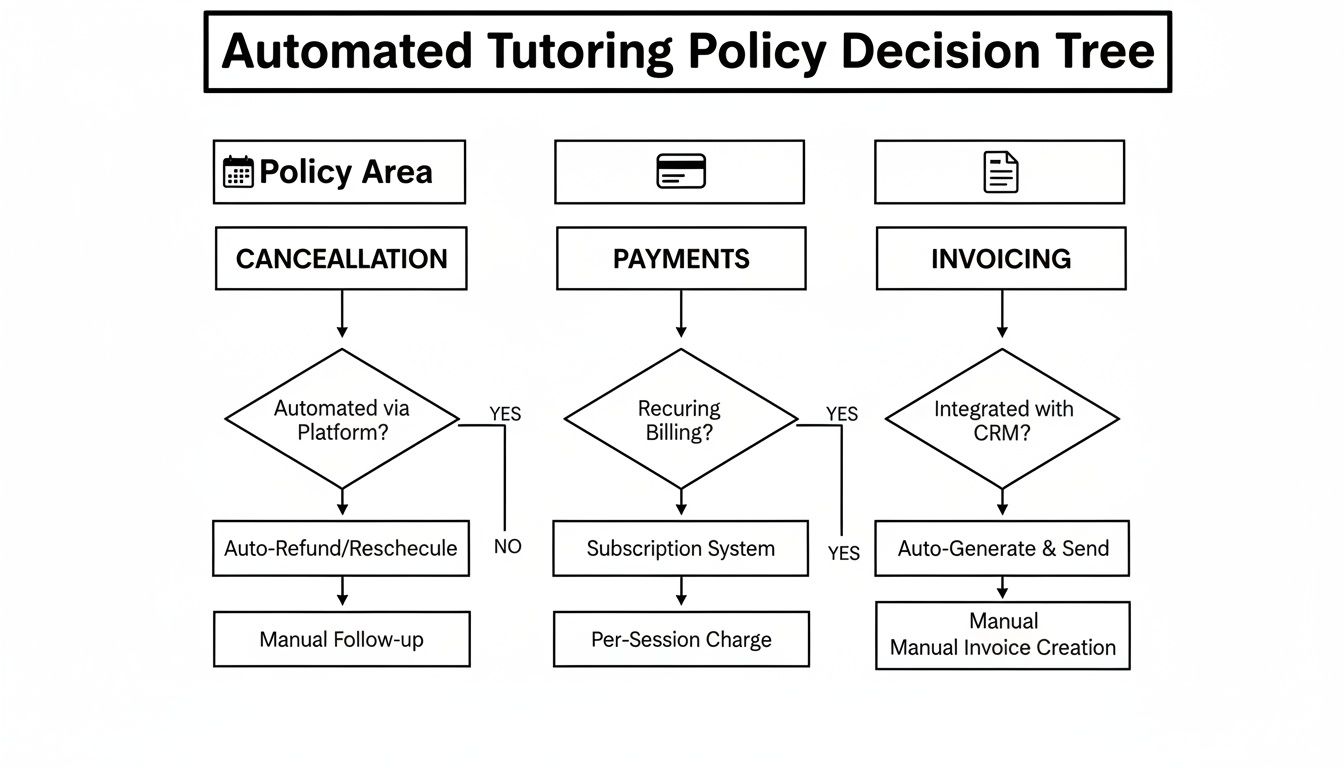
By systematizing things like cancellations and payments with Tutorbase, you take the human emotion out of enforcement. That alone cuts down on a major source of conflict.
Recognizing When a Relationship Is No Longer Viable
Sometimes, no amount of clear communication or hard data will fix a broken relationship. Continuing to work with a toxic family drains your team's energy, disrupts your business, and ultimately costs you far more than their revenue is worth. Letting a client go is a difficult but necessary part of running a healthy business.
Here are the clear red flags that signal it's time to cut ties:
- Disrespectful Behavior: Yelling, personal insults, or any communication that demeans your staff is a non-starter. Your team's well-being comes first.
- Constant Policy Disputes: A parent who perpetually argues about policies they already agreed to shows a fundamental lack of respect for your business.
- Undermining the Tutor: If a parent consistently questions the tutor's methods in front of the student, it makes learning impossible and poisons the relationship.
- Unrealistic Demands: This includes demands for constant, unscheduled updates, guaranteed grades, or anything else that goes far beyond your service agreement.
Parting ways with a client is not a failure. It is a strategic business decision to protect your team's well-being and your company's culture. One difficult parent can consume the energy that could be spent serving ten great ones.
When you make the call, be professional, direct, and firm. Keep the conversation brief and focused on the decision, not the drama. A simple script works best: "After reviewing the situation, we've determined that our tutoring style is not the right fit for your family's needs. We wish you the best in finding a more suitable provider."
Don't get drawn into a debate. Document the final conversation, process any last payments or refunds, and move forward. Your team and your other clients will thank you.
Frequently Asked Questions
Even with the best systems in place, tutoring is a human business. Here are answers to some of the most common tricky parent situations.
How do I handle a parent who says their child isn't getting better grades?
When a parent is upset about grades, your first move is to listen without getting defensive. Start with validation: "Thank you for bringing this to my attention. I can hear how frustrating this is, and I want to look into it with you." Then, pivot from emotion to facts using data from your management software. Review the student's attendance records, detailed tutor notes, and any progress reports together. This transforms a confrontation into a collaborative problem-solving session.
What is the best way to back up my tutor when a parent is demanding?
Protecting your tutors from burnout is non-negotiable. When a parent becomes demanding, you must step in and reset boundaries. First, speak with your tutor privately to get their side and reassure them of your support. Then, schedule a call with the parent and the tutor. As the manager, you lead the conversation, calmly reiterating your communication policies, like using the parent portal for updates and respecting off-hours. This shows your entire team that you value their well-being.
How do I deal with parents who constantly argue about invoices?
Regular fee disputes are often a symptom of unclear or inconsistently enforced policies. The solution is technological and procedural. First, ensure your billing and cancellation policies are airtight and signed by every parent during onboarding. Second, use software like Tutorbase to link billing directly to attendance, creating an undeniable record. Finally, switching to a prepaid credit model, where parents pay upfront, eliminates overdue invoices and payment chasing entirely.
What is the secret to getting fewer parent complaints?
The secret to reducing complaints is proactive communication and transparent systems. While 71% of tutors cite unrealistic parent demands as a challenge, centers using automated systems can cut student churn by 35% and complaints by 50%. Focus on a thorough onboarding process that sets clear expectations, provide regular updates via a parent portal, and let your software automate and enforce policies like billing and cancellations impartially.
How should I respond when a parent questions the value of tutoring?
When a parent questions the value, it's often a sign of misaligned expectations. Respond by opening a data-driven conversation. Use the records in your tutoring software to show them the full picture: consistent attendance, detailed notes from the tutor highlighting specific improvements, and progress on internal assessments. Frame the discussion around the student's journey and small wins, reinforcing that tutoring is a process of building foundational skills, not just a quick fix for grades.
Ultimately, managing parent relationships comes down to having strong systems that stop problems before they even start. Tutorbase gives you the tools to automate your policies, centralize your student data, and professionalize your communication, freeing you up to focus on what really matters: helping students succeed.
Take control of your tutoring center and reduce parent-related stress today.


