


To handle student complaints effectively, listen carefully to understand the issue, use reliable data from your tutoring management software to investigate, offer a fair solution, and always follow up to ensure satisfaction. This approach turns negative feedback from a crisis into an opportunity to fix systemic weaknesses in your operations.
Why Every Complaint Is a Hidden Opportunity

Complaints are an inevitable part of running a service business like a tutoring center. You will face issues ranging from scheduling mix-ups and billing errors to mismatched teaching styles. While it is easy to view these issues as failures, a change in perspective reveals their true value.
Think of every complaint as free consulting. It is a direct, unfiltered look into the parts of your business that cause frustration for your customers. Ignoring this feedback not only risks losing one student; it can damage your reputation and mask deeper operational problems that hold your business back.
What are the real sources of student dissatisfaction?
Most complaints are not the result of a single bad lesson. They usually stem from small, repeated administrative errors that accumulate over time. These operational flaws are especially common in tutoring centers that rely on fragmented tools and manual processes for scheduling, billing, and communication.
Before you can fix the problems, you need to know their source. The following table breaks down common complaint triggers and the operational issues that cause them.
Common Complaint Triggers and Their Operational Root Causes
| Complaint Type | Root Cause | Operational Impact |
|---|---|---|
| Scheduling Mix-Ups | Manual booking, lack of a central calendar, no conflict detection. | Double-booked tutors, missed lessons, and frustrated families trying to reschedule. |
| Billing Errors | Manually creating invoices, inconsistent package tracking, no clear payment records. | Wrongful charges, awkward conversations about money, and a serious erosion of trust. |
| Inconsistent Communication | No centralized platform for session notes, parent feedback, or student history. | Tutors and staff lack context, leading to repetitive questions and generic service. |
| Mismatched Tutor/Student | Poor initial needs assessment, no system for tracking tutor specialties or student learning styles. | Low student engagement, slow progress, and families questioning the value of your service. |
These issues are symptoms of a disconnected system. When staff cannot quickly pull up a student's history, attendance records, or previous feedback, they operate without crucial information. This is when small issues escalate into formal complaints.
The Growing Trend in Formal Complaints
The need for a solid, structured process is becoming more urgent. According to the Office of the Independent Adjudicator for Higher Education (OIAHE) in the UK, formal student complaints saw a 15% year-over-year increase, reaching a record 3,613.
The report also noted that specialized programs often had higher complaint volumes. This reflects the challenges in high-stakes tutoring like test prep (SAT, ACT, IELTS) or language schools, where access to qualified, consistent instruction is critical. You can explore more about these trends in student complaints to see the bigger picture.
By reframing complaints as data points, you can systematically identify and correct the root causes of dissatisfaction. This proactive stance is the key to improving student retention and reducing the administrative burden that slows your business down.
A structured system for handling complaints is not just about damage control. It is a strategic tool for continuous improvement, helping you build a more resilient and reputable tutoring center that families trust.
A Practical Framework for Handling Complaints
When a complaint arises, a clear, repeatable process is your best defense. A solid framework ensures every issue is handled with professionalism, turning a negative experience into an opportunity to show a family you are on their side.
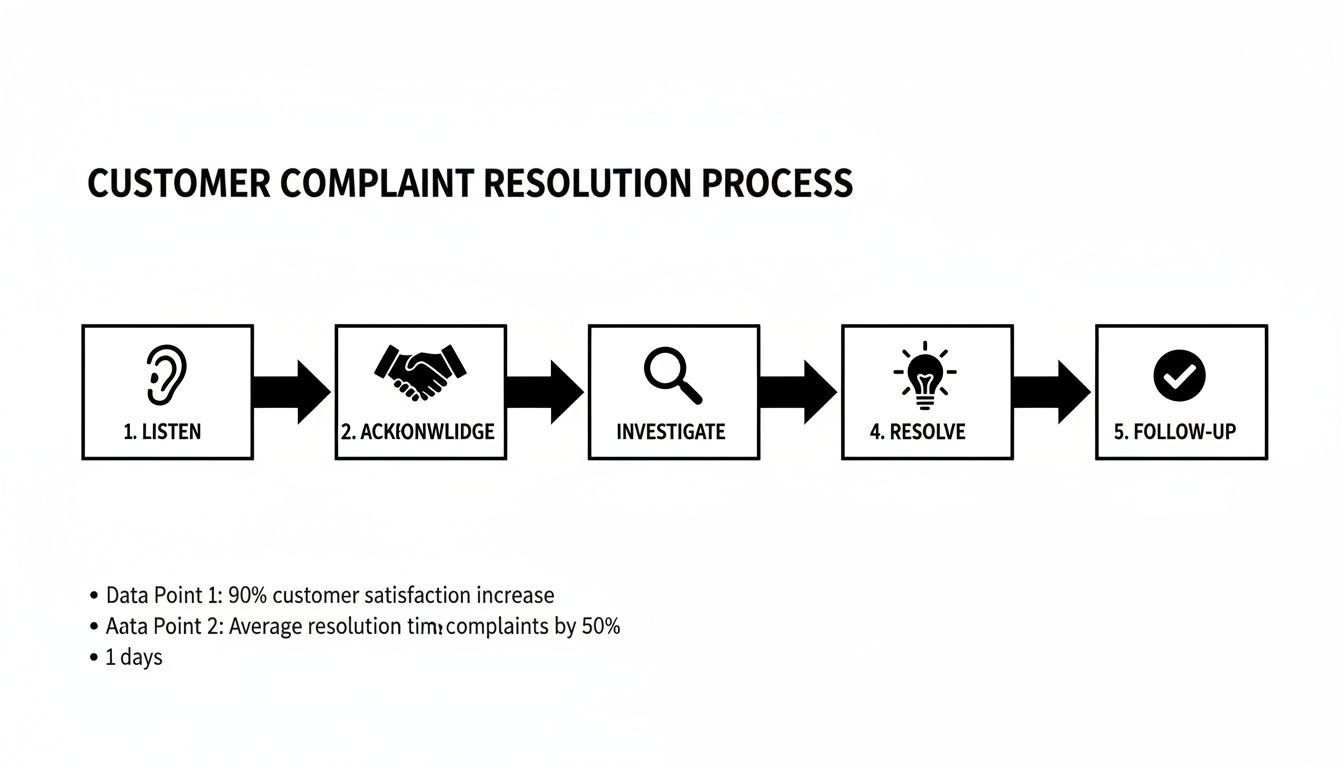
This five-phase framework (Listen, Acknowledge, Investigate, Resolve, and Follow-Up) helps de-escalate tension and find a fair solution. The goal is not just to "fix" the problem but to make the parent or student feel heard and respected.
Step 1: Listen Actively
The first moments of a complaint are the most critical. Before you defend, explain, or problem-solve, your only job is to listen. Give the person your full attention, whether they are on the phone, in an email, or standing in your lobby.
This means hearing the emotion behind their words. Are they frustrated by a billing mistake? Anxious about their child’s progress? Disappointed in a tutor’s communication? Let them share the full story without interruption.
Key Takeaway: Resist the urge to jump in with a solution. Your first goal is understanding, not fixing. A calm, patient ear can de-escalate 90% of tense situations before they spiral out of control.
Step 2: Acknowledge Their Point of View
Once they have finished, your next move is to acknowledge what you heard. This is not the time to admit fault or make promises. It is about validating their feelings and showing you understand their perspective.
A few simple, empathetic phrases can work wonders:
- "I can see why that would be so frustrating for you."
- "Thank you for bringing this to my attention. It sounds like we fell short here."
- "I understand your concern about the progress reports. Let's look into this together."
This simple act builds a bridge. It shifts the dynamic from an adversarial one to a collaborative one, showing the parent you are on their side.
Step 3: Investigate with Data
With the emotional heat lowered, you can now get to the facts. This is where a robust tutoring management software like Tutorbase proves its worth. Instead of digging through messy spreadsheets and old emails, you can pull up a complete history in just a few clicks.
Your investigation must be quick and based on hard data.
- Check Attendance: Was the student marked 'Attended,' 'No-show,' or 'Late Cancelled'? How does this align with your cancellation policies?
- Review Tutor Notes: What did the tutor log about the session? Look for notes on topics covered, student engagement, or any challenges.
- Examine Billing History: Pull up invoices and payment records. Is there a clear link from attended lessons to charges? Are prepaid credits being applied correctly?
This data-first approach removes guesswork and emotion. It helps you build a clear, objective picture of what happened, which is essential for the next step.
Step 4: Offer a Fair Solution
Now you are ready to propose a solution. The right fix depends on your findings. It could be a sincere apology, a credit for a future lesson, a switch to a new tutor, or a clear explanation of a misunderstood policy.
Knowing how to respond to negative feedback is a critical skill in this business; it’s your chance to turn a critic into a loyal customer. When you offer the solution, be direct and confident.
Step 5: Follow Up
After resolving the issue, you are not finished. A quick phone call or email a few days later makes a significant difference. This follow-up demonstrates that you genuinely care about the outcome and value their business.
It can be as simple as, "Hi [Parent's Name], I wanted to check in and see how [Student's Name]'s lesson went with the new tutor yesterday. We are committed to making sure this is a great fit." This final touch shows accountability and reinforces their decision to trust your center.
How Technology Prevents Complaints Before They Happen
The best way to handle complaints is to build an operation that stops them from occurring. A solid resolution framework is necessary for when things go wrong, but proactive prevention is always more powerful. This is not about hiring flawless staff; it is about using the right tools to eliminate the administrative friction that causes most parent frustrations.
Modern tutoring management software is your first line of defense. It replaces manual guesswork with automated, data-driven processes that reduce human error in scheduling, billing, and communication, the three primary sources of complaints.
While a structured resolution process is essential, the real goal is to make it a backup plan, not a daily routine.
Let’s explore how the right software can prevent these issues from ever reaching your desk.
Eliminate Scheduling Conflicts and Mismatches
Scheduling errors are a classic complaint trigger. A double-booked tutor, an overbooked room, or a student mistakenly placed in the wrong level creates immediate friction. These mistakes are nearly unavoidable with manual systems like spreadsheets, especially as your center grows.
Smart scheduling software prevents these problems before they start. Tools like Tutorbase's Find Slot feature can instantly find the perfect teacher, room, and time based on real-time availability. Automated conflict detection makes it impossible to double-book a resource.
This isn't just about damage control. It's about delivering a better experience from day one. When a new family gets matched with the right SAT prep tutor at the right level in under two minutes, it sets a professional tone that builds immediate trust.
A good platform also gives you a bird's-eye view of your entire operation. A centralized dashboard makes it easy to spot potential logjams and manage schedules with confidence. For growing centers, robust tools like Tutorbase scheduling can reduce student onboarding time by 3x simply by cutting out the manual back-and-forth.
Proactive Complaint Prevention With Integrated Software
Many complaints stem from simple administrative breakdowns that are completely preventable. The right software tools are designed to catch these issues before they escalate.
| Common Problem | Preventative Software Feature | How It Prevents Complaints |
|---|---|---|
| Double-booked tutors or rooms | Automated Conflict Detection | Makes it impossible to schedule a tutor or room for two lessons at once. |
| Inaccurate invoices | Automated Billing | Links attendance data directly to invoices, eliminating manual entry errors. |
| Last-minute cancellations & no-shows | Automated SMS/Email Reminders | Reduces missed appointments by prompting families ahead of time. |
| Parent feels "out of the loop" | Centralized Student Profiles | Tracks attendance, teacher notes, and progress in one place for quick updates. |
| Confusion over remaining credits | Prepaid Package Tracking | Automatically deducts lessons and sends low-balance alerts. |
This table shows how specific features directly address the root causes of common frustrations, turning your team from reactive problem-solvers into proactive managers.
Ensure Accurate and Transparent Billing
Money is a sensitive topic, and nothing erodes trust faster than a billing error. Manually created invoices from handwritten attendance sheets are a recipe for disputes over missed lessons, late cancellations, and package credits.
Automated billing systems create a transparent, indisputable record by linking directly to attendance data. This simple workflow is powerful:
- A tutor marks a student as "Attended."
- The system logs the completed lesson.
- The charge is added to the next invoice or deducted from a prepaid credit balance.
This direct link eliminates manual data entry errors. Parents receive accurate, itemized invoices they can trust, and your staff spends less time chasing payments and more time helping students.
Gain Proactive Insights From Centralized Profiles
Some of the worst complaints are those that build slowly over time. A student's declining attendance or slow progress might not seem significant session by session, but it can explode into a frustrated phone call from a parent who feels they are wasting money.
A centralized platform gives you the visibility to spot these patterns early. Every student profile becomes a complete history, containing:
- Attendance Records: Easily track no-shows, cancellations, and tardiness.
- Teacher Notes: Review comments on student engagement and progress from every session.
- Billing Status: See payment history and any outstanding balances at a glance.
This unified view transforms your team from reactive firefighters into proactive advisors. When an admin notices a student has missed three sessions in a month, they can reach out before the parent complains. This turns a potential crisis into a supportive check-in, reinforcing your center's value.
Building a Culture of Transparency and Trust
While a solid complaint resolution process is crucial, it is far better to prevent complaints from happening in the first place. Many escalations start not with a single bad lesson, but with unclear communication, mismatched expectations, and inconsistent policies.
Building trust with parents starts with making your rules clear and accessible from day one. When families know exactly what to expect from your pricing, cancellation windows, and communication channels, you eliminate the ambiguity that breeds frustration.
Make Your Policies Clear and Accessible
Most common complaints boil down to one thing: a negative surprise. A parent thought a last-minute cancellation would be credited, or they were not expecting a registration fee. These issues are entirely preventable.
Your core operational policies should be documented and shared with every new family. Create a simple, one-page document that covers the essentials:
- Pricing: Detail your rates per lesson, package deals, and any subscription models.
- Cancellation Rules: Be specific. State the exact notice period required (e.g., 24 hours) and the consequence of a late cancellation (e.g., the full lesson fee is charged).
- Payment Due Dates: Outline your billing cycle (weekly, monthly) so parents know when to expect an invoice.
- Communication Channels: Define the best way to contact staff for scheduling, billing, or academic questions.
Making these policies visible during onboarding and easy to find on your website or parent portal sets a professional tone from the start.
A University of Wollongong study found that the private tutoring industry often lacks regulation, leaving parents with little recourse for poor service. This highlights a critical need for centers to build trust through clear, structured processes and transparent communication. By establishing and enforcing fair policies, you create a reliable environment in an often-unregulated field. Discover more insights about building parental trust with digital communication.
Use Software to Enforce Policies Consistently
Having policies is one thing; enforcing them fairly is another. Manual enforcement opens the door to human error and accusations of favoritism. Your management software is your best tool for maintaining trust.
A platform like Tutorbase automatically applies your cancellation rules, ensuring every family is treated the same. If a lesson is cancelled within the approved window, the system can issue a credit. If it is a late cancellation, it enforces the fee without an awkward conversation. This automation removes human error and guarantees fairness.
Plus, centralizing this data gives your team a single source of truth for every student's history, from attendance to payments.
Train Your Entire Team
Your complaint handling protocol is only as strong as the person who answers the phone. Every team member, from the front-desk administrator to your most senior tutor, must be trained on how to handle student complaints professionally.
This training should cover your 5-step resolution framework and empower staff to answer policy questions with confidence. When everyone on your team can handle an initial inquiry with empathy and accuracy, it shows parents that your center is organized, professional, and reliable. This unified approach turns your entire staff into a cohesive unit that builds and protects your reputation.
Turning Complaint Data Into Actionable Insights
 Resolving a single complaint is a task. Using data from complaints to improve your entire operation is a strategy.
Instead of treating each issue as a fire to extinguish, see it as a valuable data point that reveals friction in your business. This mindset shift moves you from constantly reacting to proactively improving your center. It is how you make smart decisions that strengthen your business, reduce future issues, and improve student retention.
How do you track complaints systematically?
First, you must log every single complaint, no matter how small. A centralized system is perfect for this. When an issue comes in, do not just solve it and move on. Create a record and tag it with key information.
This process creates a structured dataset you can analyze later. Essential tags include:
- Complaint Type: Billing, scheduling, tutor quality, communication, curriculum.
- Location/Branch: Which center is generating the feedback?
- Subject/Service: Are complaints clustering around a specific subject like SAT Prep?
- Resolution: How was the issue solved (e.g., credit issued, tutor changed)?
Systematic tracking transforms scattered anecdotes into measurable trends. As you analyze, it’s crucial to understand the difference between raw customer data points versus customer feedback to pull out genuinely useful insights.
How do you identify patterns and root causes?
Once you have a few months of data, you can run reports to find recurring patterns. A spike in scheduling complaints at one branch might indicate a need for more admin training there. A consistent trickle of negative feedback about a specific subject could signal that the curriculum needs a refresh or that its tutors need more support.
By analyzing aggregated complaint data, you stop fixing the same problem over and over. Instead, you address the root cause, saving administrative time and preventing dozens of future complaints.
The goal is to connect the dots. Do billing complaints increase at the beginning of every month? Maybe your invoicing process is confusing. Are parents constantly confused about how prepaid credits work? Perhaps you need to set up automated low-balance alerts.
These insights tell you exactly where to invest your time and resources for the biggest impact on customer satisfaction. You can dive deeper into which metrics matter most in our guide to the essential tutoring center KPIs dashboard. This data-first mindset is how you build a resilient, trusted tutoring business.
FAQ: Handling Tutoring Student Complaints
What is the best way to respond to an angry parent?
When a parent is upset, your first job is to de-escalate. Let them talk and listen actively without interrupting to defend your tutor or business. Once they have finished, acknowledge their feelings with a simple phrase like, "I can understand why that would be so frustrating." Avoid getting defensive. The goal is to shift the conversation from a conflict into a collaboration before finding a solution together.
How quickly should we resolve a complaint?
Timeliness shows you take concerns seriously. Acknowledge every complaint within 24 hours, even if it is just a quick email confirming receipt. Aim for a full resolution within 3 to 5 business days. If an issue requires more investigation, keep the parent updated on your progress to manage their expectations and show you are actively working on their behalf.
Should we offer a refund or a lesson credit?
This depends on the situation and your policies. A lesson credit is often the better first choice because it keeps the family engaged with your center and gives you another chance to deliver a great experience. However, for a major service failure or a clear billing error on your part, a full refund may be necessary to restore trust. Document your decision and the reason for it in the student's profile for consistency.
How can technology help with subjective complaints?
Technology provides the objective data needed to address subjective feedback like, "I don't think my child is learning anything." Instead of a "he said, she said" debate, you can use your tutoring software to review the tutor's detailed session notes, see the exact curriculum topics covered, and track the student's attendance history. This turns a vague complaint into a productive, fact-based conversation focused on solving the real problem.
Ready to stop complaints before they start? Tutorbase uses AI-powered scheduling, automated billing, and centralized student profiles to eliminate the administrative errors that frustrate parents, helping you reduce admin time by 60%. Start your free trial today.


