


Key Takeaway: Excellent student retention, benchmarked at over 80%, hinges on eliminating operational friction. Families rarely leave due to poor teaching; they leave because of scheduling hassles, a lack of progress visibility, and billing surprises. Automating these touchpoints with a unified platform is the key to long-term loyalty.
Keeping good students long-term comes down to one simple idea: make their experience effortless. Yes, great teaching is the main event, but families don't usually leave because of a bad lesson. They leave because of the small operational headaches—confusing schedules, unclear progress updates, and surprise billing issues.
The secret is to build systems that make staying with you far easier than walking away.
Why Do Good Tutoring Students Quietly Disappear?
It’s a story every center owner knows by heart. A student is making progress, the parents seem happy, and then one day… radio silence. They just stop booking. No complaints, no feedback, they’re just gone. More often than not, the problem wasn’t the tutor. It was the hidden friction in your day-to-day operations.
The industry benchmark for excellent student retention is over 80%. If you're falling short, it’s rarely a reflection of your teaching quality. Instead, it points to solvable operational gaps that cause families to quietly leave.
- Lack of Progress Visibility: Parents pay for results. If they can't easily see how their child is improving through reports or quick updates, they'll start to wonder if their investment is paying off.
- Scheduling Friction: A clunky booking system or rigid rescheduling policies can make your center feel difficult to work with. For busy families, convenience is non-negotiable.
- Billing Surprises: Nothing erodes trust faster than an unexpected charge or a confusing invoice. When it comes to money, total transparency is essential.
- Poor Communication: Missed reminders, slow email replies, or a lack of proactive check-ins can make families feel like just another number.
A study by the Spanish Council Singapore, a language school in Singapore, reduced churn by 35% after implementing automated progress reports. That proves visibility alone can be a powerful retention tool.
These issues aren't failures of your educational mission; they're failures of your systems. And the good news? Systems can be fixed. By zeroing in on these friction points, you can move from reacting to churn to proactively building an experience that keeps students enrolled and engaged for the long haul.
Building a Retention-First Onboarding Process

Long-term retention isn't won in year two; it's secured in the first two weeks. A family's first impression sets the tone. A structured, empathetic approach builds immediate trust and gets them invested from day one. This is where you uncover motivations, manage expectations, and align the parent, student, and tutor on a shared definition of success.
Using Intake Forms to Capture What Matters
Your intake process is your first real shot at gathering intelligence. A well-designed form does more than collect contact details; it digs into the nuances that lead to a perfect student-tutor match and realistic goals. To dig deeper, check out our dedicated guide on how to perfect your student intake process for tutoring centers.
Your form should be a strategic asset that captures these key data points:
- Primary Academic Goals: Ask parents to be specific. Is success improving a grade from a C to a B? Mastering fractions? Or building confidence?
- Student's Learning Style: Add questions about how their child learns best. Are they a visual learner? Do they thrive with hands-on activities?
- Past Tutoring Experiences: Find out what worked—and what didn't—with previous tutors. This helps you avoid repeating past mistakes.
- Communication Preferences: Ask if they prefer a quick text, a detailed weekly email, or a monthly phone call for updates.
The Goal-Setting Session and Parent Expectations Alignment
Once you have the intake data, the next move is a dedicated goal-setting session. This meeting is where you cement the parent-tutor partnership and transparently walk through how your center operates. It’s also your best chance to prevent future friction around things like scheduling and billing.
Use this session to proactively cover the essentials:
- Review Goals: Start by confirming the academic goals from the intake form. Then, work together to set a realistic timeline for the first set of milestones.
- Explain Your Method: Briefly outline your teaching approach and how you'll track and report on their child's progress. This builds confidence in your system.
- Discuss Policies: Clearly walk through your policies for scheduling, cancellations, and billing. More importantly, explain why these policies exist.
- Introduce Communication Channels: Show them exactly how they’ll receive updates—whether it's through a parent portal, automated emails, or scheduled check-in calls.
Using Progress Tracking Systems to Prove Value

Parents are investing in results. If they can't see a clear, consistent return, their motivation will fade. To keep families committed long-term, you must make academic growth visible and easy to understand. This means building your own system to track and communicate progress through regular assessments, milestone celebrations, and clear progress reports.
From Data Points to Progress Reports
The foundation of visible progress is data. Weave in regular, low-stakes assessments as quick check-ins to gauge understanding. These check-ins give you the raw material for meaningful progress reports that translate academic data into a language parents can instantly grasp.
- Focus on Skills, Not Scores: Instead of "scored 85% on the quiz," frame it as "mastered converting fractions to decimals." This highlights tangible abilities.
- Keep it Jargon-Free: Ditch the educational terminology. Explain concepts in plain language that a busy parent can digest in under a minute.
- Share via a Parent Portal: Housing reports in a central parent portal creates a single source of truth for a family’s entire relationship with your center.
Celebrate Milestones to Build Momentum
Progress isn't always a straight line, which is why celebrating small wins is so important. Acknowledging milestones keeps both students and parents motivated, especially when they hit a tough patch. An effective system for student progress tracking is essential to making this work.
Create a system for recognizing these achievements:
- "Concept Mastered" Alerts: Set up automated notifications that ping parents when a tutor marks a key concept as "mastered" in your system.
- Personalized Shout-Outs: Encourage tutors to include a specific, positive note in their post-session summaries about something the student did well.
- Progress Certificates: Create simple digital certificates for completing a unit or achieving a specific goal.
These small gestures have a huge cumulative effect. Research backs this up; a comprehensive analysis found that tutoring programs correlated with a 3.02 percentage point increase in student retention rates, placing it among the top five most effective retention interventions. You can review the full findings about tutoring's impact in this detailed study.
The Importance of Communication Cadence
Silent churn—when a family just fades away—often starts with poor communication. To keep students long-term, your operations need to feel supportive and professional. This means creating a communication rhythm that keeps families in the loop without burning out your staff. Automation is how you deliver a consistently professional experience as you grow.
Start by mapping out the key touchpoints that matter most to parents:
- Automated Lesson Reminders: SMS or email reminders sent 24 hours before a session are non-negotiable. They drastically cut down on no-shows.
- Post-Lesson Summaries: Give tutors a simple way to log key takeaways after each session. A system can then automatically share these notes with parents.
- Quarterly Parent Check-ins: Schedule automated emails or tasks for your admin team to proactively check in with families every 90 days to gather feedback.
This automated flow ensures every family gets the same high level of service. It closes the communication gaps that make parents feel forgotten, shifting your operations from reactive to truly proactive.
Flexible Scheduling as a Retention Tool
Life for modern families is unpredictable. A rigid cancellation policy that punishes them for a sick child sends a clear message: we value our rules more than your loyalty. A flexible, fair approach, on the other hand, shows empathy and builds a powerful connection. Your scheduling policy is one of your most powerful retention tools.
This doesn't mean having no rules. It means designing makeup lesson policies that don't punish families but are easy for them to manage themselves. A robust piece of tutoring scheduling software can enforce these policies for you, offering flexibility without creating administrative chaos.
A parent who can easily reschedule a lesson from their phone at 10 PM isn't just less stressed—they're also more likely to see your center as a genuine partner.
Instead of a strict "use it or lose it" rule, consider offering a set number of makeup credits per term. By empowering parents with self-service rescheduling options through a portal, you reduce admin friction and give them the control they crave.
Why Billing Transparency is Non-Negotiable
Nothing erodes trust faster than an unexpected charge or a confusing invoice. To keep families long-term, your billing process must be completely transparent and predictable. Families should never be surprised by a charge. Clear package usage visibility is essential for building the financial trust that underpins a lasting relationship.
- No Surprise Charges: Use prepaid packages or recurring subscriptions so costs are predictable.
- Clear Package Usage: A parent portal should clearly show how many lessons are remaining in a package and when it expires.
- Automated Low-Balance Alerts: Set up automated notifications when a student's package is running low (e.g., with 2 lessons left) to prompt a smooth renewal.
When billing is clear and automated, it removes a major source of potential conflict and reinforces your center’s professionalism.
The Role of Software in Student Retention
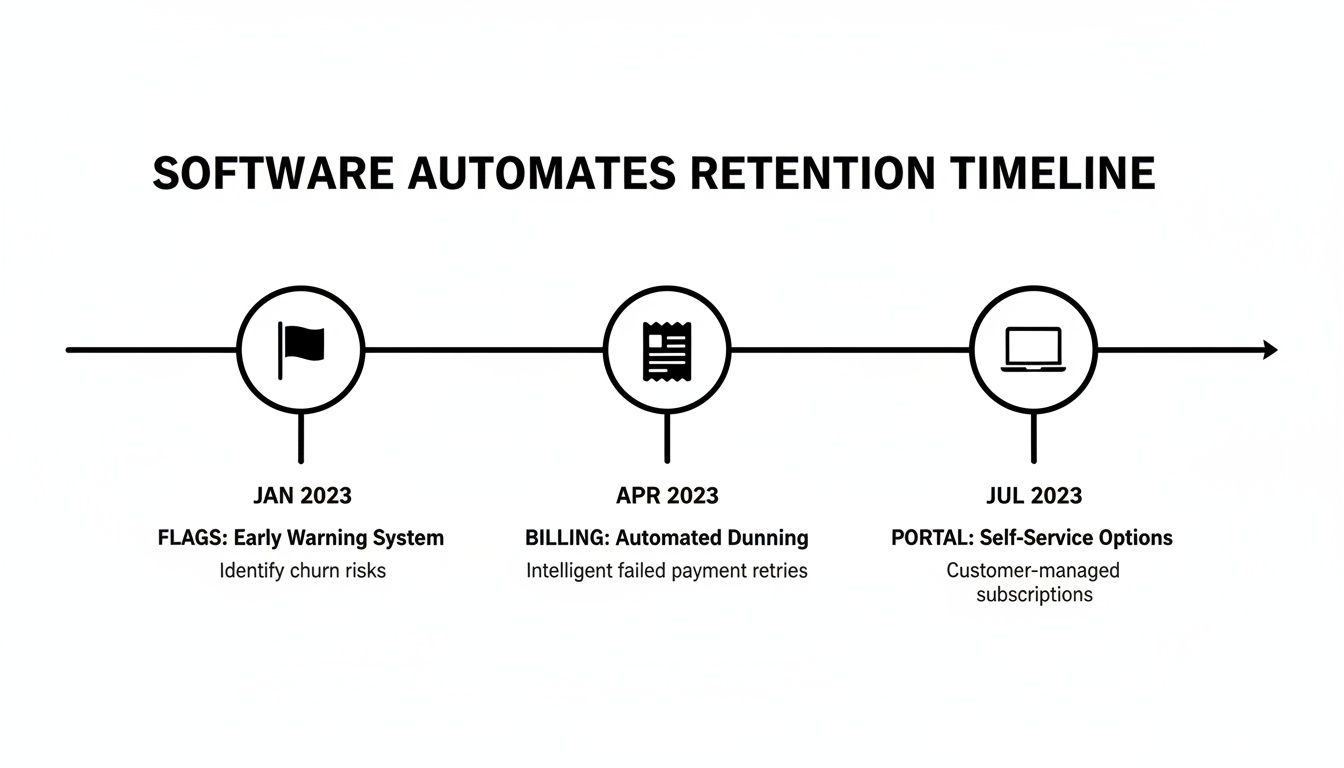
The little things that build trust—consistent communication, clear billing, and visible progress—are nearly impossible to manage at scale without the right technology. This is where student management tools and CRM software become crucial. They automate the touchpoints that keep families engaged.
Platforms like Tutorbase consolidate attendance tracking, parent communication, and billing visibility into one system. This reduces the administrative gaps that cause families to quietly leave.
Instead of your data being scattered across spreadsheets, calendars, and separate billing apps, everything lives in one place:
- Student CRM: A single record tracks a student’s entire journey—their initial goals, attendance history, tutor notes, and payment status.
- Parent Portal: This gives families a self-service window into their child's tutoring. They can view schedules, check package balances, and review progress.
- Automated Communication: The system handles routine tasks like sending lesson reminders, notifying parents of low package balances, and delivering post-session summaries.
The impact here is well-documented. A comprehensive analysis of online tutoring platforms found a direct link between engagement and retention. Students using tutoring services had retention rates up to 11% higher than their institutional averages. You can explore the full study on tutoring platform effectiveness for more details. By using software to manage these interactions, you ensure every student gets the consistent engagement that keeps them committed for the long haul.
A Practical 90-Day Retention Checklist
This actionable, 90-day plan turns retention principles into practice. It's a step-by-step roadmap for building an operation that keeps families happy and enrolled.
First 30 Days: The Foundation
The first month is about getting the foundation right. Your goal is to make every new family feel seen, heard, and confident in their decision.
- Audit Your Intake Form: Ensure it captures learning goals, communication preferences, and past tutoring experiences.
- Hold a Goal-Setting Session: Have a 15-minute call with every new family to review goals and walk through policies.
- Confirm Portal Access: Send a welcome email with a direct link and confirm they can log in, view schedules, and understand billing.
Days 31 to 60: Engagement and Proving Value
The next 30 days are focused on demonstrating tangible value and keeping up the momentum. This is where you make academic progress real.
- Deliver the First Progress Report: By day 45, share a detailed progress report via the parent portal that highlights skills mastered.
- Automate Post-Lesson Summaries: Ensure tutors log brief notes after every session and your system delivers them automatically.
- Flag Attendance Issues: Use your software to alert you to students with more than two consecutive absences or cancellations for a personal check-in.
Days 61 to 90: Feedback and Seamless Re-Enrollment
The final phase is about cementing the relationship. Now it's time to gather feedback and make the renewal process feel like a natural next step.
- Send a Simple Feedback Survey: Ask families about their experience so far to gather invaluable insights and make them feel heard.
- Identify Renewal Candidates: Run a report of all students with packages expiring in the next 30 days. This is your team's priority follow-up list.
- Make Proactive Renewal Calls: Personally reach out to every family on that list. Discuss their child’s progress and make re-enrollment effortless.
For a deeper dive, exploring practical guides on how to improve customer retention can provide even more tactics.
FAQ on How to Retain Tutoring Students Long Term
What Is a Good Student Retention Rate for a Tutoring Center?
For K-12 and test prep centers, an annual retention rate of 80% or higher is an excellent benchmark. This indicates that families see real value and the operational experience is smooth. While this varies by program type (e.g., short-term test prep vs. ongoing support), tracking and improving your rate month-over-month is the primary goal.
How Do I Handle Difficult Conversations About Slow Progress?
Lead with empathy, then follow up with data. Validate the parent's concern first: "I understand you're concerned about his math grade, and I appreciate you bringing this to me." Then, pivot to the tangible progress you have tracked using your system's tutor notes and progress reports. Frame progress around mastered skills ("He has now fully mastered multi-step equations"), not just school grades.
How Can I Reduce Churn Without Offering Big Discounts?
Focus on operational excellence, not pricing. Families leave due to administrative friction, not price. A seamless experience is a powerful retention tool that costs nothing in margins. Implement a parent portal for self-service rescheduling, automate billing to eliminate surprises, and send consistent post-lesson summaries to prove value.
What Is the Single Most Important System for Long-Term Retention?
A centralized student management system is the operational backbone of your entire retention strategy. You cannot deliver the consistent communication and progress tracking needed to keep families engaged at scale without one. Platforms like Tutorbase consolidate attendance, billing, scheduling, and parent communication into one place, closing the administrative gaps that cause families to quietly leave.
How Do I Create a Fair but Effective Makeup Lesson Policy?
The key is a balance of flexibility and structure. Instead of a rigid "use it or lose it" rule, offer a set number of makeup credits per term that can be used within a specific timeframe (e.g., within 30 days). Use tutoring management software to automatically track and enforce these limits, allowing parents to self-schedule makeups via a portal. This shows empathy without creating administrative chaos.
By automating the small things that build trust, Tutorbase helps you create an effortless experience that keeps families coming back. See how our all-in-one platform can reduce your admin time by 60% and increase renewals. Start your journey at tutorbase.com/register.


