


Writing a tutoring center employee handbook is about more than putting rules on paper. You're defining your operational policies, legal obligations, and cultural standards in a single, clear document. A great handbook covers your company mission, scheduling, attendance, and payroll, creating one source of truth for your entire team.
Why Your Handbook Is More Than Just a Document

Starting a handbook from a blank page can feel monumental. This document, however, is your operational playbook, not just an administrative chore. It’s the single source of truth that prevents inconsistent policy enforcement and stops you from repeating instructions for scheduling, cancellations, or payroll.
For growing tutoring centers, especially those managing 5 to 100+ teachers across multiple locations, a well-structured handbook is the foundation for scaling. It provides the clarity and structure needed to move from chaotic, reactive management to streamlined, predictable operations, reducing admin time by up to 60%.
Setting Clear and Consistent Expectations
At its core, a handbook’s job is to create a shared understanding of expectations. When rules are documented, they are no longer subject to individual interpretation. This clarity is essential for everything from daily conduct to complex payroll calculations.
Your handbook should clearly define:
- Professional standards: This includes dress code, communication etiquette with parents, and the appropriate use of center resources like tablets or software.
- Operational procedures: Detail the exact steps for booking lessons, marking attendance in your system, and handling student no-shows.
- Compensation and payroll: Explain how pay is calculated, especially if you have different rates for subjects or premiums for weekend hours, and lay out the payment schedule.
This consistency frees you from answering the same questions repeatedly and empowers your team to act confidently within established guidelines. A good handbook helps you manage the business, not just the people in it.
Protecting Your Tutoring Business
Beyond setting expectations, a handbook is a critical tool for risk management. It establishes a formal record of your policies, which is invaluable in protecting your center from legal challenges. Without documented policies, your business is vulnerable to disputes over pay, termination, or workplace conduct.
One of the biggest risks for tutoring centers is employee misclassification. The distinction between a W-2 employee and a 1099 contractor has serious financial and legal implications. Your handbook is the place to clearly define these roles and their corresponding expectations to help ensure you stay compliant.
Furthermore, it establishes a fair process for everyone. Documented procedures for performance reviews, disciplinary actions, and grievance reporting demonstrate a commitment to equitable treatment. This not only strengthens your legal standing but also fosters a culture of trust. It is not about bureaucracy; it is about building a professional, resilient organization.
Building Your Handbook’s Legal and Cultural Foundation
Before you get into the details of scheduling and payroll, your handbook needs to lay down the core principles of your tutoring center. This section sets the professional tone from day one and turns a rulebook into a genuine welcome to your team. Think of it as where your culture meets compliance.
A great way to start is with a welcome message from you, the owner. Share your passion for education and what makes your center different. Follow that up with clear mission, vision, and values statements. These are not just buzzwords; they give your tutors a sense of purpose and connect their daily work to a bigger goal.
Setting Non-Negotiable Legal Standards
Once you’ve set the cultural tone, it is time for the legal framework that protects both your staff and your business. This part is critical for risk management. The key is using straightforward language so every team member, regardless of their background, understands their rights and responsibilities.
Make sure to include these key policies:
- Equal Employment Opportunity (EEO) Statement: A clear declaration that you provide equal opportunities and prohibit discrimination based on race, religion, sex, national origin, age, disability, or any other legally protected status.
- At-Will Employment Disclaimer: This clause clarifies that either the employer or the employee can end the employment relationship at any time, for any lawful reason. It's a crucial piece of language that helps prevent claims of a binding employment contract.
- Anti-Harassment and Anti-Discrimination Policies: Go into detail on what constitutes harassment and discrimination. More importantly, provide a clear, confidential procedure for reporting incidents and assure your team they will be protected from retaliation.
If you are starting from scratch, you do not have to reinvent the wheel. Exploring various employment legal templates can give you a solid, legally-sound starting point for these foundational sections. You can then adapt the language to fit your center’s specific needs.
Differentiating Employee and Contractor Policies
One of the most common, and costly, mistakes tutoring centers make is misclassifying staff. Your handbook needs to draw a very clear line between a W-2 employee and a 1099 independent contractor. This distinction affects everything from payroll taxes and benefits to the amount of control you can legally have over their work.
For employees, you can dictate work hours, require them to use your curriculum, and mandate specific teaching methods. For contractors, the agreement should focus on the outcome of their work, giving them more autonomy over how, when, and where they tutor. For a deeper dive, our guide breaks down the nuances between an employee vs. an independent contractor.
Keeping Your Handbook Current and Compliant in 2024
An employee handbook is a living document, not a "set it and forget it" project. Labor laws constantly change, so you need to review and update it regularly, at least once a year. This is especially true in 2024.
As tutoring centers adopt hybrid models, policies must address how you will manage both online and in-person work. Data privacy laws like GDPR in Europe and CCPA in California also affect tutoring centers, big and small. Your handbook must now outline things like student data encryption and breach response plans, especially if you are managing anywhere from 50 to 10,000 lessons weekly.
Clarifying Roles and Compensation Plans
Ambiguity around pay and job roles is a fast track to mistrust and frustration. This section of your handbook is where you get ahead of those problems. It is where you lay out, in black and white, exactly how your team is classified and compensated.
Getting this right is not just about avoiding future headaches. It is about building a transparent, fair system that everyone understands, one that supports your business model and keeps you legally compliant.
W-2 Employee or 1099 Contractor? Getting It Right Matters
The single most critical distinction you will make is between W-2 employees and 1099 independent contractors. This is not just a label. It dictates how much control you have, what your tax responsibilities are, and how much autonomy a tutor has. I have seen tutoring centers make costly mistakes here; misclassifying staff is a surefire way to attract legal trouble and hefty fines.
Your handbook needs to spell out the difference. A W-2 employee is someone whose work you direct, including the "how," "when," and "where." You can mandate a specific curriculum, set their exact schedule, and require them to use your tools and location. A 1099 contractor, on the other hand, is hired for a specific result and retains control over their methods and schedule.
This flowchart can help you think through how to create policies that are both protective and legally sound.
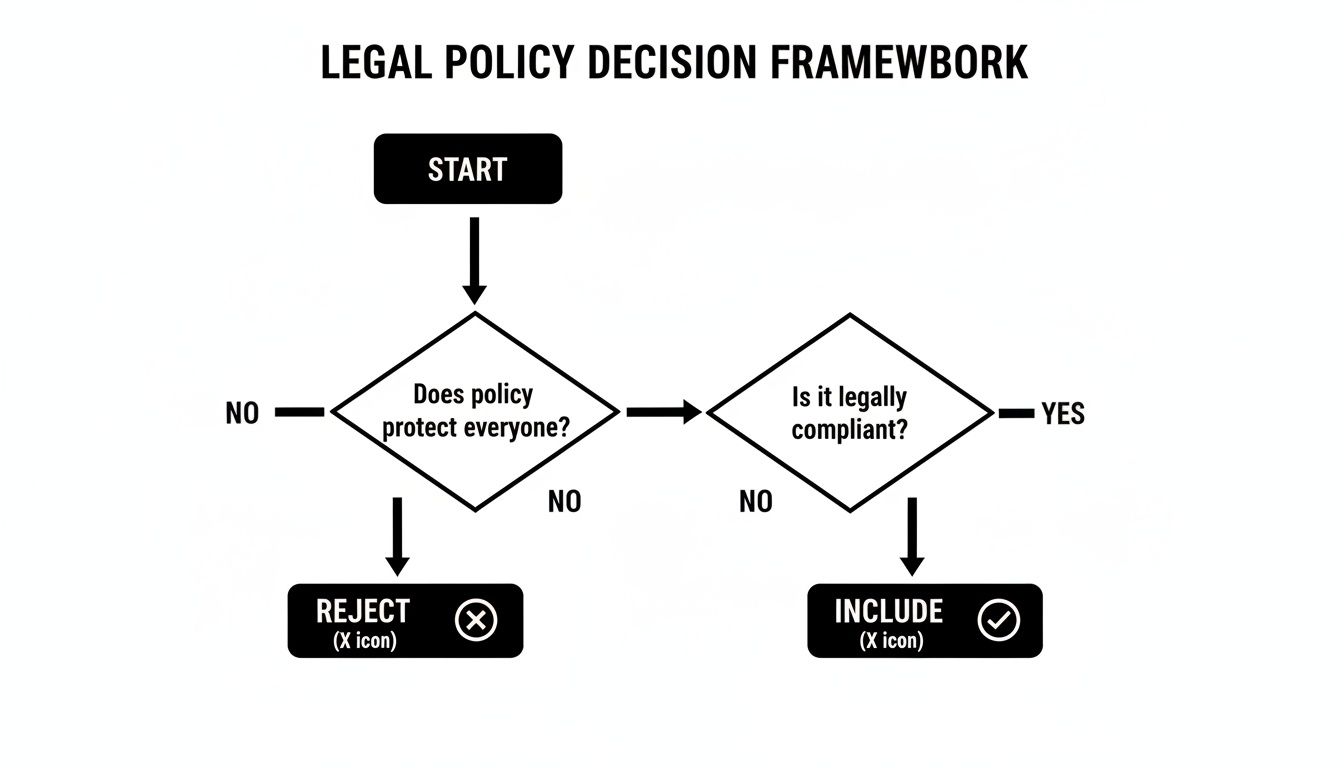
The takeaway here is simple: every policy you write should pass through two filters. Does it protect our center and our team? And is it legally compliant? Only then does it belong in your handbook.
Misclassification can lead to serious penalties from tax authorities. Remember, employee benefits and taxes can add 30-40% to your labor costs, while experienced contractors often charge 15-25% more to cover their own expenses and taxes.
To help clarify the practical differences when writing your policies, here's a quick comparison table:
Employee vs Independent Contractor Key Policy Differences
| Policy Area | W-2 Employee Consideration | 1099 Contractor Consideration |
|---|---|---|
| Scheduling & Hours | You can set specific, mandatory work hours and require on-site presence. | Contractor controls their own schedule and can accept or decline work. |
| Curriculum & Methods | You can mandate the use of your specific curriculum, materials, and teaching methods. | Contractor uses their own professional methods and materials to achieve the agreed-upon result. |
| Tools & Equipment | You typically provide all necessary tools (laptops, software, books). | Contractor provides their own tools and equipment to perform the service. |
| Training | You can require mandatory training on your systems and teaching philosophy. | You can provide orientation on your business, but cannot require extensive, mandatory training. |
| Compensation | Paid a regular wage (hourly/salary), eligible for overtime, and you withhold taxes. | Paid per project or hour via invoice; responsible for their own taxes (self-employment tax). |
| Benefits | May be eligible for benefits like health insurance, paid time off, and retirement plans. | Not eligible for employee benefits; must secure their own. |
Thinking through these points ensures your handbook's policies align with the actual working relationship you have with your tutors, preventing compliance issues down the road.
Outlining Your Compensation Models
Once you've defined the roles, it is time to detail every single aspect of your pay structure. Total transparency is your best friend here. It prevents payroll disputes and ensures your tutors know exactly how their hard work turns into income.
Your handbook should clearly explain the pay models you use. Common structures in tutoring include:
- Per-Hour Rate: Tutors are paid for each hour of instruction delivered.
- Per-Lesson Rate: A flat fee for each lesson taught, regardless of slight variations in duration.
- Revenue Share: Tutors earn a percentage of the revenue their lessons generate for the center.
- Base Plus Variable: A hybrid model combining a lower base salary with performance-based bonuses.
Leave no room for interpretation. If you use a revenue-sharing model, state the exact percentage and show how it is calculated. For hourly rates, clarify whether prep time or administrative tasks are paid. A modern tutor payroll software automates these complex calculations to ensure accuracy and free you from hours of manual work.
Addressing Premiums, Overtime, and Deductions
The base pay model is just the start. Your handbook must also cover all the variables that can change a tutor’s final paycheck. These are the details that, if left unaddressed, often lead to payroll errors and frustrated tutors.
Be crystal clear about your policies on special pay conditions:
- Overtime Pay: For your non-exempt employees, explain your policy clearly. You must adhere to federal and state labor laws, typically requiring time-and-a-half for hours worked over 40 in a week.
- Pay Premiums: Document if you pay more for high-demand slots, like weekends or evenings, or for specialized subjects like AP Calculus or SAT prep.
- Holiday Pay: List which public holidays, if any, are paid days off. State the rate of pay for tutors who are required to work on those days.
- Deductions: Clearly list every potential deduction from a paycheck, such as for benefits, taxes, or specific supplies, and ensure you are complying with all legal requirements.
By meticulously documenting every part of compensation, you are not just writing a handbook; you are building a foundation of trust. When your team knows exactly how they are paid, they can focus on what they do best: helping students succeed.
Running a Smooth Operation Day to Day

This is where your handbook gets down to the practical, daily rules that keep your center running smoothly, even when you are not there. A well-defined operational section is your best defense against scheduling chaos, inconsistent student experiences, and administrative headaches.
By setting clear, enforceable policies for day-to-day activities, you empower your team to handle common situations on their own. That means less manual oversight for you and fewer conflicts born from ambiguity.
Defining Tutor Availability and Scheduling Protocols
Your scheduling policy is the heartbeat of your operations. It needs to be clear, fair, and built to prevent the double-bookings that drain your time and frustrate clients. Your handbook should map out the entire process, leaving no room for guesswork.
First, explain exactly how tutors submit their availability. Is it a weekly task? Monthly? Do they need to enter it into a specific system by a firm deadline? Make it clear that submitted availability is a commitment to work those hours.
Next, detail the procedure for accepting new students or scheduling lessons. This is a big one. Your policy must state that all bookings are made through the center’s official scheduling system. This simple rule prevents tutors from making side deals that lead to double-bookings or unbilled lessons. Using modern tutoring center software is a game-changer here, as tools with conflict detection can automatically prevent a tutor or room from being booked twice.
Crafting a Clear Attendance and Cancellation Policy
Few things disrupt a tutoring center more than missed appointments and last-minute cancellations. To manage these situations fairly and consistently, your handbook needs explicit policies for both your tutors and your students.
Start with tutor punctuality. Define what "on time" actually means. For example, is it being in the room and ready to teach five minutes before the lesson’s scheduled start? Then, create a clear procedure for what a tutor must do if they are running late or need to request time off, specifying notice periods and who to contact.
For students, your cancellation policy needs to be ironclad to avoid disputes. Your handbook should spell out:
- The Cancellation Window: Define the exact timeframe for a penalty-free cancellation (e.g., 24 hours before the lesson).
- Late Cancellation Fees: State the specific fee or percentage of the lesson cost that will be charged for late cancellations.
- No-Show Policy: Explain the consequence of a student not showing up without any notice, which is almost always a full charge for the session.
Automating these rules is the real key to success. If your system can automatically apply a late cancellation fee based on the policy, it removes you from being the bad guy and makes the process completely objective.
Setting Standards for Professional Conduct
Professionalism is the bedrock of your center's reputation. Your handbook must set clear expectations for how tutors conduct themselves, communicate with clients, and represent your brand. These guidelines are what create a consistent, high-quality experience for every family.
Your professional conduct section should cover a few key areas. Start with a dress code that reflects your center's image, whether that is business casual or a branded polo shirt. The goal is to present a professional image without being overly restrictive.
Next, establish communication etiquette. Provide clear guidelines on how and when tutors should communicate with parents. Should updates be sent through an official portal, via email, or in person? Set a professional tone and define a reasonable response time for parent inquiries, like within 24 business hours. This prevents inconsistent communication and makes parents feel valued.
Finally, outline the rules for using center resources. This covers everything from keeping shared spaces tidy to the proper use of equipment like tablets, whiteboards, or online teaching tools. If you run multiple branches, be sure to note any location-specific rules for room usage or material access.
Putting Your Handbook into Action
Creating a thorough handbook is a huge accomplishment, but the document itself is just the starting point. Its real value comes from making it a living, breathing part of your tutoring center’s culture. Let us walk through how to roll out your new policies and make sure they stick.
An effective rollout is not just about emailing a PDF and hoping for the best. It is a deliberate process that involves clear communication, formal acknowledgment, and weaving the handbook into your day-to-day operations. When done right, this process transforms the handbook from a static file into an active tool that guides your team's decisions.
Distribution and Acknowledgment
First, get the handbook into the hands of every single member of your team, from your lead tutors to your administrative staff. Make the document incredibly easy to find, whether it is on a shared drive, your company intranet, or as a resource inside your management software.
But just sending it out is not enough. You need to require a signed acknowledgment form from every employee. This is a simple, one-page document confirming they have received, read, and understood the policies inside.
This signed form is non-negotiable for two critical reasons:
- It creates accountability. It completely removes the "I did not know" excuse when a policy is violated.
- It provides legal protection. If a dispute ever arises, this document proves you made a good-faith effort to inform your team of the rules.
Make sure you store these signed forms securely in each employee's personnel file. It is a simple step, but it is a cornerstone of a solid implementation plan.
Integrating the Handbook into Onboarding
Your handbook should be a cornerstone of your onboarding process for new hires. Do not just hand it to them on their first day and expect them to read it. Make it an active part of their training.
Carve out a specific time slot during their first week to walk through the most critical sections.
Focus on the policies that will impact their day-to-day work right away:
- Scheduling protocols and how to submit their availability.
- Attendance rules and cancellation procedures.
- How your payroll model works and when they get paid.
- Your standards for communicating with parents and students.
By weaving the handbook into onboarding, you set crystal-clear expectations from the very beginning. This ensures every new tutor is aligned with your standards before they even teach their first lesson, which saves you a ton of headaches down the road.
Scheduling Regular Reviews and Updates
Finally, an employee handbook is not a one-and-done project. Labor laws change, your business evolves, and new situations will pop up that your current policies do not cover. To keep the document relevant and effective, you have to commit to a regular review schedule.
Best practice is to conduct a full review at least once per year. You should also plan for immediate updates whenever something significant changes, like expanding to a new location, introducing a new payroll structure, or facing new legal requirements in your state or city.
This annual review keeps your handbook from becoming an outdated relic and ensures it remains a valuable, protective tool as your tutoring center grows. Treating it as a living document is the key to its long-term success.
Frequently Asked Questions
A few questions always pop up. Here are some of the most common ones we hear from tutoring center owners about their handbooks, along with some straight-to-the-point advice.
How Often Should I Update My Tutoring Center Employee Handbook?
You should review your handbook at least once a year. It is not a "set it and forget it" document; think of it as a living part of your business that needs to keep up. An annual review makes sure your policies still match how you actually run things and that you are compliant with any new laws.
But that is just the minimum. You need to make immediate updates whenever something significant changes. That could mean:
- New federal, state, or local labor laws are passed.
- You have changed a core operation, like switching from hourly pay to a revenue share model.
- You are expanding to a new location with its own set of rules.
- You have adopted new software (like Tutorbase) that changes how your staff handles scheduling or billing.
What Is the Biggest Legal Mistake to Avoid in a Handbook?
The most dangerous legal pitfall is misclassifying tutors as independent contractors when they should be employees. The penalties for getting this wrong can be severe. Your handbook has to spell out the policies and expectations for each role, reflecting the real level of control you have over their work.
Another major mistake is using language that accidentally creates an employment contract. This can weaken the "at-will" employment status, which gives both you and your staff the right to end the working relationship at any time. Always include a clear disclaimer stating the handbook is not a contract of employment.
How Can I Get My Tutors to Actually Read the Handbook?
Just emailing it out and hoping for the best is a recipe for ignored policies. You need a practical approach that makes it part of your center's culture.
First, make it a cornerstone of your onboarding. Sit down with new hires and walk them through critical policies like scheduling, payroll, and cancellation rules. It shows you take it seriously, so they will too.
Second, use your management software to bring the policies to life. When a rule from the handbook, like an automated late cancellation fee, is built right into the system your team uses every day, it stops being abstract. It is real, consistent, and enforced without you having to be the bad guy.
Finally, always require a signed acknowledgment form. This confirms every tutor has received and understood the handbook, creating clear accountability.
A well-crafted handbook sets the stage for operational excellence, but enforcing those policies consistently is what makes it work. Tutorbase automates your rules for scheduling, billing, and payroll, turning your handbook's policies into your center's reality and saving you over 10 hours a week on admin.
Ready to see how? Start your free trial today.


