


In-home tutoring is a premium experience that delivers personalized, one-on-one instruction in a student's home. This model creates a comfortable, focused learning environment that moves beyond the classroom or computer screen. It is a tailored approach that many families are actively looking for.
Why In-Home Tutoring Is a Premium Growth Opportunity

In a competitive academic market, in-home tutoring stands out as a high-value service. It shifts the dynamic from a one-to-many center model or the digitally mediated experience of online tutoring. Instead, it offers a deeply personal, relationship-driven approach that builds significant trust between the tutor, student, and family.
For any tutoring center, this is a massive growth opportunity. By adding in-home sessions to your offerings, you can:
- Command higher rates: The convenience and personalization of in-home services easily justify a premium price point.
- Build stronger client relationships: Direct, in-person contact fosters loyalty and leads to higher renewal rates.
- Capture a wider market: You can attract clients who live too far from your physical center or prefer the privacy of home-based learning.
The Growing Demand for Personalized Learning
The demand for this model is a significant market trend. The global private tutoring market reached USD 133.8 billion in 2025 and is forecasted to hit USD 248.4 billion by 2034.
This growth shows a clear, worldwide shift. Parents are turning to personalized, in-home support to give their children an academic advantage.
By positioning in-home tutoring as a key part of a hybrid strategy—combining it with online and center-based options—you can cater to diverse client needs and significantly expand your market share. This model allows you to offer the best of all worlds.
Comparing Tutoring Models for Your Center
Deciding to offer in-home tutoring means understanding how it compares to other models. Each has unique strengths, and a side-by-side comparison can clarify where in-home services fit into your business strategy.
| Feature | In-Home Tutoring | Online Tutoring | Learning Center |
|---|---|---|---|
| Personalization | Highest level; one-on-one in a familiar setting. | High; one-on-one but digitally mediated. | Moderate; often small groups, standardized curriculum. |
| Convenience | Maximum convenience for the family; no travel required. | Very high; accessible from anywhere with internet. | Lower; requires travel to a physical location. |
| Overhead Costs | Low; no facility costs, but has travel expenses. | Lowest; no physical space or travel needed. | Highest; requires rent, utilities, and facility management. |
| Scalability | Moderate; limited by tutor travel time and geography. | Highest; can reach students globally. | High; can serve many students simultaneously in one location. |
| Pricing Power | Premium; families pay more for the convenience. | Competitive; rates vary widely by platform. | Mid-range; group settings often mean lower per-student rates. |
In-home tutoring fills a specific, high-value niche that online or center-based models cannot always match. It is about delivering a premium service directly to the client's door.
However, this service comes with operational headaches. Managing schedules for traveling tutors, ensuring safety, and handling complex payroll can become a nightmare without the right systems. Manual processes lead to double-bookings, inefficient routes, and countless hours of wasted admin time. You can discover how an established franchise achieved major results in this article detailing Tutor Doctor's success story.
Finding and Managing Top-Tier In-Home Tutors

Your tutors are your business. When you offer in-home tutoring services, you send a brand ambassador directly into a family's personal space. This is not just about finding someone who knows calculus; it is about finding a reliable professional you can trust to represent you well.
The US tutoring workforce had around 182,700 professionals in 2022. With women making up 66% of that number, the talent pool for K-12 and test prep is especially strong. You just need a smart plan to find and manage them. For a closer look at the market, you can find more insights from researchandmarkets.com.
Writing Job Descriptions That Attract the Right Talent
A generic job post gets generic applicants. To find the right tutors for an in-home role, your job description must be specific and compelling, speaking directly to the unique challenges and rewards of the job.
Go beyond listing subjects. Here is what to highlight:
- Emphasize Autonomy and Trust: Mention you are looking for self-starters who can manage their own time and communicate professionally without direct supervision.
- Be Upfront About Safety: State clearly that background checks are mandatory. This filters for serious applicants and shows parents you prioritize safety.
- Define the Territory: Be specific about the geographic areas tutors will need to cover. This manages travel expectations from day one.
How do I vet tutors for safety and skill?
Your vetting process must be rock-solid. This protects your students, your tutors, and the reputation you are building. The best process is a two-part system: background checks for safety and practical assessments for teaching skill.
A clean record is non-negotiable, but seeing how a tutor actually teaches ensures a great learning experience. Ask a candidate to explain a tricky concept in a mock tutoring session. You will instantly see how they build rapport, adapt their explanations, and handle questions—insights a simple Q&A would never reveal. For a deeper dive, check out our complete guide on how to hire tutors.
How to Manage Your In-Home Team Without the Chaos
Hiring is just the first step. Managing a team of tutors who are always on the move is where many businesses get bogged down. Trying to juggle schedules, locations, and student matches with spreadsheets and text messages is a recipe for double-bookings and burnout.
This is exactly where a centralized platform for people management is crucial. Modern software lets you build a detailed profile for every tutor, tracking availability, service areas, subject expertise, and pay rates. When a new student inquiry comes in, you can instantly find the perfect match without guesswork. It frees you up to focus on growing your business.
Pricing Your In-Home Tutoring Services for Profitability
Figuring out what to charge for in-home tutoring services is a strategic move that impacts your bottom line, tutor satisfaction, and business growth. A simple flat-rate fee often fails to account for real-world costs like a tutor's travel time, specialized expertise, or different costs of living between neighborhoods.
Adopting Smarter Pricing Models
As you scale, manually adjusting prices for every situation becomes a nightmare. Modern tutoring software solves this with a system of pricing rules called Policy Packs. This approach lets you set a base rate and then automatically layer on adjustments for specific scenarios. It is a smart, scalable way to stop leaving money on the table.
For example, a standard 7th-grade math lesson has one price. But an in-home AP Chemistry session for a student 20 miles away? The system automatically applies rules that add a premium for the tutor's specialized knowledge and their travel time. This automation ensures you are always charging what you are worth.
Moving from a one-size-fits-all hourly rate to a dynamic pricing model is essential for profitability. It allows you to accurately price the high-value, personalized experience that in-home tutoring provides, protecting your margins as you scale.
What are common in-home tutoring pricing models?
The right model depends on your business goals and local market. Below is a look at the most common approaches, along with their pros and cons.
Common In-Home Tutoring Pricing Models
| Pricing Model | How It Works | Best For | Potential Pitfall |
|---|---|---|---|
| Per-Hour Rate | Clients pay a fixed rate for each hour of tutoring. | Simplicity and ease of understanding for clients and new centers. | Does not account for travel or tutor expertise; can limit cash flow. |
| Package Deals | Clients purchase a bundle of lessons (e.g., 10 or 20 hours) upfront at a slight discount. | Improving cash flow and securing longer-term client commitment. | Requires tracking usage and handling expirations, which is difficult manually. |
| Subscription | Clients pay a recurring monthly fee for a set number of lessons per week or month. | Creating predictable, stable revenue and increasing client retention. | Can be complex to manage without software that automates recurring billing. |
You do not have to pick just one. Successful tutoring companies often use a hybrid approach, offering packages alongside subscriptions. This gives families options while building a more resilient and predictable revenue stream. When you automate these models, you prevent costly billing errors and free up your team.
Solving the Scheduling Puzzle for In-Home Lessons
Scheduling is the operational heart of an in-home tutoring business, but it is often the first thing to break. Juggling spreadsheets, calendars, and text messages is a time-consuming nightmare filled with double-bookings, inefficient travel routes, and countless hours lost to admin. This administrative burden directly eats into your profits.
For centers managing 5 to 100 tutors and 50 to 10,000 lessons a week, fragmented tools lead to losses from manual work. The right platform changes the game. Smart systems can boost monthly renewals by 42% and onboard students 3x faster. You can see the full research on capitalizing on market growth. Automation turns a 10-minute manual task into a two-minute process.
How to Find the Perfect Slot Instantly
The old way of finding a tutor involves manually checking every tutor's availability and cross-referencing their location. It is a recipe for mistakes. An AI-powered tool flips this script. You input the student's needs—subject, level, location, and preferred times—and the system instantly generates a list of the best teacher-time combinations.
This smart matching considers factors like:
- Tutor Availability: It only shows you tutors who are actually free.
- Geographic Zones: It avoids suggesting a tutor an hour away for a 30-minute lesson.
- Subject Expertise: It ensures the tutor is qualified to teach the specific subject and level required.
This process eliminates human error, stops double-bookings, and maximizes your tutors' time, which means less travel and less burnout.
Managing Recurring Lessons and Cancellations with Ease
The scheduling headache does not end after the first booking. Consistency is key, which means managing recurring lessons. A robust system lets you create these repeating appointments in a single click, saving hours of data entry.
The real game-changer is automating your cancellation policy. Instead of making awkward phone calls about fees, the system can enforce your rules automatically. If a parent cancels inside your 24-hour window, the system applies the fee, protecting your revenue and your tutors’ time without conflict.
This level of control separates a small operation from a professional, scalable business. With powerful Tutorbase scheduling tools, you can coordinate multiple tutors, handle last-minute changes, and manage your entire in-home business from one organized dashboard. It turns scheduling from your biggest bottleneck into one of your greatest strengths.
Streamlining Billing and Payroll for In-Home Tutors
If you still create invoices by hand and run payroll on a spreadsheet, you are losing money. Manual admin work is a silent profit killer, easily consuming more than 10 hours of your time every week. This is a major roadblock to growth. Every hour you spend on manual data entry is an hour you are not spending on teaching, marketing, or finding great tutors.
Making the switch from manual to automated systems is how you scale. It is the difference between a business that runs you and a business you can run effectively.
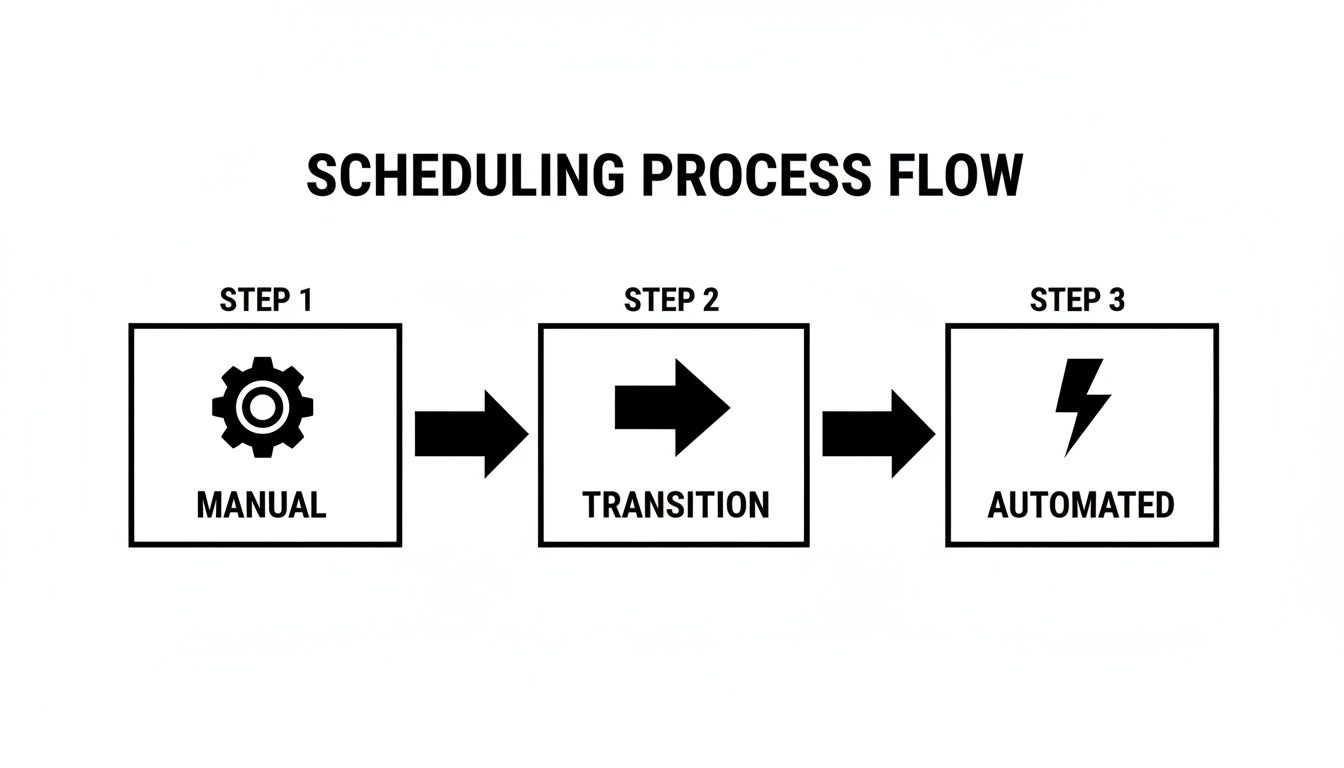
Automation removes the friction that leads to mistakes and delays. It lets your business run smoothly, freeing you up to focus on what matters.
Automating Invoicing From Attendance
The single best way to eliminate billing errors is to tie invoices directly to attendance records. When a tutor marks a lesson as Attended, No-show, or Late Cancel, the system should instantly create the right charge. No manual entry, no forgotten lessons, no guesswork.
Good tutoring management software takes this even further. With a dedicated billing module, you can set up automated invoicing schedules—weekly, bi-weekly, or monthly—to create predictable cash flow and give clients a professional experience.
In-home services remain a bedrock of the USD 97.11 billion global private tutoring market in 2023. Centers that fail to streamline operations with automation lose money on manual admin, but those that adopt modern software can achieve zero double-bookings and a 60% admin reduction.
To make things even easier, you can offer a prepaid credit system. Families can load a balance, and lesson fees are automatically deducted. The system can even send low-balance alerts, ensuring lessons continue without awkward payment conversations.
Handling Complex Payroll for In-Home Tutors
Paying your tutors on time and accurately is non-negotiable for keeping your team happy. This is especially true for in-home tutors who represent your business in clients' homes. In-home tutoring payroll often gets complicated fast. A solid, automated system needs to handle different pay structures without error.
Common payroll models include:
- Revenue Sharing: Giving tutors a percentage of the lesson fee.
- Premiums: Adding extra pay for travel time, weekend work, or high-demand subjects.
- Base + Variable: A model combining a fixed base rate with performance bonuses.
To keep your finances in order, integrating a good payroll software for small business is a smart move. Automating these calculations ensures every tutor is paid correctly, which builds trust and lets them focus on teaching.
Building Trust and Ensuring Safety with Families

Trust is the bedrock of the in-home tutoring business. When a family invites one of your tutors into their home, they are placing an incredible amount of confidence in your company’s integrity. This requires a serious, visible commitment to safety and transparency from day one.
It all starts with who you hire. Running mandatory, comprehensive background checks on every single tutor is the first and most critical step. This is a fundamental requirement that protects students and tells parents their child's well-being is your top priority.
Establishing Clear Professional Standards
Beyond background checks, you need a formal code of conduct. This document clearly defines what is expected of your tutors when they step into a client's home. It gives them a clear standard for behavior and protects everyone involved.
Key areas your code of conduct must cover include:
- Professional Boundaries: Spell out appropriate communication and interaction with students and their family members.
- Confidentiality: Lay out strict policies for protecting a student's personal information and respecting the family's privacy.
- Emergency Protocols: Give tutors clear, step-by-step instructions for what to do in an unexpected situation.
Fostering Transparency and Communication
Building lasting trust also means keeping parents in the loop. Regular, structured communication about their child’s progress reinforces the value you provide and builds a strong partnership.
One of the best ways to build this partnership is with technology. Using a system with shared teacher notes lets tutors leave a quick summary after each session. Parents can log in anytime to see progress updates, which shows you’re accountable and invested in their child’s success.
This open line of communication, combined with strict safety protocols, turns your business into a trusted educational partner. It creates a secure environment where tutors can teach effectively and students can learn with confidence.
FAQ: Your In-Home Tutoring Questions Answered
How do you handle last-minute cancellations?
The fairest approach is to set a clear, automated cancellation policy. For example, you can decide that any cancellation within 24 hours of a lesson automatically incurs a 50% fee. A good tutoring management system enforces this rule for you, applying the fee based on when the cancellation occurs. This removes emotion from the process and ensures everyone knows what to expect.
What is the smartest way to schedule tutors?
Manually scheduling tutors who travel between homes is a recipe for disaster. The most efficient method is using an AI-powered scheduling tool that handles the complex logistics for you. You input the student’s address and needs, and the system analyzes every tutor’s availability, location, and expertise to find the best matches. This minimizes travel time and prevents burnout.
How can I monitor student progress?
Even if you are not physically at the lesson, you can stay on top of student progress. The key is a central platform where tutors can log session notes immediately after each home visit. These notes create a running record of topics covered, student struggles, and future goals. You can keep them internal or share them with parents to demonstrate value.
Can I offer both in-home and online tutoring?
Absolutely. Offering a hybrid model is one of the smartest moves you can make. It gives families the flexibility they expect and helps you stand out from competitors. The key is using a management system that handles different delivery types (in-person, online) within the same student profile. This gives you a major competitive advantage.
How do I ensure tutor and student safety?
Safety starts with a mandatory, comprehensive background check for every tutor. You should also establish a formal code of conduct that outlines professional boundaries, confidentiality rules, and emergency protocols. This protects students, tutors, and your business's reputation.
What is the best way to handle payments for in-home services?
Automated billing is the most efficient and error-free method. Link invoicing directly to attendance records to capture every billable session. Offering prepaid credit packages, where clients buy lessons in advance, can improve cash flow. A system that automates deductions and sends low-balance alerts makes the process seamless for parents.
How does in-home tutoring compare to online tutoring?
In-home tutoring offers the highest level of personalization in a familiar environment, justifying premium pricing. Online tutoring provides greater convenience and scalability. Many families prefer in-home for the direct, personal connection that digital platforms cannot always replicate. A hybrid model captures the benefits of both.
Managing scheduling, billing, payroll, and parent communication for in-home services does not have to be chaotic. Tutorbase consolidates all your operations into one AI-powered platform, reducing admin time by 60% and eliminating booking errors. To see how you can scale your tutoring business more efficiently, register for a free trial.


