


You're probably dealing with the same reality most educators face, a class that looks calm on paper and feels overloaded in practice. Teachers are juggling behavior, parent expectations, lesson pacing, and their own stress, while students are arriving with anxiety about tests, grades, and whether they can keep up. Teaching stress management matters because it helps both groups function better inside the same learning space.
For tutoring centers and language schools, this is no longer a “nice wellness add-on.” The best guidance now treats stress as both a personal coping issue and an organizational design issue, which means schedules, roles, and routines all matter. That's why practical support for teachers and students has to fit the actual workday, not sit outside it.
Why Teaching Stress Management Is No Longer Optional
A tired teacher, a nervous student, and a packed schedule usually show up together. That is the setting for teaching stress management, not a calm room and a polished lesson plan. Modern guidance treats stress as a shared system problem, not just an individual resilience issue, because workload, behavior, and administrative pressure shape how stress shows up in schools. The Wisconsin Department of Public Instruction's guidance groups responses into organizational interventions, organization-individual interface interventions, and individual interventions as outlined here.
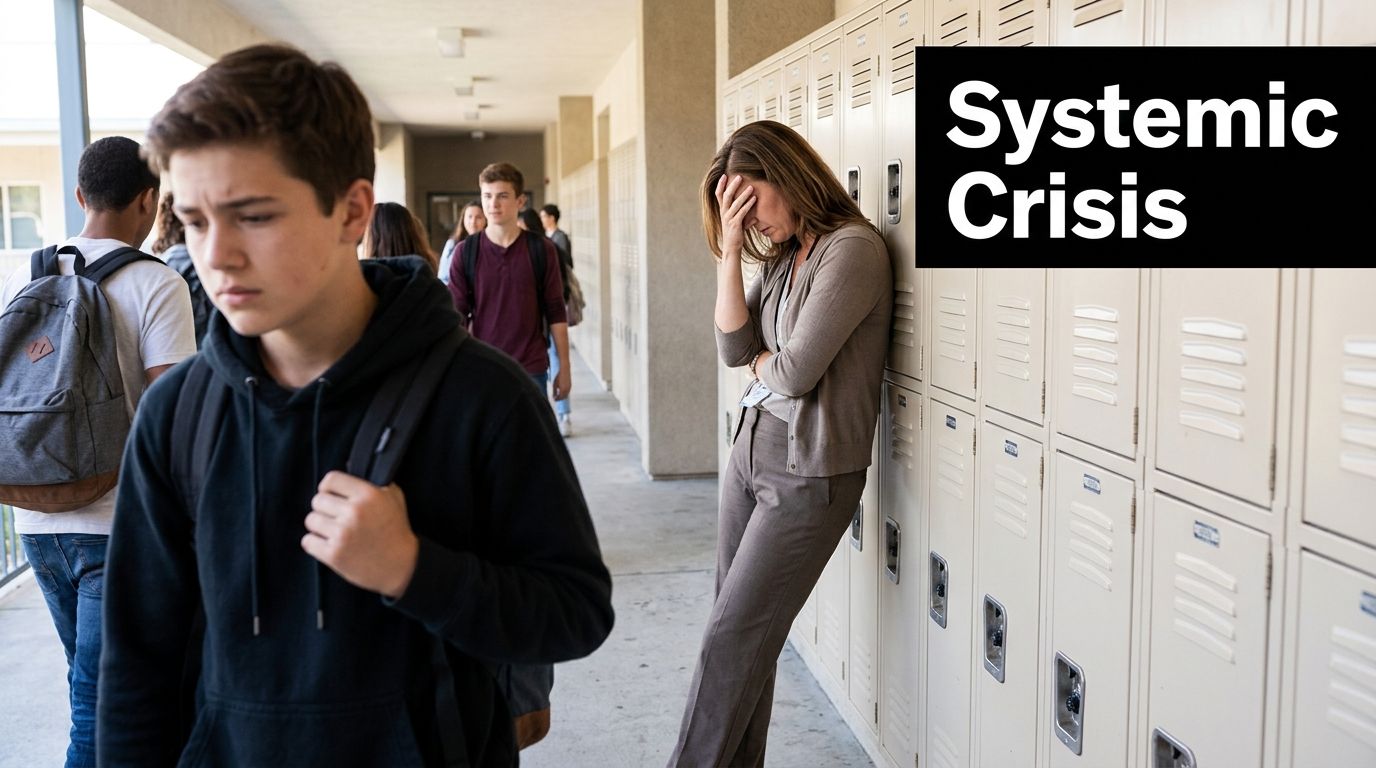
The stress problem is bigger than calm-down techniques
The older model of stress support focused too heavily on breathing exercises and generic self-care. Those tools can help, but they do not fix overloaded schedules, difficult transitions, or the emotional labor of managing a classroom all day. RAND's 2024 State of the American Teacher Survey found that teachers' top job-related stressors included managing student behavior, low salaries, and administrative work outside of teaching as summarized by the Wisconsin DPI reference above.
That matters for tutoring centers too. If your teachers are running between rooms, absorbing after-hours messages, and improvising around attendance changes, then stress management becomes part of operational design. Practical support for teachers and students has to fit the actual workday, not sit outside it. That is why operational solutions for teacher well-being belong in any serious program.
If stress is spilling beyond what workplace routines can handle, broader mental health support may also be appropriate, including finding local Vernon therapists.
Practical rule: If the schedule creates the stress, the schedule has to be part of the solution.
Teaching stress management works best when it changes both the person and the system around the person. School leaders and tutoring operators need operational answers, not just motivational advice.
Defining Clear Learning Objectives for Your Program
A stress-management lesson gets much stronger when it has a visible outcome. “Help students feel less stressed” sounds caring, but it's too vague to teach, measure, or improve. Strong objectives name the behavior, the situation, and the expected result, which makes the lesson usable in a real classroom or tutoring session.
Write objectives you can observe
Start with the question, “What should the learner do differently after this lesson?” That question keeps you from building a feel-good activity that never changes behavior. For example, a good objective might be that a student can identify three personal stress triggers, or independently use a two-minute breathing exercise before a quiz.
A weaker version would be “students understand stress.” That sounds fine, but you can't watch it, coach it, or track it over time. A better objective is concrete and performance-based, just like other learning goals.
Use this simple template:
- When the student feels stressed,
- they will use one named strategy,
- so that they can return to the task.
That structure works because it connects emotion to action. It also fits tutoring, where students often need to recover quickly from frustration, test anxiety, or a mistake during problem-solving.
Make the goal fit the setting
In a tutoring center, objectives should reflect the day-to-day pressure points. A student in test prep may need to practice a grounding skill before timed work. A younger learner may need to name a feeling and ask for help without shutting down. A multilingual classroom may need a visual routine that lowers uncertainty before speaking tasks.
If you want a broader emotional-learning lens, the Playz guide for emotional growth is useful as a companion resource because it keeps the focus on age-appropriate emotional skills. For program design, it also helps to design student progression paths so stress-management goals match the learner's level, not just their age.
A lesson objective should sound like something a teacher can coach and a student can actually do.
Designing Age-Appropriate Stress Management Lessons
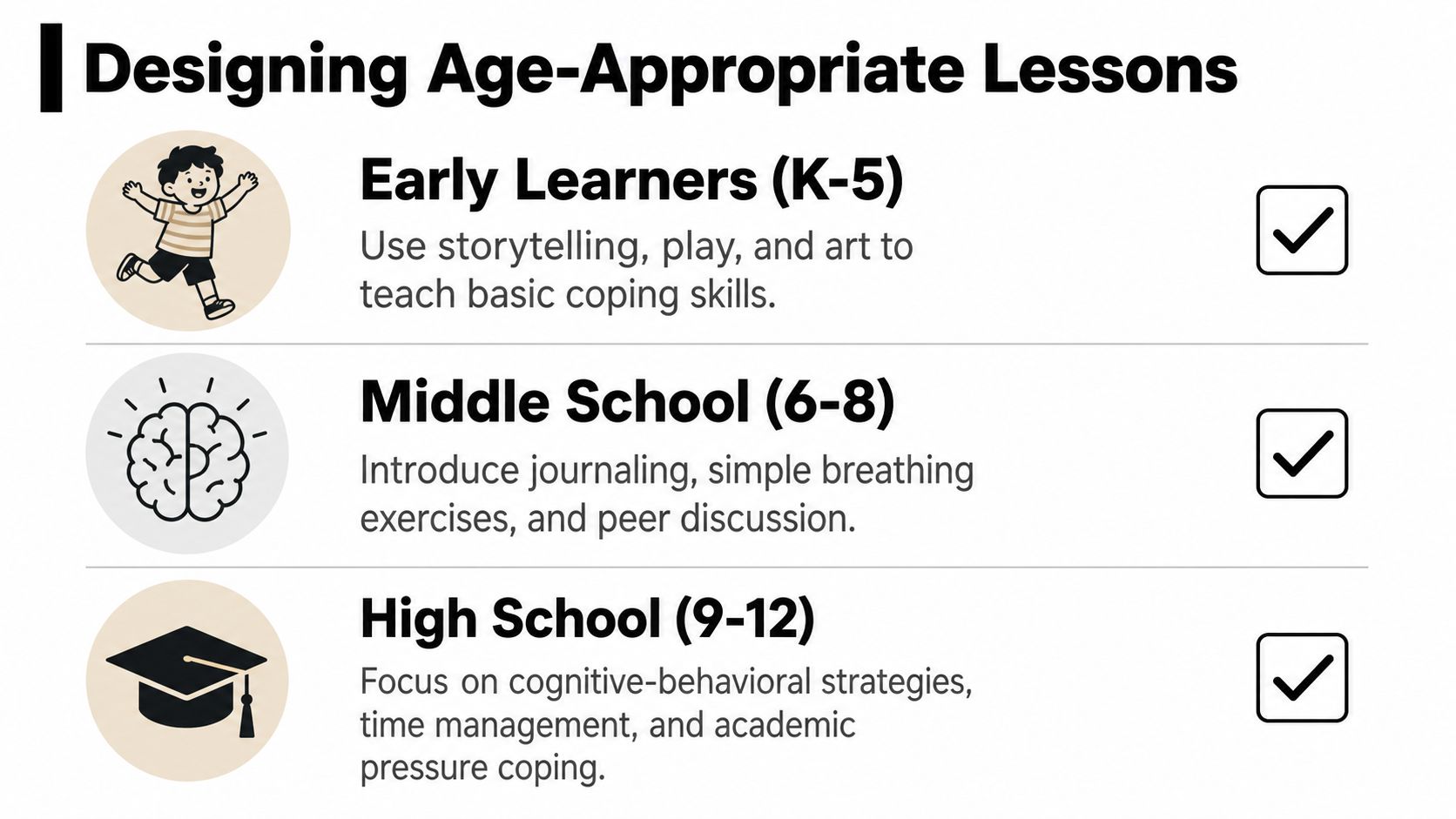
A fifth grader who freezes during reading time doesn't need the same language or activity as a teen staring at an exam score. The stress is real in both cases, but the entry point changes. Younger learners usually need naming, modeling, and play, while older students need reflection, cognitive reframing, and a way to handle academic pressure without feeling patronized.
Early learners need simple, visible coping cues
A primary school student usually notices stress before they can explain it. They may get quiet, restless, clingy, or suddenly refuse the task. For that age group, storytelling, drawing, and games work better than abstract discussion because children can practice a response without needing advanced self-analysis.
A simple lesson might use a story character who feels nervous before a spelling test. The class can help the character choose between stamping feet, hiding the paper, or taking three slow breaths and trying again. The goal is not to erase the stress, it's to give the child a way back into learning.
Middle school students benefit from reflection and peer language
By middle school, students start comparing themselves to classmates and worrying about how they look under pressure. They may insist they “don't care” while avoiding hard work. Journaling, short breathing exercises, and guided peer discussion help them notice the connection between thoughts and behavior.
This age group does well with prompts like, “What do you tell yourself when you get stuck?” or “What helps you restart after a bad grade?” That kind of language starts moving them toward cognitive reframing without sounding clinical. It also respects the social side of stress, which is often a bigger issue than the assignment itself.
High school and test prep need performance support
Older students usually want practical tools they can use before a deadline, a mock exam, or a speaking task. They're often dealing with academic uncertainty, fear of mistakes, and pressure to keep progressing. That's where short CBT-style reframing, time management, and reset routines become useful.
For test prep, I'd use a short scenario: the student sees a difficult question, panics, and starts rushing. The response should be explicit, pause, breathe, label the thought, and return to the next step. In tutoring, the strongest lessons are the ones that help a student recover during the lesson, not just talk about stress after it.
A Toolkit of Evidence-Based Activities and Exercises
The strongest interventions are usually the ones people can repeat. A 2021 systematic review found that mindfulness, behavioral, and cognitive-behavioral programs performed best, while informational-only approaches were among the least effective Wiley review. That's a useful filter for teachers, because it means passive advice isn't enough.
Quick resets that fit inside a lesson
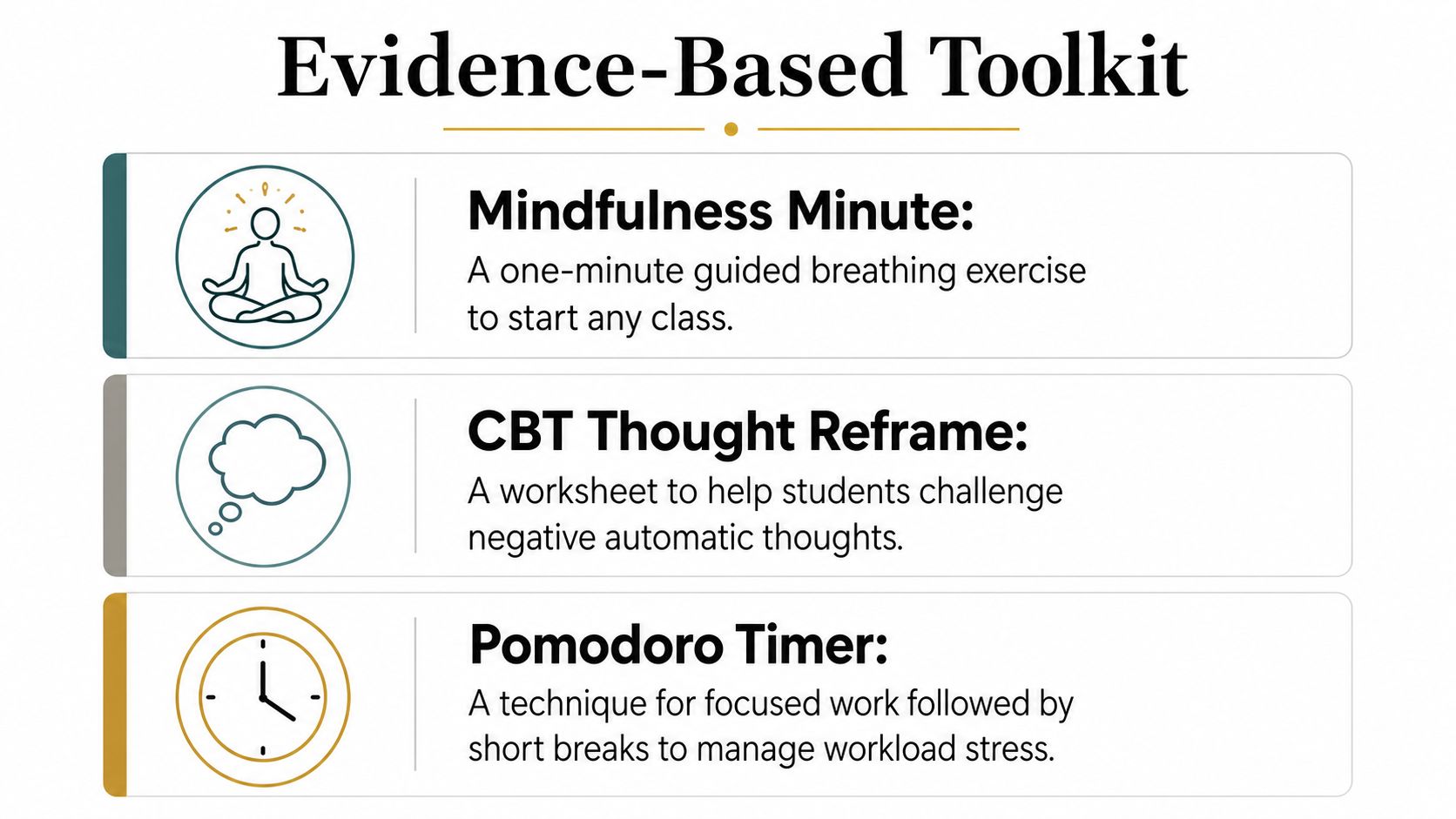
Use a Mindfulness Minute when the room feels scattered. Ask students to sit still, notice the breath, and count slow inhales and exhales for one minute. The point is not deep relaxation, it's helping the nervous system settle enough to re-engage.
A CBT Thought Reframe works when a student says, “I can't do this.” Have them write the thought, challenge its accuracy, and replace it with something more usable, like “I haven't solved it yet.” That shift matters because it changes the student from shutdown mode to problem-solving mode.
A short movement reset also helps. The CDC recommends practical relief strategies like deep breathing, stretching, meditation, journaling, spending time outdoors, talking with trusted people, and gratitude practice CDC stress guidance. Those tools are simple, but they work best when teachers schedule them into the day.
Longer practices for staff or wellness blocks
A University of British Columbia review of a mindfulness-based teacher program described a structured schedule of a 90-second loving-kindness practice at least three times per day at school, a 10-minute breath meditation every other day, and an additional 16-minute every-other-day combination practice UBC review. That detail matters because it shows stress management can be operationalized as timed routines, not just encouraged as a habit.
For deeper nervous-system support in a staff setting, some leaders also look at approaches that help people regulate before a hard interaction. If you want a practitioner-oriented resource on that angle, enhance executive performance from Acheloa Wellness, Inc. offers a relevant lens.
The best exercise is the one your teachers or students can repeat without extra prep.
For classroom wellness work, it also helps to boost student engagement with SEL by pairing coping practice with reflection and application.
Integrating Lessons Into Your Busy Timetable
A beautiful curriculum can still fail if it creates more admin work than it solves. That's the trap many schools and tutoring centers fall into, they add a wellness idea, then spend weeks chasing room assignments, parent messages, and teacher availability. If the program is hard to run, it won't last.
Make the lesson fit the schedule you already have
The easiest implementation is often a short brain break inserted into an existing block. That works when you want students to reset without adding a separate class. A weekly wellness session works better when the goal is teaching a repeatable skill, such as breathing, reframing, or test-day routines.
The key is consistency. Teachers don't need one more thing that appears randomly on the calendar. They need a predictable slot, a clear room, and a communication pattern parents can understand.
Use operations to protect the program from chaos
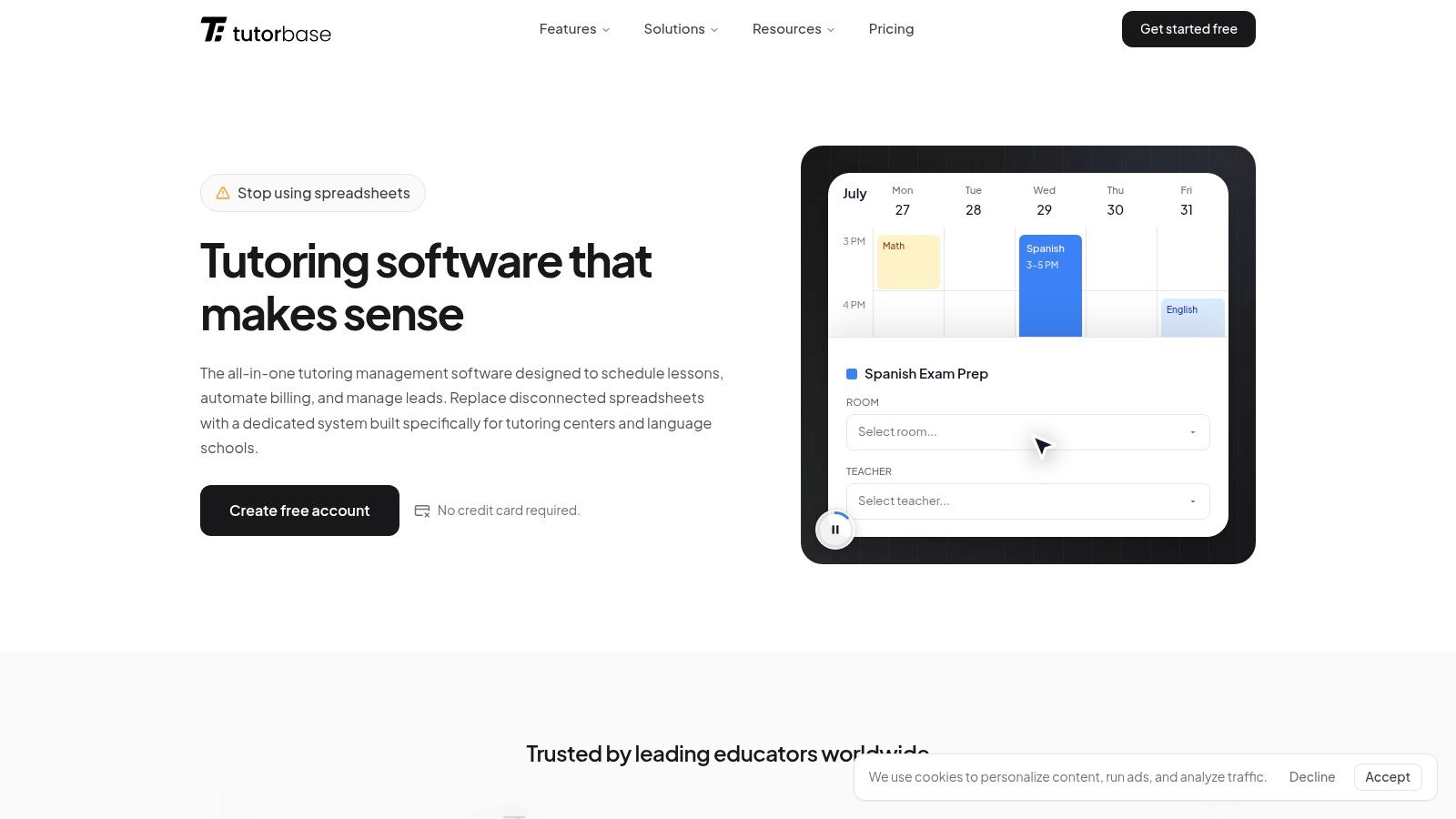
Management systems matter. Recurring lesson scheduling reduces the back-and-forth of setting up the same class every week. Room allocation keeps wellness sessions from competing with academic classes. Automated parent communications make it easier to explain what the program is, why it exists, and when students need to attend.
If you run a tutoring center, those details decide whether a stress-management offering feels professional or improvised. The program should look as organized as your core academic lessons. When teachers can rely on stable scheduling and clear room assignment, they can focus on facilitation instead of logistics.
A useful operational rule is to make wellness classes behave like any other service line. Set the recurrence, assign the room, confirm the roster, and communicate changes before class day. That keeps the program from becoming another source of stress for the adults running it.
Measuring Success and Building a Calm Culture
Stress-management teaching works best when you treat it like part of the culture, not a one-off event. You do not need formal testing to know whether it's helping. You need observation, honest feedback, and a few simple signals that tell you whether students and teachers are using the tools.
Track what happens during the lesson and after it. Are students returning to work faster after a reset? Are teachers seeing fewer shutdown moments during hard tasks? Are students attending the wellness block consistently and talking about the strategies in other classes?
The U.S. Department of Education recommends gathering teacher input through valid and reliable scales, focus groups, and meetings, and it also encourages districts to set priorities for educator well-being teacher well-being report. That's a good model for tutoring centers too, because it keeps the feedback loop organized and visible.
Best signal: if staff and students start using the tools without being reminded every time, the program is landing.
A calmer culture doesn't come from one lesson. It comes from repeated practice, clear routines, and operations that stop the program from becoming another burden. When you design it that way, teaching stress management supports both learning and retention, and it becomes part of how the center works every day.
If you want to run stress-management lessons without adding more admin work, Tutorbase gives tutoring centers a single place to manage scheduling, rooms, billing, payroll, and student tracking. That makes it much easier to build recurring wellness classes, protect teacher time, and keep communication clean for parents. Visit Tutorbase to see how a more organized center can support calmer classrooms and a healthier weekly rhythm.
FAQ
What is teaching stress management?
Teaching stress management means helping students and teachers recognize stress, respond to it skillfully, and return to learning or work. It includes coping tools, routine design, and classroom habits that make stress easier to handle.
Does stress management belong in academic tutoring?
Yes, because academic uncertainty often creates stress during lessons, quizzes, and test prep. Students need performance support, not just academic content, when anxiety blocks focus.
What works better than generic stress tips?
Practice-based methods work better than informational-only advice. Mindfulness, behavioral practice, and cognitive-behavioral strategies have stronger support than lectures about calmness.
How often should students practice stress-management skills?
Short routines work best when they happen consistently. A brief reset during class and a recurring wellness block are easier to sustain than occasional long sessions.
Should teachers also be taught stress management?
Yes, because teacher stress affects classroom climate, attendance, and instruction quality. Teacher support works best when schools also adjust workload, scheduling, and expectations.
How do I know if a stress-management lesson is working?
Look for behavior change, not just positive feedback. Watch whether students recover faster, use the strategy independently, and stay engaged during challenging tasks.
Can tutoring centers run this without adding admin overload?
Yes, if the program uses clear scheduling, room assignment, and communication workflows. The operational side has to be as intentional as the lesson design.


