


Finding the best platforms for reading tutors can be overwhelming. The right platform can streamline scheduling, billing, and student acquisition, but the wrong one wastes time and money. This guide details the top platforms in 2026, helping you choose the best fit for your specific needs, whether you are a solo practitioner or a multi-branch tutoring center.
We will explore three distinct categories of tools:
- Marketplaces: Platforms designed to connect you with students.
- Specialized Programs: Certified methodologies for intensive reading instruction.
- Management Software: All-in-one systems for scheduling, billing, and payroll.
Each entry includes an honest assessment of key features, ideal use cases, pricing, pros, and cons, complete with screenshots and direct links. Our goal is to equip you with the practical information needed to select the right platform, reduce your administrative burden, and focus on what matters most: helping students succeed. This curated list is designed for everyone from independent tutors organizing their schedules to multi-branch center owners looking to scale their business efficiently.
1. Tutorbase
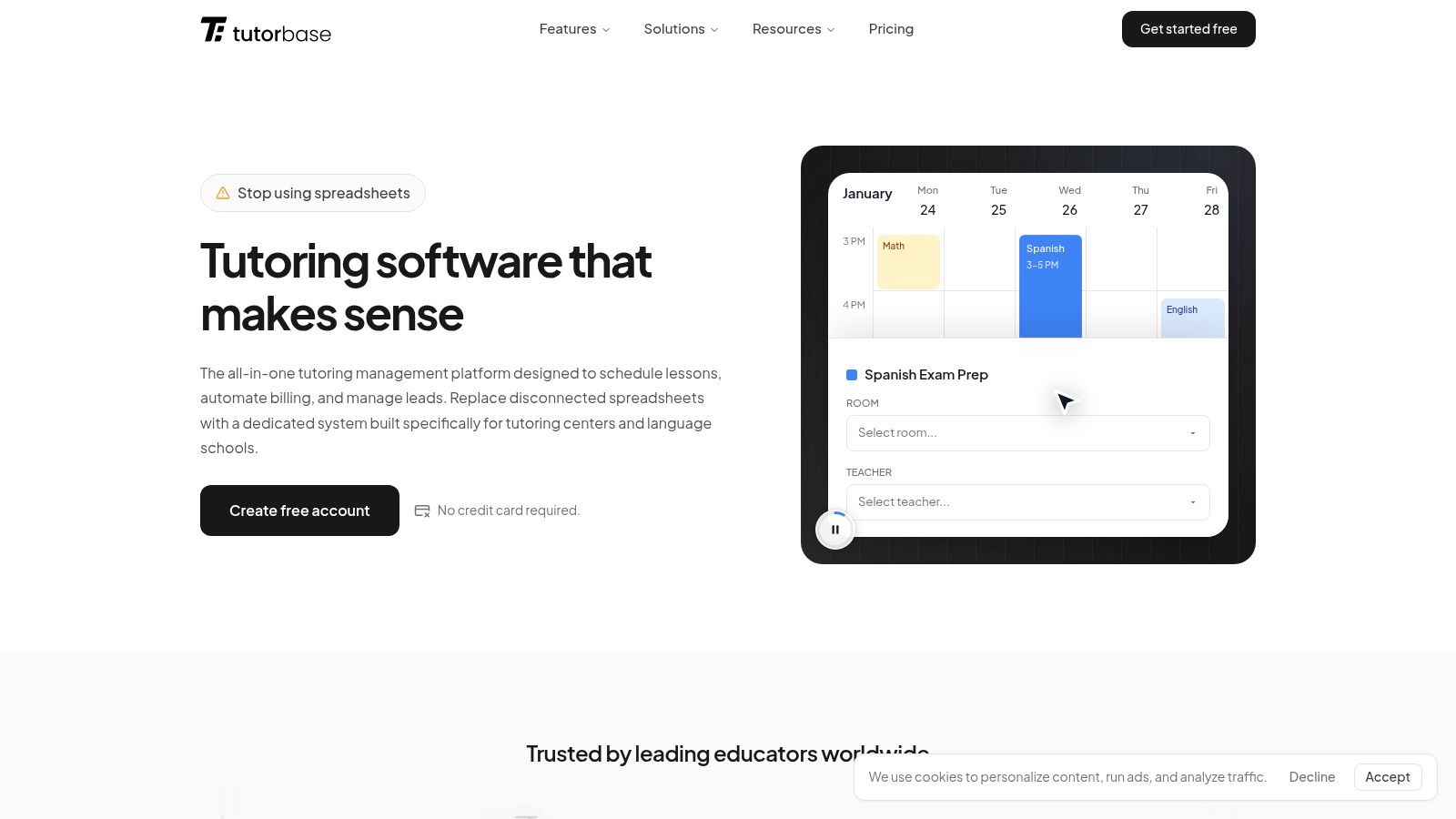
Tutorbase is an all-in-one, AI-powered tutoring management platform designed for scale. It replaces fragmented tools like spreadsheets and legacy software by unifying scheduling, billing, payroll, and a student CRM into a single, intelligent system. This comprehensive approach makes it an exceptional choice among platforms for reading tutors, especially for established centers and ambitious solo practitioners aiming to grow. It is engineered to dramatically reduce administrative workload, allowing educators to focus on teaching.
Key Features & Use Cases
Tutorbase excels with its advanced, automated features that directly solve common tutoring center bottlenecks. The AI-powered "Find Slot" feature instantly suggests optimal teacher, room, and time combinations, preventing double-bookings and maximizing resource use. For reading tutors managing multiple group classes, the "Find Spot" feature quickly identifies open seats in existing lessons, helping to fill every available slot.
Its billing and payroll systems are remarkably flexible, supporting everything from simple per-lesson charges to complex subscription models and prepaid credit wallets. Invoices are automatically generated from attendance records, eliminating manual data entry. This end-to-end automation from scheduling to payroll is a significant differentiator, with users reporting up to a 60% reduction in administrative time.
Pros & Cons
Pros:
- True end-to-end automation that links scheduling, attendance, invoicing, and payroll, minimizing manual errors.
- Advanced scheduling AI prevents double-bookings and optimizes teacher and room utilization for maximum capacity.
- Built for scale with multi-branch management, multi-brand support, and native WhatsApp lead capture.
- Robust billing and payroll accommodate complex pricing models and variable teacher compensation structures.
Cons:
- The extensive feature set may have a steeper learning curve for solo tutors or very small operations.
- Detailed pricing for larger deployments requires direct sales contact, though a free account is available to start.
Platform Details
- Ideal For: Tutoring centers with 5-100+ teachers, multi-branch operations, and solo tutors planning to scale their business.
- Pricing: Offers a free account and free trial with no credit card required. Custom pricing is available for larger centers.
- Access: https://tutorbase.com
2. Wyzant
Wyzant is a vast online marketplace connecting students with independent tutors for both online and in-person reading support. It functions like a massive directory, allowing parents and students to search for tutors specializing in everything from early literacy and phonics to advanced reading comprehension and dyslexia support. The platform’s strength lies in its sheer volume and transparency, offering a competitive landscape where tutors set their own rates and display detailed profiles.
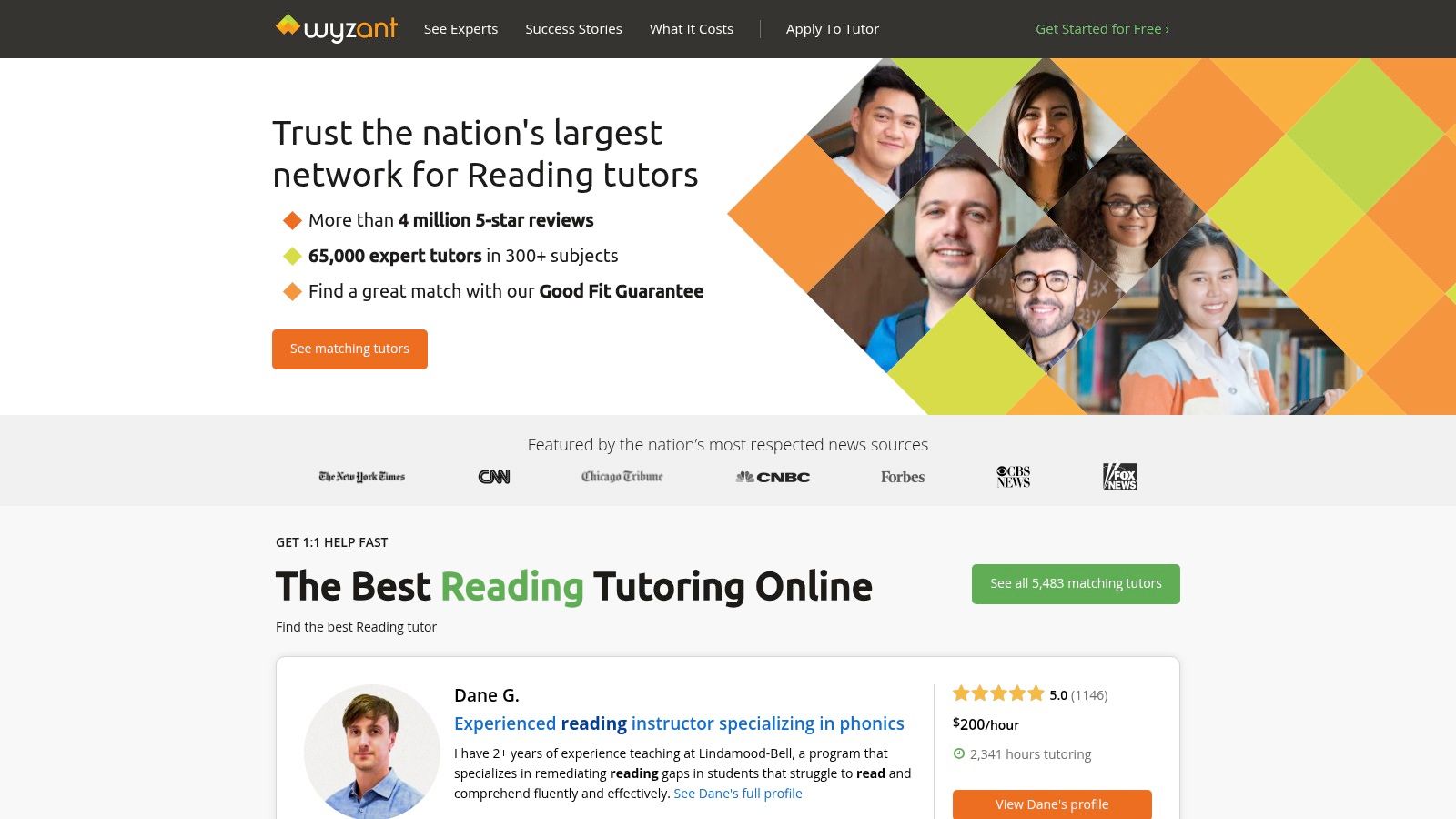
This makes it one of the most flexible top platforms for reading tutors, especially for those who prefer to operate independently. The pay-as-you-go model, with no required packages or long-term contracts, is a major draw for families seeking flexibility. For tutors, it’s a powerful tool for lead generation, though you are competing directly with thousands of others. This environment often provides a great starting point for building a client list, and tutors can find additional resources on how to secure jobs for home tutors to further build their business.
Key Details & Features
- Ideal Use Case: Independent reading tutors looking to build their student base without the overhead of their own marketing. Also ideal for parents who want to browse a wide selection of tutors and pay per lesson.
- Pricing: Tutors set their own hourly rates (typically $30-$80+). Wyzant charges a service fee on each lesson, which is deducted from the tutor's payment.
- Pros: Huge pool of potential students, no upfront costs to list your services, flexible pay-per-lesson model.
- Cons: High competition, service fees cut into earnings, requires significant effort to stand out and build a strong profile.
3. Varsity Tutors
Varsity Tutors is a national service that matches students with highly vetted tutors for ongoing reading support, from K-12 through adult learners. Unlike open marketplaces, Varsity Tutors offers a managed experience, curating the connection between tutor and family. The platform is built around a Learning Membership model, providing a more structured, long-term approach to academic support rather than one-off lessons.
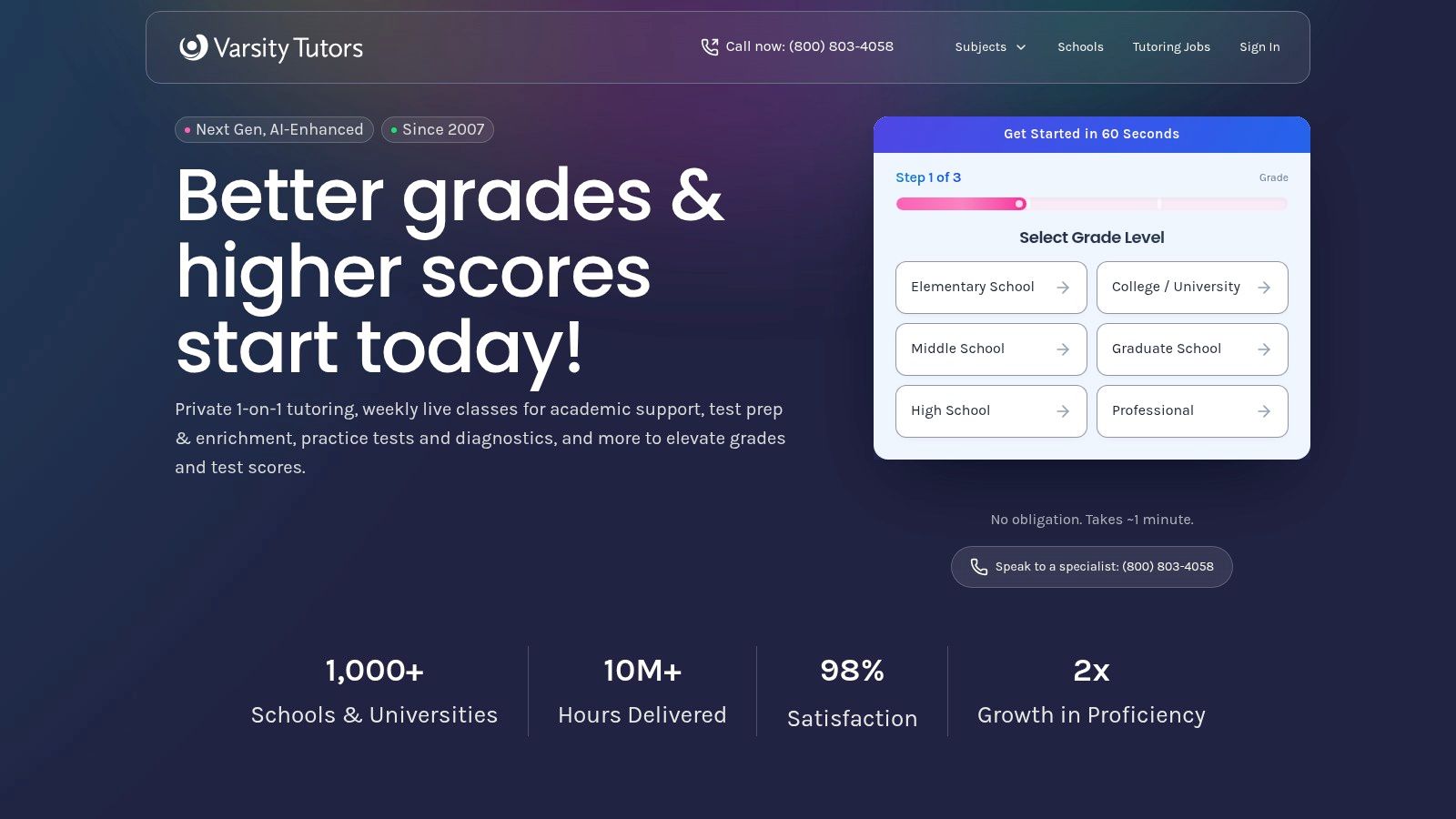
The service utilizes its own integrated Live Learning Platform, which includes tools for scheduling, accessing resources, and even getting instant help. For families, this provides a guided, all-in-one ecosystem for their child's reading journey. For tutors, it means working within a structured system with pre-qualified students. This makes it one of the top platforms for reading tutors who prefer a more managed environment without the need for self-marketing and client acquisition.
Key Details & Features
- Ideal Use Case: Reading tutors who prefer a structured system with pre-screened students and no personal marketing. It is also great for families seeking a comprehensive, managed tutoring service with a consistent platform.
- Pricing: Operates on a membership model where families purchase monthly hours. The specific costs are not publicly itemized on the website and are determined through a consultation.
- Pros: Curated matching removes the guesswork for families, integrated platform provides all necessary tools, and tutors get access to a steady stream of students without marketing.
- Cons: Less autonomy for tutors, membership model can be a bigger commitment for families than pay-as-you-go, and tutor pay structure can be complex.
4. Tutor.com
Tutor.com, a service from The Princeton Review, operates on an on-demand model, making it a go-to for immediate reading and English Language Arts (ELA) homework help. Widely utilized by libraries, schools, and even military families, the platform provides 24/7 access to qualified tutors. This structure is less about long-term, scheduled intervention and more about providing quick, targeted support when a student gets stuck on a specific reading comprehension question or ELA concept.

The platform's main appeal is its convenience, offering a safety net for students who need help outside of traditional school or tutoring hours. Tutors on this platform are adept at quick problem-solving within short sessions, typically lasting 20–25 minutes. This model is one of the top platforms for reading tutors who prefer a flexible, non-committal schedule, though it differs significantly from platforms designed for building a long-term private client base. The integrated platform includes features that are essential, and you can learn more about the best video conferencing tools for online tutoring to see how they compare.
Key Details & Features
- Ideal Use Case: Students needing immediate, on-demand homework help for reading assignments. Tutors looking for flexible, shift-based work without the need to find their own clients.
- Pricing: Consumers can purchase monthly subscriptions or multi-month hour bundles. Pricing varies by plan, with larger bundles offering a better per-hour rate.
- Pros: 24/7 availability for instant help, simple subscription models, and strong institutional backing which provides credibility and a steady stream of students.
- Cons: Not designed for intensive or structured reading therapy (like dyslexia support), the on-demand model is less personal, and it's not a platform for building an independent tutoring business.
5. Preply
Preply is a global online marketplace connecting students with tutors for a vast range of subjects, including reading, phonics, and reading comprehension. It operates on an international scale, providing access to a diverse pool of educators who specialize in different areas of literacy. The platform’s model is built around convenience and choice, allowing users to filter tutors by specialty, price, and availability, and then book trial lessons to ensure a good fit.
This makes Preply one of the top platforms for reading tutors who want to reach an international student base entirely online. The per-lesson payment structure after a trial offers flexibility for both parties. Tutors can set their own rates, which is a key factor when considering the average price for tutoring in different markets. While it offers immense reach, the platform's global nature means tutors must clearly articulate their credentials and teaching methodologies to attract the right students.
Key Details & Features
- Ideal Use Case: Online-only reading tutors aiming to connect with a global audience. It's also great for families seeking flexible scheduling and tutors with specific language or niche literacy skills.
- Pricing: Tutors set their own hourly rates. Preply takes a commission on lessons, starting at 100% of the trial lesson fee and decreasing with more hours tutored.
- Pros: Large international student and tutor pool, flexible scheduling across time zones, and the ability to book low-cost trial lessons to evaluate compatibility.
- Cons: Quality and pedagogical approaches can vary significantly between tutors, U.S.-specific reading intervention credentials may be less common, and it's almost exclusively an online marketplace.
6. Superprof
Superprof operates as a global, classifieds-style marketplace connecting students with tutors for a vast array of subjects, including reading and English Language Arts. It allows families to find local or online support nationwide, with a standout feature being that many tutors offer their first lesson for free. This model significantly lowers the barrier to entry for parents wanting to trial a tutor before committing, making it a budget-friendly option.
The platform's strength lies in its massive, decentralized network of independent tutors. Tutors create profiles, set their own rates, and manage their own schedules, giving them a high degree of autonomy. For families, this translates into a wide selection of tutors at competitive price points. Superprof is less of a managed service and more of a discovery tool, positioning it among the top platforms for reading tutors who want to quickly build a local or online client base with minimal upfront costs.
Key Details & Features
- Ideal Use Case: Independent tutors seeking maximum visibility with low startup friction, and parents looking for affordable, local reading help with the option for a free trial lesson.
- Pricing: Tutors set their own hourly rates (often starting from $20-$50). Students may pay a subscription fee to unlock the ability to contact multiple tutors.
- Pros: Huge selection of tutors with many budget-friendly options, the "free first lesson" model reduces risk for new clients, and offers both in-person and online tutoring.
- Cons: Less rigorous vetting process requires parents to perform their own due diligence, platform support is minimal, and the quality of tutors can vary significantly.
7. Care.com
Care.com is a massive U.S. marketplace known primarily for childcare, but it features a substantial and highly localized category for academic support, including reading tutors. The platform excels at connecting families with local, in-person tutors, allowing them to search by state and city to find help nearby. Its design as a general caregiving directory means it attracts a broad audience of parents, many of whom are seeking regular, weekly in-home reading support for their children.
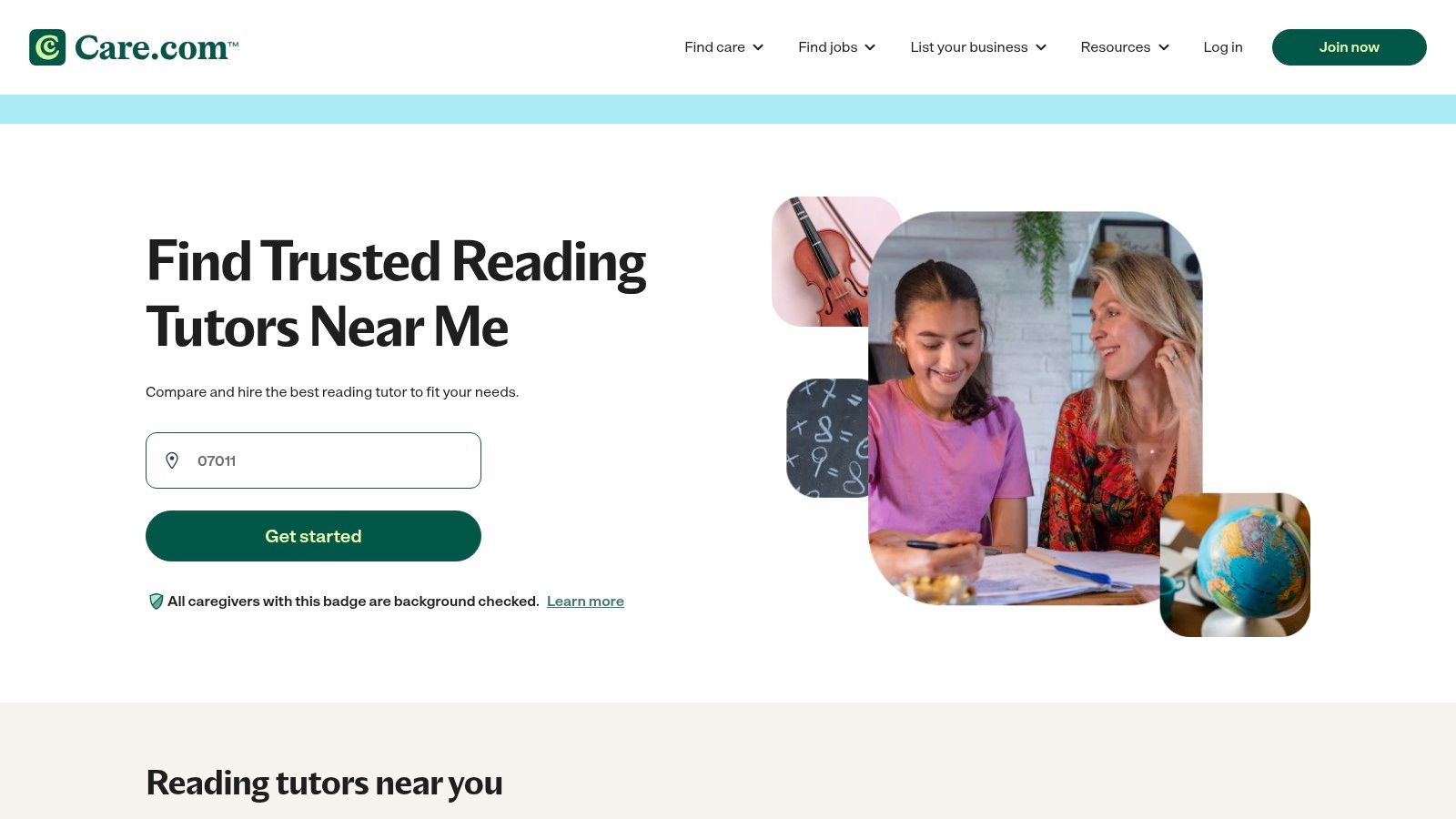
This makes it one of the more unique top platforms for reading tutors focused on local community connections rather than a strictly online model. Tutors create detailed profiles showcasing their experience, hourly rates, and availability, and families can post jobs detailing their specific needs. While the platform offers tools for background checks and communication, the quality and reliability of listings can vary, requiring diligence from both parties to ensure a good fit.
Key Details & Features
- Ideal Use Case: Independent tutors aiming to find local, in-person reading students, and parents who prioritize finding vetted, nearby help for consistent, ongoing sessions.
- Pricing: Tutors set their own hourly rates. Families typically subscribe to a premium membership on Care.com to contact caregivers and view full profiles.
- Pros: Extensive local coverage for finding nearby students, clear price transparency on tutor profiles, excellent for establishing long-term, in-home tutoring arrangements.
- Cons: Marketplace quality can be inconsistent, messaging and payment are less streamlined than on dedicated tutoring sites, requires more vetting effort from users.
8. Thumbtack
Thumbtack operates as a broad, local-services marketplace rather than a dedicated tutoring platform. It connects customers with local professionals for various jobs, including in-person reading and ELA tutoring. Families can post a request outlining their needs, and nearby tutors can respond with quotes, allowing parents to compare upfront cost estimates and profiles before hiring for phonics, elementary reading, or writing support.
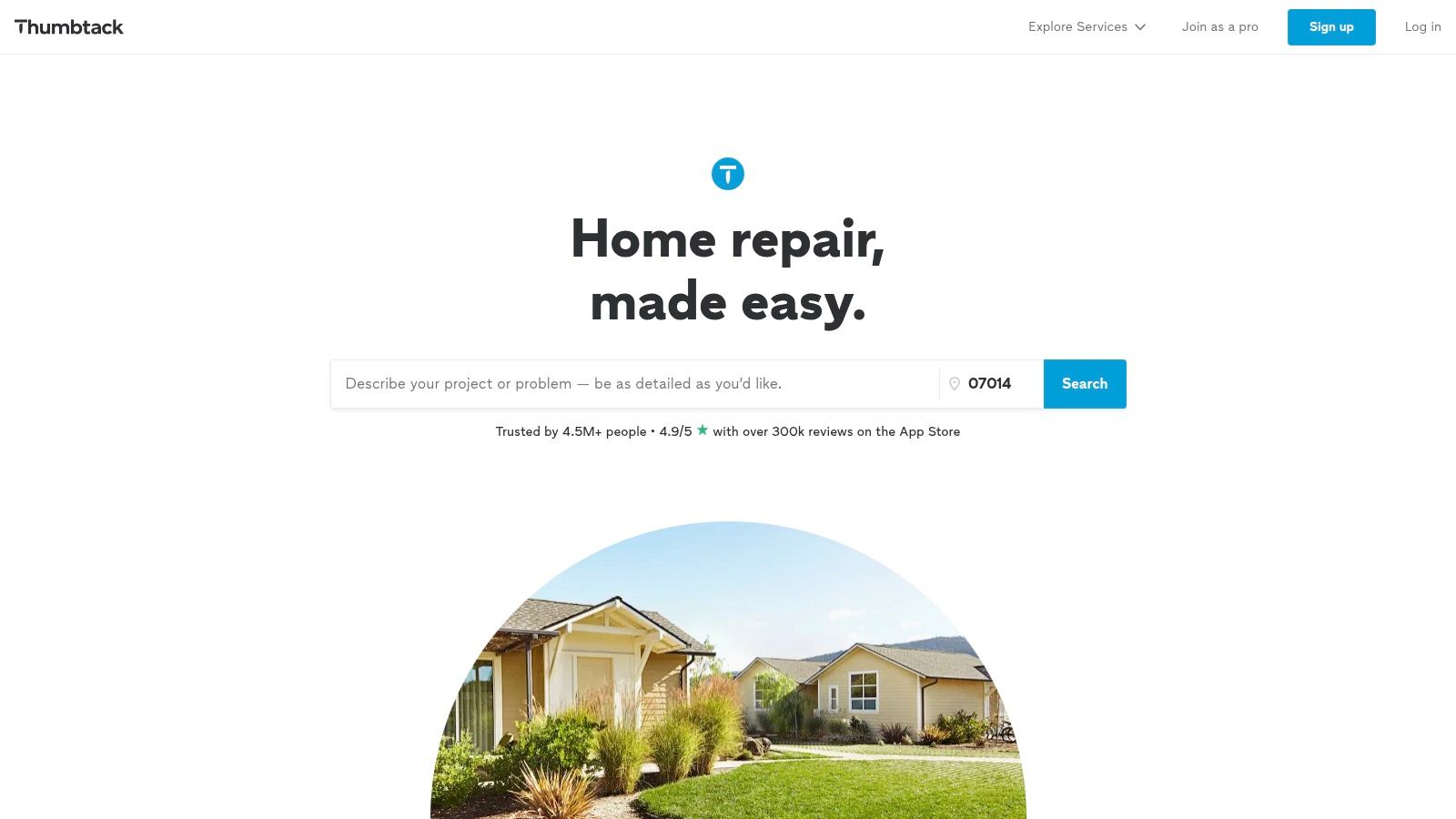
The platform’s strength is its focus on local, in-person services, making it one of the top platforms for reading tutors who prefer to travel to students' homes. It provides a simple way to generate local leads by responding directly to active requests. However, because it isn't specialized for education, the platform lacks standardized curriculum, progress tracking, and the quality control of a dedicated tutoring site, placing the burden of vetting squarely on the parent.
Key Details & Features
- Ideal Use Case: Reading tutors focused on building a local, in-person client base. Also great for parents who want to quickly gather and compare quotes from multiple tutors in their area for home-based lessons.
- Pricing: Tutors set their own prices and provide quotes. Thumbtack may charge professionals for leads or for completed jobs, depending on the service category.
- Pros: Excellent for finding local, in-person tutoring jobs; allows for direct price comparison via quotes; helpful for tutors who will travel to a student’s home.
- Cons: Not a tutoring-specific platform, so credentials and teaching quality vary widely; lacks educational features like progress tracking; quality depends entirely on the individual provider.
9. Skooli
Skooli offers an on-demand tutoring model, connecting students with educators for instant or scheduled sessions in a dynamic virtual classroom. It uniquely operates on a pay-as-you-go basis, selling time by the minute or in discounted bundles. This makes it a strong choice for students needing immediate homework help or targeted support on a specific reading comprehension challenge, rather than a long-term, structured program.
The platform's strength is its accessibility and immediacy. If a student is stuck on a particular text or ELA concept, they can connect with a tutor in minutes. This model positions Skooli as one of the more flexible top platforms for reading tutors focused on offering quick, targeted assistance. For families, it avoids the commitment of subscriptions or large packages, providing a safety net for occasional academic hurdles.
Key Details & Features
- Ideal Use Case: Tutors offering supplemental or "homework help" style reading support. It's also great for students who need quick, on-the-spot assistance with a specific reading assignment or concept.
- Pricing: Pay-per-minute model with discounted hourly bundles available. Pricing is transparent, but a 15-minute minimum charge applies to each session.
- Pros: Excellent for immediate, short-notice help. The no-subscription, pay-for-what-you-use model is highly flexible. It provides a straightforward way for tutors to earn from micro-sessions.
- Cons: Not structured for intensive, long-term reading intervention or therapy. The per-minute cost can become expensive for frequent or lengthy sessions compared to traditional hourly rates.
10. Lindamood-Bell
Lindamood-Bell is not a marketplace but a provider of highly structured, research-based instruction for reading, spelling, and comprehension. It is renowned for its proprietary programs, such as Visualizing and Verbalizing® for comprehension and Seeing Stars® for phonological processing. Instruction is delivered one-on-one, either at their physical learning centers or through live-online sessions, following an intensive, high-frequency schedule. This approach is designed to create significant and lasting changes in literacy skills.

This platform stands out for students with significant literacy gaps, dyslexia, or other learning challenges who require a deep, systematic intervention rather than general academic support. The process begins with a detailed diagnostic evaluation to create a completely individualized instruction plan. While it is one of the more intensive top platforms for reading tutors, its evidence-based methods and structured progress monitoring deliver targeted, powerful results for students who need them most.
Key Details & Features
- Ideal Use Case: Students with significant reading difficulties, including dyslexia, who need intensive, evidence-based intervention. Families looking for a structured, diagnostic approach to literacy challenges.
- Pricing: Varies significantly by center and the intensity of the required program. It is a premium service, priced higher than typical tutoring due to its specialized, one-on-one nature.
- Pros: Highly effective for significant literacy gaps and dyslexia-related needs, structured progress monitoring, individualized programs based on diagnostic evaluations.
- Cons: Requires a significant time commitment (often daily sessions), pricing is higher than general tutoring services, less suited for casual homework help.
11. Kumon Reading Program
The Kumon Reading Program is a structured, after-school curriculum delivered through a global network of local centers. Unlike typical tutoring marketplaces, Kumon offers a programmatic approach focused on building foundational skills through daily, incremental practice. It emphasizes phonics, vocabulary, and reading comprehension, guiding students from basic letter sounds to advanced literary analysis through a standardized, self-paced system. The model prioritizes consistency and habit-building over intensive, one-on-one intervention.
This makes it a unique, though less traditional, option among the top platforms for reading tutors, as it functions more like a franchise system than an open marketplace. The strength of Kumon lies in its predictable methodology and emphasis on developing independent study habits. For parents seeking a routine-based supplement to school, its methodical progression and fixed monthly cost provide a clear and structured path for academic enrichment, though it lacks the personalization of dedicated remedial tutoring.
Key Details & Features
- Ideal Use Case: Parents seeking a long-term, structured reading enrichment program that builds routine and independent study skills, rather than requiring acute, personalized intervention.
- Pricing: A fixed monthly tuition fee per subject (e.g., Reading) is charged by the local center, typically ranging from $100-$200 per month.
- Pros: Predictable monthly cost, emphasis on foundational fluency and independent learning, and a widely available network of local centers for in-person instruction.
- Cons: The standardized curriculum is less personalized than 1:1 tutoring, progress pacing may not suit students needing urgent intervention, and the format is more routine-based than therapeutically adaptive.
12. Academy of Orton-Gillingham Practitioners & Educators (AOGPE)
The Academy of Orton-Gillingham Practitioners and Educators (AOGPE) isn't a typical tutor marketplace but a crucial resource for finding highly specialized reading interventionists. As the credentialing body for the Orton-Gillingham (OG) approach, AOGPE provides a direct pathway for parents and centers to connect with certified practitioners trained in this structured literacy method, which is highly effective for students with dyslexia. Instead of an open search, users request a list of local credentialed professionals.
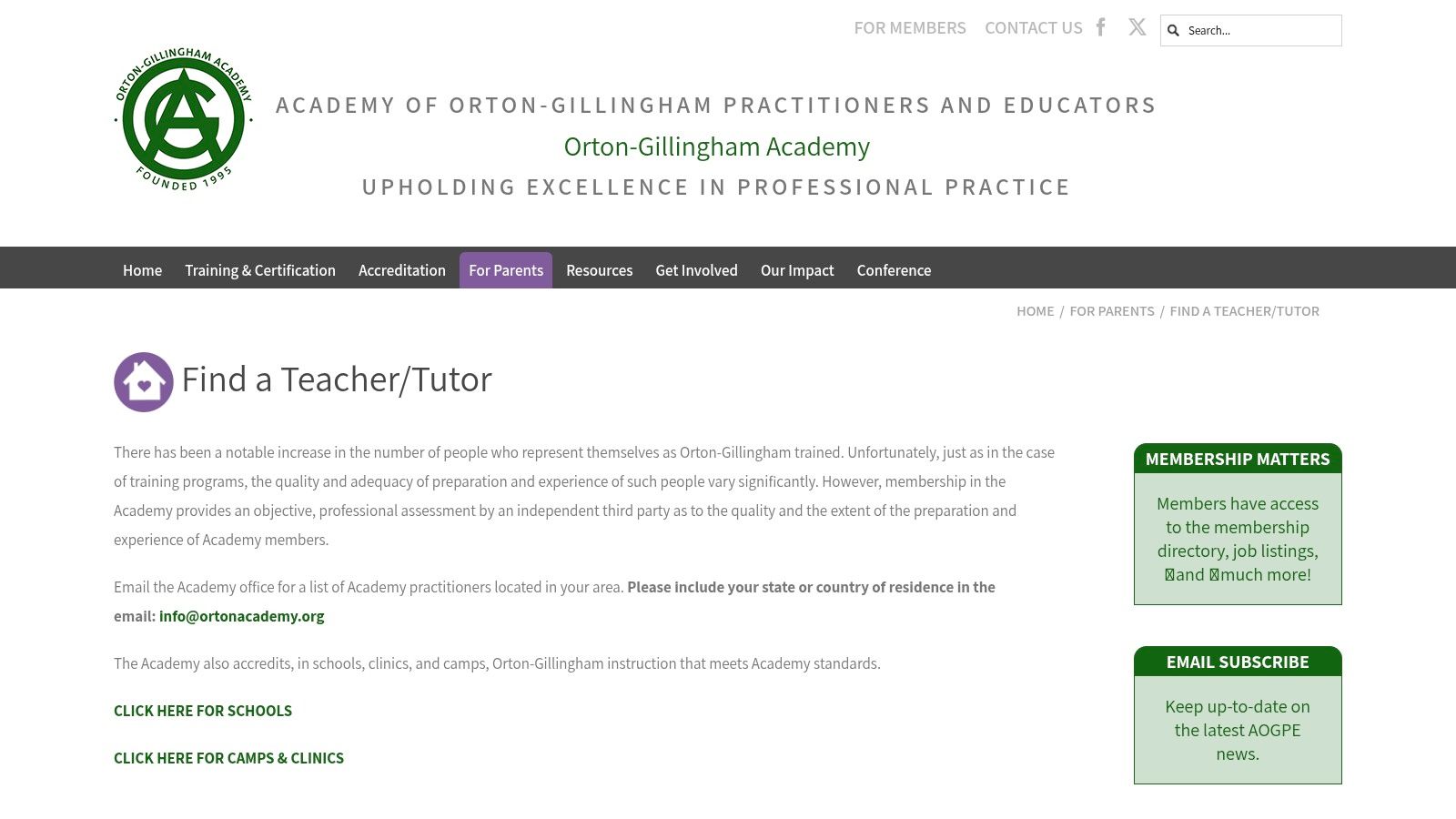
This platform stands out by prioritizing credentials and methodology over volume. For families specifically seeking structured, multi-sensory reading support, it offers a level of assurance that general platforms cannot match. Tutors who have invested in OG certification can get listed, leveraging the Academy's reputation to connect with a targeted client base. However, the manual, email-based matching process means it’s less of an instant-booking tool and more of a verified directory.
Key Details & Features
- Ideal Use Case: Families and educational directors seeking credentialed Orton-Gillingham practitioners for students with dyslexia or other significant reading challenges. It is also a key listing for certified OG tutors.
- Pricing: The service is free for parents to find a practitioner. Tutors set their own private rates, which are typically at a premium due to the specialized nature of OG instruction.
- Pros: Access to a verified pool of specialists, high assurance of quality and methodology, and a trusted resource for dyslexia-focused intervention.
- Cons: The matching process is not instant and requires an email request, practitioner availability can be limited in certain areas, and costs for tutoring are generally higher.
Comparison of Top 12 Reading Tutor Platforms
| Product | Core features | User experience / Quality | Value & ROI | Best for / Target audience | Pricing model |
|---|---|---|---|---|---|
| Tutorbase | All-in-one: AI scheduling (Find Slot/Spot), attendance→auto billing, payroll, rooms, CRM, WhatsApp, analytics | Enterprise-grade stability; prevents double-bookings; 60% admin time reduction; scalable to 10k+ lessons/week | Automates admin workflows, faster onboarding, higher renewals (reported ~42%) and payroll accuracy | Tutoring centers & language schools (5–100+ teachers, multi-branch ops), ops managers/owners | SaaS with free account/trial; custom plans for larger deployments; payment processing fees apply |
| Wyzant | Large tutor marketplace, detailed profiles, filters, pay-per-lesson, trial options | Wide supply; transparent profiles & reviews; quality varies by tutor | Flexible, no-contract pay-as-you-go; good for ad-hoc sessions | Families seeking local or online 1:1 private tutors | Tutor-set hourly rates + platform service fee (pay-per-lesson) |
| Varsity Tutors | Curated matching, Live Learning Platform, membership hours, scheduled sessions | Managed, guided experience with vetted tutors and platform tools | Stable, ongoing support under a membership model; easier continuity | Families wanting curated, ongoing tutoring across subjects | Membership-based (pricing not always public); add-on hours |
| Tutor.com | 24/7 on-demand tutors, subscription & hour bundles, short sessions | Always-on access; institutional reliability (libraries, schools) | Predictable subscription access for quick homework help | Institutions and families needing instant or frequent short help | Monthly subscriptions or multi-month hour bundles |
| Preply | Global tutor marketplace, trial lessons, detailed profiles, flexible scheduling | Large international pool; variable pedagogy; online-only focus | Good for niche languages/skills and trial-based selection | Online learners seeking language/ELA tutors worldwide | Pay-per-lesson; tutor-set pricing + platform commission |
| Superprof | Classified-style listings, many tutors, often free first lesson, local & online | Budget-friendly and fast to contact; minimal vetting | Low-cost entry; high variability in quality | Price-sensitive families looking for local or online tutors | Tutor-set rates; often free initial lesson |
| Care.com | Broad caregiver/tutor directory, local filters, profile rates, background-check badges | Wide local coverage; mixed listing quality | Useful for ongoing in-home tutoring with local candidates | Families seeking nearby, in-person weekly support | Pay tutor hourly; platform may require membership for full access |
| Thumbtack | Quote-based local marketplace, in-app messaging, cost guides | Good for price discovery and comparing local options; variable vetting | Fast comparisons and upfront quotes for in-person services | Families wanting local tutors who travel to home | Quote-based hiring; professionals may pay for leads |
| Skooli | Virtual classroom, per-minute pricing, instant or scheduled help, minute bundles | Transparent per-minute billing; ideal for quick targeted help | Flexible pay-as-you-go for short sessions; can be costly if frequent | Students needing short, urgent homework help | Per-minute pricing with tiered bundles (pay-as-you-go) |
| Lindamood-Bell | Diagnostic evaluations, research-based proprietary programs, intensive sessions | High-quality, structured clinical instruction; frequent sessions | Effective for serious literacy gaps/dyslexia; measurable progress | Students with significant reading difficulties or dyslexia | Program-based pricing (typically higher; varies by center) |
| Kumon Reading Program | Standardized incremental curriculum, routine practice, center network | Predictable pacing and practice; less individualized therapy | Good for fluency/habit formation and steady progress | Families seeking routine after-school practice & fluency | Fixed monthly tuition per subject (center pricing) |
| AOGPE (Orton‑Gillingham) | Directory/credentialing for OG-trained practitioners, verified certifications | High-assurance credentialing; manual/email matching for practitioners | Access to specialized dyslexia expertise; higher per-session ROI for targeted therapy | Families needing OG-certified structured-literacy intervention | Practitioners set rates; no central session pricing (varies) |
Choosing Your Platform: From Finding Students to Scaling Your Business
Navigating the landscape of top platforms for reading tutors requires a clear understanding of your current business stage and future goals. This guide has showcased a diverse range of tools, from student acquisition marketplaces like Wyzant and Preply to specialized pedagogical resources such as the Academy of Orton-Gillingham Practitioners & Educators. Each serves a distinct purpose, and the right choice hinges on your specific needs.
For solo tutors or new ventures, marketplaces offer an invaluable pipeline to connect with families seeking reading support. Platforms like Superprof and Skooli reduce the initial marketing burden, allowing you to focus on instruction. Similarly, specialized programs like Kumon and Lindamood-Bell provide structured curricula that can be a powerful foundation for tutors who prefer an established, evidence-based methodology.
However, for established tutoring centers and growing businesses, the primary challenge often shifts from finding students to managing them. As your roster grows from 10 students to 50, or your team expands from one tutor to twenty, the operational cracks begin to show. This is where the true bottleneck to growth appears, consuming hours in manual, repetitive tasks.
Moving Beyond Student Acquisition to Operational Excellence
The core problem for scaling centers is not a lack of students, but a lack of systemization. Fragmented tools, such as using Google Calendar for scheduling, QuickBooks for billing, and spreadsheets for payroll, create inefficiencies and costly errors. This is the critical transition point where a dedicated tutoring management platform becomes not just a convenience, but a necessity for survival and growth.
When selecting a management tool, consider these key factors:
- Automation Depth: Does the platform truly automate complex workflows? Look for features like conflict detection for scheduling, automatic invoice generation from attendance records, and complex payroll calculations that handle varied teacher rates.
- Scalability: Can the software handle your business today and in three years? A system that slows down with more students or cannot manage multiple locations will eventually need to be replaced, a costly and disruptive process.
- Business Model Alignment: Your operational software must support your specific business model. Whether you use prepaid credit packages, recurring subscriptions, or complex multi-branch room booking, the platform must accommodate these nuances natively. To understand how established tutoring businesses leverage platforms for expansion, considering case studies like those detailing Tutor Doctor's platform strategies can offer valuable insights.
While many tools offer basic features, a solution like Tutorbase is engineered specifically to resolve the operational chaos that holds tutoring centers back. By unifying scheduling, billing, payroll, and CRM into a single, intelligent system, it directly addresses the administrative burden, freeing you to focus on educational outcomes and strategic expansion.
Ready to stop managing spreadsheets and start scaling your tutoring business? Tutorbase replaces fragmented tools with a single, AI-powered platform designed to automate your operations. See how you can reduce admin time by 60% and eliminate booking errors by signing up at Tutorbase.
Frequently Asked Questions (FAQ)
What is the best platform for a new reading tutor?
For a new reading tutor focused on finding students, a marketplace like Wyzant or Superprof is often the best starting point. These platforms provide immediate visibility to a large pool of potential clients with low upfront costs, allowing you to build a client base and gain experience.
How much do reading tutors charge per hour?
In 2026, the average rate for a private reading tutor in the United States typically falls between $30 and $80 per hour. Rates can vary significantly based on the tutor's experience, credentials (e.g., Orton-Gillingham certification), and geographic location.
Are specialized reading programs like Lindamood-Bell worth the cost?
For students with significant learning challenges like dyslexia, specialized, evidence-based programs like Lindamood-Bell or those using the Orton-Gillingham approach are often worth the investment. Their structured, diagnostic methods can produce results that general tutoring may not achieve.
Can I find local, in-person reading tutors online?
Yes, platforms like Care.com and Thumbtack are specifically designed to connect you with local professionals for in-person services. Marketplaces like Wyzant and Superprof also allow you to filter searches for local, in-person tutors in your area.
What is tutoring management software?
Tutoring management software is a platform that helps tutoring businesses automate their administrative operations. This includes tools for scheduling lessons, managing students and teachers, automating invoicing and billing, processing payroll, and tracking business performance.
How does Tutorbase help a tutoring center scale?
Tutorbase helps tutoring centers scale by automating core administrative tasks that create bottlenecks. Its AI-powered scheduling prevents booking errors, automated billing eliminates manual invoice creation, and integrated payroll simplifies complex compensation. This reduces admin time by up to 60%, allowing owners to focus on growth.
What's the difference between a tutor marketplace and management software?
A tutor marketplace (e.g., Wyzant) is designed to connect individual tutors with new students; its primary function is lead generation. Management software (e.g., Tutorbase) is an internal tool for running the entire tutoring business, handling operations from scheduling to payroll for an existing roster of students and teachers.


