


Effective tutoring center staff performance reviews are the bedrock of a thriving educational business, turning subjective gut feelings into a data-driven growth engine. This process isn't about judgment; it's a structured conversation that boosts tutor retention, improves student outcomes, and drives operational efficiency. By grounding feedback in clear KPIs, you create a fair, transparent system that helps everyone succeed.
For years, many centers relied on intuition: "Sarah seems popular with students" or "John always looks busy." This approach is a recipe for inconsistency and bias. A modern framework, powered by a system like Tutorbase, replaces guesswork with objective data on student retention, schedule utilization, and payroll efficiency, making reviews a tool for growth, not a source of anxiety.
Why Gut Feelings Fail in Tutor Reviews
When you manage on intuition alone, you open the door to bias and inconsistency. This method leaves both you and your tutors without a clear map for improvement, often leading to recurring operational headaches.
This subjective approach almost always creates familiar problems:
- Inconsistent Feedback: One tutor gets praised for being "engaging," while another is critiqued for being "too quiet," with no objective criteria to back it up. This inconsistency breeds confusion and resentment among your staff.
- Recency Bias: A single great (or terrible) session right before a review can overshadow months of solid performance. This paints an inaccurate picture and devalues consistent, long-term effort.
- No Actionable Goals: Vague feedback like "be more proactive" is impossible to act on. Tutors need measurable targets to achieve genuine improvement and feel a sense of progress.

The Shift to Data-Driven Evaluations
A structured, data-centric review process eliminates these issues. When you use Key Performance Indicators (KPIs) tracked in a central system, your conversations are grounded in reality. Instead of guessing, you can point to hard numbers on student attendance, client retention, and schedule utilization.
This isn't just about accountability; it's about building a culture of continuous improvement. The power of a structured review system is well-documented. A landmark 2011 survey of over 2,000 tutors found that over 95% were satisfied with their work, thanks largely to a robust mentoring system providing regular, data-backed feedback.
The result? A staggering 95% student recommendation rate. The data proves it: what’s good for your tutors is fantastic for your business. You can learn more about these powerful findings and how they apply to tutoring centers today.
By leveraging key performance indicators (KPIs), structured meeting formats, and actionable development plans, you can turn a tedious administrative task into a powerful tool for retaining your best tutors and improving student outcomes.
Ultimately, a data-driven framework gives you the clarity to make smart decisions. It helps you identify who your top performers really are, who needs more support, and how to align each person's growth with your center's goals.
Building Your Performance Review Framework
A solid performance review system isn’t something you just wing; it needs to be built with intention. The goal is a predictable, fair, and repeatable process that staff trust and managers can execute with confidence. Get it right, and you turn a dreaded task into a powerful tool for growth. This framework is the operational backbone for effective reviews.
First, decide on a consistent rhythm. A mix of frequencies often works best, ensuring feedback isn't a once-a-year surprise. Many centers find success with a tiered approach that balances in-depth analysis with timely check-ins, letting you address small issues before they snowball.
- Quarterly Check-ins: Informal, 30-minute meetings focused on recent performance and immediate goals. They're perfect for quick course corrections and keeping momentum high.
- Annual Deep Dives: This is the formal, comprehensive review. It covers the entire year, connects performance to compensation adjustments, and sets the stage for long-term career development.

Setting Clear Expectations From Day One
Your performance review framework begins with the tutor's contract and first day of onboarding. You must clearly outline what success looks like, which metrics will be tracked, and how performance will be measured. This transparency is non-negotiable for building trust and ensuring everyone is aligned from the start.
When you communicate the process upfront, your staff understands that reviews are about development, not just judgment. When your team sees the system as a tool to help them succeed, they are far more likely to engage with it constructively.
As your tutoring center grows, you might explore different types of employee performance review software. These tools can formalize documentation and keep feedback cycles on track, especially when managing a larger team across multiple branches.
Structuring the Review Meeting Agenda
A productive review meeting needs a clear, consistent agenda. This isn't about being rigid; it's about ensuring every tutor gets the same detailed feedback and that conversations don't veer off track. A well-designed agenda is your roadmap for a constructive dialogue.
A great performance review is a two-way conversation, not a one-way critique. The best frameworks create space for the tutor to share their perspective, challenges, and aspirations.
An effective agenda should include:
- Opening & Purpose: State the meeting's goal to review past performance and plan for future growth.
- Tutor Self-Assessment: Give the tutor the floor first. Ask them to reflect on their wins and challenges.
- Manager's Review (Data-Backed): Present your evaluation grounded in the KPIs you've tracked. Discuss student progress, retention rates, and utilization.
- Goal Setting: Collaboratively set 2-3 specific, measurable, achievable, relevant, and time-bound (SMART) goals.
- Professional Development: Discuss growth opportunities like training, mentorship, or new responsibilities.
- Summary & Next Steps: Recap key takeaways and confirm agreed-upon goals and follow-up actions.
This structured approach transforms the meeting from a source of anxiety into a predictable, productive conversation. A platform like Tutorbase for tutoring centers simplifies prep work by consolidating data from attendance records to payroll history, ensuring every manager runs a fair and thorough review.
Choosing KPIs That Actually Matter
If the only thing you track is whether a tutor showed up on time, you're missing the whole story. To get a real sense of a tutor's impact, you must measure their contribution across a few key areas of the business. By focusing on specific, data-backed Key Performance Indicators (KPIs), you can build a complete and objective picture of their success.
These metrics generally fall into four buckets: Student Outcomes, Operational Excellence, Instructional Quality, and Professional Conduct. The right software doesn't just collect this data; it organizes it so you can see trends at a glance, turning raw numbers into real insights for every review conversation.

Here is a breakdown of the essential KPIs we recommend tracking for your tutoring staff. This table gives a clear overview of what to measure and where you can find this data inside a system like Tutorbase.
| KPI Category | Specific Metric | What It Measures | Data Source (in Tutorbase) |
|---|---|---|---|
| Student Outcomes | Progress Tracking | How effectively a tutor moves students through curriculum levels or concepts. | Student Profiles, Lesson Notes |
| Test Score Improvement | The direct impact a tutor has on standardized test results (e.g., SAT, TOEFL). | Student Profiles, Custom Fields | |
| Operational Excellence | Student Retention Rate | The percentage of a tutor’s students who continue lessons over time. | Student Lists, Billing History |
| Tutor Utilization Rate | The percentage of a tutor's available hours that are booked with paid lessons. | Calendar Reports, Payroll Data | |
| Instructional Quality | Parent/Student Feedback | Qualitative input on teaching style, rapport, and satisfaction. | Communication Logs, Custom Forms |
| Lesson Preparation | The level of planning and detail put into session notes and materials. | Lesson Note History | |
| Professional Conduct | Attendance & Punctuality | Reliability and adherence to scheduled sessions. | Attendance Records ("Attended," "No-show") |
| Communication | The timeliness and professionalism of responses to admin and parents. | Internal Messaging, Email Logs |
By looking at this mix of metrics, you get a much more balanced and fair view of a tutor's performance. Let's dive into what each of these looks like in practice.
Gauging Student Outcomes
This is the bottom line. The ultimate measure of a tutor's effectiveness is whether their students are making progress. While some growth is qualitative, you should track hard metrics to see their direct influence.
- Progress Tracking: Are students moving from A1 to A2 Spanish? Are they mastering Grade 4 math concepts? A tutor who consistently advances their students delivers clear value.
- Test Score Improvements: For test prep centers, this is the gold standard. A tutor who can consistently help students improve their SAT score by 150 points is a powerful asset.
Measuring Operational Excellence
A fantastic tutor contributes to the smooth and profitable operation of your center. These operational KPIs reflect a tutor's reliability and their ability to build relationships that keep students coming back.
Student Retention Rate is arguably one of the most important metrics. It tells you exactly how many students choose to stick with a specific tutor over time. High retention is a sure sign of strong rapport, effective teaching, and happy parents.
A tutor with a high retention rate is a massive asset. They aren't just teaching a subject; they are building loyalty to your brand and generating predictable revenue for your center.
Another key number is the Tutor Utilization Rate. This measures what percentage of a tutor’s available hours are filled with paid lessons. A tutor with a 90% utilization rate is a highly efficient member of your team, maximizing their schedule and contributing directly to your bottom line.
Assessing Instructional Quality
Instructional quality is what separates an average tutor from a great one. It’s about looking at both direct feedback and indirect signs of their teaching methods and preparation.
- Parent and Student Feedback: Setting up a simple system to collect feedback after a trial lesson or at the end of a package can give you invaluable qualitative data.
- Lesson Preparation: Well-prepared tutors leave detailed notes. A quick scan of a tutor's lesson notes in Tutorbase can tell you a lot about the planning they put into each session. To ensure reviews are objective, it's crucial to measure performance with KPIs that are both fair and insightful.
Evaluating Professional Conduct
Finally, a tutor's professionalism has a ripple effect on your entire team and brand reputation. These KPIs are about the fundamentals: reliability, collaboration, and how they represent your center.
- Attendance and Punctuality: Tracking statuses like "Attended," "No-show," and "Cancelled" in your management system gives you a black-and-white record of reliability.
- Communication: How quickly and professionally does the tutor respond to your admin team or to parent inquiries? This is a key part of the customer experience.
- Peer Collaboration: Do they actively share resources or cover lessons for colleagues? This shows a commitment to the team that goes beyond their own roster of students.
By tracking KPIs across these four areas, you can run performance reviews that are comprehensive and genuinely motivating. For a deeper look at visualizing this data, check out our guide on building a tutoring center KPIs dashboard.
How to Run a Productive Review Meeting
You have the data. You have crunched the numbers. Now comes the hard part: the meeting itself. This is where your data-driven approach pays off, turning an awkward chat into a constructive, two-way conversation.
A good review meeting is a collaborative session where you and your tutor align on performance and map out what comes next. The goal is to build a culture of growth, making sure your tutor leaves feeling heard, valued, and clear on their development path.
Setting the Stage for a Successful Conversation
Walking into a review without a plan is asking for trouble. Before sitting down with your tutor, you need to have all your information pulled and ready. This isn't just about having numbers on a page; it’s about weaving those numbers into a story that paints a clear picture.
- Attendance Records: Pull their complete history. Look for patterns in "No-shows" or "Late Cancellations."
- Student Retention Reports: Who is sticking around and who has dropped off? This is a powerful indicator of a tutor's connection with students.
- Capacity Utilization: Check their schedule. What percentage of their available time is booked? This speaks directly to their value within your center.
- Lesson Notes & Feedback: Skim through recent lesson notes and any parent feedback you have collected. This qualitative info adds crucial context.
Having this ready means you can speak with confidence and objectivity. A system like Tutorbase keeps everything neatly organized in each student's profile, reducing hours of prep to just a few minutes.
Structuring the Meeting for Maximum Impact
An agenda keeps the meeting on track and reduces anxiety. A predictable structure makes the process feel safer and more professional.
- Start with the Wins: Always begin by highlighting strengths and recent successes. Be specific. Instead of "Good job," try, "I was impressed with how you helped Liam jump from a C+ to a B last term. His parents were thrilled."
- Review the Data Together: Lay out the KPIs as a shared review, not an interrogation. Say, "Let's look at your student retention. It's at 85%, which is really strong. From your perspective, what’s been working so well?"
- Address Growth Areas Supportively: When discussing challenges, be direct but encouraging. Avoid accusatory language. Ditch "You have too many cancellations" and try, "I noticed the late cancellation rate was 15% last quarter, a bit higher than our 5% average. Can you walk me through what's been happening?"
The best feedback is specific, objective, and forward-looking. Your goal isn't to critique the past; it's to work together to find solutions for the future.
Navigating Difficult Conversations and Setting Goals
Not every part of a review is easy. When you tackle a significant issue, focus on the behavior, not the person. Use a simple three-step framework: describe the situation, explain its impact, and then ask for their perspective.
Scenario: A tutor consistently submits lesson notes late.
- Situation: "I've noticed your lesson notes are often coming in a day or two after the session."
- Impact: "When that happens, our admin team has a tough time answering parent questions, which can also delay our billing cycle."
- Inquiry: "Is there something in the current process making it difficult? I want to see if we can solve this together."
This approach turns a potential conflict into a problem-solving session.
Finally, no review is complete without setting clear, collaborative goals. These should tie directly back to the KPIs. If utilization was low, a goal might be: "Increase personal utilization rate from 75% to 85% by the end of next quarter." Write these goals down and schedule a quick check-in to ensure follow-through.
Linking Reviews to Growth and Compensation
A performance review is only as good as what happens next. The conversation is just the beginning; the real value comes from turning feedback into concrete action. This is where you connect a tutor's performance directly to their professional growth and financial rewards, creating a clear and motivating career path.
This step is critical. It shows your team that high performance is noticed and actively rewarded. When employees receive targeted training linked to their roles, companies see a 17% increase in productivity and a 21% boost in profitability. It's a clear win-win.
From Feedback to a Professional Development Plan
First, translate the "what" (performance data) into the "how" (actionable growth). An effective professional development plan (PDP) moves beyond vague suggestions and outlines specific, targeted opportunities that align with both the tutor's skills and your center's needs. A PDP must be a collaborative plan tailored to the individual.
- Targeted Training: If a tutor struggles with group dynamics, the goal might be to enroll them in a classroom management workshop.
- Mentorship Opportunities: Pair a strong, experienced tutor with a newer one. This rewards senior staff with leadership experience while upskilling your junior team.
- New Responsibilities: For a top performer, offer a chance to design curriculum, lead a subject-specific team, or pilot a new program. This provides a growth path beyond teaching more hours.
This infographic breaks down the simple three-step process for ensuring every meeting is productive, from prep to follow-up.
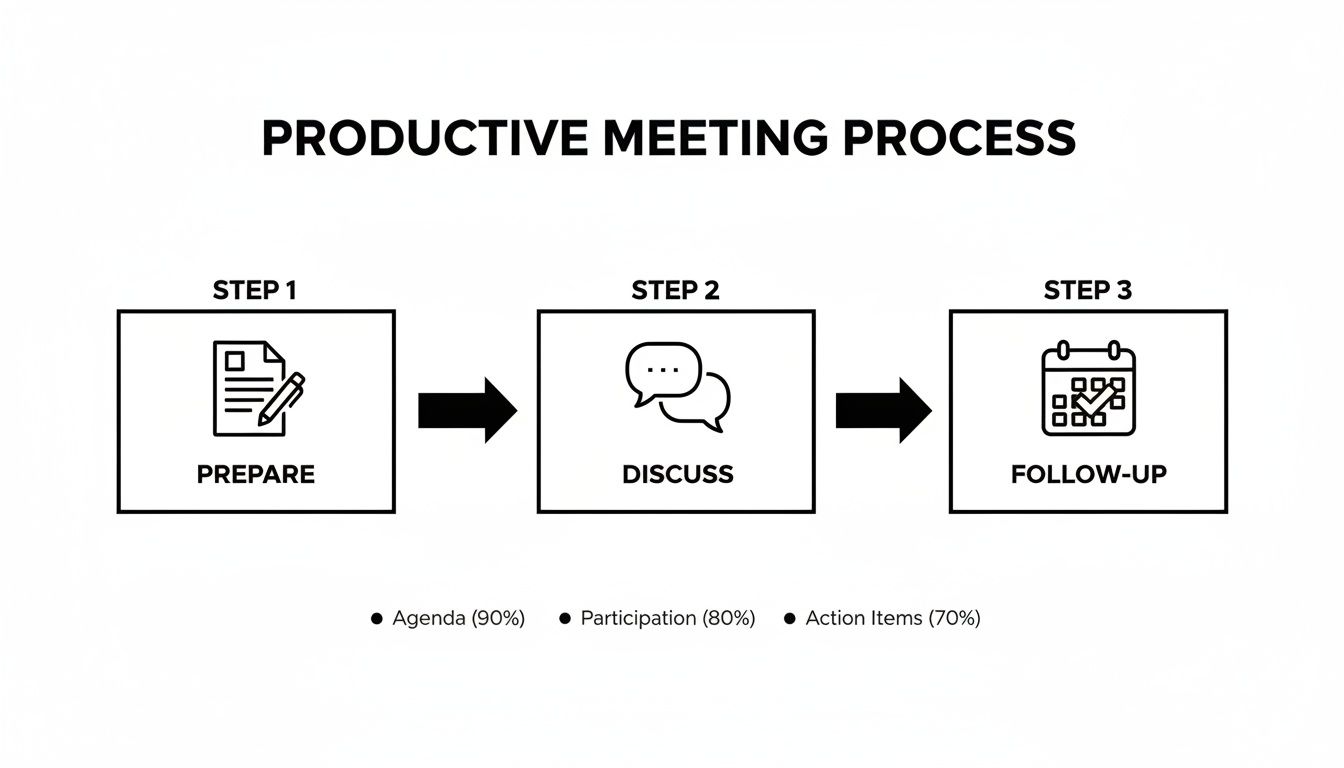
The key insight here is that the follow-up is just as important as the meeting itself. It ensures that development goals and compensation changes are formally documented and, most importantly, acted upon.
Tying Performance to Pay and Bonuses
For your review system to have real teeth, performance must be transparently linked to compensation. When tutors know that hitting specific KPIs will lead to better pay, you create a powerful incentive structure that drives the exact behaviors your center needs to succeed.
Vague promises of "future rewards" don't motivate anyone. A structured compensation model that is directly tied to review outcomes shows your team that you value and invest in high performers.
This is where systems like Tutorbase come in. They are built to handle these more nuanced payroll models, making it easy to implement a fair and motivating system. You can finally move beyond simple hourly rates and build a more sophisticated approach.
This table compares a few effective models you can implement.
Performance-Based Compensation Models
Linking pay to performance is not a one-size-fits-all approach. Different models incentivize different behaviors, so it's important to choose one that aligns with your center's goals. Here’s a look at a few popular structures and how a platform like Tutorbase helps you manage them.
| Compensation Model | How It Works | Best For | Tutorbase Feature |
|---|---|---|---|
| Performance-Based Bonus | A one-time or quarterly bonus is paid for hitting specific KPIs, like achieving a 90% student retention rate. | Rewarding specific, short-term achievements without altering base pay. | Payroll system with one-off payment capabilities. |
| Premium Pay Rates | Tutors certified in high-demand subjects (like SAT Prep or AP Calculus) become eligible for a higher hourly rate. | Incentivizing tutors to upskill in areas that are most profitable for the center. | Teacher profiles with customizable, subject-specific pay rates. |
| Tiered Pay Scale | Tutors advance through predefined levels (e.g., Junior, Senior, Master Tutor) based on review scores and tenure. | Creating a clear, long-term career ladder that encourages loyalty and continuous improvement. | Customizable contracts and payroll models that support multiple rate structures. |
Implementing these models requires a system that can handle the complexity. With Tutorbase, you can define different payroll rules for each tutor, automatically applying premiums for weekend hours, specific subjects, or overtime. This removes the manual calculation burden and ensures your compensation system is both fair and easy to manage.
By linking reviews directly to growth and pay, you create a powerful cycle. Tutors are motivated to improve, student outcomes get better, and your center thrives. This strategic approach to tutoring center staff performance reviews is what separates good centers from great ones.
FAQs on Tutoring Center Staff Performance Reviews
Even with a rock-solid framework, a few questions always pop up. We get these all the time from center owners and ops managers, so let's tackle the most common ones head-on. The goal here is to give you clear, practical answers to handle these moments with confidence.
How often should we conduct tutor performance reviews?
Finding the right rhythm is everything. Too often feels like micromanagement; not often enough, and you lose the chance to guide your team effectively. We've found a blended approach works best for most tutoring centers.
- Annual Deep-Dive: A formal, comprehensive review once a year is non-negotiable. This is where you connect overall performance to pay raises and talk through long-term career goals.
- Quarterly Check-ins: Lighter, 30-minute catch-ups every three months. They are perfect for tracking progress on goals from the annual review or troubleshooting new challenges.
- New Tutor Reviews: For new hires, check in at the 30, 60, and 90-day marks. This ensures they feel supported and helps you spot any onboarding issues early.
What is the best way to handle a tutor who disagrees with their review?
Disagreements will happen. How you navigate them says a lot about your center’s culture. If a tutor pushes back, your first move is simple: listen. Your immediate goal is not to "win" the argument but to understand their perspective. Often, a disagreement stems from a simple misunderstanding or a piece of context you might be missing.
Ask open-ended questions like, “Can you walk me through your perspective on this?” Then, gently guide the conversation back to the data. Point to specific metrics—student retention numbers, attendance records—and explain how you arrived at your conclusions. If you're still not aligned, agree on a concrete, short-term plan to revisit the issue in a few weeks.
Can we use student or parent feedback in performance reviews?
Absolutely, but you have to be smart about it. Feedback from parents and students gives you invaluable insight that numbers alone can't capture. However, it should only ever be one piece of the puzzle, not the whole picture. Feedback can be subjective and colored by factors outside the tutor’s control.
To use it fairly:
- Look for trends, not one-off comments. One negative review is an anecdote; five similar comments point to a pattern worth discussing.
- Balance it with objective data. How does qualitative feedback stack up against quantitative KPIs like student progress and retention rates?
- Share it constructively. Instead of saying, "A parent said you were boring," frame it as, "We've received feedback suggesting students would appreciate more interactive exercises. What are your thoughts?"
How do we adapt the review process for part-time vs. full-time tutors?
The core principles of a good review are the same for everyone, but you should adjust the scope and frequency. Part-time tutors have less contact time, so their KPIs should reflect that. For example, a full-timer’s review might cover curriculum development projects, while a part-timer’s review will focus more intensely on session quality and student retention for the hours they work.
You can also adjust the timing. For a part-time tutor working just a few hours a week, a full annual review supplemented by brief, informal check-ins each semester is often enough to keep them aligned with your center's goals without being burdensome.
Managing scheduling, payroll, and performance data for dozens of tutors is complex. Tutorbase consolidates all of it into one platform, cutting down your admin time by 60% and giving you the clear data you need to run fair, effective performance reviews that build a stronger team.


