


Parents keep asking if you offer dyslexia support. Your front desk says yes too quickly, your academic team hesitates, and you end up stuck in the middle. You can see the demand, but you also know this isn't just “reading tutoring with a new label.”
That hesitation is healthy. A dyslexia tutoring program asks more from your center than a standard homework-help service. You need the right instructional model, tutors who can deliver it, and operations strong enough to support frequent sessions, detailed notes, and parent reporting without turning your admin team into a bottleneck.
For center owners, that's the primary question in 2026. Not whether dyslexia support matters. It does. The question is whether you can launch it in a way that produces real outcomes and still runs like a business.
An Introduction for Tutoring Center Owners
A lot of owners reach this point the same way. You run a solid center for K-12 tutoring, test prep, or language learning. Then one parent asks for dyslexia support. Then three more ask. One family wants after-school reading intervention, another wants online sessions, and a third says their child already tried general tutoring and nothing changed.
That's usually when the confusion starts.
You hear terms like Orton-Gillingham, structured literacy, decoding, phonemic awareness, and Science of Reading. Meanwhile, you still have branches to staff, rooms to schedule, invoices to send, and teachers asking who's covering the Saturday block. The educational side feels specialized, and the operational side feels risky.
That's exactly why many good centers delay too long.
Operator view: A dyslexia tutoring program becomes viable when you treat curriculum, staffing, scheduling, billing, and reporting as one system, not five separate decisions.
The opportunity is real, but only if you build it intentionally. Families aren't looking for generic reading help. They're looking for a center that can explain the method clearly, deliver it consistently, and show progress over time.
That also means your program has to work for a wider range of learners. If you're reviewing accessibility across your parent communications, intake forms, and digital resources, WebAbility.io's education accessibility platform is a useful reference point for how education providers make services easier to access for more families.
Why center owners struggle at launch
The hard part isn't demand. It's uncertainty around execution.
Common sticking points include:
- Curriculum confusion: You don't know whether to license a branded system or build your own structured sequence.
- Hiring risk: You're unsure whether a strong classroom teacher can handle dyslexia intervention without specialized training.
- Scheduling pressure: Dyslexia support usually needs more frequency and consistency than standard tutoring.
- Reporting expectations: Parents expect clearer proof of progress than “the sessions are going well.”
A strong launch solves all four. When it doesn't, centers either underdeliver or create a service line that drains management time.
What Makes a Dyslexia Program Effective
The shortest useful answer is this. An effective dyslexia tutoring program teaches reading in an explicit, systematic order. It doesn't assume students will “pick it up” through exposure, context clues, or more reading practice alone.
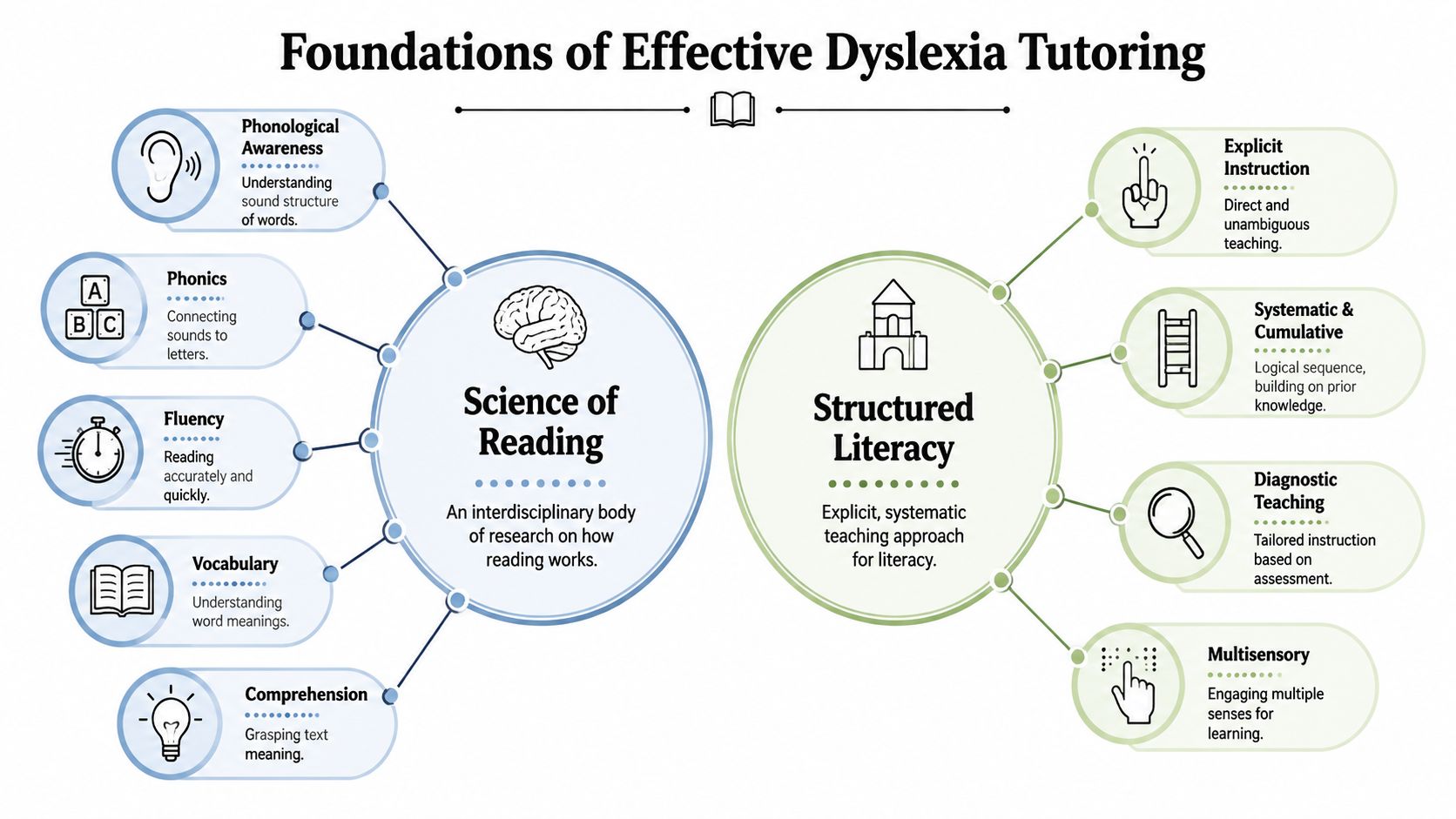
That approach sits inside two terms you need to understand and use correctly with parents and staff: Science of Reading and Structured Literacy.
Science of Reading in plain language
The Science of Reading is the research base on how reading develops. For an owner, the practical point is simple. Reading isn't one skill. It's a stack of skills that have to develop in a workable sequence.
A house is a good analogy. You don't start with the roof. You start with the foundation and framing.
- Phonological awareness is the foundation. Students hear and manipulate sounds in words.
- Phonics is the frame. Students connect those sounds to letters and spelling patterns.
- Fluency, vocabulary, and comprehension sit on top. They matter, but they depend on what came first.
When a center skips the foundation, students often look like they're reading, but they're guessing, memorizing, or compensating.
What Structured Literacy actually means
Structured Literacy is the teaching method that puts that research into practice. It is explicit, systematic, cumulative, diagnostic, and often multisensory.
That matters because students with dyslexia usually don't benefit from loose, discussion-led, or incidental reading instruction. They need the tutor to teach skills directly, in sequence, and revisit them with purpose.
Good dyslexia instruction is not creative improvisation. It is planned, responsive teaching with a clear sequence.
This is also where many centers get fooled by marketing. A program can use nice materials, games, and decodable readers and still fail if the actual instruction lacks order, corrective feedback, and skill progression.
A high-quality structured approach produces stronger outcomes than standard tutoring models. High-dosage tutoring programs for dyslexia that use structured methods show a statistically significant effect size of 0.37 standard deviations on learning outcomes, with impact up to 15 times greater than standard tutoring models, according to the National Bureau of Economic Research paper on high-dosage tutoring.
What doesn't work well
Centers usually run into trouble when they offer dyslexia support that looks like this:
- General reading help: Broad comprehension support without direct work on sound-symbol relationships.
- Tutor-led guessing strategies: Asking students to use pictures, context, or first-letter cues instead of decoding.
- Random lesson planning: Pulling worksheets from mixed programs with no cumulative sequence.
- Too much text too soon: Pushing fluency and comprehension before decoding becomes reliable.
If your team can explain why those practices fall short, you're already ahead of most general tutoring providers.
Core Components of an Evidence-Based Curriculum
A curriculum review should feel like due diligence, not guesswork. If a vendor can't show you how core skills are taught, in sequence, and how tutors respond when a student stalls, keep looking.
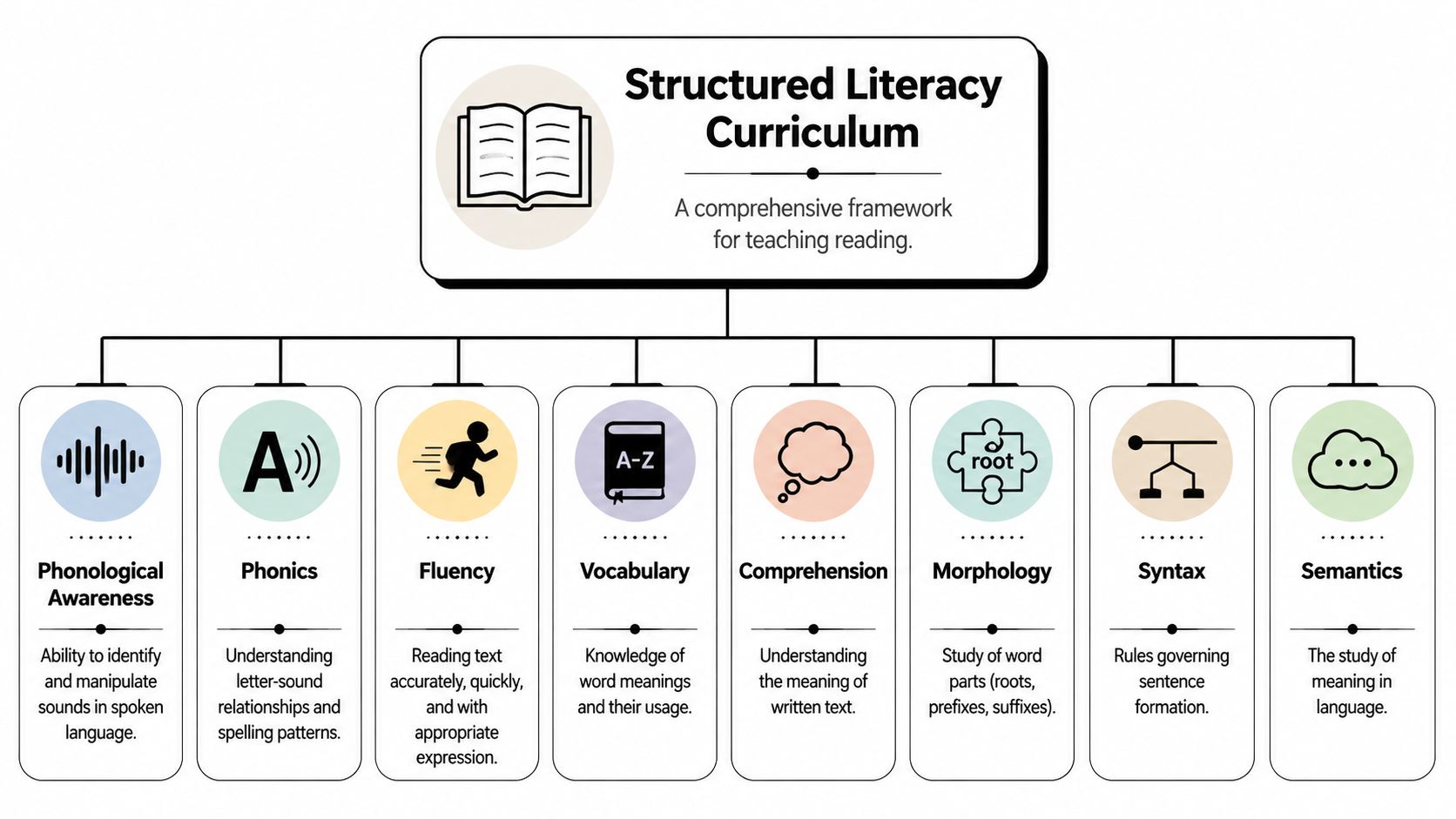
The easiest way to evaluate a dyslexia tutoring program is to break the curriculum into its essential parts.
The non-negotiable instructional pieces
| Component | What it looks like in a session | Why it matters |
|---|---|---|
| Phonological awareness | Sound deletion, blending, segmenting, and manipulation tasks done orally | Students need control over spoken sounds before print work becomes secure |
| Phonics | Direct teaching of letter-sound patterns, spelling rules, and decoding practice | This is where students learn how print maps to sound |
| Fluency | Repeated reading of controlled text with feedback | Accuracy has to become more automatic over time |
| Vocabulary | Direct teaching of word meanings tied to text and oral language | Students can decode a word and still not understand it |
| Comprehension | Guided discussion, retell, and meaning checks tied to readable text | Understanding is the goal, not just sounding words out |
| Morphology | Prefixes, suffixes, roots, and how words change form | Older students especially need tools for larger academic words |
| Syntax | Sentence structure, grammar, and how words work together | Weak syntax affects both reading and written expression |
| Semantics | Nuance of meaning, multiple-meaning words, and language relationships | Students need language depth to fully access text |
What to ask a curriculum provider
Most providers sound convincing in a demo. Push past the terminology.
Ask questions like these:
- Sequence: What skill comes first, and what determines when a student moves on?
- Assessment: How do tutors identify whether the issue is phonological awareness, decoding, fluency, or language comprehension?
- Correction: What does a tutor do in the moment when a student makes a predictable decoding error?
- Materials: Are texts controlled to match what the student has learned?
- Transfer: How does the curriculum connect reading, spelling, and writing?
Screening rule: If a curriculum treats spelling as separate from reading instruction, it usually isn't built strongly enough for dyslexia intervention.
A practical test helps too. Sit in on a sample lesson and watch whether the tutor does most of the cognitive heavy lifting. In strong instruction, the tutor leads tightly, prompts precisely, and adjusts fast.
If you're building an online or hybrid offer, your delivery has to stay structured on screen as well. These effective virtual teaching strategies are useful because they focus on keeping instruction clear and interactive instead of turning online sessions into passive screen time.
What a weak curriculum often looks like
Weak programs usually reveal themselves quickly:
- They overpromise on engagement, but underdefine scope and sequence.
- They use multisensory as a buzzword, without showing how instruction is cumulative.
- They rely on broad reading passages too early, before the student has enough decoding control.
- They make the lesson look easy to teach, which often means the program leaves too much to tutor instinct.
That last point matters. You don't want a curriculum that only works when your best tutor is in the room.
Choosing the Right Program and Specialist Tutors
The curriculum decision matters. The staffing decision matters more.
Owners often spend weeks comparing branded programs, then rush hiring. That's backwards. A recognized system can help with structure, training, and parent confidence, but the actual gains depend heavily on who teaches it and how well they diagnose and respond inside each lesson.
Build your own or license a program
There are two realistic paths.
Option one is licensing a known program such as an Orton-Gillingham-aligned system or another structured literacy framework. This gives you a clear scope and sequence, training pathway, and a simpler message for parents. It also limits flexibility and can create dependency on the brand rather than your instructional quality.
Option two is building your own program from evidence-based principles. This gives you more control over lesson design, assessment, staffing, and pricing. It also takes longer and requires stronger academic leadership.
A simple comparison helps:
| Decision | Strength | Trade-off |
|---|---|---|
| Licensed curriculum | Faster launch, clearer training path, easier marketing language | Less flexibility, recurring costs, possible overreliance on the brand |
| In-house program | Stronger control, easier customization, better fit across branches | Slower setup, heavier training load, more internal QA needed |
If your center has never run specialist literacy intervention before, a licensed pathway usually reduces early errors. If you already have a strong academic director and a culture of training, an in-house model can become more durable over time.
The tutor matters more than the logo
This is the point many operators need to hear clearly. Parents may ask about Orton-Gillingham or Wilson, but a branded name doesn't compensate for weak delivery.
Teacher-led interventions produce the strongest learning gains, with impacts of 0.37 to 0.44 standard deviations, compared with 0.30 for paraprofessionals and 0.21 for nonprofessionals, according to the AIBM summary of high-dose tutoring research.
That should shape your hiring model.
You can build support roles around specialists, but the core of your dyslexia tutoring program should rest on trained teachers or trained paraprofessionals working inside a tightly supervised system. It should not rest on well-meaning general tutors, parents, or part-timers improvising from a binder.
Hire for diagnostic teaching, not just warmth. Warmth helps retention. Diagnosis drives outcomes.
What to look for in a specialist tutor
Good candidates usually show three things at once:
- Instructional training: They understand structured literacy and can explain how they teach sound-symbol relationships, spelling, morphology, and fluency.
- Error analysis: They don't just mark answers wrong. They can identify patterns in substitutions, omissions, reversals, or weak phonemic processing.
- Session discipline: They can run a lesson with pace, correction, review, and cumulative practice.
Ask candidates to teach a short mock lesson. Then ask what they noticed about the student's errors and what they would teach next. Their answer tells you more than their resume.
A practical hiring system also needs onboarding, observation, and coaching. If you're building that from scratch, this guide to tutor program development is a useful operational reference for turning training into a repeatable process.
Red flags owners should treat seriously
Be cautious when a candidate:
- Talks mostly about helping children feel confident, but says little about instructional sequence.
- Uses broad terms like multisensory or individualized without concrete examples.
- Relies on classroom experience alone as proof of dyslexia expertise.
- Can't explain why a student might read a word incorrectly, beyond saying they need more practice.
Confidence matters. So does rapport. But if you want a program that scales across branches, your tutors need technical teaching skill, not just good intentions.
Operationalizing Your Dyslexia Program
Educational quality breaks down fast when operations can't support it. Dyslexia intervention usually involves frequent recurring sessions, small fixed groups, detailed notes, parent communication, specialist payroll, and more scheduling constraints than standard tutoring.
That's why many centers get acceptable instruction in isolated cases but fail to run a program cleanly across multiple teachers or branches.
Where admin chaos starts
A dyslexia tutoring program often needs consistent tutor-student pairing and stable timing. If you manage that in Google Calendar, billing in QuickBooks, and payroll in Excel, the friction shows up quickly.
That pattern is common in growing centers. Tutoring centers managing 5 to 100+ teachers across 1 to 10+ branches often lose significant revenue from fragmented tools, and industry data cited by Oases reports that 68% of mid-sized tutoring operations experience double-bookings and revenue leakage while owners spend over 10 hours per week on manual admin in their overview of tutor management system needs.
The educational damage is easy to miss at first:
- Students lose consistency when sessions move around.
- Groups become messy when open seats aren't tracked accurately.
- Specialist pay gets calculated wrong when rates vary by service or time slot.
- Parent updates slip because notes live in scattered documents.
Why group design affects operations
One-on-one delivery isn't the only viable format. Research indicates that outcomes depend more on instruction quality than delivery mode, and small-group structured literacy at a 1-to-3 ratio can be as effective as one-on-one, based on The Reading Center impact overview.
That creates a business advantage if you can manage it properly.
Small groups improve tutor utilization and can make specialist services more accessible to families. But only if you control four things tightly:
- Group matching: Students need similar instructional profiles, not just similar ages.
- Seat management: You need a live view of capacity by teacher, service, time, and room.
- Attendance-driven billing: Families should only be charged under clear policy rules.
- Persistent notes: Tutors need access to prior lesson data before the next session starts.
A small-group dyslexia model fails when the group is built for convenience instead of instructional fit.
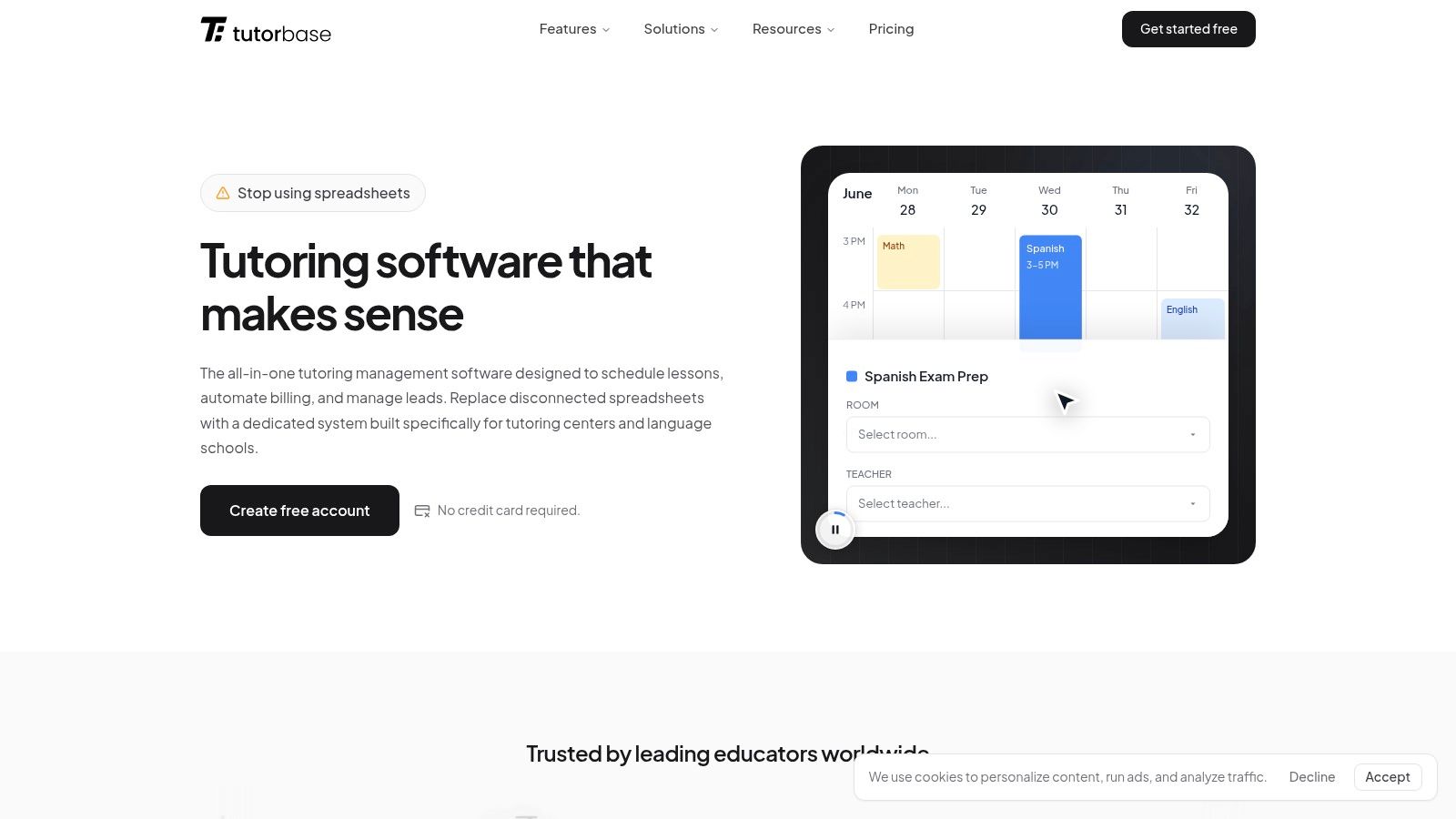
This is where purpose-built tutoring center software matters operationally. For centers running recurring literacy intervention, you need one place to manage scheduling, room capacity, student records, attendance, billing, and payroll rules. Otherwise, your academic model and your back office will keep fighting each other.
The workflows that need to be standardized
If you're launching across one branch or several, standardize these early:
| Workflow | What to lock down |
|---|---|
| Intake | Referral reason, assessment status, reading profile, preferred schedule, parent goals |
| Placement | Service type, tutor assignment, group or 1-to-1 fit, start date |
| Scheduling | Recurring slots, room assignment, online or in-person mode, catch-up policy |
| Notes | Per-lesson observations, taught skills, errors, next steps, parent-share settings |
| Billing | Package or subscription logic, cancellation policy, attendance trigger |
| Payroll | Specialist rates, premiums, revenue share if used, settlement cycle |
Centers that skip this end up rebuilding the same processes branch by branch.
A short product walkthrough helps if your operations lead needs to see how these pieces fit together in practice.
What mature operations look like
When the system is working, your team can do the following without manual chasing:
- Create recurring sessions quickly
- Place students into suitable small groups with open seats
- Prevent room and teacher conflicts
- Generate invoices from attendance rather than hand-entry
- Apply different payroll logic for specialist tutors
- Keep parent-facing notes attached to the actual lesson record
That's what turns a specialist service into a repeatable business unit instead of a heroic effort from one great teacher.
Measuring Success and Proving Value to Parents
Parents don't stay because your website says “structured literacy.” They stay because they can see progress, understand the plan, and believe the investment is working.
That means your reporting system has to measure learning in a way that families can follow, without overwhelming them with terminology.
What to track every week
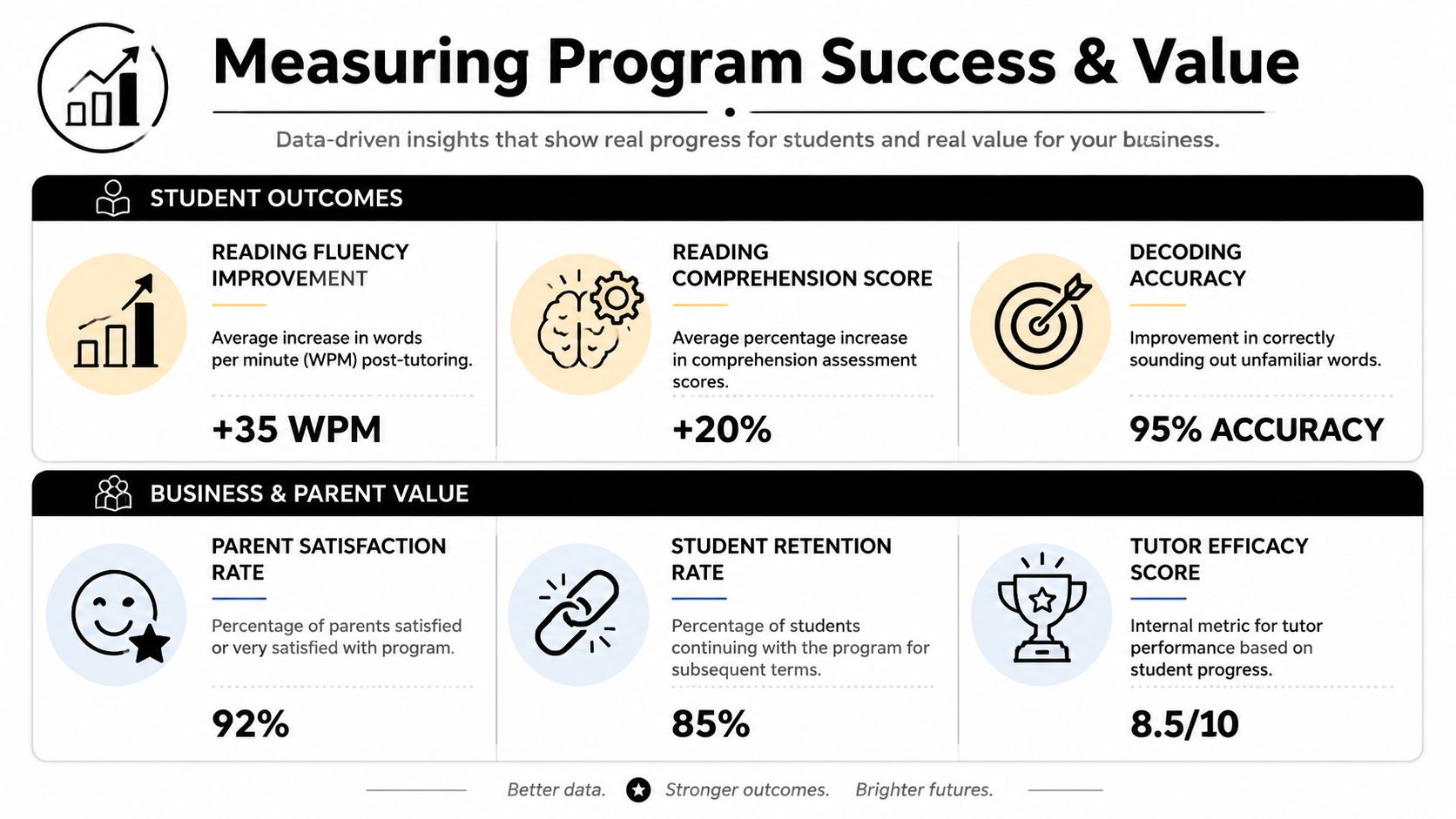
Use a mix of skill data, lesson data, and parent-facing summaries.
Track items like:
- Phonemic awareness performance: Which sound tasks the student can complete independently
- Decoding control: Which patterns are accurate, emerging, or still unstable
- Spelling transfer: Whether taught patterns appear correctly in dictation and writing
- Fluency observations: Accuracy, pace, and phrasing on appropriate text
- Attendance consistency: Missed sessions often explain stalled progress
- Curriculum movement: What lesson or concept sequence the student has completed
Don't turn every parent update into a test report. Give families a simple picture of what changed, what's next, and what support the student needs.
How to present value clearly
A strong parent report usually includes three parts:
- Skills mastered
- Current instructional focus
- Evidence from recent sessions
That evidence can come from tutor notes, controlled reading samples, spelling probes, and internal progress checks. The key is consistency. If every tutor reports differently, your program looks less credible than it is.
Parents don't need more data. They need cleaner interpretation.
If you want one system where staff can track enrollments and student progress, lesson history and parent reporting become much easier to standardize across tutors and locations.
What good reporting does for the business
Clear reporting supports more than instruction.
It helps you:
- Justify premium pricing for specialist support
- Reduce parent anxiety during slower periods of progress
- Improve renewals because families can see the plan continue
- Strengthen referrals when parents can describe results clearly to other families
The center that explains progress best usually wins long-term trust.
Frequently Asked Questions
How should you price a dyslexia tutoring program?
Price it as a specialist service, not as standard homework tutoring. Your cost base is higher because training, planning, assessment, and reporting are heavier. Keep the structure simple enough that parents can understand the commitment.
Should you sell single lessons or packages?
Packages or subscriptions usually fit better than ad hoc lessons. Dyslexia intervention works best when families commit to a consistent schedule and understand that progress comes from sustained instruction, not occasional sessions.
How long should the initial commitment be?
Set an initial term long enough to establish routines, gather baseline data, and show real movement. Very short commitments often create pressure for immediate visible change before the program has enough instructional history.
Is one-to-one always the best format?
Not always. Small groups can work well when students are matched carefully and the instruction stays structured. The key decision isn't group versus individual. It's whether the lesson design and student grouping are academically sound.
How do you market the program without overpromising?
Lead with method, tutor qualifications, consistency, and reporting. Avoid miracle language. Families respond better to clarity than hype.
What should your intake process include?
Ask about school concerns, previous intervention, formal assessment if available, scheduling constraints, and parent goals. You need enough detail to place the student correctly from the start.
Sample Dyslexia Program Pricing Models
| Model | Description | Best For |
|---|---|---|
| Assessment plus recurring plan | Initial assessment followed by a fixed weekly schedule | Centers that want structured onboarding and clear placement |
| Monthly subscription | Families pay a recurring amount tied to reserved lesson frequency | Programs with stable attendance and ongoing intervention |
| Lesson package | A set block of sessions used within a defined period | Centers that want commitment with some scheduling flexibility |
| Small-group specialist plan | Lower per-student cost within a structured group format | Centers expanding access while protecting tutor utilization |
| Premium one-to-one plan | Individual specialist sessions with higher reporting intensity | Students needing tighter pacing and highly customized support |
If you're building a dyslexia tutoring program and want the operational side to run as cleanly as the academic side, Tutorbase gives tutoring centers one platform for scheduling, billing, payroll, rooms, and student tracking. It's built for owners and operators who've outgrown spreadsheets, manual invoicing, and calendar chaos. You can register at tutorbase.com/register.


